Pay As You Go - AI Model Orchestration and Workflows Platform



AI workflow solutions are transforming how machine learning teams operate by reducing time spent on repetitive tasks like model monitoring, retraining, and data quality checks. This article reviews Prompts.ai, Vellum, Zapier, and UiPath to identify the best platform for streamlining workflows, improving governance, and managing costs. Here's what you need to know:
Quick Comparison:
| Platform | Strengths | Limitations | Best For |
|---|---|---|---|
| Prompts.ai | Unified AI models, cost tracking, governance | Requires technical expertise for setup | AI-driven teams, enterprises |
| Vellum | LLM workflows, orchestration, collaboration | Pricing not transparent | Engineering-focused teams |
| Zapier | No-code automation, app integrations | Limited AI-specific functionality | Business and non-tech teams |
| UiPath | RPA + AI integration, unstructured data | Complex setup for smaller teams | Enterprises with RPA focus |
Choosing the right tool depends on your team's expertise, goals, and infrastructure. Dive into the full article for detailed insights.
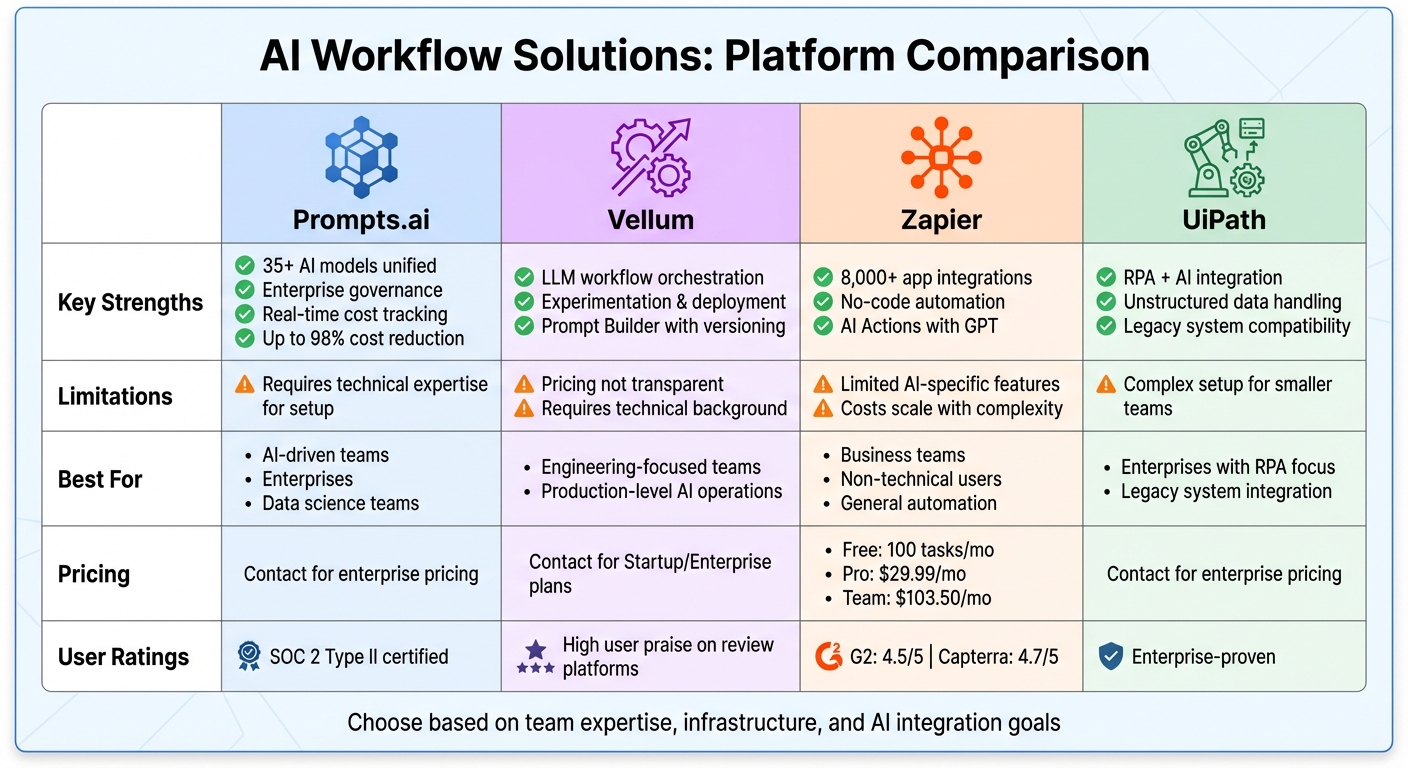
AI Workflow Solutions Comparison: Prompts.ai vs Vellum vs Zapier vs UiPath
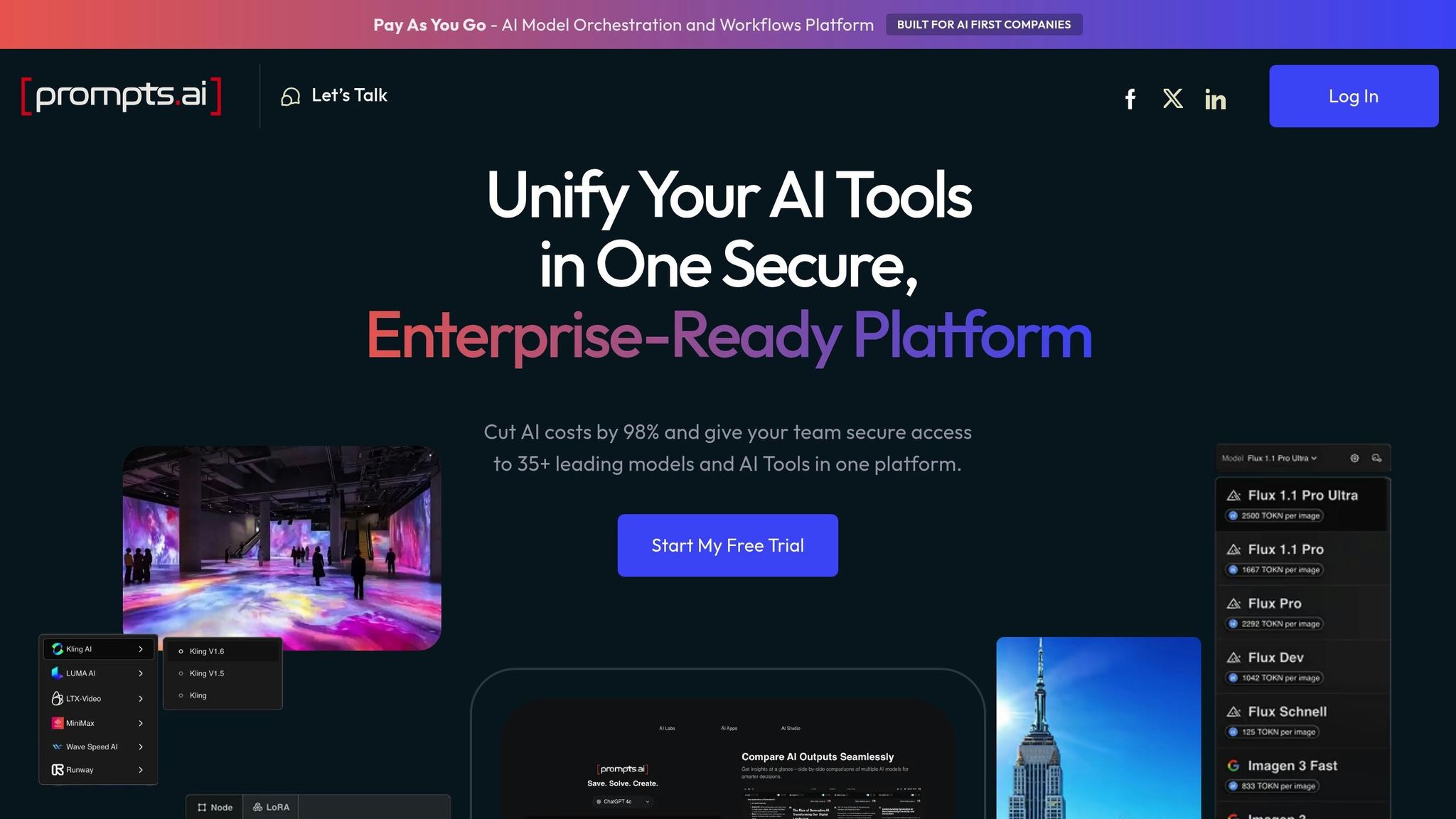
Prompts.ai brings together more than 35 top AI models - including GPT, Claude, LLaMA, and Gemini - into one secure, unified platform, eliminating the hassle of juggling multiple tools and API keys. With this setup, machine learning teams can easily compare models side-by-side within a single workspace, simplifying the process of determining which model is best suited for a specific task.
The platform goes beyond just language models, offering seamless integration with key business applications like Slack, Gmail, and Trello. This allows teams to automate workflows across their existing tools. For visual and video generation, Prompts.ai supports a variety of creative tools, such as Midjourney V7, Google DeepMind ImageFX, Flux 1, Reve AI, Kling AI, Luma AI, and Google DeepMind Veo2. These features empower creative and technical teams to manage multi-modal projects from one central hub, streamlining their efforts.
A compelling example of this integration comes from April 2025, when Johannes V. used Prompts.ai to create a promotional video for Breitling and the French Air Force. By combining tools like Midjourney V7, Google DeepMind ImageFX, and Flux 1 through ComfyUI, he achieved a seamless workflow. This unified approach eliminated the need for manual file transfers and resolved compatibility challenges, producing polished, immersive animations with ease.
Prompts.ai simplifies complex workflows by transforming scattered tasks into scalable, AI-driven processes that can be repeated across departments. From task routing among AI services to streamlining team communications and planning, everything happens through a centralized interface.
In February 2025, Johannes V. demonstrated the platform’s capabilities by creating a BMW concept car video. He started with a design generated in Midjourney V7, trained a LoRA model for environmental adaptation, and assembled the final video - all within Prompts.ai. This streamlined, end-to-end orchestration allowed him to chain together intricate workflows without needing custom integration code. As workflows grow more complex, having a platform that ensures smooth execution while maintaining control becomes essential.
Prompts.ai is designed with enterprise needs in mind, offering secure and compliant AI workflows at scale. Built on frameworks like SOC 2 Type II, HIPAA, and GDPR, the platform prioritizes data security and governance. In June 2025, Prompts.ai completed a SOC 2 Type II audit, further solidifying its commitment to data protection.
The platform provides teams with full visibility into all AI interactions through centralized governance tools. Real-time updates on security posture are available via the Trust Center at https://trust.prompts.ai/, ensuring organizations can monitor and maintain compliance effortlessly.
Prompts.ai includes a built-in FinOps layer that tracks token usage in real time, helping organizations stay within budget. Teams can set specific usage limits for projects or departments, preventing unexpected cost overruns. By offering detailed cost tracking, the platform enables businesses to align AI expenses with tangible outcomes and pinpoint areas where costs can be reduced, ensuring smarter spending across the board.
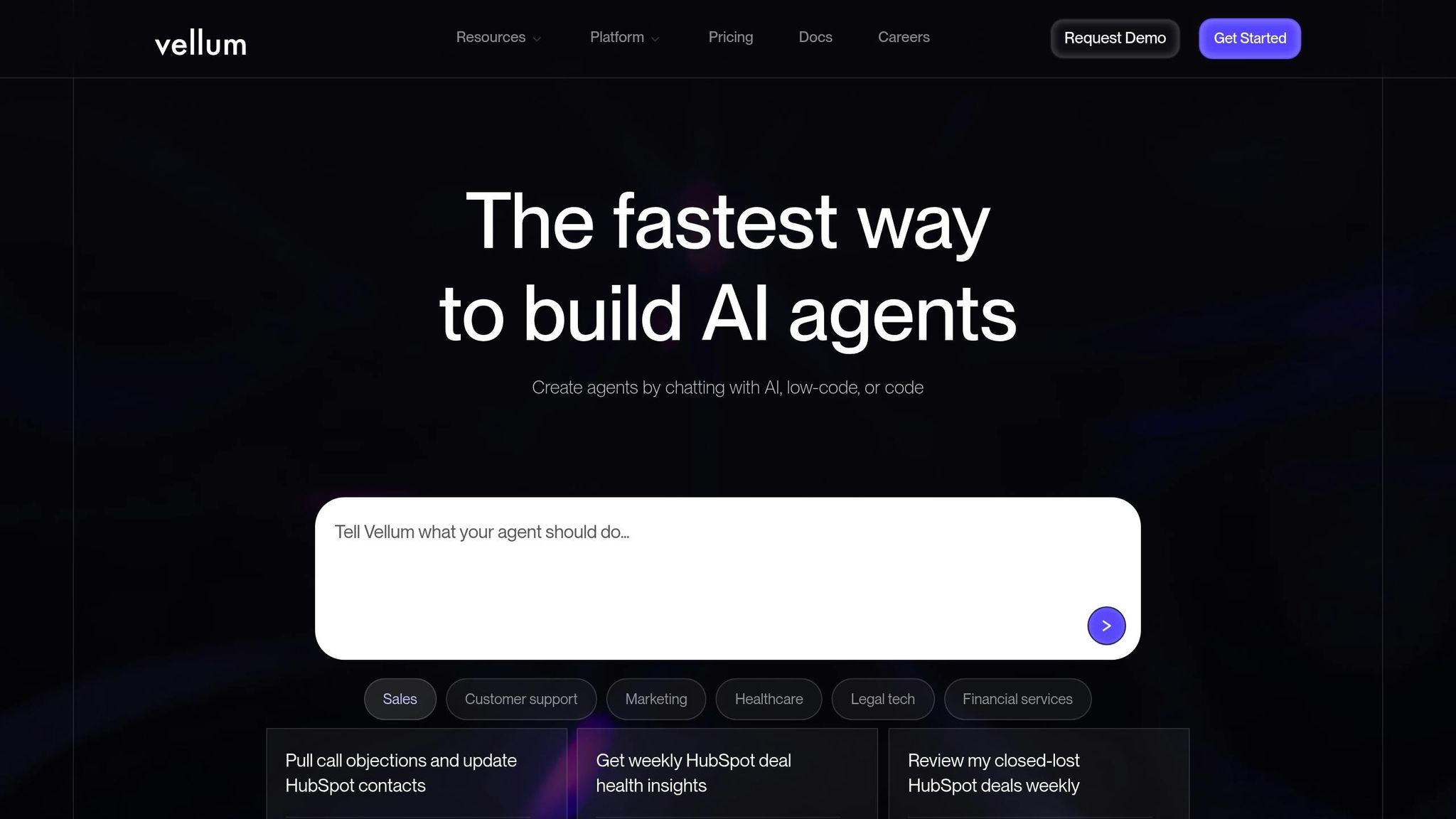
Vellum AI brings together experimentation, analysis, deployment, and monitoring into a single, cohesive platform. Designed specifically for crafting LLM-powered agents and workflows, it seamlessly integrates with existing business systems. This makes it easy for teams to enhance their current machine learning tools and infrastructure with AI capabilities.
One standout feature is the Prompt Builder, which allows users to create, edit, and refine prompts in real time - no coding skills required. It supports chaining multiple prompts, adding variables, previewing responses from various models, and fine-tuning outputs before deployment. This streamlined process facilitates the creation of complex, multi-step workflows, all within a unified environment.
Vellum takes workflow orchestration to the next level by combining prompt engineering, collaboration tools, and orchestration capabilities in one workspace. This setup empowers teams to design, test, and launch multi-step AI agents from a central hub. Using natural language descriptions, teams can quickly turn ideas into fully functional AI workflows.
For enterprise teams and engineering groups aiming to automate repetitive tasks or deploy sophisticated AI agents, Vellum offers the necessary infrastructure to build reliable AI applications. It has also received high praise from users on various review platforms.
Vellum is built with governance in mind, offering features like prompt versioning and workflow orchestration to meet regulatory and accountability needs. The Prompt Builder creates an audit trail, ensuring reproducibility and transparency throughout the development process. This collaborative workspace supports controlled development, allowing organizations to refine AI agents while maintaining compliance.
These governance features align with MLOps principles by enabling model documentation, explainability, and change tracking - key requirements for adhering to regulatory standards. By integrating these capabilities, Vellum ensures that organizations can manage their AI workflows responsibly and effectively.
Zapier expands the possibilities of AI workflows by seamlessly connecting over 8,000 apps, including CRMs, databases, marketing tools, and communication platforms - all without requiring custom code. Its AI Actions feature integrates GPT-based steps like summarization, translation, and data enrichment directly into automated workflows. Additionally, AI by Zapier provides built-in access to ChatGPT, eliminating the need for an API key. For example, a video idea shared in Slack can be turned into a refined prompt, processed by Runway for video creation, and then sent back to Slack as a notification. While effective, Zapier's AI features are not as deeply embedded within machine learning workflows compared to some specialized platforms.
Zapier empowers teams to streamline multi-step automations with tools like its Copilot builder and Zapier Agents. Marketing teams can use these features to draft campaign briefs, create channel-specific content that adheres to brand guidelines, route materials for approval, and publish finalized assets automatically. For sales, RevOps, and support teams, Zapier enables lead enrichment, routing high-intent prospects based on AI scoring, automating ticket triaging, summarizing customer feedback, and updating CRMs. Its Tables feature offers a flexible way to organize automation data. While Zapier excels at managing general AI workflow automation, it doesn’t provide the same level of customization or complexity for building advanced AI agents as some newer AI-native platforms. Instead, it complements existing workflows by enhancing efficiency without replacing more specialized AI design solutions.
Zapier’s pricing is straightforward, offering options tailored to different needs. The free plan includes 100 tasks per month, while the Pro plan, at $29.99 per month, unlocks multi-step Zaps and unlimited premium app integrations. The Team plan costs $103.50 per month for up to 25 users, and custom Enterprise pricing is also available. User reviews reflect strong satisfaction, with ratings of 4.5 out of 5 on G2 and 4.7 out of 5 on Capterra. However, users have pointed out that costs can rise significantly as workflow complexity and volume increase - something to keep in mind for machine learning projects with more demanding requirements.
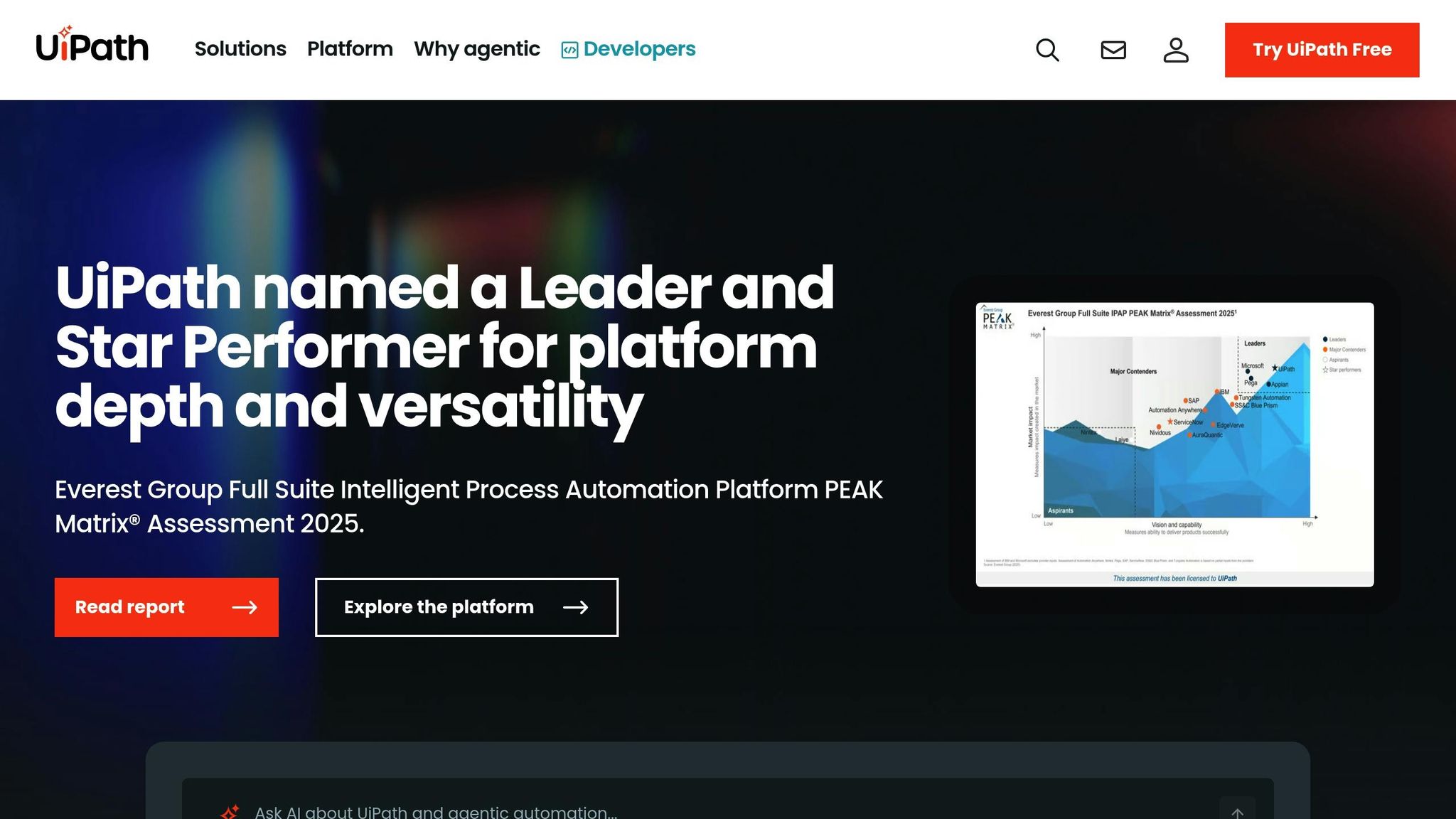
UiPath brings together RPA bots, AI models, and human collaboration seamlessly through its Orchestrator platform, enabling end-to-end machine learning workflows. With tools like AI Fabric and Agentic Automation, it allows bots to make decisions aligned with business rules, while its Healing Agent automatically identifies and fixes workflow disruptions.
UiPath also enhances data handling capabilities. Leveraging AI technologies such as natural language processing, handwriting recognition, and long-document analysis, it efficiently manages unstructured data. For instance, Omega Healthcare's deployment of UiPath tools has resulted in saving thousands of work hours every month.
Here's a closer look at the standout features and limitations of each platform:
Prompts.ai shines by integrating over 35 top-tier large language models into one streamlined interface. It provides enterprise-grade governance and real-time FinOps cost tracking, making it an excellent choice for reducing tool sprawl and cutting costs - up to 98% in some cases.
Vellum is tailored for managing complex, LLM-powered agent workflows, offering an all-in-one solution for experimentation, deployment, and monitoring. Engineering teams often praise its functionality, but its advanced features demand a solid technical background. Additionally, pricing for its Startup and Enterprise plans isn't readily available and requires direct inquiries.
Zapier delivers dependable no-code automation with connections to thousands of apps, making it user-friendly for non-technical audiences. However, its AI capabilities often feel like add-ons rather than core features, and scaling workflows can lead to rising costs.
These comparisons can guide teams in choosing the platform that aligns with their goals and technical expertise.
When choosing an AI workflow solution, it's essential to align your decision with your team's technical expertise, existing infrastructure, and strategic priorities. Prompts.ai stands out for its ability to streamline access to over 35 top AI models while ensuring enterprise-level governance and significant cost savings - potentially reducing expenses by up to 98%. For organizations grappling with tool sprawl, its centralized platform offers real-time FinOps tracking, model comparisons, and the audit trails that compliance teams demand. It’s an ideal choice for data science teams, AI centers of excellence, and product developers building AI-powered applications, as it removes the hassle of managing multiple subscriptions.
Different platforms cater to varying needs. Vellum is best suited for engineering-focused organizations that treat AI as a core component of their product infrastructure, offering robust orchestration for production-level operations. Zapier, on the other hand, is tailored for non-technical teams aiming to automate business processes across a wide range of apps, though its AI capabilities are more of an add-on than a central feature. Meanwhile, UiPath is a strong fit for enterprises heavily invested in RPA programs, providing tools to integrate machine learning models with legacy systems.
Consider whether AI workflows are at the heart of your operations or simply a complement to existing automation efforts. If your objective is to centralize AI model access, enforce governance across teams, and maintain cost transparency while scaling machine learning initiatives, Prompts.ai offers an efficient and effective solution. By simplifying workflow management and ensuring cost clarity, these platforms allow teams to redirect their focus from routine tasks to meaningful innovation.
Prompts.ai provides a simple Pay-As-You-Go pricing structure, designed to keep costs clear and predictable. Users are charged solely based on actual usage, with no hidden fees or surprise costs.
With comprehensive usage insights, enterprises gain the tools they need to track and control their AI workflow expenses, ensuring budgets are managed efficiently while maintaining optimal performance.
Vellum stands out as a strong option for engineering teams, offering advanced schema management, dependable data synchronization, and scalability. These tools help teams manage intricate data workflows and integrate multiple systems with ease - key requirements for technical, data-heavy projects.
With these features, engineers can simplify workflows, enhance teamwork, and handle large-scale machine learning tasks efficiently. This makes Vellum a valuable resource for addressing complex technical demands.
Zapier works well for straightforward, rule-based automation tasks, making it a useful tool for simplifying repetitive workflows. However, it falls short when it comes to handling more advanced needs like orchestrating AI models, enabling adaptive learning, or supporting dynamic decision-making. These capabilities are essential for managing intricate AI workflows and ensuring smooth integration across complex systems.