Pay As You Go - AI Model Orchestration and Workflows Platform


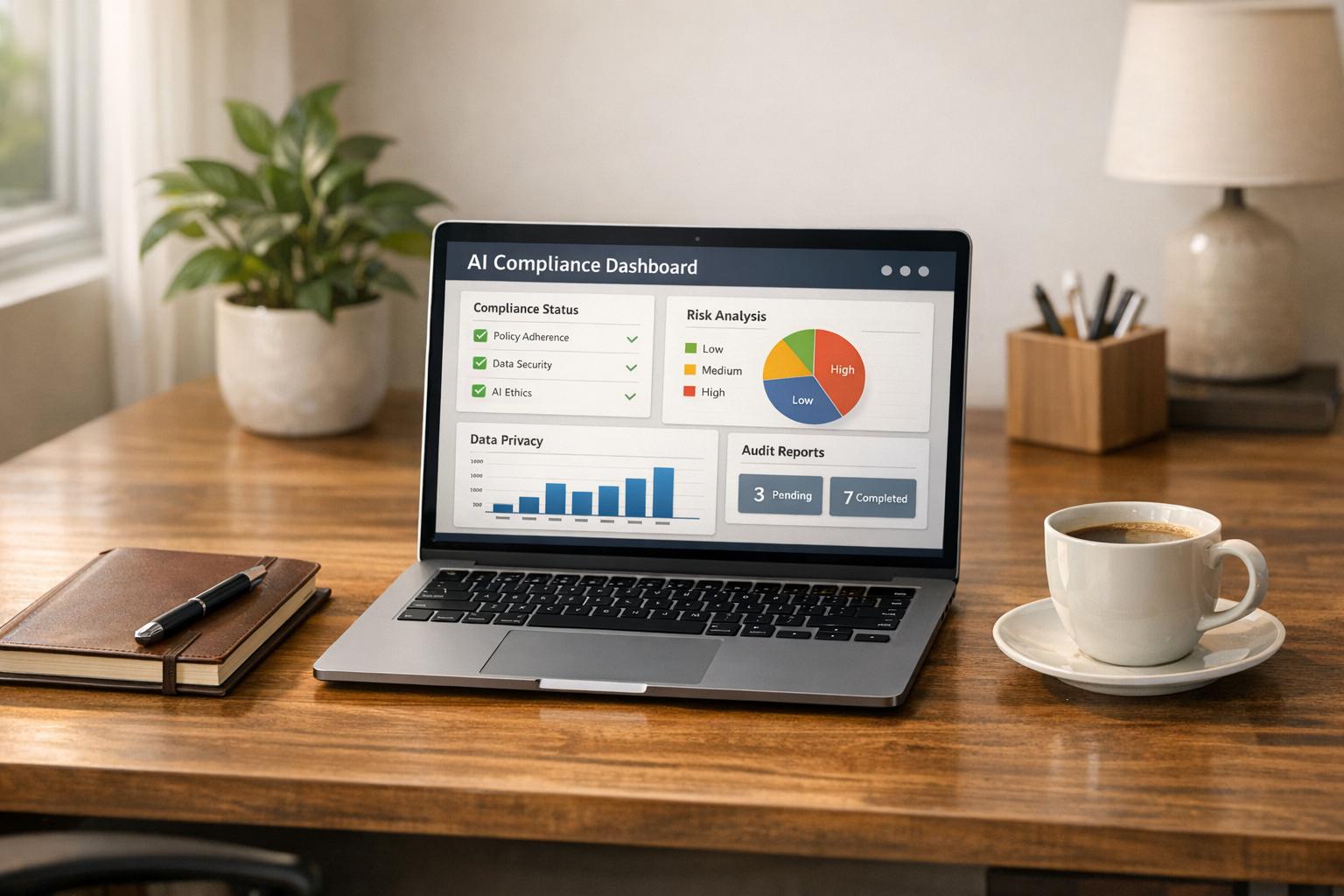
AI compliance tools help small businesses save time, cut costs, and meet critical regulatory standards like SOC 2, HIPAA, and GDPR. By automating evidence collection, risk management, and audit preparation, these tools reduce manual work, improve data security, and open doors to new contracts.
Top Affordable Tools for Small Businesses:
Key Benefits:
Choose the right tool based on your business size, compliance needs, and budget to stay ahead in today’s regulatory landscape.
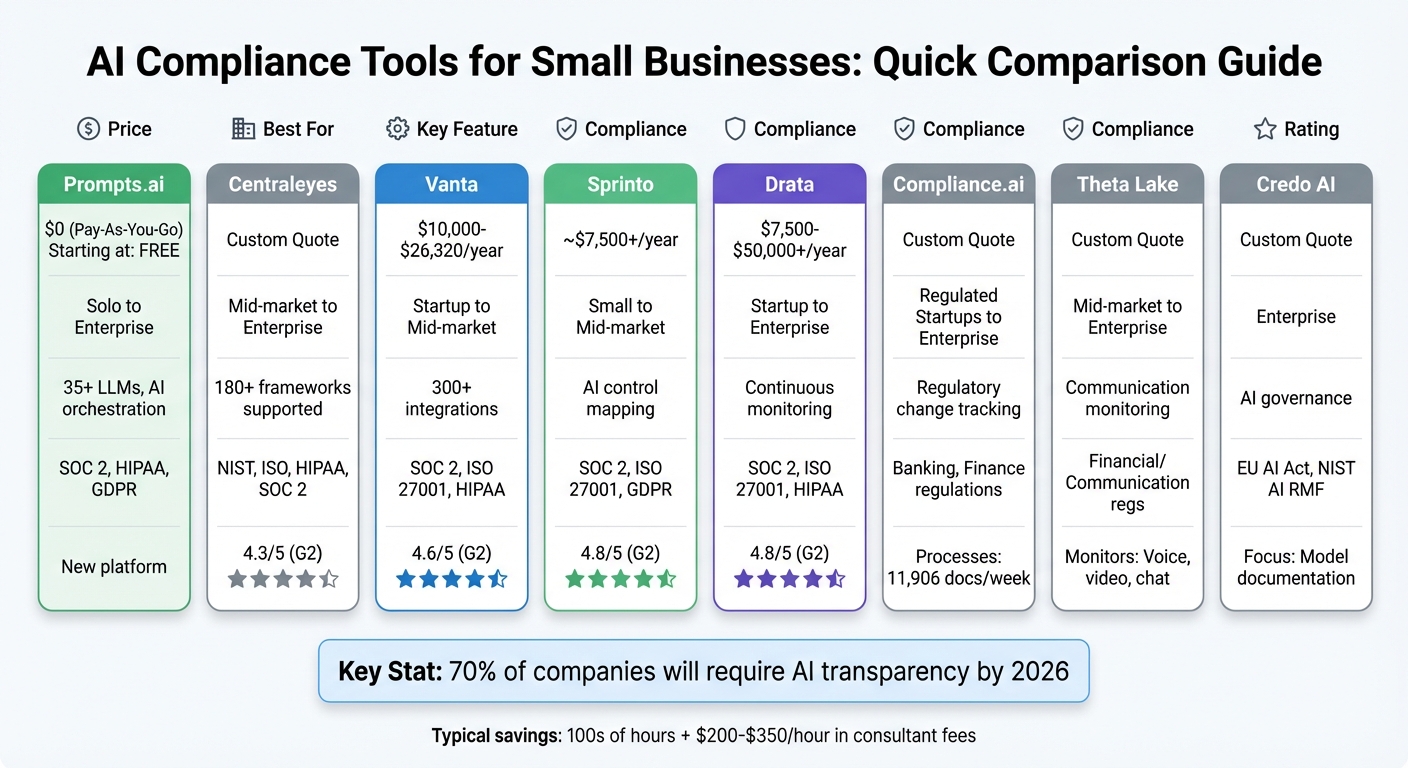
AI Compliance Tools Comparison: Pricing, Features, and Business Fit
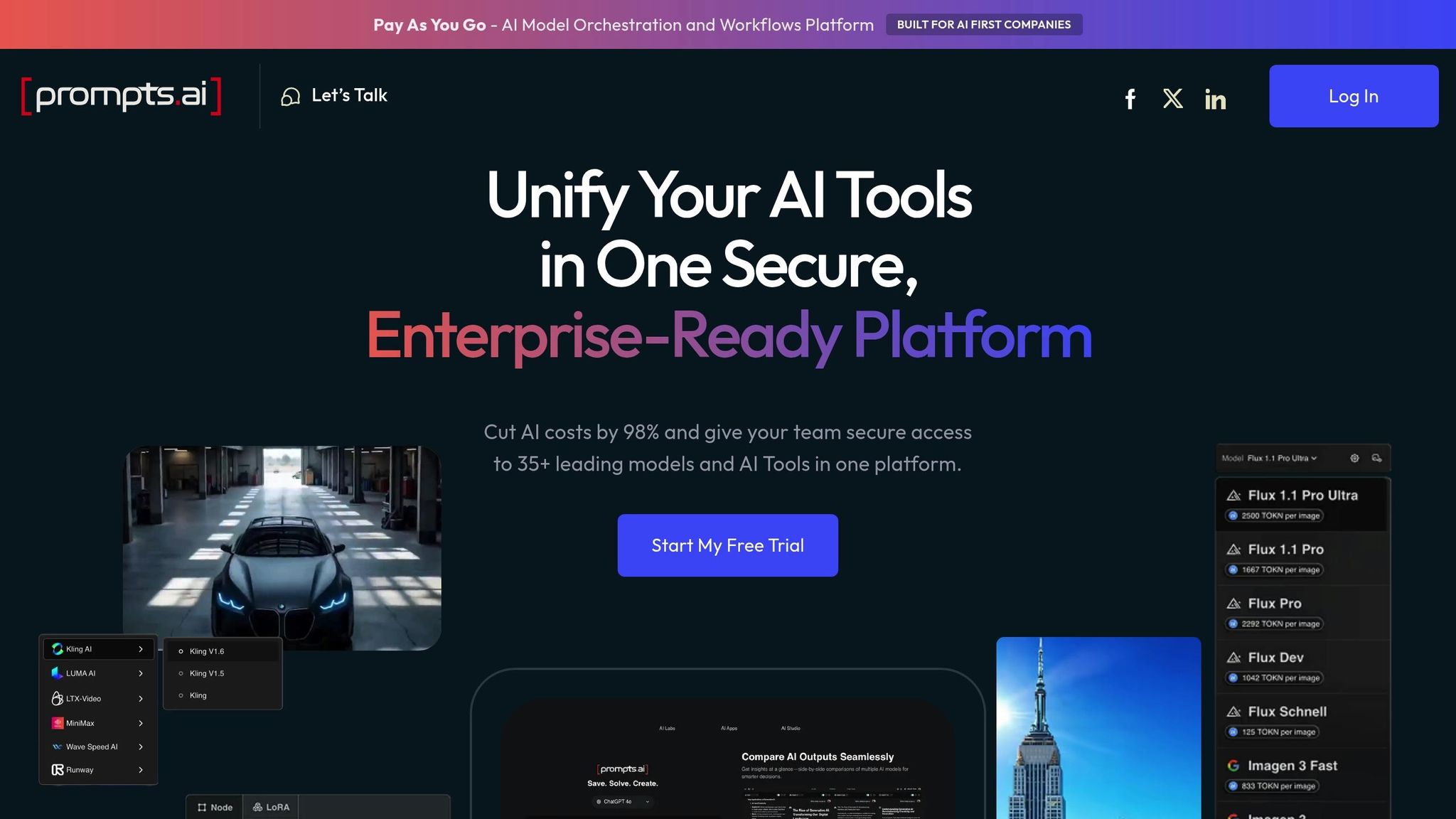
Prompts.ai brings together leading AI models within a secure, user-friendly platform. By adhering to SOC 2 Type II, HIPAA, and GDPR standards, it ensures business data remains protected while offering centralized oversight with complete visibility and auditability for every AI interaction. The platform initiated its SOC 2 Type II audit on June 19, 2025, leveraging Vanta and a real-time Trust Center to maintain compliance without requiring additional staff. This robust compliance framework makes it easier for small businesses to integrate AI into their operations with confidence.
Small businesses often need enterprise-level compliance but lack the resources for large budgets or dedicated teams. Prompts.ai solves this problem with a setup process that takes under 10 minutes and eliminates the need for complex integrations. Its built-in governance tools allow small teams to monitor AI usage effectively, preventing unregulated adoption. Frank Buscemi, CEO & CCO, highlighted its impact:
"Today, he uses Prompts.ai to streamline content creation, automate strategy workflows, and free up his team to focus on big-picture thinking".
This combination of speed and simplicity makes Prompts.ai a valuable resource for small businesses navigating AI compliance.
Prompts.ai offers flexible pricing options that cater to different needs while keeping costs manageable:
By consolidating AI tools, the platform helps reduce costs associated with multiple subscriptions. Its TOKN credit system ensures businesses only pay for what they use, adding transparency and efficiency to their spending.
Prompts.ai excels at centralizing AI operations while maintaining strict governance. Users can compare various large language models side-by-side, boosting productivity by up to ten times. Its workflow automation transforms one-off AI tasks into scalable, repeatable processes, ensuring consistency and compliance. Steven Simmons, Emmy Award-winning Creative Director and founder of Prompts.ai, showcased the platform's efficiency by completing proposals in just one day. For small businesses handling sensitive information or preparing for certifications, these features provide the control and documentation required to meet regulatory standards.
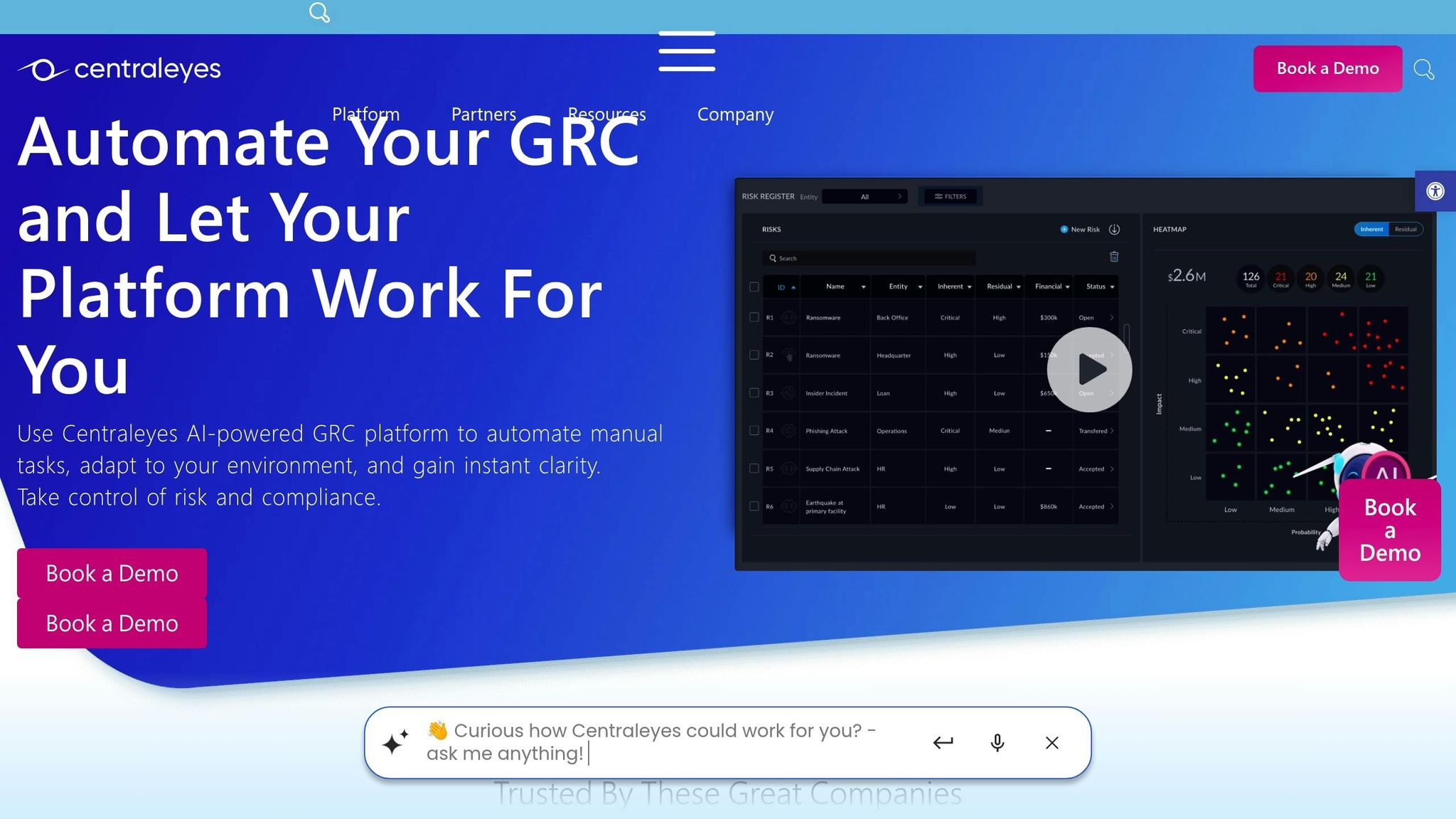
Centraleyes is a cutting-edge platform designed to simplify Governance, Risk, and Compliance (GRC) processes, particularly for cyber risk management and automated compliance. Supporting over 180 frameworks, standards, and regulations - including HIPAA, HITECH, NIST, and SOC 2 - it automates the mapping of risks to controls, significantly reducing the need for manual compliance research. One standout feature is its ability to cross-map requirements across multiple frameworks, meaning progress made toward one standard (like SOC 2) can also advance compliance with another (such as ISO 27001). This approach offers a practical solution for small businesses still grappling with outdated compliance methods like spreadsheets and manual tracking.
Small businesses often struggle with outdated compliance tools, relying heavily on manual spreadsheets to manage risk and regulatory requirements. Centraleyes modernizes this process with a no-code implementation that delivers a comprehensive risk assessment in as little as 30 days. It also streamlines vendor onboarding, cutting the process down to just 30 seconds. These time-saving features make it a game-changer for businesses looking to replace cumbersome manual methods with efficient, automated solutions.
Centraleyes provides a free trial, allowing businesses to experience its capabilities before committing. While its pricing is tailored for mid-market and enterprise users, specific details are available upon request. The platform has received strong user feedback, with ratings of 4.3/5 on G2 and 4.5/5 on Capterra. Users frequently highlight its real-time insights and automated reporting as standout features, underscoring its value for organizations aiming to enhance compliance efforts.
Centraleyes leverages large language model (LLM) technology to power its intelligent risk register, enabling it to generate detailed risk assessments in minutes. The platform’s AI continuously monitors systems, updates risk scores, drafts compliant policy language, and provides actionable remediation steps. By automating these traditionally manual tasks, Centraleyes transforms compliance management into a streamlined, efficient process, ensuring businesses maintain visibility across multiple frameworks with minimal effort.
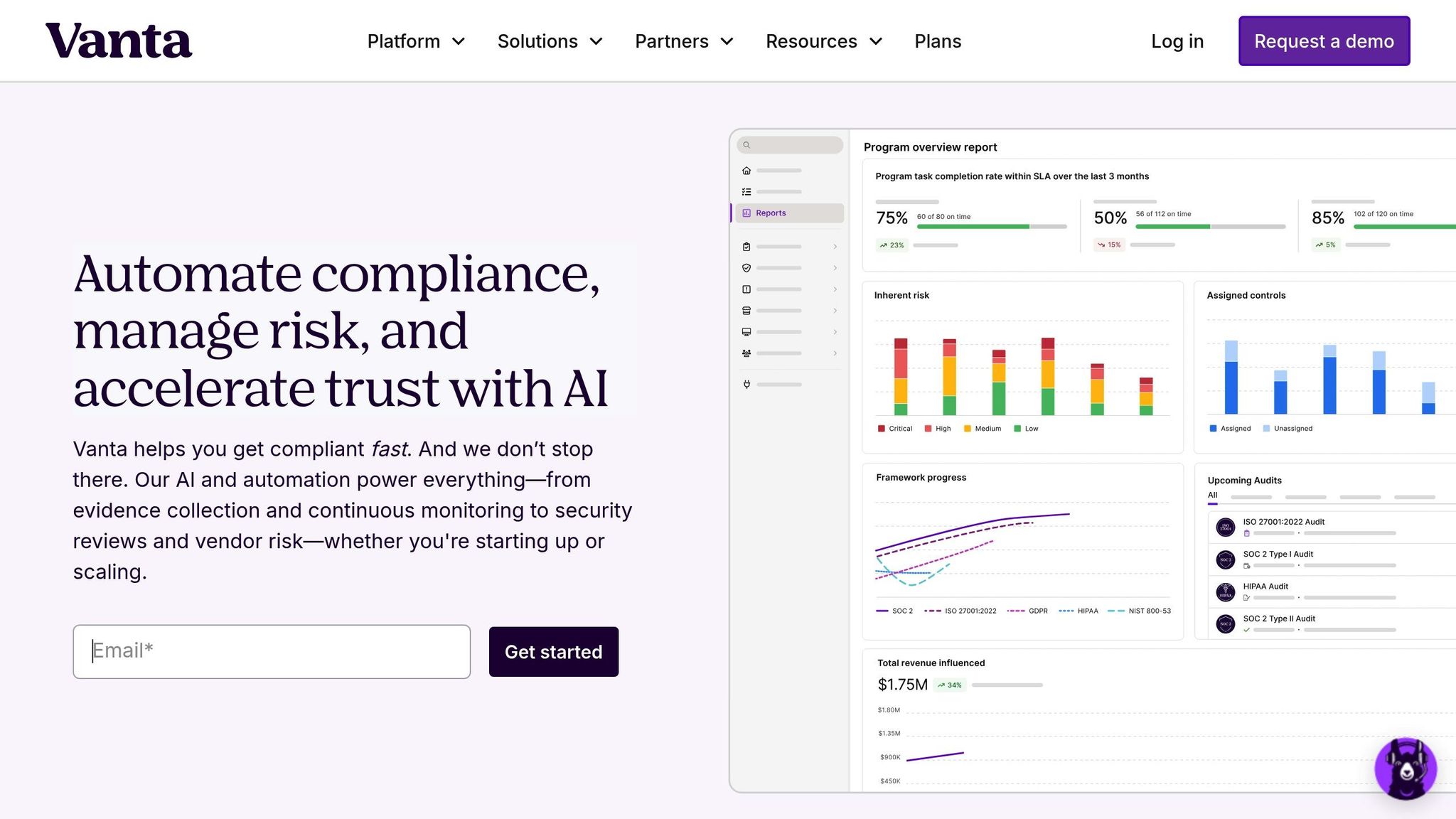
Vanta brings modern GRC automation to the forefront, streamlining compliance processes with seamless integrations and precise risk mapping.
Vanta is designed to simplify risk management and compliance automation, making it easier for companies to complete their first audit and secure enterprise clients. By automating evidence collection and mapping controls to critical frameworks like SOC 2, ISO 27001, and GDPR, Vanta reduces the heavy lifting of compliance. It supports over 300 pre-built integrations with tools such as AWS, Google Workspace, Slack, and GitHub, enabling continuous monitoring of your security posture while eliminating tedious manual tasks.
For small businesses aiming to secure larger clients, compliance certifications are often a necessity - but limited resources can make this a challenge. Vanta provides a streamlined, automated solution tailored to startups, growing companies, and mid-sized organizations. Many users report noticeable improvements in their workflows within just 2 to 4 weeks of using the platform.
With an annual cost of approximately $26,320 (around $2,193 per month), Vanta offers a more affordable alternative to hiring consultants or full-time staff dedicated to compliance. Its flexible pricing options cater to businesses at different growth stages, ensuring you only pay for what you need. The platform’s effectiveness is backed by strong user reviews, boasting a 4.6/5 rating on G2 (over 1,900 reviews) and a 4.3/5 rating on Capterra (30 reviews).
Vanta integrates advanced AI tools, combining its proprietary large language model with OpenAI technology. These capabilities allow the platform to automatically complete security questionnaires using existing documentation, adjust audit scopes based on your framework and business needs, and analyze internal policies to recommend appropriate controls and tests. Its document verification feature also ensures uploaded materials meet audit requirements, identifying any gaps before the official audit process begins.
Sprinto streamlines compliance tasks through the power of AI, designed specifically for startups and mid-market companies operating in highly regulated sectors such as fintech, healthtech, and SaaS.
At its core, Sprinto focuses on automating Governance, Risk, and Compliance (GRC) tasks by tackling the repetitive work that often bogs down engineering and security teams. The platform handles critical activities like evidence gathering, vendor due diligence, and mapping risks to controls - all automatically. By keeping compliance efforts contextually aligned and offering predictive insights, Sprinto helps shift businesses from a reactive compliance stance to a proactive one. This allows small teams to focus on more strategic goals instead of getting buried in administrative tasks.
For startups aiming to secure enterprise clients, passing audits quickly and efficiently is often a make-or-break factor. Sprinto simplifies this process, ensuring compliance is manageable even for teams with limited resources. The platform automates audit preparation by identifying gaps in evidence before auditors step in. It also provides policy gap assessments, flagging missing documentation that could delay certification. Particularly for smaller teams, Sprinto’s automated vendor due diligence is a game-changer, helping manage third-party risks without the need to hire additional compliance professionals.
Sprinto is positioned as a cost-effective solution for startups and mid-sized businesses. Its strong reputation - 4.8/5 stars on G2 from over 1,400 reviews and 4.7/5 stars on Capterra from 84 reviews - demonstrates that users see real value in the platform. When compared to the expense of hiring full-time compliance staff or external consultants, Sprinto offers a more budget-friendly alternative.
Sprinto’s AI-driven features include automatic risk mapping, completing security questionnaires using existing documentation, and providing real-time policy recommendations. Its evidence gap analysis ensures you’re audit-ready by identifying missing pieces before the review begins. Additionally, the platform’s intelligent support aids compliance efforts across audit, engineering, and security teams, making day-to-day tasks more manageable.
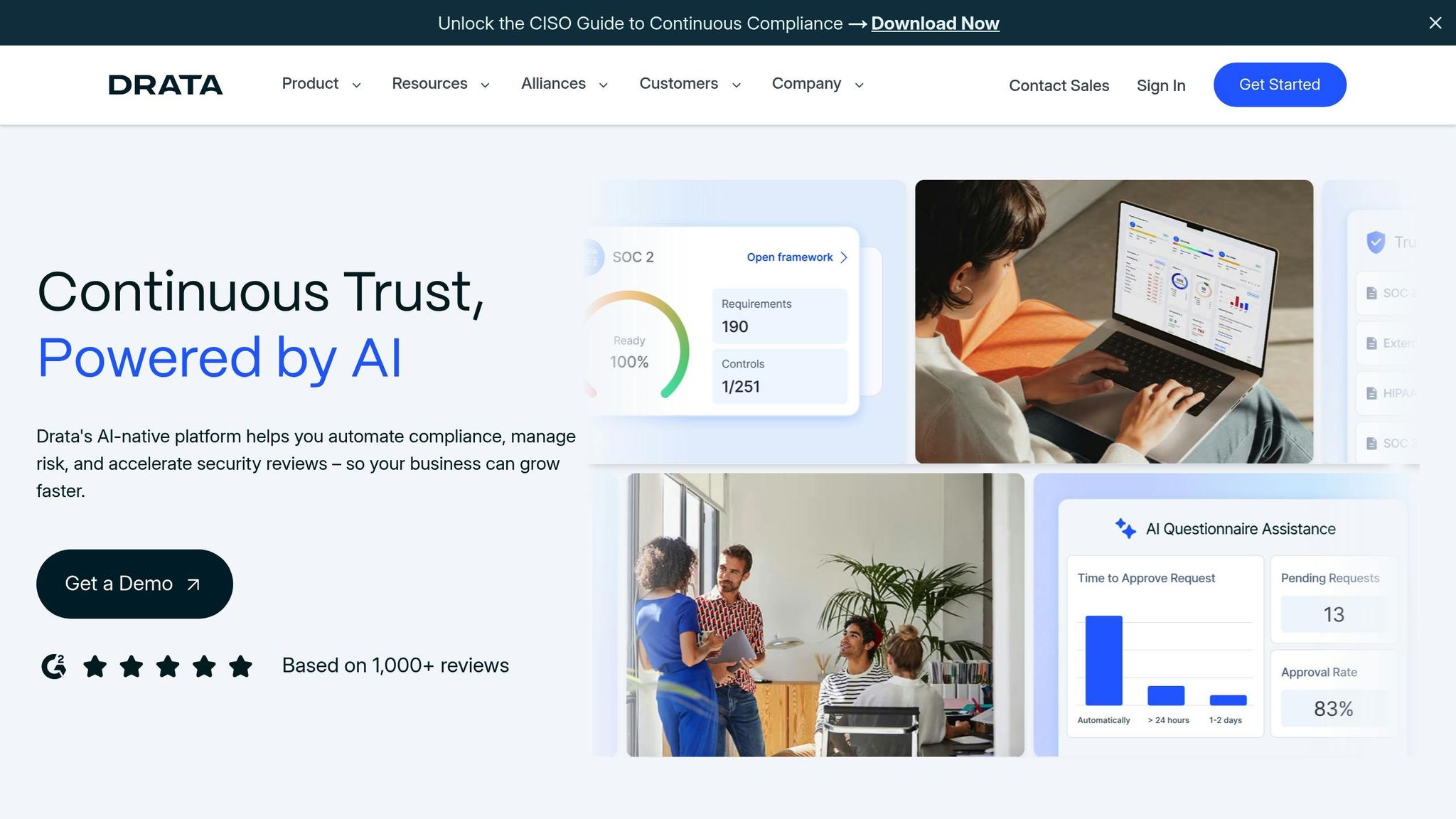
Drata's AI-native trust management platform simplifies compliance by automating workflows like evidence collection and control monitoring. It supports frameworks specifically designed for AI, such as NIST AI RMF and ISO 42001, alongside widely used standards like SOC 2, ISO 27001, HIPAA, and GDPR.
Drata operates on a "continuous trust" model, leveraging AI-driven automation to gather evidence and monitor security controls. This approach ensures that every AI-related decision is auditable, with mandatory human oversight required before any external disclosures.
Drata's continuous trust model delivers practical advantages for smaller organizations. Built with startups and growing businesses in mind, it streamlines compliance by automating evidence collection and identifying gaps ahead of audits. Features like the VRM Agent handle vendor risk reviews automatically, while no-code control tests enable non-technical teams to adapt workflows to their needs.
Drata offers custom pricing tailored to an organization's size and specific compliance frameworks, making it accessible for businesses of all scales. From startups to enterprises managing complex governance programs, the platform adapts to a variety of needs. With a stellar 4.8/5.0 rating on G2 from over 1,000 reviews and a perfect 5.0/5.0 on Capterra, users consistently highlight its continuous monitoring capabilities and centralized governance workflows.
Drata's AI tools are designed to make compliance faster and more efficient. For instance, its test failure insights provide actionable guidance to quickly address security control issues. The AI-powered Trust Library speeds up audit preparation by locating necessary documentation in seconds. Policy mapping automatically aligns internal policies with relevant compliance controls, while AI-driven questionnaire assistance simplifies responses to security reviews. To safeguard sensitive data, Drata encrypts and isolates all customer information. These AI-driven features enhance Drata's compliance toolkit, making it an effective and affordable option for small businesses.
Compliance.ai focuses on streamlining Regulatory Change Management (RCM) for financial service organizations and smaller compliance teams, making it easier to keep up with ever-changing regulations. The platform continuously monitors updates from agencies like the SEC, FTC, UK-FCA, and EU-ESMA, ensuring only relevant updates are flagged. Considering the U.S. Code of Federal Regulations spans nearly 200,000 pages, manually tracking these changes is impractical for smaller teams.
Compliance.ai stands out for its ability to handle massive amounts of regulatory content efficiently. In just one week, the platform processed 11,906 new regulatory documents and identified obligations in 1,670 of them. Its machine learning capabilities map new regulatory requirements directly to a company’s policies, procedures, and controls, eliminating the need for manual tracking that might leave compliance gaps unnoticed. With the SEC imposing over $1.3 billion in penalties last year and tracking 1,558 enforcement actions within a 30-day span, staying ahead of regulatory changes is essential.
For smaller compliance teams, Compliance.ai’s "Expert in the Loop" approach combines AI-driven analysis with human expertise for greater precision. Kelly Housh, a consultant at Bremer Bank, highlights the platform’s impact:
"Every word makes a difference in regulatory compliance ... so how it applies is very specific to your organization. Having Compliance.ai's software definitely makes my job more efficient."
The platform also simplifies audits by generating third-party-certified reports, which provide examiners with a clear compliance history without requiring extensive preparation. This repeatable and auditable process is particularly valuable for resource-constrained teams.
Compliance.ai doesn’t offer fixed pricing plans. Instead, it encourages organizations to request demos and use its Savings Calculator to estimate the financial benefits of automating manual compliance processes. Additionally, the platform provides free weekly reports - such as the Agency Report and Enforcement Action Report - that are available even without a subscription.
Compliance.ai uses advanced AI technology to analyze and enrich regulatory content, delivering personalized feeds that filter out irrelevant updates. Its proprietary AI and machine learning engine ensures a proactive approach to compliance management. Richard Dupree, SVP and Operational Risk Manager at Bank of the West, emphasizes this advantage:
"Most solutions in the market today are not scalable and still rely on a pull of regulatory content across a multitude of sources, rather than a 'push' of information from a single, reliable source. This is the key value Compliance.ai delivers for banks."
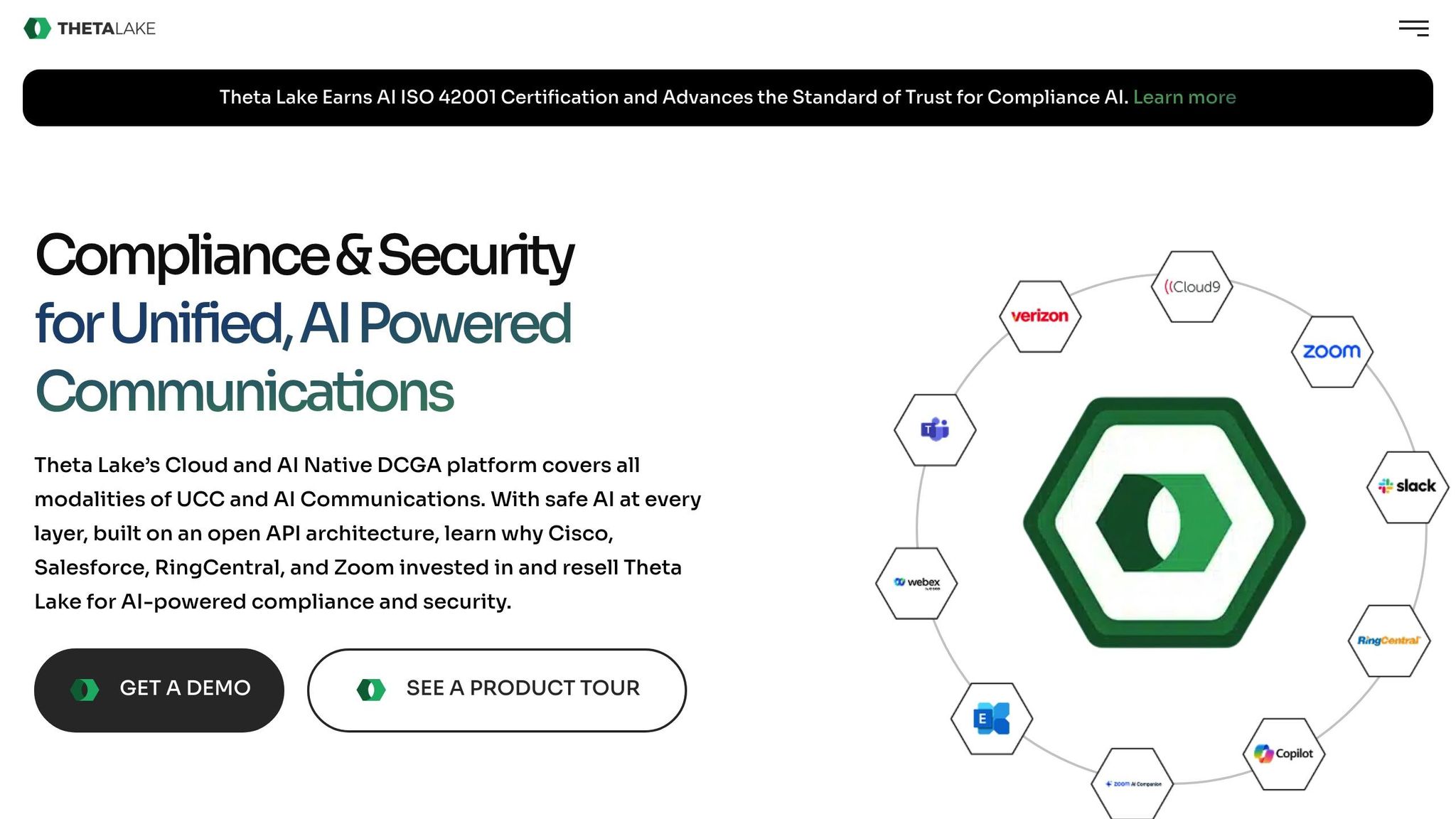
Theta Lake takes AI compliance a step further, focusing not just on backend processes but also on the everyday risks that arise in digital communications.
Specializing in compliance for modern collaboration tools, Theta Lake addresses the challenges companies face as they increasingly rely on platforms like Microsoft Teams, Zoom, Slack, and Webex. While these tools are essential for remote work and daily operations, they also bring significant compliance risks. Theta Lake monitors voice, video, chat, and other content shared across these platforms, identifying issues like conduct risks, mishandling of data, and accidental exposure of sensitive information.
Theta Lake zeroes in on regulatory challenges tied to digital conversations. Its platform analyzes interactions to spot risky behavior and compliance gaps, flagging issues such as missing disclosures, retention failures, or instances where employees share personally identifiable information (PII) or provide non-compliant financial advice. This is particularly critical as regulators increasingly scrutinize how businesses manage customer data and maintain records of digital communications. By automating these processes, Theta Lake allows businesses to shift from time-consuming manual reviews to a more proactive approach to risk management.
For small businesses, collaboration tools are indispensable, but maintaining compliance can be overwhelming without dedicated resources. Theta Lake’s automated monitoring eliminates the need for large compliance teams, making it possible to oversee communication risks effectively. As remote work becomes the norm, this solution offers a practical way for small businesses to stay compliant without stretching their resources thin.
Theta Lake uses advanced AI to analyze voice, video, and text communications, detecting problematic language or behavior. The system highlights sensitive information and potential regulatory breaches, delivering actionable insights that help compliance teams assess risks quickly and efficiently. This AI-driven process allows even small teams to review large volumes of content, simplifying workflows while maintaining thorough oversight.
Credo AI shifts the conversation around compliance by zeroing in on AI governance. As artificial intelligence becomes a vital tool for managing business operations, companies face growing pressure to demonstrate the reliability of their AI systems. Credo AI addresses this need with a platform tailored for AI governance, ensuring organizations stay aligned with global regulations like the EU AI Act and the NIST AI Risk Management Framework. By integrating automation, Credo AI simplifies the often-daunting task of navigating compliance requirements.
Credo AI specializes in auditing AI systems and ensuring they operate transparently. The platform helps align AI deployments with industry-specific regulations while generating the documentation regulators require. For instance, the EU AI Act, enacted in 2024, categorizes compliance-related AI as "high-risk", mandating that companies provide detailed documentation of model functionality and explainability for auditors. Credo AI automates this process, producing comprehensive model documentation with minimal manual effort. According to Gartner, by 2026, over 70% of companies will expect AI vendors to supply "model cards" - transparency reports that detail how AI models function and address potential biases.
Credo AI is particularly beneficial for small businesses aiming to compete with larger, highly regulated organizations. These larger entities often require assurances that AI systems are trustworthy before entering into partnerships. For smaller companies with limited legal or technical resources, meeting these demands can be challenging. Credo AI simplifies the process by offering centralized, automated governance tools, enabling small teams to manage compliance effectively. This streamlined solution allows smaller businesses to meet regulatory expectations without the need for significant investments, leveling the playing field.
The platform features a unified dashboard that monitors AI systems across an organization, ensuring compliance with both internal policies and external regulations. It automates the creation of model documentation, eliminating the need for manual processes and collecting audit-ready evidence to demonstrate compliance to regulators and stakeholders. By replacing reactive, labor-intensive methods with a more efficient, automated approach, Credo AI makes AI governance more manageable and accessible for businesses of all sizes.
This table compiles key details to help you quickly compare pricing, features, and suitability for your team when choosing an AI compliance tool. While most vendors provide custom quotes based on company size and compliance frameworks, basic plans typically start around $7,500 annually, with advanced options exceeding $50,000. For instance, Vanta costs approximately $26,320 annually, with smaller team plans starting near $10,000. Below, you’ll find a summary of pricing, features, and compliance focus for each tool.
For small businesses, Vanta and Sprinto stand out for their user-friendly interfaces and quick audit preparation, especially for first-time SOC 2 or ISO 27001 compliance. As teams grow, Drata and Sprinto effectively scale by automating workflows that would otherwise require dedicated compliance staff. For larger, more complex environments, Centraleyes and Credo AI are better suited, offering multi-framework management and AI-specific governance capabilities.
| Tool | Starting Price (USD/year) | Recommended Business Size | Primary AI Features | Compliance Focus |
|---|---|---|---|---|
| Prompts.ai | $0 (Pay-As-You-Go) | Solo to Enterprise | 35+ LLMs, real-time FinOps, prompt workflows, governance controls | AI orchestration, secure model access, cost transparency |
| Centraleyes | Custom quote | Mid-market to Enterprise | Intelligent risk register, automated remediation steps | Cyber Risk, NIST, ISO, HIPAA |
| Vanta | ~$10,000–$26,320 | Startup to Mid-market | Questionnaire autofill, policy-to-control scanning | SOC 2, ISO 27001, HIPAA, PCI |
| Sprinto | ~$7,500+ | Small to Mid-market | AI-assisted control mapping, automated due diligence | SOC 2, ISO 27001, HIPAA, GDPR |
| Drata | ~$7,500–$50,000+ | Startup to Enterprise | VRM Agent, Trust Library search, test failure insights | SOC 2, ISO 27001, HIPAA, GDPR |
| Compliance.ai | Custom quote | Regulated Startups to Enterprise | Regulatory change monitoring, automated summaries | Banking, Finance, Insurance |
| Theta Lake | Custom quote | Mid-market to Enterprise | Communication risk detection (voice/video/chat) | Financial/Communication Regulations |
| Credo AI | Custom quote | Enterprise | AI governance, policy alignment, model documentation | EU AI Act, NIST AI RMF |
User reviews further highlight the strengths of these tools. Drata boasts a 4.8/5 rating on G2 (based on over 1,000 reviews) and a perfect 5.0/5 on Capterra. Similarly, Sprinto scores 4.8/5 on G2 (with over 1,400 reviews) and 4.7/5 on Capterra. Meanwhile, Vanta holds a 4.6/5 rating on G2 (over 1,900 reviews) and 4.3/5 on Capterra. These ratings reflect high user satisfaction, particularly among startups and small teams navigating their first audits.
Affordable AI compliance tools have revolutionized how small businesses in the U.S. can meet strict regulatory standards without breaking the bank. Gone are the days when only large enterprises with hefty legal budgets could afford compliance. The solutions highlighted here - like Prompts.ai's flexible pay-as-you-go AI orchestration and Vanta's efficient SOC 2 automation - offer businesses a way to achieve regulatory readiness with starting costs around $7,500 annually. These platforms handle critical tasks such as automating evidence collection, aligning controls with frameworks like HIPAA, NIST, and SOC 2, and real-time monitoring, significantly reducing the manual workload for small teams.
The benefits extend well beyond cost efficiency. Automated compliance doesn't just help avoid fines - it can drive business growth. For instance, 11x saved 143 hours and gained $2.3 million in deals, while Knowtex secured $15 million in federal contracts. As Delve succinctly puts it:
"Every slip in compliance is a deal you lose, a market you don't enter, or a customer you can't win".
To replicate these successes, start by identifying your specific compliance needs. Whether you're tackling your first SOC 2 audit, managing security questionnaires, or keeping up with evolving state privacy laws, there’s a tool tailored to your situation. For example, Sprinto and Vanta are great for first-time audits, Drata excels in scalability, and Credo AI specializes in AI governance.
When selecting a vendor, prioritize those with proven compliance credentials. Look for tools that have completed their own SOC 2 Type II or ISO 27001 audits, and always ensure a Data Processing Agreement (DPA) is in place if personal data is involved. With 43% of professionals already incorporating AI into their work and 70% of companies expected to require AI transparency sheets by 2026, the time to invest in a strong compliance foundation is now - before a failed audit or missed opportunity costs you.
Take advantage of free trials to explore these tools, and let automation handle the repetitive tasks, giving your team the freedom to focus on driving growth and success.
AI compliance tools provide an affordable solution for small businesses to navigate the often-complicated world of regulations. These tools can take over time-consuming tasks such as risk assessments, policy management, and document analysis, cutting down on manual work and improving efficiency.
They also play a crucial role in safeguarding data privacy and security, ensuring that sensitive information remains protected. By simplifying compliance efforts, businesses can stay ahead of regulatory changes, address risks proactively, and dedicate more energy to growth. Additionally, these tools support responsible AI practices, helping small businesses foster trust with their customers and partners.
AI compliance tools help small businesses navigate regulations such as SOC 2 and GDPR by automating essential tasks. These include conducting risk assessments, continuously monitoring compliance controls, and maintaining detailed audit trails. By reducing reliance on manual processes, these tools lower the chances of errors and offer a clear view of compliance status, making it easier to prepare audit documentation.
This automation allows small businesses to save time, cut expenses, and meet regulatory demands efficiently - all without straining their resources.
When choosing an AI compliance tool, small businesses should zero in on a few critical aspects: cost-effectiveness, user-friendliness, and seamless integration with their current systems. Opt for solutions that handle key tasks like automating risk assessments, managing policies, and ensuring adherence to regulations such as GDPR, SOC 2, or ISO standards.
Additionally, it’s wise to select tools that can grow alongside your business, provide dependable vendor support, and adhere to ethical AI principles. A transparent, dependable solution tailored to your compliance needs can save valuable time, minimize risks, and help uphold customer confidence.