Pay As You Go - AI Model Orchestration and Workflows Platform



Scaling AI workflows is no longer a guessing game. With tools like Prompts.ai, Vellum AI, and Relevance AI, businesses can now compare large language model (LLM) workflows side by side. These platforms help optimize prompts, reduce costs, and improve performance while maintaining transparency and compliance - especially crucial for industries like finance and healthcare. Here's a quick breakdown of what each platform offers:
Each platform caters to different needs, from direct model comparisons to agent-driven automation. Choosing the right tool ensures better results, cost control, and scalable AI processes.
Quick Comparison:
| Platform | Key Features | Starting Price | Best For |
|---|---|---|---|
| Prompts.ai | 35+ LLMs, token tracking, cost control | $0/month | Teams needing detailed comparisons |
| Vellum AI | Visual tools, A/B testing, SDK | $25/month | Collaborative, multi-user teams |
| Relevance AI | Agent-driven workflows, integrations | $19/month | Custom AI agent creation |
These tools empower teams to move from experimentation to disciplined AI deployment with clarity and efficiency.
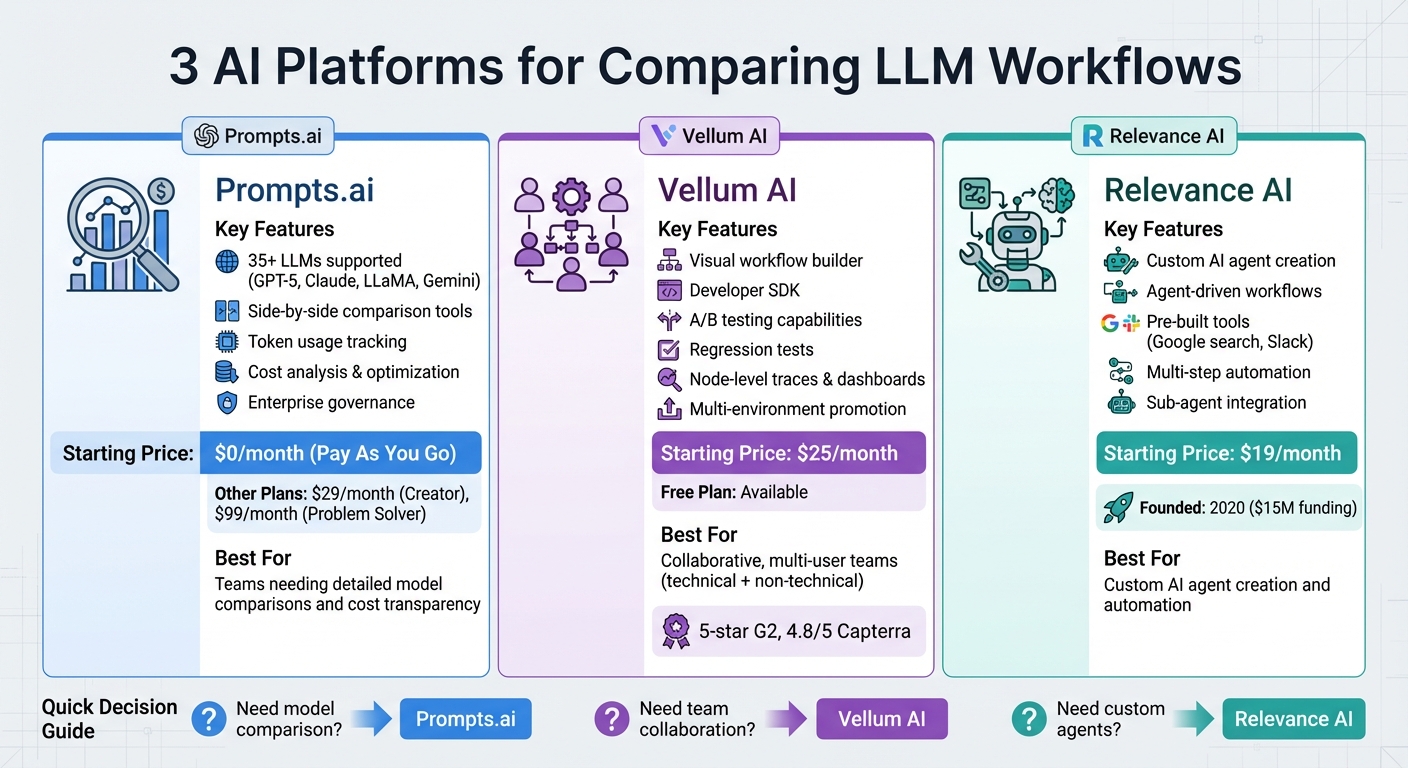
Comparison of 3 AI LLM Workflow Platforms: Features, Pricing and Best Use Cases
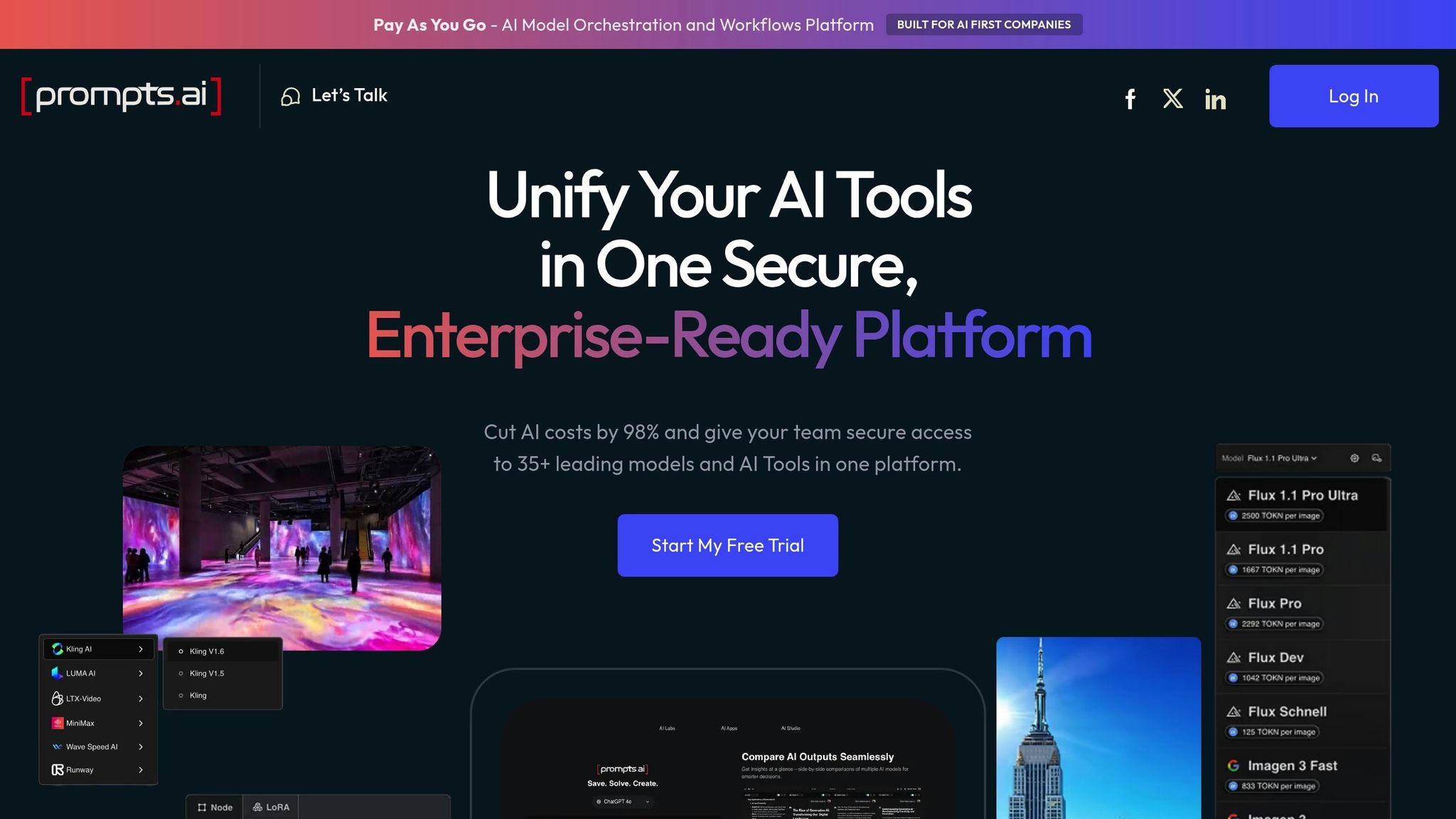
Prompts.ai connects users to over 35 top-tier LLMs - including GPT-5, Claude, LLaMA, Gemini, Flux Pro, and Kling - through a single secure platform. This integration allows U.S.-based teams to use their existing API keys and manage workflows across multiple providers without needing to switch interfaces. With this setup, teams can perform A/B testing between proprietary and open-source models and adapt to changes in pricing or compliance requirements. This streamlined approach simplifies comparisons between different LLM implementations, making it easier to find the best fit for evolving needs.
The "Compare AIs Instantly" feature offers a straightforward way to evaluate multiple workflow variations side by side. Teams can test differences in prompts, temperature settings, or retrieval methods using the same datasets.
Architect June Chow shared, “Comparing LLMs on Prompts.ai helps bring complex projects to life and inspires innovative concepts”.
This method replaces trial-and-error guesswork with clear, documented results. It creates an audit trail that shows which adjustments improved performance, reduced errors, or sped up response times.
Prompts.ai tracks token usage and costs (in USD) for every workflow, breaking down expenses by model, request, and run. This detailed tracking helps teams forecast budgets and manage spending effectively. By consolidating tools and adopting scalable, pay-as-you-go TOKN credits, teams can reduce AI costs by up to 98%. The platform also identifies high-cost workflows, encourages experimentation with more efficient models or prompts, and allows users to set spending limits - essential features for managing unpredictable token usage.
Prompts.ai is designed to grow with its users, scaling seamlessly from small experiments to large-scale enterprise operations. Adding new models, users, and teams is straightforward, and the platform supports the transition from manual testing to fully automated pipelines.
CEO Steven Simmons noted, "With Prompts.ai's LoRAs and workflows, I now complete renders and proposals in a single day - no more waiting, no more stressing over hardware upgrades”.
Flexible pricing plans cater to teams of all sizes. The $0/month Pay As You Go plan includes limited credits and a single workspace, while the $99/month Problem Solver plan offers 500,000 TOKN credits, unlimited workspaces, 99 collaborators, and unrestricted workflow creation - making it a fit for both small teams and large-scale operations.
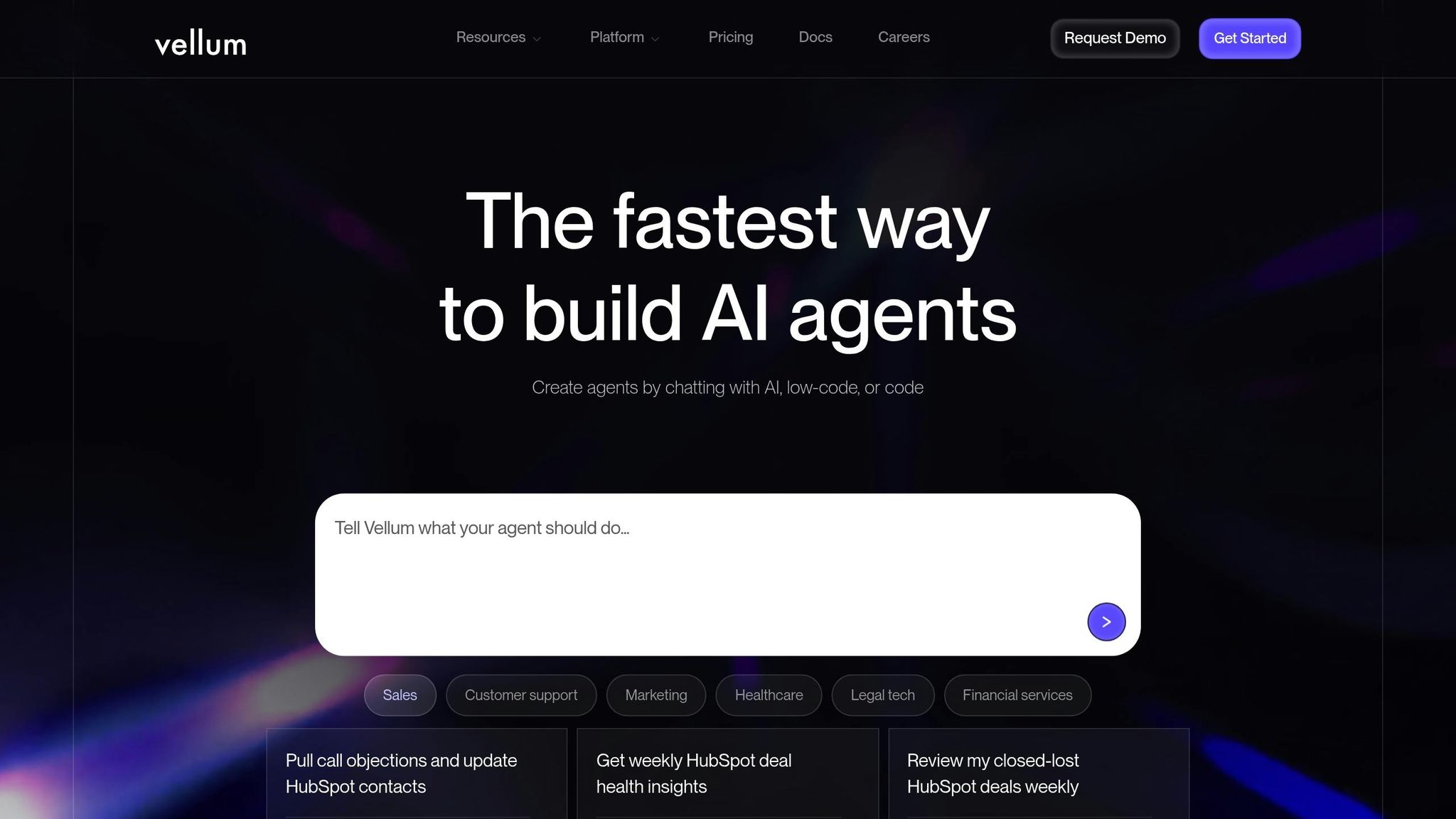
Vellum AI provides a centralized platform that combines visual tools with a developer SDK, making it easier to create LLM-powered agents that connect directly to real-world business systems. This setup caters to both technical developers and non-technical users, enabling them to work together seamlessly on refining prompts and setting up logic configurations. By integrating these elements, the platform establishes a strong base for comparing workflows effectively.
The platform includes built-in tools for evaluations and versioning, allowing users to compare models and prompts side by side. Key features like A/B testing, regression tests to catch configuration issues quickly, and detailed observability tools - such as node-level traces, dashboards, and performance metrics - offer a comprehensive view of operations. These side-by-side evaluations help teams showcase improvements in areas like factual accuracy and response time to stakeholders. However, compared to specialized platforms, Vellum AI's evaluation tools are relatively basic, lacking advanced automated methods for detecting hallucinations or ensuring safety.
Vellum AI is designed to grow with your needs, transitioning smoothly from small experiments to large-scale enterprise operations. Its visual tools and developer-friendly features make it easy to integrate into workflows, supporting CI pipelines and multi-environment promotion for thorough evaluations at every stage of development. A shared workspace with features like comments, role-based reviews, change tracking, and human-in-the-loop steps encourages collaboration across teams. For accessibility, Vellum AI offers a free plan, with paid options starting at $25 per month, making it a practical choice for teams at different levels of maturity.
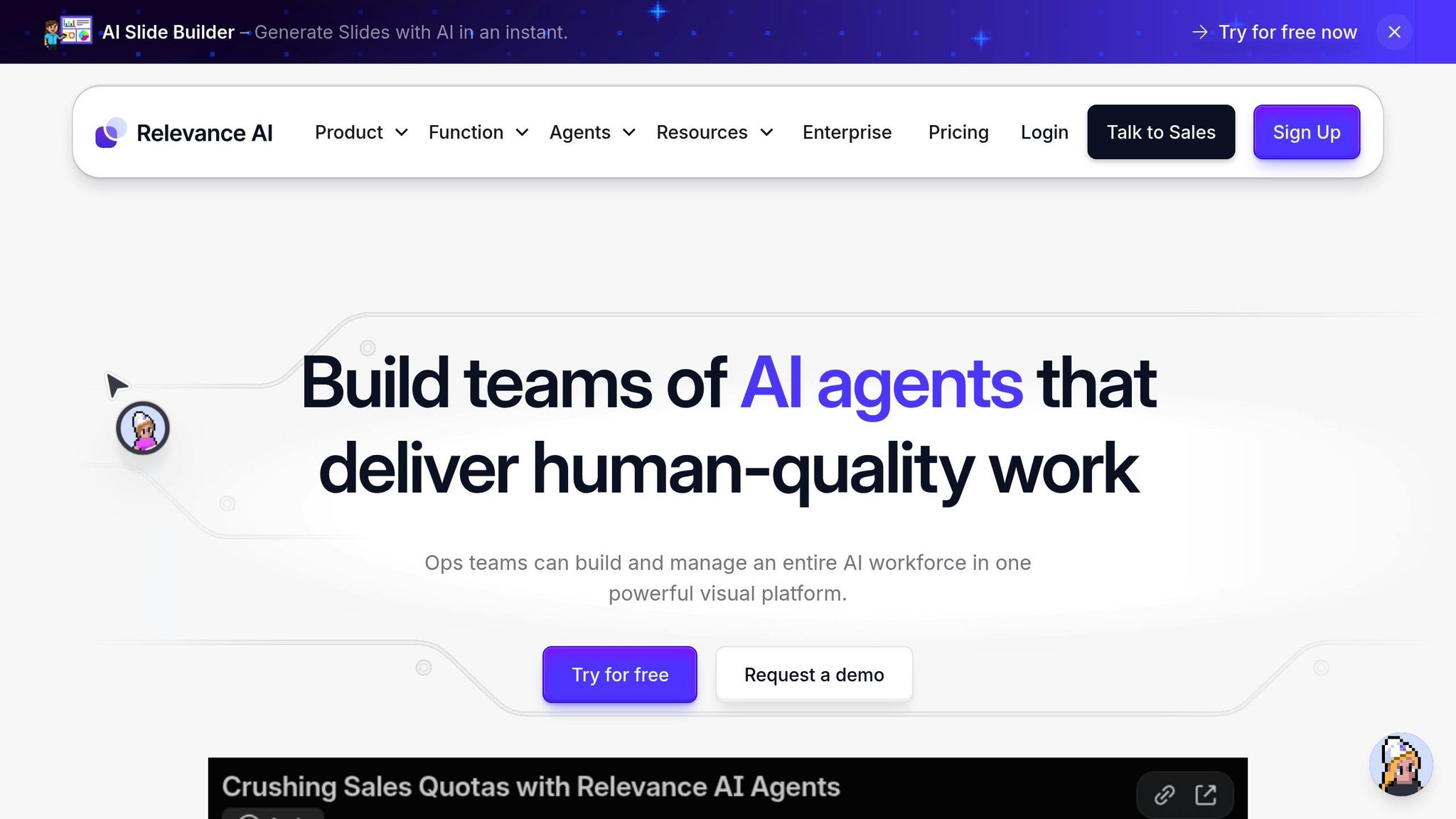
Relevance AI takes a fresh approach by focusing on creating custom AI agents rather than sticking to the usual workflow structures. Founded in 2020 with $15 million in funding, the platform allows users to design agents simply by defining their purpose. For example, you can create an agent to scrape data from LinkedIn, draft email outreach, or even write blog posts using its intuitive "Describe your agent" feature. This agent-driven model introduces a new way of thinking about workflow management.
While many platforms rely on traditional side-by-side workflow metrics, Relevance AI shifts the focus to an agent-driven, highly customizable strategy. The platform comes equipped with pre-built tools like Google search capabilities and Slack integration, and it enables the use of multiple sub-agents to handle more complex tasks seamlessly.
Relevance AI’s agent-centric structure is designed to scale effortlessly by combining sub-agents into intricate, multi-step workflows. As Whalesync explains:
"The open-endedness of agents makes the learning curve a little greater, but as you start to put these agents together the possibilities are limitless".
With entry-level paid plans starting at $19 per month, Relevance AI offers an affordable way for teams to dive into agent-based automation and expand their capabilities.
Every platform comes with its own set of strengths and trade-offs. Prompts.ai stands out with its straightforward tiered pricing: Pay As You Go at $0/month, Creator at $29/month, and Problem Solver at $99/month. These plans include detailed breakdowns of TOKN credits, workspaces, and collaborators, making it easy for teams to plan and manage budgets effectively. The platform supports over 35 leading LLMs - such as GPT, Claude, LLaMA, and Gemini - and includes native side-by-side comparison tools. These features allow teams to directly evaluate model performance, driving productivity gains of up to 10×. For teams with large-scale needs, the Problem Solver plan offers unlimited workspaces and workflow creation, making it ideal for scaling AI operations.
"Previously, architects relied on time-consuming drafting processes. Now, by comparing different LLMs side by side on Prompts.ai, [she] can bring complex projects to life while exploring innovative, dreamlike concepts".
Details on other platforms remain sparse. The table below highlights the key strengths and limitations of the platforms, providing a quick overview.
| Platform | Key Strengths | Main Limitations | Best For |
|---|---|---|---|
| Prompts.ai | 35+ models, side-by-side comparisons, transparent pricing, enterprise governance | Requires familiarity with multiple LLMs | Teams needing direct model evaluation and cost clarity |
| Vellum AI | Not disclosed | Not disclosed | Further research needed |
| Relevance AI | Not disclosed | Not disclosed | Further research needed |
One of Prompts.ai's standout features is its cost transparency. Its predictable pricing structure, combined with built-in support, offers a clear advantage for teams managing multiple LLMs. This ensures budget control and efficient resource allocation - critical factors when deploying LLM workflows at scale. Such clarity and structure play a significant role in how organizations evaluate and choose platforms for production use.
Each platform brings its own strengths to managing LLM workflows, catering to different team needs and priorities. Prompts.ai stands out for its ability to compare over 35 leading LLMs side by side, offering teams a streamlined platform for evaluating models directly. With built-in tools for budget management and scalable AI operations, it’s especially suited for teams focused on efficiency and enterprise-level governance.
Vellum AI, on the other hand, takes a broader approach as an all-in-one solution for AI pipeline development. Covering everything from experimentation to deployment and monitoring, it provides flexibility for both small teams and large enterprises. The Startup plan supports up to five users with tools like prompt engineering and workflow management, while the Enterprise tier adds advanced features like role-based access control, VPC installation, and Single Sign-On (SSO). Its strong user feedback - boasting a perfect 5-star G2 rating and a 4.8 out of 5 score on Capterra - makes it a trusted choice for diverse teams, whether technical or non-technical. Custom pricing ensures configurations can be tailored to specific needs.
Relevance AI offers fewer publicly available details, which may pose challenges for teams needing clear feature and pricing information. For those considering this platform, conducting thorough independent research is essential to fully understand its capabilities and suitability.
When selecting a platform, consider factors like cost transparency, the variety of supported models, and how well it integrates with your existing IT infrastructure. Smaller teams or users without technical expertise might prioritize platforms with user-friendly prompt builders and real-time previews. Meanwhile, enterprises managing sensitive data should emphasize governance, audit capabilities, and compliance features. By weighing these considerations, teams can choose a solution that aligns with their goals and ensures effective deployment of AI workflows.
When choosing an AI platform, begin by clearly defining your business objectives. Are you aiming to boost efficiency, cut expenses, improve safety measures, or simplify workflows? Understanding your goals will guide you toward the right solution.
Focus on platforms that include evaluation tools, ensure compatibility with your existing systems, and offer features like real-time cost tracking and the ability to customize comparisons. A good platform will make it easier to manage multiple LLMs while seamlessly integrating with your current tools, helping you fine-tune your AI processes. Select one that meets your unique requirements and delivers practical insights to support smarter decision-making.
Prompts.ai brings over 35 AI models and tools into one unified platform, eliminating the need for juggling multiple subscriptions or tools. This consolidation can slash expenses by up to 98%, offering a smarter way to manage resources.
By streamlining workflows and reducing tool overload, Prompts.ai not only saves money but also boosts productivity. It's a practical solution for businesses looking to optimize their large language model operations efficiently.
Prompts.ai is built to address the rigorous compliance requirements of highly regulated sectors like finance and healthcare. It safeguards data with strong governance policies, advanced access controls, and enterprise-level encryption.
By focusing on privacy and aligning with industry-specific regulations, Prompts.ai enables organizations to adopt AI solutions securely, ensuring sensitive information remains protected while maintaining compliance.