Pay As You Go - AI Model Orchestration and Workflows Platform



AI is reshaping how startups operate. In 2026, small teams can achieve more with less by leveraging generative AI tools. From automating workflows to cutting costs, these solutions deliver measurable results:
Generative AI empowers startups to streamline content creation, automate processes, improve design workflows, and optimize spending. Whether you're using AI to generate content, handle customer support, or manage team collaboration, these tools allow small teams to compete effectively in a crowded market. Start small, measure results, and scale up intelligently.

Key Benefits of AI Adoption for Startups: Time Savings, Revenue Growth, and Cost Reduction Statistics
AI writing tools are a game-changer for startups looking to scale their content production without overloading their teams. These platforms can tackle a range of tasks, including blog posts, social media captions, email sequences, and product descriptions, helping marketers save an average of 5 hours per week.
For instance, ChatGPT, available at $20/month, is excellent for brainstorming and creating content across multiple formats. Jasper, priced at $39/month, offers over 50 templates and customizable brand voice options, making it ideal for consistent branding. Copy.ai provides a free tier with 10 credits and a drafting wizard designed for short-form content. Meanwhile, Claude stands out for its strength in early ideation and outlining.
Currently, more than 75% of marketers use AI tools, with 19% specifically leveraging them for content generation. These tools can reduce blog writing time by 30% while maintaining impressive plagiarism-free rates of 99.98%.
"Think of an AI writing tool as a junior specialist in your content team. It can't be a 100% performer, but it's a helpful hand to streamline the processes." - AITopTools
One of the most impactful uses of these tools is content repurposing. For example, a single long-form blog post can be transformed into multiple social media captions, email snippets, and ad copy in just minutes using AI. This approach not only improves content quality but also ensures startups operate efficiently - an essential factor for success. However, always review AI-generated content for accuracy and inject your startup's unique perspective before publishing.
This streamlined content strategy aligns perfectly with broader workflow automation and creative design efforts in your startup's AI toolkit.
Startups today juggle an average of 11 SaaS applications, often leading to fragmented data and wasted time. AI-powered workflow automation platforms tackle this issue by integrating your entire tech stack and introducing intelligent decision-making into routine tasks.
Beyond improving content creation, workflow automation simplifies operations further. Tools like Activepieces ($25/month for the Plus plan) and Gumloop ($37/month for Solo) leverage large language models to handle unstructured data, such as emails and documents, rather than just transferring information. With drag-and-drop visual builders, even non-technical founders can design complex workflows without needing developers.
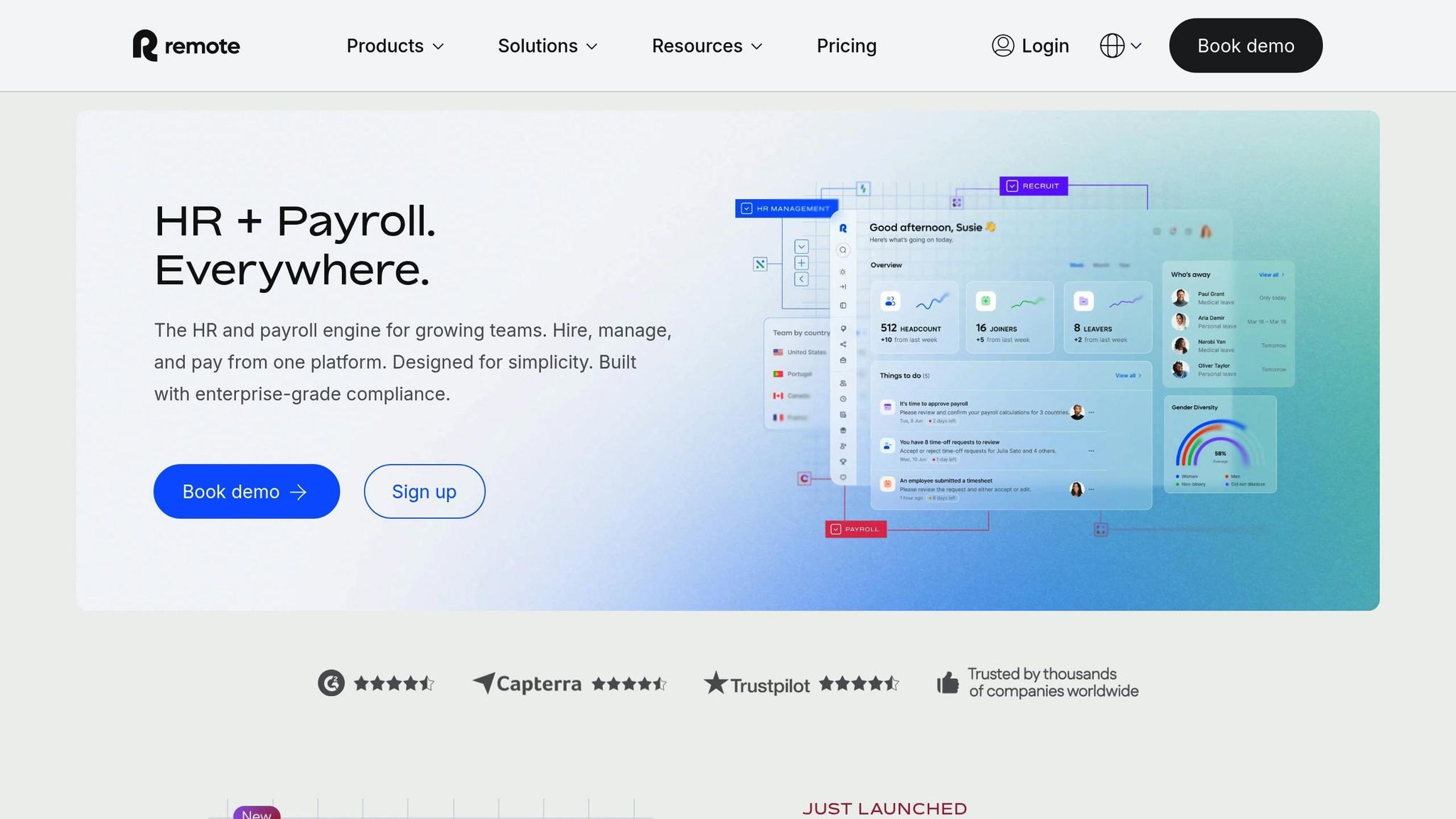
In December 2025, Remote's three-person IT team handled 1,100 support tickets monthly using Zapier and ChatGPT. The system classified tickets, searched past resolutions, and drafted responses automatically. This led to 28% of tickets being resolved without human intervention, saving the team over 600 hours each month.
Similarly, Popl created over 100 workflows to streamline daily lead management. Their automation system filtered spam emails, categorized leads, and enriched data by pulling company details from domains. CEO Jason Alvarez-Cohen shared that these automations saved the company $20,000 annually, eliminating the need for costly custom integrations.
"AI offers arbitrage across workflows and gives internal business users technical superpowers." - Nick Scavone, CEO, Seam AI
To get started, focus on high-impact areas like lead qualification or invoice processing. Incorporate "human-in-the-loop" features for critical approvals to maintain oversight. Intelligent automation accelerates scaling by 3.2× compared to manual processes, making it an essential step for startups aiming to grow efficiently. This foundation not only saves time and money but also opens the door to further operational improvements.
Design delays can be a major hurdle for startups trying to launch campaigns, pitch decks, or product mockups. Waiting days - or even weeks - for professional designers often isn’t feasible. Fortunately, AI-powered design tools now enable anyone to create polished visuals in just minutes.
One standout in this space is Canva Magic Studio, which transforms text prompts into ready-to-use social media posts, presentations, and videos. Its Brand Kit feature ensures consistent branding by automatically applying your logos, colors, and fonts to every AI-generated design. For startups working with limited resources, Canva offers a free tier with basic functionality, while its Pro and Teams plans provide access to advanced tools and features.
A great example of AI-driven design in action comes from Zapier's Brand Studio team in October 2025. Led by Brand Design Lead Julia Jaskólska and AI artist Gizem Akdağ, the team created "The Illuminated Journey", a series of 14 cinematic visuals for ZapConnect. Using tools like Midjourney and OpenAI, this four-person team produced studio-quality images that helped increase event registrations by 25% year-over-year and boosted engagement on visually focused platforms by 33%.
The numbers speak for themselves. By 2025, 23% of designers and developers reported that most of their work relied on AI-powered tools, up from 17% the year before. Among startups with fewer than 10 employees, 61% described AI as "very or critically important" for achieving their market share goals. AI doesn’t replace creativity - it enhances it, allowing for faster iterations, stronger collaboration, and more ambitious projects. These efficiencies align with broader trends in AI adoption, including cost-saving measures and improved team workflows.
Startups often drain their AI budgets by defaulting to premium models like GPT-5.2 or o3 for every task, even when simpler models could handle many of those requests at a fraction of the cost. Model routing, also called tiering, addresses this by automatically assigning tasks to the most cost-effective model capable of handling them. Premium models are reserved only for complex tasks requiring advanced reasoning. This method alone can reduce AI expenses by 30% to 50%, but the savings don’t stop there - strategic prompt management and workload scheduling further amplify the benefits.
For startups navigating tight budgets and growth demands, this approach is a game-changer. Consider the cost differences: GPT-5-mini charges $0.30 per million input tokens and $1.00 per million output tokens, while GPT-5.2 is significantly pricier. Assigning tasks to the right model ensures you’re not overpaying for routine operations.
Prompt caching is another powerful tool. By reusing processed prompts, examples, and context, startups can save between 50% and 90% on token costs. Pairing this with output length controls - such as setting max_tokens limits or using JSON mode - can lead to an additional 20% to 40% reduction in expenses.
"79% of companies implementing AI automation tools in 2024 reported saving at least 15 hours per week per employee, with the top quartile saving 28+ hours weekly. The ROI threshold has fundamentally shifted - automation now pays for itself in under 60 days for most use cases." - Ehab AlDissi, Founder, AIVanguard.tech
Batch APIs offer yet another cost-saving opportunity, cutting expenses by 50% when requests are processed during off-peak hours. To ensure sustainable cost management, startups should focus not just on their total monthly spend but also on cost per successful task. This helps pinpoint which features deliver the best return on investment (ROI). Setting spending caps is another essential step to prevent unexpected usage spikes from disrupting budgets.
For startups with team members scattered across time zones, staying in sync can feel like an uphill battle. Missed connections, fragmented communication, and endless catch-up sessions can derail progress. Generative AI eliminates these hurdles by creating shared project spaces that retain brand guidelines and project history. For instance, when a designer in Los Angeles takes over from a developer in Berlin, the AI ensures the project’s context remains intact.
On top of smoother communication, visual collaboration tools enhance team alignment even further. Visual collaboration platforms turn chaotic brainstorming into actionable deliverables. A great example is Swiss design firm FREITAG, which partnered with Miro Solution Partner Smart System Guild in January 2026 to overhaul their ERP system. By utilizing Miro AI Workflows, they cut time and resource costs by 50% and improved data analysis speed by 80%. Tasks that once took weeks, like workshop evaluations, were completed in just a few days.
The benefits go beyond speed. PepsiCo leveraged Miro's AI-powered workspace to streamline global product planning, launching a new product 3.6 times faster than with traditional methods. Koen Burghouts, VP of Innovation and Emerging Brands, described the project as a breakthrough in cross-functional collaboration.
"Teams shouldn't have to choose between AI and collaboration. Collaborative AI Workflows lets teams work with AI the same way they work with each other - visually, in real-time, on a shared canvas where everyone can contribute." - Jeff Chow, Chief Product and Technology Officer, Miro
AI doesn’t just accelerate workflows; it also eliminates inefficiencies. Knowledge workers often lose 33% of their day on low-value tasks. AI connectors that integrate tools like Gmail, Google Drive, and GitHub help bridge time zone gaps by summarizing threads, providing channel recaps, and enabling AI-powered searches. These features save users an average of 97 minutes each week, freeing up time to focus on meaningful work. Together, these AI-driven tools enable startups to operate more efficiently and scale with confidence.
Generative AI is reshaping what's possible for startups operating with limited budgets and small teams. With developers becoming 88% more productive, coding speeds improving by 35–40%, and AI automation saving 15 hours weekly, these advances aren't just incremental - they're transformative. They can mean the difference between burning through resources and achieving sustainable growth.
As AI continues to prove its value in areas like content creation, automation, and design, the future looks even more promising. By 2027, over half of enterprise generative AI models are expected to focus on specific business functions, highlighting a shift toward tailored, high-impact solutions. Startups that embed AI into their core operations create scalable advantages. Consider the breakthroughs: cutting diagnosis times from 15 minutes to under 10 seconds or reducing model deployment timelines from 50 days to just 3 days. These results underline the immense potential of AI.
"Generative AI offers a path to achieving more with fewer resources... enabling a 'one-person unicorn' - where a single individual can achieve what once required entire departments." - Alexander Barge, Senior Solutions Architect, AWS
For those just starting, the advice is simple: begin with a high-impact workflow, such as a chatbot or document automation. Track the results, then scale up. Prioritize tools that integrate easily with your current tech stack, ensure data is well-organized, and set clear editorial guidelines to keep outputs consistent with your brand's voice.
When startups embrace AI thoughtfully, the benefits go far beyond saving time or reducing costs. AI-driven personalization has the potential to increase revenue by 40%, and 75% of organizations report customer satisfaction improvements exceeding 10%. Startups that adopt these tools early, develop robust AI strategies, and weave them into their core operations won't just keep up - they'll lead the way in their industries.
Start by focusing on automating workflows that improve efficiency and allow your team to concentrate on higher-value tasks. For example, in marketing and lead generation, AI can handle content creation, tailor customer interactions, and simplify outreach efforts.
Customer support is another area where automation shines, with AI-powered chatbots speeding up response times and enhancing customer satisfaction. Beyond that, automating sales development, revenue operations, and finance tasks reduces repetitive manual work, improves accuracy, and ensures that your operations can scale smoothly as your startup expands.
To keep AI-generated content aligned with your brand, start by defining clear voice guidelines that reflect your tone and style. Train AI models using your best-performing content and implement shared templates to minimize variations. Always involve human oversight for customer-facing materials or content with higher stakes. Continuously update prompts and guidelines based on feedback to correct any deviations and strengthen alignment with your brand's identity.
To bring down AI API costs without compromising output quality, focus on refining your prompts - eliminate extra context and condense conversation histories. Assign simpler models to handle straightforward tasks, reserving advanced models for more complex needs. Additional cost-saving measures include caching frequently used responses, grouping requests together, and capping token outputs. For startups, implementing infrastructure tweaks like model routing and prompt caching can make a big difference in reducing expenses while still delivering top-notch results.