Pay As You Go7 天免费试用;无需信用卡
获取我的免费试用版
January 9, 2026

United States Leading AI Model Orchestration Services

Chief Executive Officer

January 10, 2026

AI model orchestration in the U.S. is reshaping enterprise workflows by unifying tools, automating operations, and optimizing costs. Platforms like Prompts.ai integrate over 35 top AI models, enabling seamless switching, reducing expenses by up to 98%, and addressing "AI chaos" with robust governance. Key features include:

  • Multi-Model Routing: Unified access to GPT-5, Claude, LLaMA, and more, with real-time comparisons.
  • Governance & Security: Role-based controls, compliance with HIPAA, GDPR, and SOC 2 standards.
  • FinOps Tools: Real-time cost tracking, token usage optimization, and budget controls.

With enterprises spending an average of $85,521/month on AI in 2025, U.S. platforms focus on cost-effective scaling, compliance, and operational efficiency. Prompts.ai stands out by offering centralized workflows, audit-ready governance, and transparent pricing starting at $99/month per user. This approach ensures businesses can scale AI securely and efficiently.

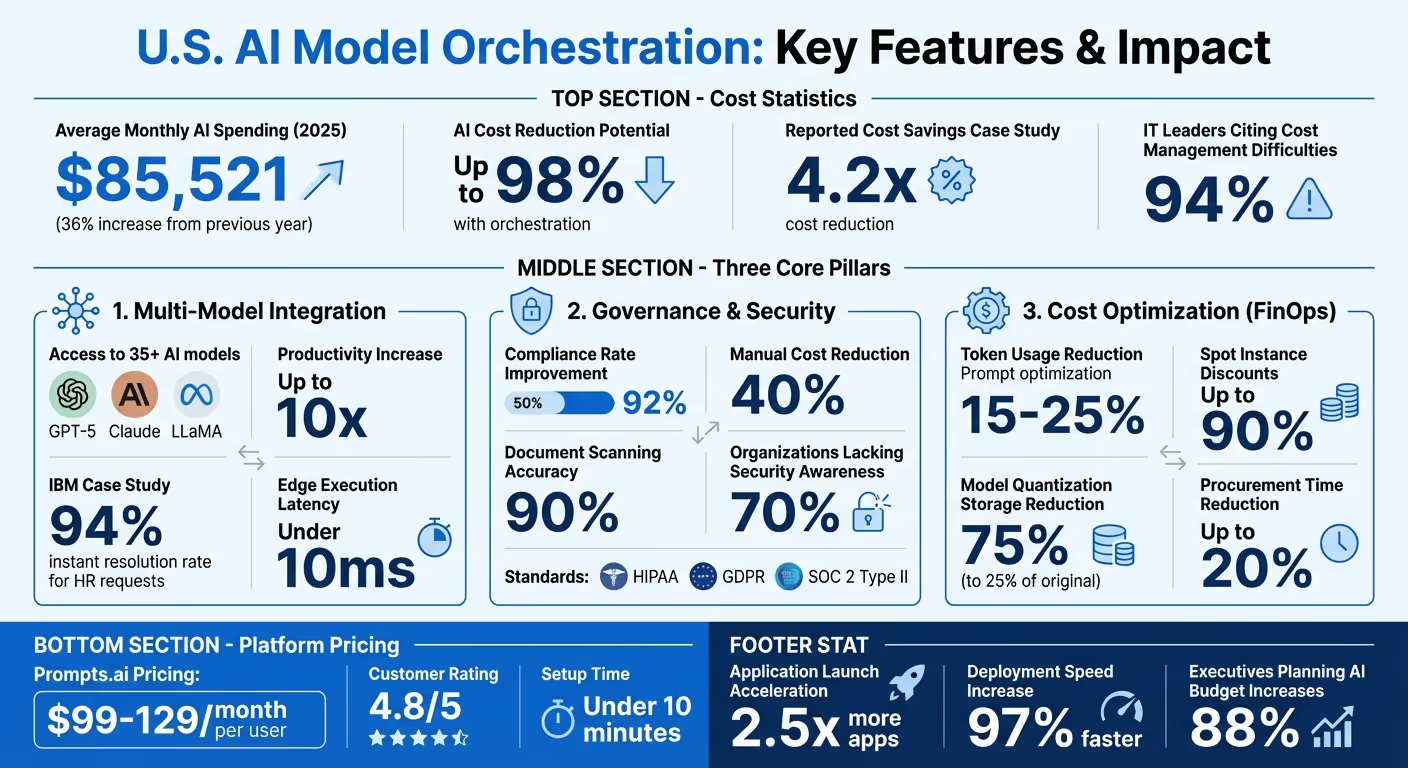
AI Orchestration Platform Features and Cost Savings Statistics

AI Orchestration Platform Features and Cost Savings Statistics

AI Orchestration: The Infrastructure Behind AI That (Actually) Works

Core Features of U.S. AI Orchestration Services

U.S. AI orchestration platforms are built around three essential capabilities: multi-model routing and workflow integration, robust governance and security measures, and cost management through FinOps. These features are designed to tackle the practical challenges enterprises face when scaling AI operations.

Multi-Model Routing and Workflow Integration

These platforms simplify the complexity of working across multiple AI models by offering a unified interface. This allows developers to switch between models seamlessly, without needing to modify code. For instance, some services enable smooth multi-modal interactions, making the integration process more efficient.

A standout feature is autonomous agent coordination, which synchronizes AI agents across tools and data sources. IBM, for example, achieved instant resolutions for 94% of millions of HR requests, enabling staff to focus on strategic priorities instead. This level of automation is powered by platforms that manage state across multiple agents, reduce latency through multi-layer caching, and create repeatable workflows using Directed Acyclic Graphs (DAGs).

Advanced execution techniques further enhance performance. Edge-native execution, for example, uses distributed computing to deliver sub-50ms cold starts and latency under 10ms, making real-time applications a reality.

The adoption of the Model Context Protocol (MCP) has also been pivotal. MCP provides a standardized framework for AI agents to interact with enterprise systems like databases and content repositories. As noted by Snowflake:

"MCP servers have become foundational for agentic applications, providing a consistent and secure mechanism for invoking tools and retrieving data".

By eliminating fragile, point-to-point connectors, this approach simplifies AI integrations and ensures long-term reliability.

Governance, Security, and Compliance

While integration enhances workflows, governance ensures these systems operate reliably and securely. U.S. platforms strengthen governance through automated compliance frameworks, zero-trust access controls, and AI-driven anomaly detection. For example, one U.S. agency increased its compliance rate from 50% to over 92% while reducing manual costs by 40% by automating its cyber lifecycle.

Role-based access control (RBAC) is a cornerstone of these platforms, with adaptive policies that dynamically adjust permissions based on user behavior, location, and device context. The General Services Administration (GSA) leveraged these capabilities to monitor compliance with Section 508 and security regulations, scanning millions of federal documents with 90% accuracy in predicting non-compliance.

For industries handling sensitive data, these platforms ensure that Personally Identifiable Information (PII) is securely masked and segmented. The Maryland Health Care Commission (MHCC), for example, modernized its security infrastructure to manage clinical data and PII for over 50 hospitals, safeguarding more than 3 million patient days of information. As SAP NS2 Staff highlights:

"AI initiatives must align with applicable policies and controls. Think of data segmentation, access governance, encryption in transit/at rest, model governance, and rigorous audit trails. Zero-trust principles, identity and role management, and least-privilege access are the backbone of safe AI".

Continuous auditing tools also play a key role, generating compliance-ready reports for regulations like HIPAA, GDPR, and CCPA. These measures are critical, especially as nearly 70% of organizations report a lack of basic security awareness.

Cost Optimization and FinOps

In 2025, the average monthly AI expenditure reached $85,521 - a 36% increase from the previous year - with 94% of IT leaders citing difficulties in managing these costs. Challenges like GPU shortages, token-based billing, and significant cost variances between optimized and unoptimized deployments contribute to this issue.

To address this, platforms use model right-sizing, allowing enterprises to switch between high-reasoning models like GPT-4 and smaller, more affordable models such as Mistral 7B, depending on task complexity. Automated tagging through Infrastructure as Code (IaC) provides detailed visibility, enabling "showback" models to hold teams accountable for their usage.

Compute optimizations also play a significant role. These include leveraging Spot Instances for discounts of up to 90%, dynamically switching models based on task requirements, and using serverless inference to minimize costs.

Inference optimization techniques further reduce expenses. For example, adding "be concise" to AI prompts can lower token usage by 15% to 25%. Caching frequently requested responses reduces redundant API calls, while model quantization - converting FP32 models to INT8 - cuts storage needs to just 25% of the original size without compromising accuracy.

Financial guardrails are another critical feature. These include setting budget thresholds with real-time alerts for anomalies. Many organizations are also moving toward fixed-cost dedicated infrastructure to stabilize budgets, especially given the unpredictability of token-based billing. As OpenMetal succinctly puts it:

"The fastest way to kill an AI initiative is to make teams justify every GPU hour before they spin it up".

FinOps ensures a balance between cost efficiency and operational flexibility, enabling enterprises to scale AI without breaking the bank.

Categories of U.S. AI Orchestration Solutions

AI orchestration platforms in the U.S. can be grouped into three primary categories, each tailored to different organizational needs and technical demands. These categories reflect a focus on managing costs, ensuring governance, and enabling scalable integration. Whether it's business process automation, seamless cloud integration, or operational efficiency, these platforms highlight the varied approaches shaping the U.S. AI orchestration landscape. Let’s break down each category.

Enterprise AI Automation Platforms

These platforms cater to teams in HR, finance, and sales by offering prebuilt workflows designed for non-technical users. For example, IBM watsonx Orchestrate provides a free trial and automated policy enforcement, allowing HR departments to handle large volumes of requests instantly, freeing up time for strategic initiatives. Similarly, Dun & Bradstreet achieved up to a 20% reduction in procurement time using AI-driven risk evaluation.

Centralized governance and built-in safeguards are key features of these platforms. As Domo aptly puts it:

"Success in AI is no longer about having the most models - it's about orchestrating them effectively."

One notable advantage is the "no rip and replace" approach, which integrates seamlessly with existing SaaS tools like Salesforce and SAP, avoiding the need for a complete infrastructure overhaul. From here, we move on to cloud-native orchestration layers that are tightly woven into existing cloud ecosystems.

Cloud-Native Orchestration Layers

Major U.S. cloud providers like AWS, Microsoft Azure, and Google Cloud offer orchestration services that are deeply embedded within their ecosystems. AWS Step Functions, for instance, enables serverless orchestration and quick workflow execution by integrating closely with other AWS services. Amazon SageMaker Pipelines can handle tens of thousands of concurrent ML workflows, as demonstrated by Rocket Mortgage’s use of multiple open-source LLMs for evaluation.

Microsoft’s Foundry Agent Service takes integration a step further by unifying models, tools, and frameworks into a single runtime. It enforces content safety, manages conversations, and integrates with identity systems like Microsoft Entra. With Azure Cosmos DB, the platform ensures state preservation and conversation history even during regional outages. One enterprise reported achieving 4.2x cost savings after adopting the Microsoft Foundry stack. Developers also benefit from features like local execution modes, which allow workflow testing on personal devices before incurring cloud costs. Governance features such as role-based access control (RBAC), network isolation, and detailed execution histories ensure that ML jobs remain auditable and secure. Lastly, let’s look at AIOps platforms that focus on boosting operational efficiency for technical teams.

AIOps-Focused Platforms

AIOps platforms are tailored for data scientists and ML engineers who oversee the lifecycle of AI systems. Built on open-source frameworks like Apache Airflow and Ray, these platforms excel in distributed training, scaling, and monitoring - all without licensing fees. For instance, Anyscale efficiently distributes workloads across clusters, optimizing performance while minimizing costs from idle infrastructure.

While these platforms offer unmatched flexibility, they demand a higher level of technical expertise. Organizations must manage their own infrastructure and handle maintenance, which adds complexity. AIOps platforms are designed to prioritize performance and resource efficiency, supporting continuous training and high-volume inference workloads.

Deployment options vary widely: enterprise platforms often provide SaaS and hybrid configurations, cloud-native layers offer serverless and fully managed environments, and AIOps platforms support open-source, managed, and hybrid setups. This variety allows organizations to choose solutions that align with their technical capabilities, compliance needs, and budgetary considerations.

Prompts.ai: A U.S. AI Orchestration Platform

Prompts.ai

Prompts.ai is making strides in the U.S. market by tackling the issue of fragmented AI subscriptions. By bringing together over 35 leading large language models within a single, secure platform, it simplifies operations and eliminates the overwhelming sprawl of tools. This solution integrates enterprise-grade controls that meet the high standards of CFOs and CISOs, ensuring trust and reliability.

Unified Access to Multiple Models and Streamlined Workflows

Prompts.ai offers seamless access to over 35 top models through a unified interface, allowing users to perform real-time, side-by-side comparisons. This approach has been shown to increase productivity by up to 10×. As Steven Simmons, CEO and Founder, highlighted:

"With Prompts.ai's LoRAs and workflows, he now completes renders and proposals in a single day."

The platform removes delays caused by hardware limitations and transforms experimental processes into reusable workflows. These workflows can be instantly deployed across departments such as marketing, HR, and finance. With quick setup times - often under 10 minutes - and integrations with tools like Slack, Gmail, and Trello, Prompts.ai makes adopting new workflows straightforward. These workflow capabilities are supported by a strong governance framework, which is explored further below.

Enterprise-Grade Governance and Security

Prompts.ai ensures precise tracking of AI usage through full audit trails and role-based access control (RBAC). This feature allows legal and compliance teams to monitor interactions with confidence. The platform aligns with established best practices, including SOC 2 Type II, HIPAA, and GDPR standards, and began its SOC 2 Type 2 audit process on June 19, 2025. Prompts.ai also provides a public Trust Center, offering real-time security updates through continuous monitoring powered by Vanta.

For businesses, the platform includes compliance monitoring and governance modules, giving organizations centralized oversight to prevent the "AI chaos" that can arise from disorganized implementations. This focus on governance aligns with predictions that multi-agent orchestration dashboards will become a cornerstone of intelligent enterprises. Combined with its robust security features, Prompts.ai’s cost management strategy further enhances its value for enterprise users.

Cost Management with a FinOps-First Model

Prompts.ai employs a FinOps-first approach, utilizing pay-as-you-go TOKN credits and real-time analytics to deliver scalable and efficient AI solutions. By pooling credits and storage across teams, the platform helps organizations cut down on the costs associated with managing multiple licenses, achieving AI cost reductions of up to 98%. The detailed analytics allow FinOps teams to monitor token usage closely, optimizing workflows and reducing expenses.

The platform’s side-by-side model comparisons also enable engineers to evaluate cost efficiency before scaling up deployments. One enterprise reported saving 4.2× in costs after adopting Prompts.ai’s orchestration stack. Pricing for business tiers is transparent, ranging from $99 to $129 per member per month. Frank Buscemi, CEO & CCO, gave the platform a 4.8 out of 5 rating, praising its ability to streamline content creation and free up resources for strategic priorities.

Selecting and Scaling AI Orchestration in U.S. Enterprises

Evaluation Criteria for U.S. Enterprises

Finding the right AI orchestration platform means balancing technical capabilities with business priorities. For U.S. enterprises, integration flexibility is key. Platforms should offer robust APIs and connectors to seamlessly link AI models with existing databases and legacy systems. Support for hybrid and multi-cloud setups is also essential, allowing workloads to shift smoothly between on-premises infrastructure and public cloud services.

Security and governance are non-negotiable. Platforms must include features like role-based access controls (RBAC), strong encryption protocols, and compliance certifications such as HIPAA for healthcare or SOC 2 Type II for broader enterprise needs. These tools ensure centralized oversight, helping organizations meet ethical AI standards and adhere to data privacy regulations. Choosing between rule-based orchestration and AI-native systems depends on the task at hand. Rule-based systems are ideal for structured tasks like processing legal documents, offering predictable and auditable outcomes. On the other hand, AI-native approaches shine in dynamic scenarios like customer support chatbots.

Cost management is another critical factor. Platforms with integrated FinOps tools provide real-time dashboards to monitor token usage, resource allocation, and compute spending. Cost-saving options like Committed Use Discounts (CUDs) or Spot VMs for non-critical tasks can significantly optimize expenses. Beena Ammanath, Executive Director of Deloitte Global AI Institute, highlights the importance of early planning:

"Orchestration and governance should be considered early, making proactive integration and oversight essential for scalable success".

These considerations form the foundation for effective and scalable deployment strategies.

Scalable Deployment and Adoption Strategies

Begin with deterministic workflows for processes that require strict rules and complete audit trails. Tools like AWS Step Functions are excellent for delivering predictable and traceable outcomes during pilot phases. Once these workflows are stable, gradually integrate AI-native orchestration for more complex, flexible tasks.

Establish governance frameworks early, before expanding beyond initial teams. Research shows that organizations using AI orchestration launch an average of 2.5× more applications than those without it. Standardizing workflows with open-source frameworks like LangChain or industry-standard APIs can streamline agent coordination. Event-driven architectures can further enhance responsiveness by triggering AI actions based on real-time data uploads or transactions, ensuring seamless integration with existing IT systems.

Real-time performance and cost monitoring is essential. This visibility enables FinOps teams to adjust data flows, optimize models, and control budgets effectively. For critical or creative tasks, human oversight remains vital to ensure AI outputs align with business objectives. Finally, opt for platforms with modular architectures that support open standards like ONNX. This allows for easy model updates or replacements as technology evolves, avoiding vendor lock-in.

Conclusion

AI adoption among U.S. enterprises continues to grow and evolve. Platforms like Prompts.ai play a pivotal role by integrating over 35 models, streamlining workflows, and offering real-time FinOps dashboards to keep compute expenses in check.

The drive for innovation fuels U.S. leadership in AI. Orchestrated AI deployment has been shown to accelerate application rollouts by an impressive 97%. However, with 88% of executives planning to increase AI budgets to handle growing complexities, the need for modular, vendor-neutral platforms is more critical than ever. These platforms allow businesses to swap models, scale workloads across hybrid cloud environments, and stay flexible as technology advances. As Domo aptly states:

"Success in AI is no longer about having the most models - it's about orchestrating them effectively".

This shift highlights the importance of enterprise-wide compliance, security, and operational efficiency.

For industries like finance and healthcare, where regulation is stringent, governance and compliance are non-negotiable. Centralized governance features - such as role-based access controls, automated policy enforcement, and detailed audit trails - turn orchestration platforms into powerful control hubs. This not only ensures adherence to compliance standards but also fosters trust among customers and regulators.

Cost optimization is another key differentiator between sustainable growth and unchecked spending. Platforms that dynamically allocate resources, cut down on manual integration tasks, and free teams to focus on innovation rather than maintenance create measurable benefits across departments, including procurement, HR, and operations.

Success in this space hinges on early planning and thoughtful execution. Starting with deterministic workflows, establishing strong governance frameworks before scaling, and prioritizing open standards for interoperability can help U.S. enterprises stay competitive while managing costs and navigating complexity effectively.

FAQs

How can AI model orchestration help businesses save money?

AI model orchestration simplifies and automates the entire AI workflow, helping businesses significantly reduce costs. By removing manual tasks - like triggering model training or managing data pipelines - it cuts down on labor hours and eliminates operational inefficiencies. These platforms also ensure smarter resource use by dynamically distributing compute, memory, and storage, preventing overspending on excess hardware.

Bringing together multiple models, APIs, and data sources into one cohesive workflow enhances system oversight. This improved visibility helps identify and address issues early, reducing downtime and avoiding expensive re-runs. Moreover, streamlined AI operations enable companies to scale as needed without the burden of maintaining underused infrastructure. The result? Tangible savings in critical areas such as finance, supply chain management, and customer service.

What are the key governance and security practices for AI orchestration platforms?

To ensure dependability and meet compliance standards, AI orchestration platforms need to integrate effective governance frameworks and strong security protocols. Governance involves establishing clear policies that outline roles, responsibilities, and decision-making authority for managing AI workflows. Organizations should keep detailed logs of model versions, apply transparent criteria for model selection, and routinely validate AI systems to align with ethical guidelines and regulatory requirements. Ongoing monitoring of model performance and potential bias is key to fostering trust and accountability.

On the security front, platforms should adopt identity and access management (IAM) with role-based permissions to control access. Data should be encrypted both during storage and transmission, and API endpoints must be secured to prevent unauthorized access. Real-time monitoring and anomaly detection systems can help identify unusual activity, while a well-documented incident response plan ensures swift issue resolution. Techniques like differential privacy safeguard sensitive information, and conducting regular vulnerability assessments further reinforces security. Together, these measures provide a solid framework for scaling AI workflows while safeguarding data and maintaining public confidence.

How can businesses control AI costs using FinOps tools?

Businesses can keep AI expenses under control by pairing FinOps frameworks with advanced AI orchestration platforms. FinOps tools break down spending by analyzing details like cloud compute usage, storage costs, and API-call expenses. This allows organizations to track expenditures for AI workloads with precision. By tagging specific models and pipelines, teams can assign costs to individual projects, set budget alerts, and keep an eye on spending through real-time dashboards.

When combined with AI orchestration platforms, these insights can trigger automated adjustments. For instance, systems can optimize by reducing compute resources, pausing unused processes, or shifting to more cost-effective nodes. This setup creates a seamless process where finance teams establish budgets, FinOps tools provide clear cost tracking, and orchestration platforms handle resource optimization. The result? AI projects stay within budget while delivering the best possible outcomes.

Related Blog Posts

SaaSSaaS
Quote

Streamline your workflow, achieve more

Richard Thomas