Pay As You Go7 天免费试用;无需信用卡
获取我的免费试用版
January 16, 2026

Top Rated AI Model Orchestration Services

Chief Executive Officer

January 16, 2026

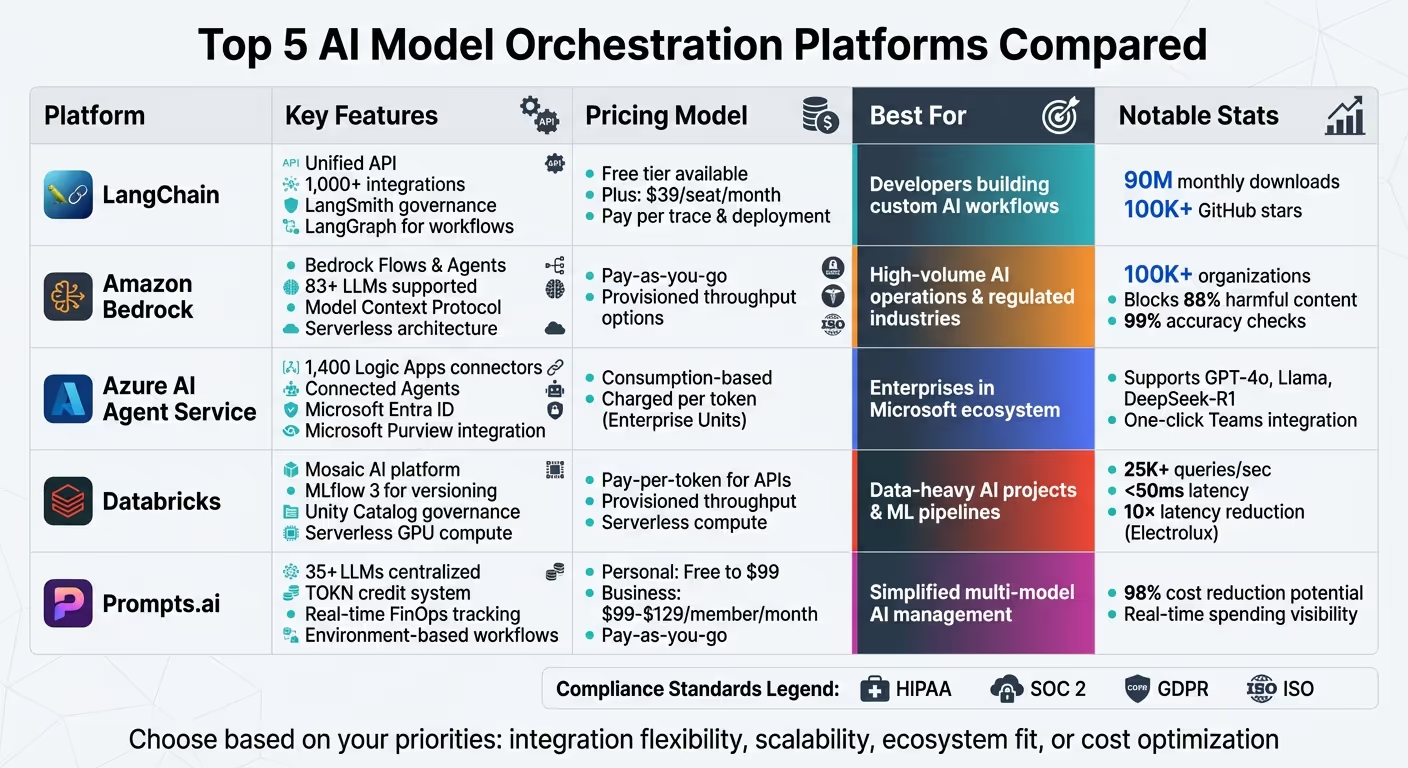
AI model orchestration platforms are essential for managing multiple AI tools, models, and workflows efficiently. These platforms simplify integration, automate processes, and ensure governance, making them indispensable for organizations scaling AI operations. Below is a quick overview of five leading platforms and their standout features:

  • LangChain: A developer-friendly framework with over 1,000 integrations and tools for building AI workflows. It offers flexible pricing and robust governance through LangSmith.
  • Amazon Bedrock: A serverless platform supporting 83+ LLMs with features like Bedrock Flows and Agents. It excels in scaling and cost optimization for high-volume AI tasks.
  • Azure AI Agent Service: Integrates seamlessly with Microsoft’s ecosystem, offering centralized orchestration, strong security, and extensive connectors for enterprise-grade workflows.
  • Databricks: Combines data engineering and AI orchestration, featuring Mosaic AI for scalable deployments and cost-efficient serverless compute.
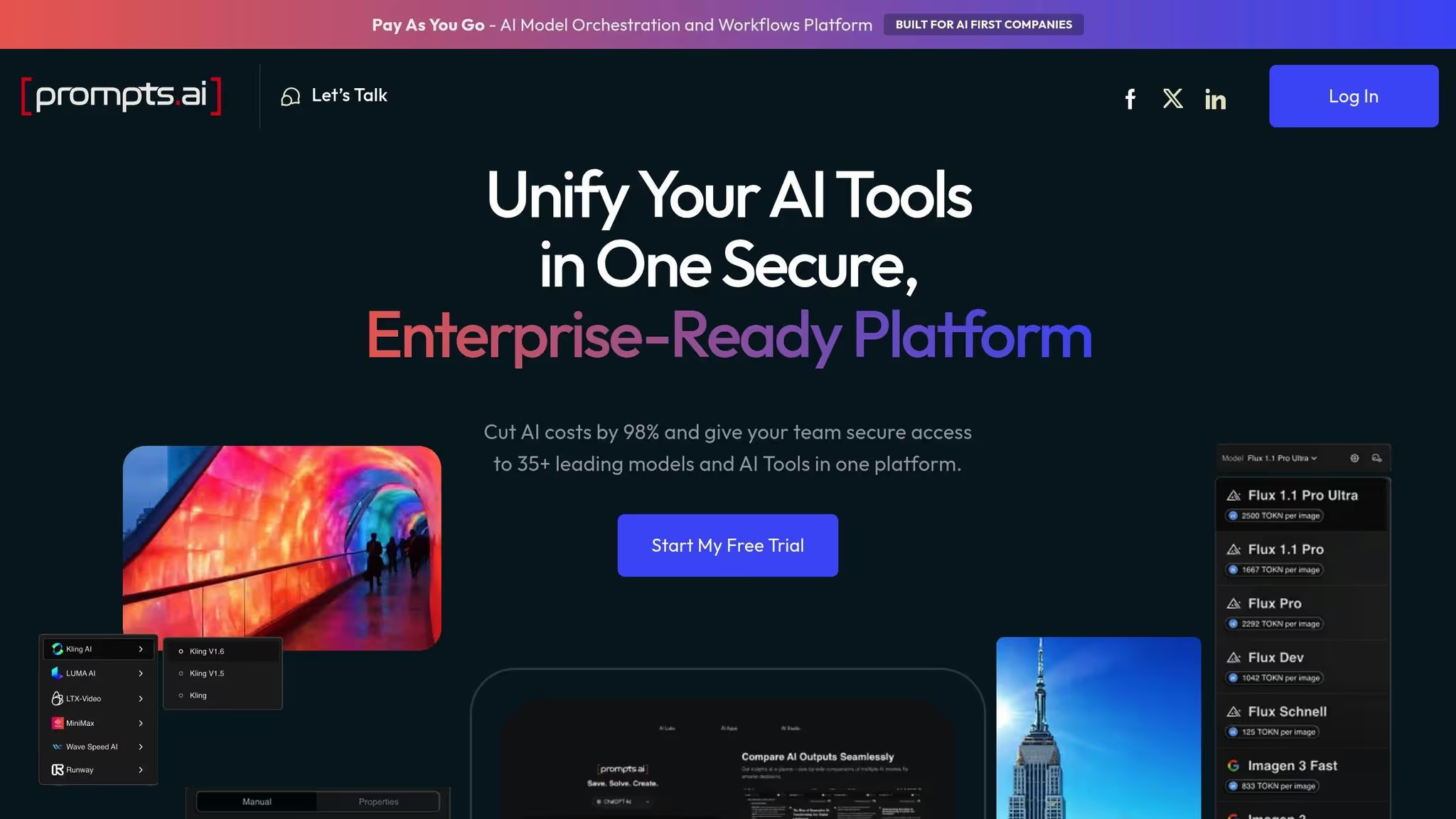
  • Prompts.ai: A centralized platform for managing 35+ LLMs with a pay-as-you-go TOKN credit system and real-time cost tracking.

Each platform caters to different needs, from developer-focused tools to enterprise-scale solutions. Choose based on your organization’s priorities, such as integration, scalability, or cost efficiency.


Quick Comparison

Platform Key Features Pricing Model Best For
LangChain Unified API, 1,000+ integrations, LangSmith Free tier; $39+/month Developers building workflows
Amazon Bedrock Bedrock Flows, Agents, MCP Pay-as-you-go High-volume AI operations
Azure AI Seamless Microsoft integration, MCP Consumption-based Enterprises in Microsoft ecosystem
Databricks Mosaic AI, serverless compute, MLflow Pay-per-token, serverless Data-heavy AI projects
Prompts.ai Centralized LLMs, TOKN credits $99+/month, pay-as-you-go Simplified AI management

These platforms streamline AI operations, reduce costs, and enhance workflow efficiency, making them critical tools for modern enterprises.

AI Model Orchestration Platforms Comparison: Features, Pricing & Best Use Cases

AI Model Orchestration Platforms Comparison: Features, Pricing & Best Use Cases

Orchestrating Complex AI Workflows with AI Agents & LLMs

1. LangChain

LangChain

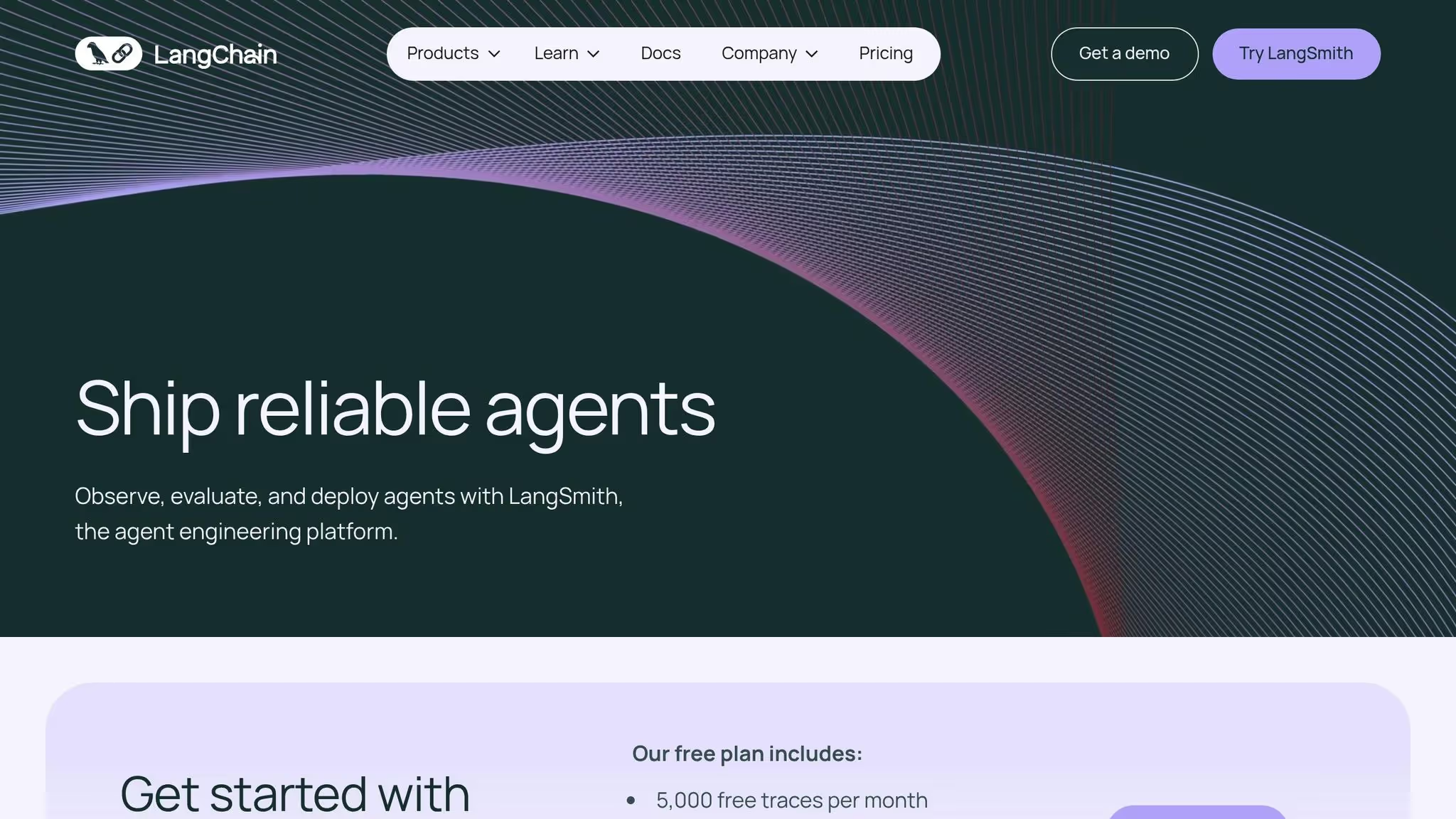
LangChain is the #1 downloaded agent framework in the world, boasting over 90 million monthly downloads and more than 100,000 GitHub stars. It's a trusted choice for developers looking to build AI workflows quickly without being tied to a single vendor.

Model Integration

LangChain simplifies model integration with a unified API that standardizes interactions across providers. Whether you're using OpenAI, Anthropic, or Google's Gemini, switching between them is seamless. Developers can connect to leading providers and create functional agents with as little as 10 lines of code. The platform supports over 1,000 integrations, covering data sources, cloud services, and specialized tools. For those working on Retrieval Augmented Generation (RAG), LangChain offers smooth integration with vector databases and document loaders, enabling models to process proprietary or real-time data without retraining. This extensive connectivity is a cornerstone of LangChain's scalability.

Scalability

LangChain is designed to handle enterprise-scale operations through horizontal scaling, supported by optimized task queues. Its infrastructure accommodates long-running agent workflows that can span hours or even days, with auto-scaling capabilities tailored for such demands. As LangChain explains:

Standard infrastructure can't handle long-running agent workloads that need human collaboration. Deploy with APIs that manage memory, auto-scaling, and enterprise security.

The platform is powered by LangGraph, which ensures durable execution and allows for custom checkpointing to maintain state across complex processes.

Cost Optimization

LangChain offers flexible pricing to suit different needs. The Developer Plan is free, including 1 seat and 5,000 base traces per month. The Plus Plan costs $39 per seat monthly, providing 10,000 base traces, a free development deployment, and additional agent runs at $0.005 per run. For production deployments, uptime is priced at $0.0036 per minute. Teams can further reduce costs by using base traces (14-day retention at $0.50 per 1,000 traces) for high-volume debugging and reserving extended traces (400-day retention at $5.00 per 1,000 traces) for valuable feedback data used in model fine-tuning. In addition to cost efficiency, LangChain ensures robust governance and security.

Governance and Security

LangSmith, LangChain's observability and deployment system, adheres to HIPAA, SOC 2 Type 2, and GDPR compliance standards, offering detailed insights into agent behavior through execution tracing, state transitions, and runtime metrics. LangGraph also supports human-in-the-loop workflows, enabling manual intervention and approval for sensitive tasks. Enterprise customers have deployment flexibility, with options for cloud-based, hybrid (SaaS control plane with self-hosted data plane), or fully self-hosted setups within their own VPC.

2. Amazon Bedrock

Amazon Bedrock

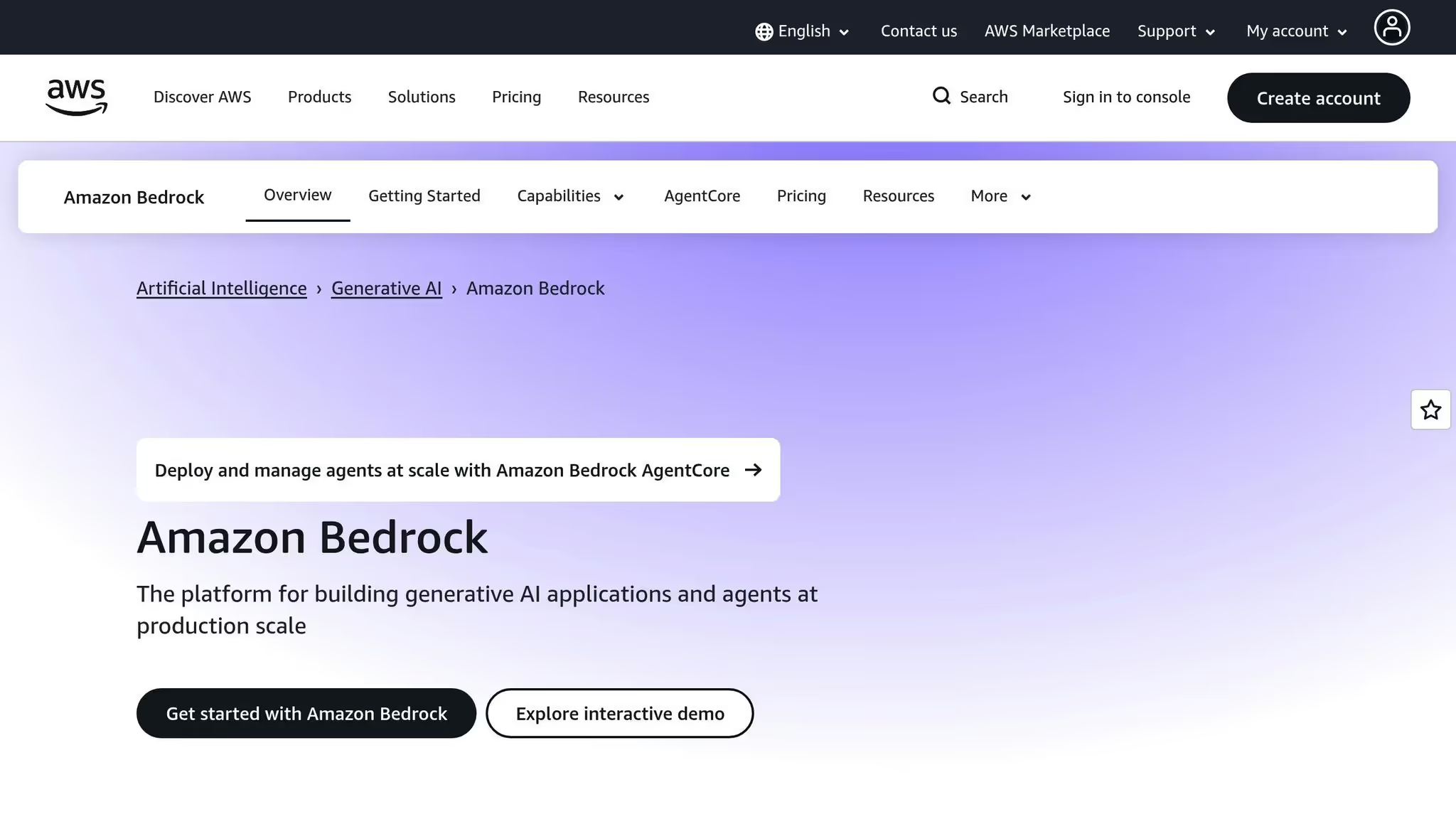
Amazon Bedrock supports generative AI for over 100,000 organizations, offering a fully managed, serverless platform that eliminates the need to manage infrastructure. This allows users to scale AI applications seamlessly, as needed.

Model Integration

Amazon Bedrock provides three distinct methods for integrating AI workflows:

  • Bedrock Flows: A visual builder that connects foundation models, prompts, and AWS services like Lambda into structured workflows. These workflows can be executed using the InvokeFlow API.
  • Bedrock Agents: Designed for dynamic scenarios, this feature orchestrates interactions between models, data sources, and applications through predefined Action Groups.
  • AgentCore: Enables users to develop agents with any framework - such as CrewAI, LangGraph, or LlamaIndex - and with any model, including external ones like OpenAI or Gemini.

Bedrock's Model Context Protocol (MCP) further enhances integration by converting existing APIs and Lambda functions into MCP-compatible tools. This allows agents to interact with enterprise systems like Salesforce, Slack, and JIRA with minimal coding effort. These integration options provide flexibility and adaptability for various AI applications.

Scalability

In 2024, Robinhood demonstrated Bedrock's scalability by increasing its AI operations from 500 million to 5 billion tokens daily in just six months. Distilled models hosted on Bedrock run five times faster and cost up to 75% less than their original counterparts. Additionally, Intelligent Prompt Routing can cut costs by as much as 30%, all while maintaining output quality. This scalability is further supported by Bedrock's consumption-based pricing model.

Cost Optimization

Bedrock operates on a pay-as-you-go model, meaning users are charged based on resource usage. For example, in Bedrock Flows, costs are tied to the specific resources invoked, such as a Titan model used in a prompt node. Organizations with large workloads can opt for provisioned throughput, gaining dedicated capacity at discounted rates. Robinhood leveraged Bedrock's infrastructure to reduce its AI costs by 80% and cut development time in half. Dev Tagare, Head of AI at Robinhood, highlighted Bedrock's strengths:

Amazon Bedrock's model diversity, security, and compliance features are purpose-built for regulated industries.

Governance and Security

Amazon Bedrock prioritizes data security and compliance. Customer data is never shared with third-party model providers or used to train foundation models. Organizations retain full control over their encryption keys through AWS Key Management Service. Additional safeguards include:

  • Bedrock Guardrails: Blocks up to 88% of harmful content.
  • Automated Reasoning Checks: Ensures correct model responses with up to 99% accuracy [23,24].

The platform meets rigorous standards, including ISO, SOC, GDPR, and FedRAMP High, and is HIPAA eligible. Fine-grained IAM policies provide control over user actions and resource access, while AWS CloudTrail and Amazon CloudWatch integration enable detailed monitoring and auditing. These features make Bedrock a secure and reliable choice for organizations handling sensitive data.

3. Azure AI Agent Service

The Azure AI Agent Service, part of Microsoft Foundry, serves as a centralized orchestration platform that brings together models, tools, and frameworks into a unified system. This service simplifies operations by managing conversation states and tool calls automatically, removing the need for manual intervention. Microsoft outlines its purpose as follows:

Foundry Agent Service connects the core pieces of Foundry, such as models, tools, and frameworks, into a single runtime... These activities help ensure that agents are secure, scalable, and production ready.

Model Integration

This platform stands out for its ability to integrate models and tools effortlessly. It supports a wide range of large language models, including Azure OpenAI (GPT-4o, GPT-4, GPT-3.5), Llama, and DeepSeek-R1. Through 1,400 Azure Logic Apps connectors, users can directly link to systems like SharePoint, Microsoft Fabric, and custom APIs. To enhance security and interoperability, the platform employs the Model Context Protocol (MCP) for connecting agents to custom tools and APIs.

One standout feature is Connected Agents, which lets a primary orchestrator assign tasks to specialized subagents using natural language routing. This eliminates the need for hardcoded logic, though parent agents are only able to delegate tasks to subagents. For more complex setups, creating focused and reusable subagents simplifies maintenance and debugging, rather than overburdening a single agent with multiple capabilities.

Scalability

Azure AI Agent Service supports containerized agents built with frameworks like LangGraph, enabling scalable operations to manage varying workloads. Agents can automatically switch to a secondary region using customer-provisioned Azure Cosmos DB accounts if the primary region experiences downtime. Microsoft highlights this capability as critical for enterprise readiness:

Deploy and orchestrate AI agents at scale - governed, observable, and integrated for enterprise transformation.

The service also offers one-click integration with Microsoft Teams and Microsoft 365 Copilot for rapid deployment. Server-side execution with automatic retries for tool calls reduces client-side processing demands during large-scale operations.

Cost Optimization

The platform operates on a consumption-based pricing model, charging based on the number of tokens processed by each agent action. These costs appear as "Enterprise Units" on invoices. For workflows built with Azure Logic Apps, users only pay standard logic app fees, while AI model usage (like Azure OpenAI) incurs separate charges. This flexible pricing structure allows organizations to scale their AI operations without heavy upfront investments.

Governance and Security

Each agent is assigned a unique Microsoft Entra Agent ID, enabling precise identity management, access control, and policy enforcement. The service integrates with Microsoft Purview to apply data loss prevention policies, sensitivity labels, and ensure compliance with data residency rules. Real-time filtering through Azure AI Content Safety helps mitigate risks like prompt injection and jailbreak attempts.

For additional security, deployments benefit from network isolation via Azure Virtual Networks and private endpoints. The AI Red Teaming Agent allows organizations to simulate potential attacks and identify vulnerabilities before full deployment. Centralized logging, powered by Azure Log Analytics and Application Insights, ensures complete traceability of conversations and tool usage for audit purposes. The service adheres to key international standards, including GDPR, HIPAA, ISO, and SOC.

4. Databricks

Databricks

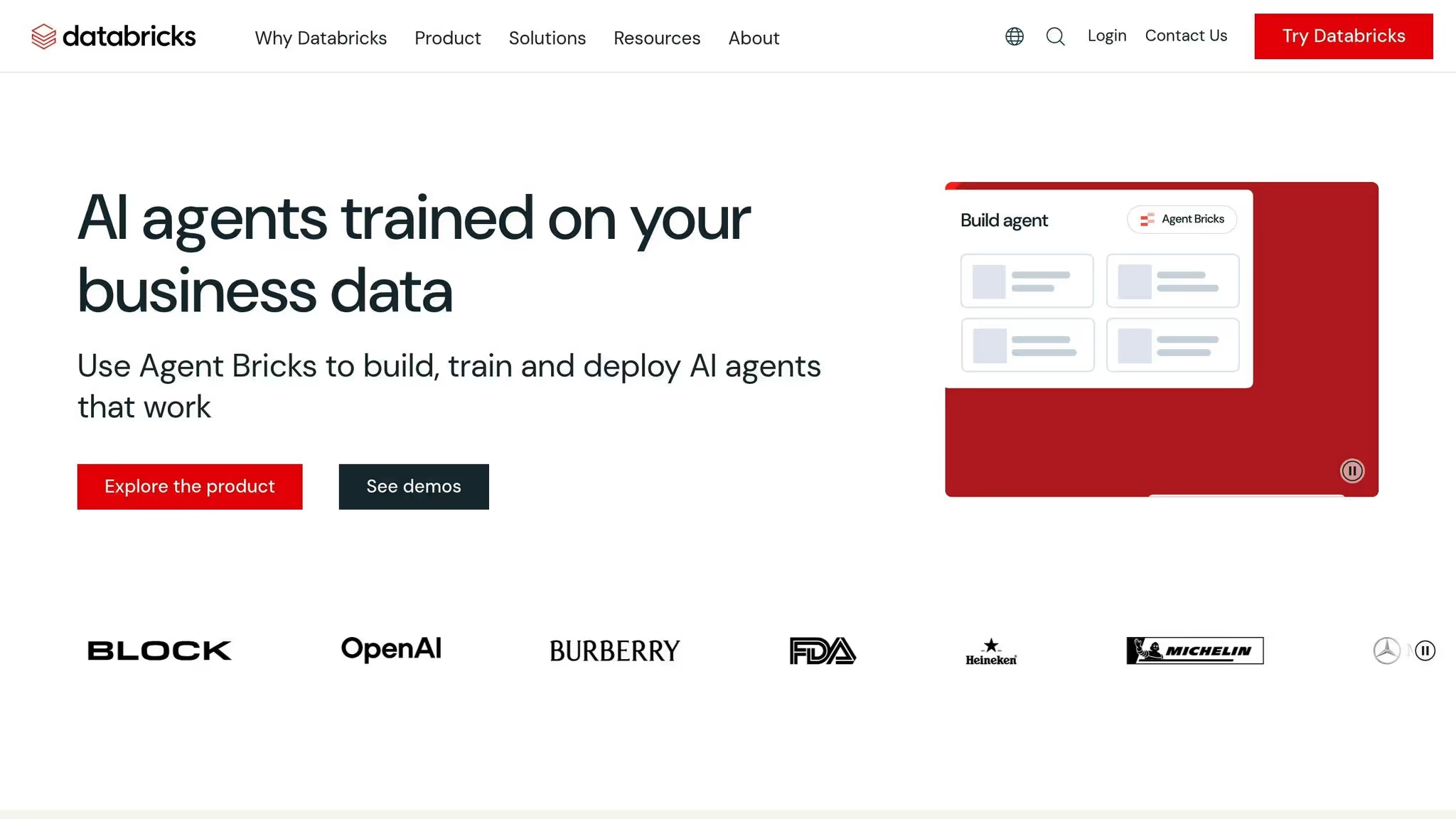
Databricks brings together data engineering, machine learning, and AI orchestration through its Mosaic AI platform. With Mosaic AI Model Serving, users can deploy both classical and foundation models, as well as AI agents, via a unified REST API. Lakeflow Jobs further simplifies processes by automating ETL, analytics, and AI workflows using a DAG structure.

Model Integration

Databricks supports over 25,000 queries per second with an overhead latency of less than 50 milliseconds. Models can be integrated into analytics workflows using Databricks SQL for batch inference or standard REST APIs for real-time applications. The Mosaic AI Agent Framework enables the development of production-ready retrieval-augmented generation applications, while the Mosaic AI Gateway manages rate limits and monitors model quality across providers like OpenAI and Anthropic.

For model management, Databricks employs a managed version of MLflow 3, which handles experiment tracking, model versioning, and deployment lifecycle management through Deployment Jobs. Additionally, the AI Playground offers a chat-like interface for testing and comparing various large language models.

"Databricks Model Serving is accelerating our AI-driven projects by making it easy to securely access and manage multiple SaaS and open models, including those hosted on or outside Databricks."

  • Greg Rokita, AVP of Technology at Edmunds.com

This integration framework ensures seamless scaling and adaptability for diverse needs.

Scalability

Databricks uses serverless GPU compute to support both single- and multi-node deep learning tasks, working with frameworks like PyTorch, TensorFlow, and Keras for large-scale training and fine-tuning. Integration with Ray on Databricks allows machine learning workloads to scale across distributed environments, which is particularly beneficial for intensive model training and inference. Model endpoints automatically adjust to meet demand, scaling up from zero and back down to reduce costs. For example, in 2024, Electrolux unified its data and AI platform, achieving a 10× reduction in inference latency and lowering maintenance overhead.

Cost Optimization

Databricks offers flexible pricing options to balance performance and cost. Its pay-per-token model for Foundation Model APIs allows users to access curated models like Llama without upfront commitments. For workloads requiring specific performance guarantees or fine-tuned models, Provisioned Throughput is available. Serverless compute options enable pay-as-you-go pricing for model serving and Lakeflow Jobs, with the ability to scale to zero to eliminate idle costs. Workspaces can handle up to 2,000 concurrent task runs and save 12,000 jobs. Lakeflow Jobs also include a "Repair and Rerun" feature, which retries only failed nodes in a workflow, saving both time and resources. Pricing for these jobs depends on the compute resources used, varying by plan, cloud provider, and cluster configuration.

Governance and Security

Unity Catalog acts as a centralized governance layer for managing all data and AI assets, including structured and unstructured data, machine learning models, notebooks, and functions. Organizations can define access policies at the account level and apply them across all workloads. The system supports row-level filters and column masks using ANSI SQL, ensuring that users only access authorized data. Data is safeguarded with AES-256 encryption at rest and TLS 1.2+ encryption during transit.

The platform complies with key regulations like GDPR, CCPA, HIPAA, BCBS 239, and SOX. Additionally, end-to-end lineage tracks data from its origin to its final destination, including model lineage, which identifies the specific dataset version used for training and evaluation. This comprehensive approach ensures both security and transparency.

5. Prompts.ai

Prompts.ai

Prompts.ai is a powerful enterprise-level platform designed to simplify AI management. It brings together over 35 leading large language models (LLMs) into one streamlined interface, tackling the issue of scattered AI tools. By centralizing access to models, workflows, and governance controls, Prompts.ai helps organizations cut AI software costs by as much as 98%. This unified approach makes integrating and managing models more efficient than ever.

Model Integration

Prompts.ai provides a single, intuitive interface that seamlessly connects with multiple LLM providers. By separating prompt management from the underlying code, teams can update AI capabilities without interrupting operations. The platform supports integration with top providers like OpenAI, Anthropic, and Google Vertex AI, enabling users to compare model performance side by side. This flexibility allows organizations to switch between models effortlessly, tailoring solutions to specific needs.

Scalability

Prompts.ai is built to grow with your organization. Its centralized interface supports environment-based workflows, making it easy for enterprise teams to manage AI operations efficiently. Adding new models, users, or teams takes just minutes. Whether you're a small business or a large enterprise, the platform’s architecture adapts to your usage patterns, removing the need for fixed infrastructure investments.

Cost Optimization

The platform employs a pay-as-you-go TOKN credit system, linking costs directly to token usage. With a built-in FinOps layer, users gain real-time visibility into spending across models, teams, and applications. Pricing for business plans starts at $99 per member per month for the Core tier, $119 for Pro, and $129 for Elite. For personal use, plans range from a free pay-as-you-go option to $99 for family access.

Governance and Security

Prompts.ai ensures full control and transparency over AI workflows. It provides detailed audit trails to maintain compliance and allows organizations to define access policies and monitor prompt performance in live environments. The platform also prioritizes strong data protection measures. To promote best practices, the Prompt Engineer Certification program offers structured guidance and training for users.

Advantages and Disadvantages

Choosing the right orchestration platform means weighing its benefits against its limitations, as each option can influence your team’s workflow, budget, and adaptability. Below is a breakdown of the key strengths and challenges for several popular platforms, helping you align your choice with your specific goals.

LangChain stands out for its extensive flexibility, boasting over 1,000 integrations and a vibrant community. With 90 million monthly downloads and 112,000 GitHub stars, its popularity highlights its utility and reach. However, this versatility comes at a cost - expect a 15–25% latency overhead compared to direct model calls. Additionally, its steep learning curve requires a high level of developer expertise.

Amazon Bedrock simplifies operations by automating scaling and security, offering access to 83 different LLMs through a single API. While this eliminates many infrastructure worries, its usage-based pricing can lead to rapid cost increases when handling high volumes. Teams may also face difficulties transitioning away from the AWS ecosystem if needed.

Azure AI Agent Service is a strong choice for organizations already invested in Microsoft’s ecosystem. It integrates seamlessly with platforms like Azure Synapse, making it ideal for distributed data workflows. However, it requires significant technical expertise to implement effectively and may limit flexibility for teams looking to adopt multi-cloud strategies.

Databricks delivers exceptional performance for large-scale scheduling and distributed workloads, thanks to integrations with tools like Ray and Airflow. That said, its advanced capabilities demand a high level of expertise and infrastructure, making it less accessible for smaller teams or those just starting with AI.

Prompts.ai offers unmatched flexibility with the ability to switch instantly between 35+ models without altering code. Its pay-as-you-go TOKN credit system ensures costs are tied directly to usage, avoiding the pitfalls of fixed subscriptions. The platform's built-in FinOps layer provides real-time spending insights, helping teams avoid budget surprises. Additionally, its unified interface can reduce AI software expenses by up to 98%, replacing the need for fragmented tools.

Conclusion

Bringing together scattered AI models into a streamlined and efficient system requires thoughtful orchestration. Choosing the right platform hinges on factors like your team's technical skills, budget constraints, and operational goals. Each platform has its own strengths, tailored to meet specific needs.

LangChain stands out as a key tool for developing LLM-based applications. Its modular design empowers developers to connect various models, data sources, and APIs into seamless workflows. For organizations already invested in the Microsoft ecosystem, Azure AI Agent Service offers robust automation and top-tier security features suited for enterprise environments. On the other hand, Prompts.ai tackles the complexities of managing multiple tools and unpredictable expenses. It provides access to over 35 leading language models through a single, secure interface, supported by a flexible pay-as-you-go TOKN credit system and real-time FinOps tracking.

FAQs

What should I look for in an AI model orchestration platform?

When selecting an AI model orchestration platform, focus on its integration capabilities. The ideal platform should seamlessly connect various AI models and data sources into a single, unified interface, eliminating the hassle of juggling multiple tools. This simplifies operations and ensures smoother workflows.

Scalability is another important factor. Choose a platform that can handle growing workloads efficiently and supports cloud-native environments like Kubernetes, ensuring optimal performance even as demands increase.

Pay attention to cost transparency. Opt for platforms with flexible, pay-as-you-go pricing models, along with tools that allow you to monitor usage and manage expenses effectively. Strong governance features are equally important. Look for options like role-based access controls, audit logs, and data privacy settings to ensure compliance with regulatory standards.

Finally, prioritize ease of use. A platform with a straightforward interface or low-code options can simplify complex workflows, while reliable support and thorough documentation can help ease the adoption process. By considering these factors, you can streamline AI deployments, reduce costs, and mitigate risks effectively.

How do AI model orchestration platforms help reduce costs?

AI model orchestration platforms offer a smarter way for organizations to manage their AI operations while cutting costs. By centralizing the oversight of multiple AI models and compute resources, these platforms eliminate the need for separate contracts or infrastructure, simplifying workflows and reducing licensing fees and unnecessary overhead.

One standout feature is real-time cost tracking, which allows teams to keep a close eye on spending, set budget alerts, and avoid wasting money on idle resources. The pay-as-you-go pricing model ensures you’re only charged for the compute power you actually use, solving the problem of over-provisioning that often plagues traditional systems.

Automation also plays a key role, taking over tasks like model scaling and monitoring. This reduces the need for manual intervention, cuts down on labor expenses, and minimizes costly errors that could result in time-consuming re-runs. These combined features provide a clear and predictable cost structure, making it easier for U.S. businesses to scale their AI workloads effectively without breaking the budget.

What security measures do AI orchestration platforms offer?

AI orchestration platforms place a strong emphasis on security, employing advanced methods to protect data, models, and workflows. Key features often include role-based access control (RBAC), which ensures that user permissions are tightly managed, paired with detailed audit logs to track all actions for compliance purposes. To further safeguard sensitive information, these platforms rely on enterprise-grade encryption for data protection, both at rest and during transmission, frequently meeting certifications like HIPAA and ISO 27001.

Security is further bolstered with governance tools that help track costs, enforce organizational policies, and provide clear visibility into usage patterns. Many platforms also leverage isolation mechanisms from cloud providers, ensuring customer workloads remain separate to maintain confidentiality, integrity, and availability. These measures empower businesses to confidently manage their AI models and workflows without compromising security.

Related Blog Posts

SaaSSaaS
Quote

Streamline your workflow, achieve more

Richard Thomas