Pay As You Go7 天免费试用;无需信用卡
获取我的免费试用版
January 12, 2026

Leading Providers Of AI Orchestration

Chief Executive Officer

January 12, 2026

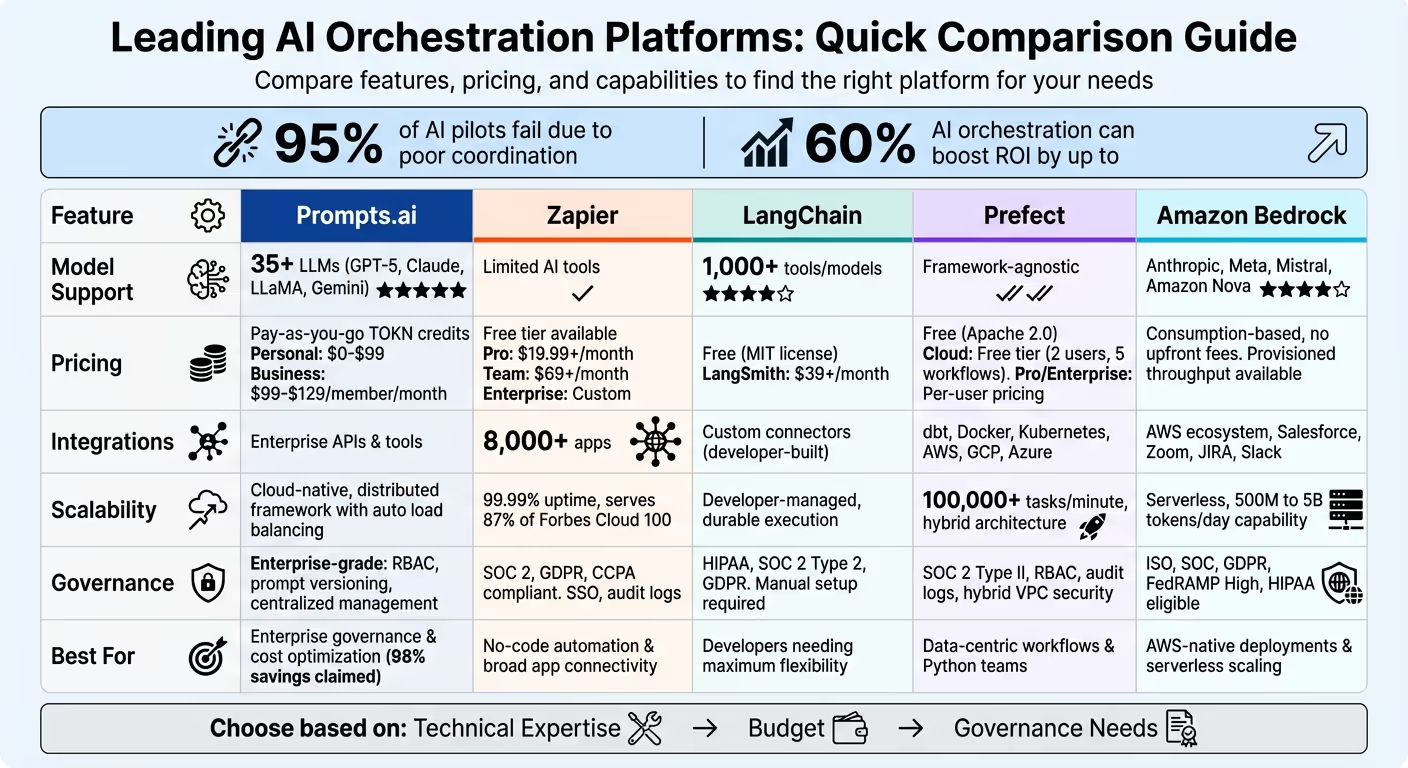
AI orchestration platforms simplify and manage workflows across multiple tools and models, helping businesses achieve efficiency and scale. With 95% of AI pilots failing due to poor coordination, orchestrating AI effectively can boost ROI by up to 60%. This guide highlights five leading platforms - Prompts.ai, Zapier, LangChain, Prefect, and Amazon Bedrock - each offering unique strengths in integration, scalability, and governance.

Key Takeaways:

  • Prompts.ai: Access 35+ LLMs (e.g., GPT-5, Claude) with automated load balancing and strong governance. Pricing starts at $0 with flexible TOKN credits.
  • Zapier: Connect 8,000+ apps and automate workflows without coding. Ideal for business users with plans starting at $0/month.
  • LangChain: Open-source framework for developers integrating 1,000+ tools and models. Free under MIT license.
  • Prefect: Python-based platform for orchestrating AI and data workflows with hybrid execution. Free tier available; enterprise pricing scales per user.
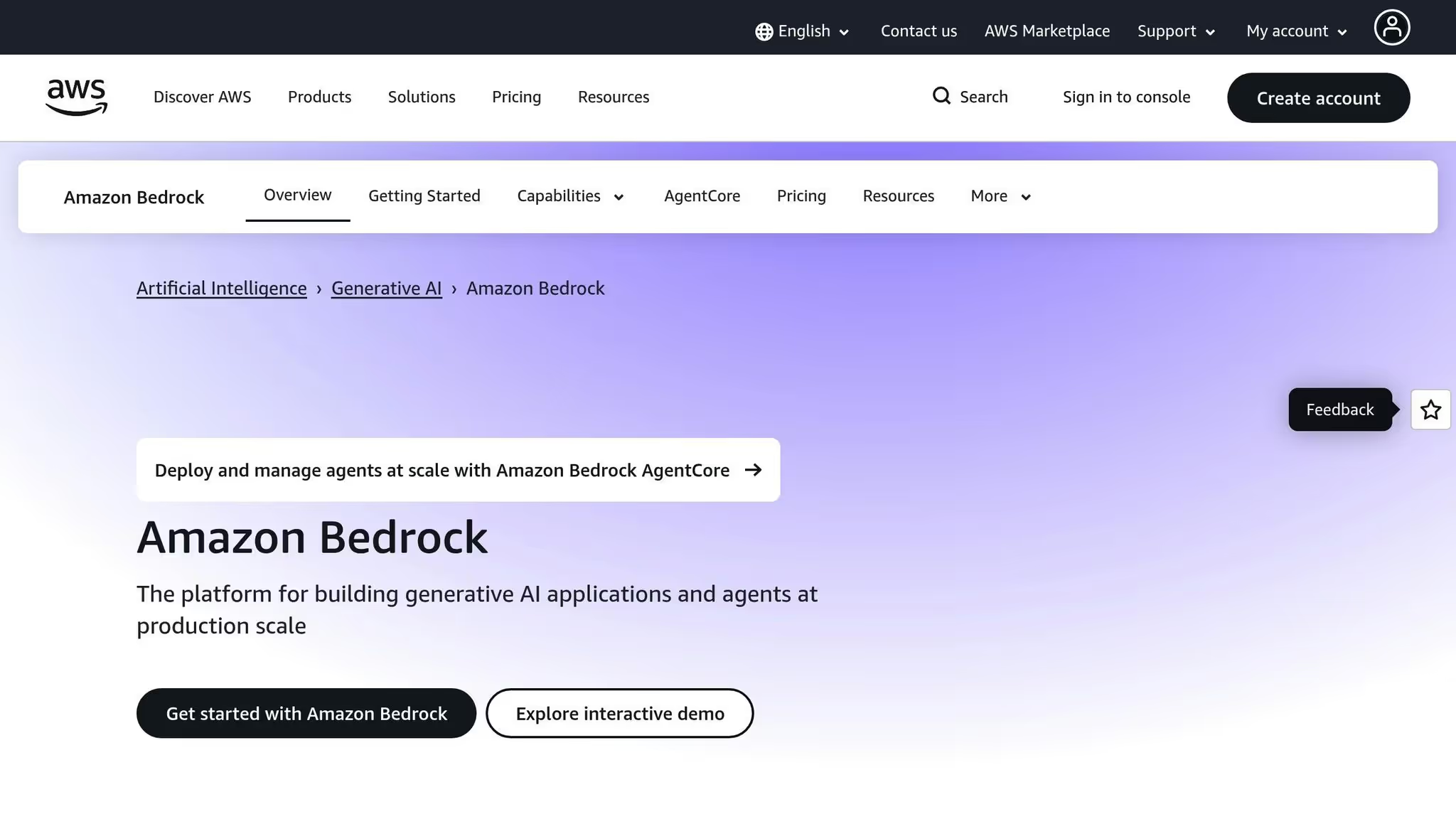
  • Amazon Bedrock: Serverless platform offering foundation models and seamless AWS integration. Consumption-based pricing with no upfront fees.

Each platform caters to specific needs:

  • Prompts.ai excels in enterprise-grade governance.
  • Zapier is perfect for no-code automation.
  • LangChain offers flexibility for developers.
  • Prefect focuses on data-centric workflows.
  • Amazon Bedrock integrates deeply with AWS for scalability.

Quick Comparison

Platform Model Support Pricing Integrations Scalability Governance
Prompts.ai 35+ LLMs (e.g., GPT-5) Pay-as-you-go Enterprise APIs Cloud-native Enterprise-grade
Zapier Limited AI tools Free/$19.99+ 8,000+ apps Medium Basic workflow tools
LangChain 1,000+ tools/models Free (OSS) Custom connectors Developer-managed Manual setup
Prefect Framework-agnostic Free/$39+ Data tools High SOC 2 compliance
Amazon Bedrock Anthropic, Meta models Consumption-based AWS ecosystem Serverless ISO, FedRAMP, HIPAA

Start with a defined workflow to determine which platform aligns with your goals, team expertise, and compliance needs.

AI Orchestration Platform Comparison: Features, Pricing, and Capabilities

AI Orchestration Platform Comparison: Features, Pricing, and Capabilities

Comparison Guide – Workflow Orchestration Tools #devtechie #dataengineering #workflowmanagement

1. Prompts.ai

Prompts.ai

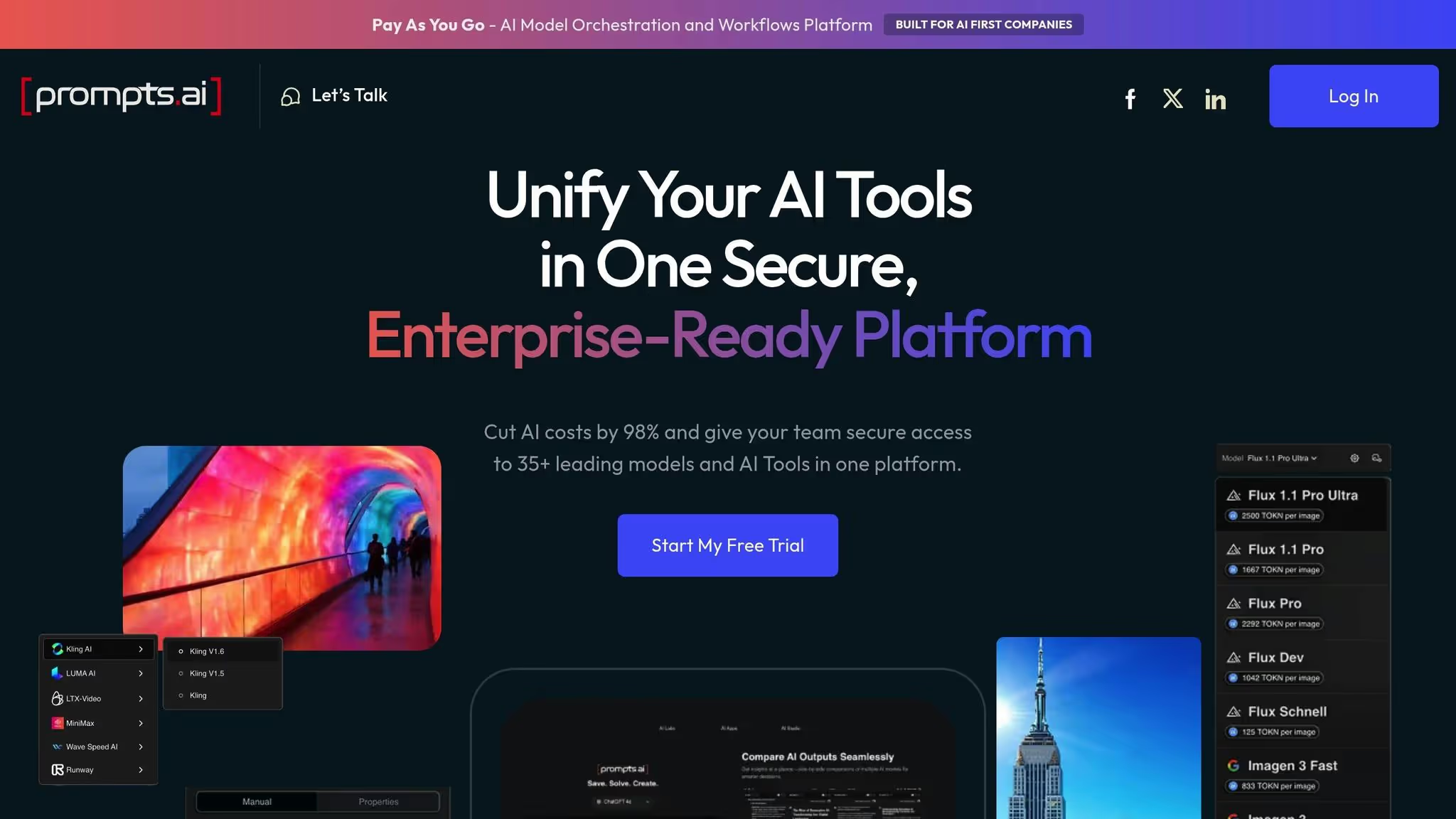
Prompts.ai is a robust platform designed to streamline enterprise AI operations by consolidating access to over 35 leading language models, including GPT-5, Claude, LLaMA, and Gemini, within a secure, unified interface. By eliminating the complexity of juggling multiple AI vendors and subscriptions, it simplifies workflows and enhances operational transparency.

Model Support

Prompts.ai provides seamless access to a wide range of advanced LLMs, offering features like automated load balancing and failover. This setup removes the hassle of managing multiple accounts or APIs. If one provider encounters downtime or performance issues, tasks are automatically rerouted to alternative models, ensuring uninterrupted workflows and consistent reliability.

Scalability

The platform is built on a cloud-native, distributed framework, enabling it to scale effortlessly to meet increasing demands. By leveraging asynchronous processing and dynamic load balancing, Prompts.ai ensures stable performance, even during periods of high usage. Tasks are evenly distributed across multiple providers, maintaining efficiency and responsiveness regardless of workload spikes.

Governance

Prompts.ai incorporates strong governance tools to uphold enterprise standards and ensure compliance. Key features include:

  • Prompt Versioning: Tracks every iteration of AI prompts, allowing teams to compare changes, revert to previous versions, or address safety concerns with ease.
  • Role-Based Access Control (RBAC): Restricts access to sensitive operations, ensuring only authorized personnel can modify or deploy prompts in production.
  • Centralized Management: Simplifies oversight by consolidating control, making it easier to trace actions and maintain accountability.

These tools collectively enhance security, traceability, and operational consistency across enterprise AI initiatives.

Pricing

The platform uses a flexible pay-as-you-go model with TOKN credits, eliminating recurring fees. Pricing plans are structured to meet various needs:

  • Personal Plans: Start at $0 (exploration), $29 (individual), and $99 (families).
  • Business Tiers: Range from $99 (Core) to $119 (Pro) and $129 (Elite) per member/month.

Prompts.ai claims organizations can cut AI software expenses by up to 98% compared to managing multiple standalone subscriptions, making it a cost-effective solution for businesses of all sizes.

2. Zapier

Zapier connects over 8,000 apps with more than 300 AI tools, including ChatGPT and Claude, through a no-code orchestration platform. To date, it has automated more than 300 million AI tasks, serving over 1 million companies. Its versatility makes it a valuable tool across a wide range of industries.

Integrations

Zapier's integration capabilities allow businesses to seamlessly connect AI models with their existing software frameworks. With access to 8,000+ applications, users can create automated workflows using features like Zaps for multi-step tasks, Zapier Agents for autonomous operations, Zapier Canvas for visualizing processes, Zapier Tables for managing data, and Zapier Interfaces for custom forms that activate AI workflows.

For example, in August 2025, Popl automated over 100 workflows for lead qualification and routing using Zapier. This eliminated a costly manual integration, saving the company $20,000 annually while streamlining their sales pipeline. Similarly, in 2024, Remote.com’s three-person IT team used Zapier to automate over 11 million tasks, with 28% of IT tickets being resolved automatically. Marcus Saito, Head of IT and AI Automation at Remote, shared:

"Zapier makes our team of three feel like a team of ten".

Scalability

Built on a cloud-native architecture, Zapier ensures scalability with features like automated high availability and intelligent throttling. The platform offers a 99.99% uptime guarantee and supports VPC Peering for secure enterprise connections to internal data sources. Enterprise plans come with annual task limits instead of monthly caps, making it easier for businesses to manage seasonal spikes in demand. Currently, Zapier serves 87% of Forbes Cloud 100 companies and is trusted by 3.4 million businesses worldwide.

Governance

Zapier provides robust governance tools tailored for enterprise users. These include role-based permissions, SAML-based single sign-on (SSO), and SCIM provisioning. The platform complies with SOC 2 Type II, SOC 3, GDPR, and CCPA standards, ensuring data security through TLS 1.2 encryption for data in transit and AES-256 encryption for data at rest. Enterprise clients can restrict access to specific AI tools and are automatically excluded from having their data used to train third-party AI models. Additional features like real-time audit logs, execution logs, and performance analytics enhance operational transparency.

Pricing

  • Free – $0/month, includes 100 tasks and two-step Zaps.
  • Professional – Starts at $19.99/month (billed annually), offering multi-step Zaps and AI capabilities.
  • Team – Starts at $69/month (billed annually), designed for collaboration with up to 25 users.
  • Enterprise – Custom pricing, includes unlimited users, VPC Peering, and a dedicated Technical Account Manager.

3. LangChain

LangChain

LangChain is an open-source framework designed to work seamlessly with any model provider, enabling developers to switch between models, tools, and databases without altering the core application logic. Unlike proprietary platforms, its open-source nature provides unparalleled flexibility. With over 90 million downloads each month and more than 100,000 GitHub stars, it has become a go-to choice for building AI workflows. LangChain offers two main frameworks: LangChain, tailored for creating agents with pre-built architectures, and LangGraph, ideal for custom, stateful, and long-running workflows. This open-source flexibility makes LangChain a standout platform for diverse AI models and workflows.

Model Support

LangChain's framework-neutral design integrates with over 1,000 models, tools, and databases. It supports various cognitive architectures, including ReAct, Plan-and-execute, Multi-agent, Critique Revise, and Self-ask. Developers can work with both Python and TypeScript, making it accessible to a wide range of users. Garrett Spong, Principal Software Engineer, highlighted its impact:

"LangChain is streets ahead with what they've put forward with LangGraph. LangGraph sets the foundation for how we can build and scale AI workloads - from conversational agents, complex task automation, to custom LLM-backed experiences that 'just work'".

Scalability

The LangGraph platform is built for scalability, utilizing dedicated task queues to handle enterprise-level traffic and sudden workload spikes without slowing down. It provides durable execution, ensuring workflows can resume after interruptions. Its APIs are designed for auto-scaling and include features like custom checkpointing, memory management, and conversation threads, making it ideal for agent-based workloads. Andres Torres, Senior Solutions Architect, shared his experience:

"LangGraph has been instrumental for our AI development. Its robust framework for building stateful, multi-actor applications with LLMs has transformed how we evaluate and optimize the performance of our AI guest-facing solutions".

Governance

LangSmith adheres to strict compliance standards, including HIPAA, SOC 2 Type 2, and GDPR. It offers granular authentication and access controls, allowing teams to manage permissions and secure data effectively for enterprise needs. Human-in-the-loop features provide manual oversight, enabling safety checks, overrides, and approval steps before AI actions are executed. Enterprise deployments include at-rest encryption and customizable headers for added security.

Pricing

  • LangChain/LangGraph OSS – Available for free under the MIT license.
  • LangSmith Free Tier – Includes up to 5,000 free traces per month with monitoring and evaluation tools.
  • LangSmith Paid Plans – Start at $39/month.

4. Prefect

Prefect

Prefect is a Python-based orchestration platform designed to transform AI workflows into reliable systems using its hybrid architecture. With over 6.5 million downloads per month and more than 21,200 GitHub stars, it simplifies workflow creation by utilizing Python decorators like @flow and @task, eliminating the need for complicated configuration files. This approach ensures seamless integration with existing Python workflows and simplifies development for users.

Model Support

Prefect is well-equipped to manage LLM loops and AI agents while incorporating human-in-the-loop controls. The platform supports dynamic task creation at runtime, allowing workflows to adjust and branch based on real-time data. Its durable execution feature ensures that costly AI workloads can resume from the point of failure, avoiding the need to re-run entire pipelines. Additionally, Prefect offers an MCP server to provide context to AI assistants such as Claude and Cursor.

Integrations

Prefect stands out for its robust integration capabilities, which align with its user-friendly design. It offers native support for tools and platforms like dbt, Docker, Kubernetes, AWS ECS, Google Cloud Run, Azure ACI, and Modal. Its Work Pools architecture separates workflows from infrastructure, allowing teams to switch execution environments without altering code. This architecture also automatically tracks data lineage, enhancing pipeline visibility. Alex Welch, Head of Data at dbt Labs, highlighted this flexibility:

"We use Prefect to orchestrate dbt Cloud jobs right alongside other data tools. It brings visibility to our entire pipeline."

Scalability

Prefect’s hybrid execution model separates the control plane from workflow execution, enabling scalable compute capacity while safeguarding sensitive data within secure infrastructure. The platform manages over 100,000 tasks per minute and employs a per-user pricing model instead of charging based on workflow runs. In 2024, Snorkel AI adopted Prefect OSS on Kubernetes, significantly boosting performance. Smit Shah, Director of Engineering at Snorkel AI, shared:

"We improved throughput by 20x with Prefect. It's our workhorse for asynchronous processing. We run about a thousand flows an hour with stable performance, as most tasks are network bound."

Snorkel AI now executes over 1,000 flows per hour, with tens of thousands of workflows processed daily. Similarly, Endpoint reduced invoice costs by 73.78% and tripled production capacity after migrating 72 pipelines from Airflow to Prefect Cloud.

Governance

Prefect Cloud prioritizes security and compliance, holding SOC 2 Type II certification and offering granular role-based access control across accounts, workspaces, and objects. The platform maintains detailed audit logs for every action, aiding compliance reviews and security investigations. Prefect’s hybrid architecture ensures sensitive AI data stays within the user’s VPC, with only metadata like run history and scheduling state sent to the control plane. Enterprise features include SSO compatibility with any identity provider, SCIM provisioning, IP allowlisting, and native data lineage tracking for full transparency into workflow outputs.

Pricing

Prefect Core is available as open-source software under the Apache 2.0 license, enabling users to self-host with complete VPC control. Prefect Cloud offers a managed platform with a free hobby tier for up to 2 users and 5 workflows. Pro and Enterprise plans provide predictable per-user pricing, allowing unlimited workflow executions.

5. Amazon Bedrock

Amazon Bedrock

Amazon Bedrock is a fully managed, serverless platform that provides access to foundation models from Anthropic, Meta, Mistral AI, and Amazon's Nova series. Trusted by over 100,000 organizations worldwide, it eliminates the need for infrastructure management, enabling seamless scaling of AI workflows from initial prototypes to full-scale production. Let’s dive into its key features, including model support, integrations, scalability, governance, and pricing.

Model Support

Amazon Bedrock streamlines access to multiple foundation models through a single API, making it easy for users to switch between model versions with minimal code adjustments. Developers can leverage Amazon Bedrock AgentCore to work with open-source frameworks like CrewAI, LangGraph, LlamaIndex, and Strands Agents. The AgentCore Runtime supports asynchronous tasks lasting up to 8 hours, providing persistence and secure tool access via the Gateway. Additionally, Bedrock Guardrails enhance safety by blocking up to 88% of harmful content and detecting model hallucinations with an impressive 99% accuracy.

Integrations

Amazon Bedrock integrates effortlessly with AWS services and third-party tools using its AgentCore Gateway. This feature converts APIs, Lambda functions, and services into MCP-compatible tools. It also connects with popular enterprise applications like Salesforce, Zoom, JIRA, and Slack. For identity management, Bedrock supports native integration with Okta, Microsoft Azure Entra ID, Auth0, and Amazon Cognito. Emre Caglar, Head of Product Engineering at Thomson Reuters, highlighted the platform’s impact:

"AgentCore reduces our engineers' cognitive load by abstracting away infrastructure complexity - agent runtimes, observability, lifecycle management - so they can focus on solving the business problems that matter."

Scalability

Amazon Bedrock has proven its ability to scale AI operations effectively. Between 2024 and 2025, Robinhood expanded its AI operations from processing 500 million to 5 billion tokens daily in just six months. This transition, led by Head of AI Dev Tagare, resulted in an 80% reduction in AI costs and cut development time by 50%. The platform’s distilled models operate up to 500% faster while reducing costs by up to 75%. Additionally, Intelligent Prompt Routing can lower expenses by as much as 30%. Epsilon, for instance, used AgentCore to automate marketing workflows, cutting campaign setup times by 30% and saving teams 8 hours per week.

Governance

Amazon Bedrock adheres to strict compliance standards, including ISO, SOC, GDPR, FedRAMP High, and HIPAA eligibility. It offers robust role-based access control and integrates with Amazon CloudWatch and OpenTelemetry for real-time monitoring of token usage, latency, and error rates. Its serverless architecture ensures full observability across workflows, enhancing transparency and control.

Pricing

Amazon Bedrock employs a consumption-based pricing model, meaning there are no upfront fees. Users can opt for provisioned throughput to secure dedicated capacity at discounted rates. Cost-saving features such as prompt caching and model distillation further help reduce operational expenses.

Platform Comparison: Strengths and Weaknesses

Zapier stands out with over 8,000 app integrations, making it a go-to for broad connectivity. LangChain shines with its highly modular architecture, offering extensive flexibility for developers, but it requires advanced technical skills and manual governance. Prefect, on the other hand, excels in data orchestration but struggles with edge deployments - traditional centralized orchestrators may face cold start times of 2–5 seconds, while edge-native solutions can achieve start times under 50 milliseconds.

Platform Model Support Pricing Integrations Scalability Governance
Prompts.ai 35+ LLMs (GPT-5, Claude, LLaMA, Gemini) Pay-as-you-go TOKN credits Enterprise tools & APIs High (multi-team deployment) Enterprise-grade with audit trails
Zapier Limited AI model access Free tier + paid plans 8,000+ apps Medium (business automation) Basic workflow controls
LangChain Extensive (any LLM/API) Free (open-source) Developer-built connectors Developer-managed Manually implemented
Prefect Framework-agnostic Free tier + cloud pricing Standard data tools High (centralized) Developer-defined

When comparing these platforms, it becomes clear that their strengths cater to different needs. The rise of Agentic AI, where autonomous agents plan and execute tasks, is reshaping what users expect from orchestration platforms. Developers aiming to build custom workflows often lean toward LangChain for its flexibility, while enterprises focused on compliance and cost efficiency gravitate to platforms like Prompts.ai, which offer built-in governance and transparent usage tracking.

Ultimately, the right choice depends on three key factors: technical expertise, integration breadth, and governance needs. For instance, Zapier offers simplicity and broad integrations, making it ideal for business users with minimal technical expertise. LangChain, with its developer-focused tools, sits at the opposite end of the spectrum. Prefect caters to data-centric teams with its robust orchestration capabilities but may require more hands-on management.

To find the best fit, organizations should start by piloting a single, well-defined workflow. This approach helps assess how each platform aligns with their technical skills, integration requirements, and governance priorities.

Conclusion

Selecting the right AI orchestration platform hinges on three key considerations: your team’s technical expertise, your budget, and the level of governance required. For teams with limited coding skills, platforms featuring drag-and-drop interfaces can empower non-technical users to design workflows without relying heavily on engineering resources. On the other hand, budget-conscious teams with strong developer capabilities might lean toward open-source options like LangChain or Prefect. These frameworks eliminate licensing fees but require self-hosted management and ongoing maintenance.

Governance is another critical factor, especially in industries like finance or healthcare, where compliance is non-negotiable. Platforms offering features such as audit trails and role-based access controls are essential for maintaining accountability and ensuring secure operations, reinforcing the orchestration benefits discussed earlier.

Cost remains a significant challenge for many organizations. According to Gartner, over 90% of CIOs cite cost as a major obstacle to AI adoption. Flexible pricing models, such as pay-as-you-go or task-based billing, allow teams to scale usage without committing to large, upfront subscription fees. For those managing multiple large language models, strategically assigning tasks - for example, using Claude for document analysis and ChatGPT for logical reasoning - can help optimize spending. A trial period can provide clarity on which platform best fits your unique operational needs.

Ultimately, the goal is to match a platform’s strengths with your organization’s priorities. Testing a clear workflow can confirm whether a platform’s integration capabilities, scalability, and governance features align with your objectives. Whether you’re streamlining sales processes, processing massive datasets, or deploying advanced AI solutions, the right platform should simplify your operations, not complicate them.

FAQs

What should I consider when selecting an AI orchestration platform?

When selecting an AI orchestration platform, it's important to prioritize features that simplify integration, support growth, and enhance the overall efficiency of your AI workflows.

Choose a platform that offers easy integration with a variety of tools, models, and data sources, reducing the need for extensive custom coding. Robust governance and compliance capabilities, such as role-based permissions and audit-ready tracking, are crucial for maintaining accountability and adhering to regulatory requirements. Ensure the platform is built for scalability and reliability, so it can efficiently manage high-demand workloads, even during peak times.

Platforms equipped with real-time monitoring and user-friendly dashboards can help you quickly pinpoint and address any performance issues. Look for transparent, usage-based pricing to keep costs under control. Finally, the platform should match your team's expertise, offering flexibility with both no-code and code-first options to simplify development and deployment. By focusing on these features, you can find a solution that boosts productivity and aligns with your organization's AI goals.

What are the common pricing models for AI orchestration platforms?

AI orchestration platforms often rely on two main pricing structures: usage-based models and tiered subscriptions. These approaches cater to a variety of needs, from small projects to large-scale enterprise operations.

With usage-based pricing, costs are determined by metrics like API calls, compute hours, or token consumption. This model works well for workloads that fluctuate or are seasonal, as you only pay for what you use. Tiered subscriptions, on the other hand, offer fixed monthly or annual rates that include bundled features, usage limits, and sometimes perks like premium support or advanced monitoring tools.

Many platforms blend these models to provide flexibility. For instance, they may offer free trials or entry-level plans to help users explore the platform with minimal commitment. As businesses grow, they can seamlessly transition to plans with higher capacity and additional features. This flexibility ensures you can find a pricing structure that suits both your budget and operational needs.

What are the key governance features for ensuring compliance in industries with strict regulations?

AI orchestration in heavily regulated sectors such as finance, healthcare, and energy demands a strong focus on governance to maintain compliance and ensure security. The most effective platforms build governance directly into their workflows, delivering traceability, auditability, and policy enforcement at every stage - from data management to model execution.

Key governance tools include policy enforcement to block unauthorized activities, role-based access controls (RBAC) to limit permissions, and immutable audit logs that capture every action for regulatory reporting. Additional layers of protection, such as data encryption, model versioning, and real-time monitoring, safeguard sensitive information and help identify irregularities. By integrating these controls, organizations can confidently meet regulatory standards while fully utilizing AI’s capabilities.

Related Blog Posts

SaaSSaaS
Quote

Streamline your workflow, achieve more

Richard Thomas