Pay As You GoPrueba gratuita de 7 días; no se requiere tarjeta de crédito



Al gestionar flujos de trabajo automatizados, el cumplimiento de normativas como GDPR, HIPAA, y SOC 2 es fundamental para evitar riesgos como multas o daños a la reputación. Las plataformas de cumplimiento de la IA simplifican esta tarea al garantizar un manejo seguro de los datos, las comprobaciones automatizadas y los registros de auditoría detallados. En este artículo se comparan seis plataformas diseñadas para satisfacer estas necesidades:
Cada plataforma ofrece puntos fuertes únicos en cuanto al cumplimiento, la gobernanza, la integración y la escalabilidad. A continuación encontrará una comparación rápida que le ayudará a elegir la que mejor se adapte a sus necesidades.
La elección de la plataforma adecuada depende de sus prioridades: el costo, la flexibilidad de implementación, la facilidad de uso o las necesidades de integración. Siga leyendo para obtener información detallada sobre las ofertas de cada plataforma.
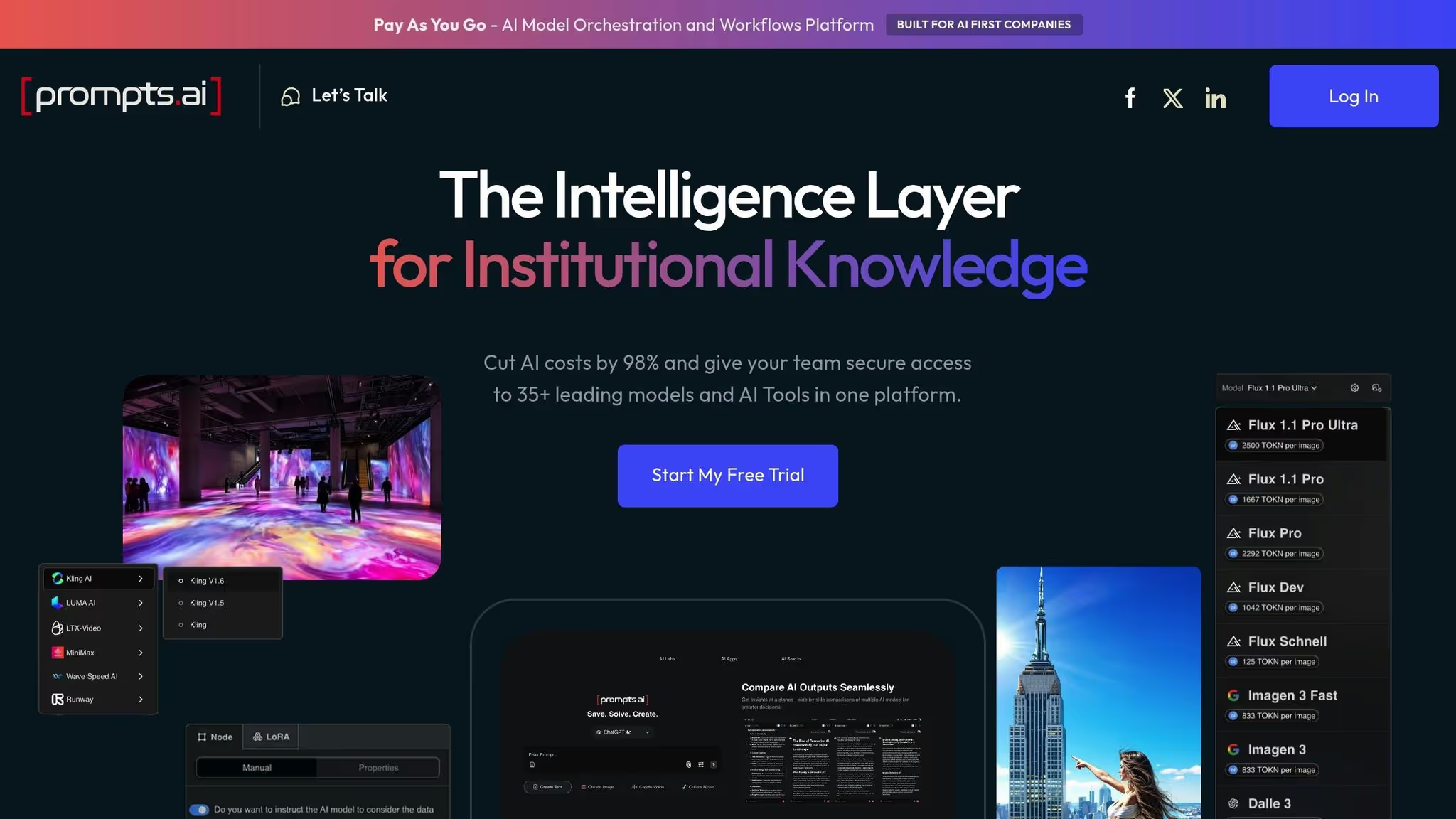
Prompts.ai es una sólida plataforma de orquestación de IA diseñada para uso empresarial, que integra sin problemas más de 35 modelos lingüísticos de primer nivel como GPT-5, Claude, LLama y Gemini en una interfaz segura y fácil de usar. Al consolidar las herramientas de inteligencia artificial, aborda las ineficiencias de los sistemas dispersos, ofreciendo un control centralizado, una supervisión de los costos en tiempo real y una gestión estricta del cumplimiento. La plataforma garantiza un funcionamiento fluido y, al mismo tiempo, cumple con los estándares regulatorios clave.
Prompts.ai prioriza la seguridad de los datos y el cumplimiento de la normativa, incorporando protocolos de los marcos SOC 2 Type II, HIPAA y GDPR. El proceso de auditoría del SOC 2 de tipo II comenzó el 19 de junio de 2025 y la plataforma mantiene un monitoreo continuo a través de su asociación con Vanta. Los usuarios pueden acceder a un centro de confianza dedicado en https://trust.prompts.ai/, que proporciona actualizaciones en tiempo real sobre las políticas de seguridad, los controles y el progreso del cumplimiento. Estas funciones se incluyen en todos los niveles de precios, lo que garantiza la tranquilidad de las organizaciones de cualquier tamaño.
Prompts.ai aborda los desafíos del uso descentralizado de la IA al ofrecer un registro de auditoría unificado. Esta función rastrea cada interacción de la IA y detalla qué modelos se usaron, los datos procesados y la persona que inició el flujo de trabajo. Esta transparencia garantiza un manejo de datos uniforme y seguro en toda la organización, lo que elimina los riesgos asociados a la implementación descoordinada de herramientas de inteligencia artificial.
Con Prompts.ai, los equipos pueden acceder a varios modelos de IA a través de una única interfaz unificada, lo que elimina la necesidad de integraciones de API independientes. Esta configuración simplificada simplifica el cambio entre modelos como el GPT-5, el Claude y el Grok-4 sin necesidad de realizar trabajos de desarrollo adicionales. Para las empresas, la administración de un único punto de conexión reduce la complejidad de la autenticación, la limitación de la velocidad y la gestión de errores, lo que facilita la escalabilidad y la implementación de soluciones de IA de manera eficiente.
Como solución SaaS basada en la nube, Prompts.ai elimina la necesidad de una infraestructura local, lo que permite a las organizaciones implementar rápidamente y escalar sin esfuerzo. Se pueden agregar nuevos usuarios, equipos y modelos a través de una interfaz web sencilla, lo que permite una transición fluida de los proyectos piloto a las operaciones a gran escala. Su arquitectura multiusuario permite a los diferentes departamentos mantener políticas de gobierno y centros de costos distintos y, al mismo tiempo, compartir una infraestructura segura. Esta flexibilidad se ve respaldada además por un modelo de precios basado en el uso, que garantiza la escalabilidad sin gastos innecesarios.
Prompts.ai utiliza un sistema de crédito TOKN con precios de pago por uso, que alinea los costos directamente con el uso. Los planes personales comienzan con la opción de pago por uso de 0$ al mes, seguida del plan Creator, de 29$ al mes, y del plan familiar, de 99$ al mes. Para las empresas, los precios se estructuran de la siguiente manera:
La plataforma también incluye una capa FinOps para monitorear el consumo de tokens en tiempo real, lo que brinda a los equipos información detallada sobre los gastos y la capacidad de optimizar el uso para lograr la máxima eficiencia.
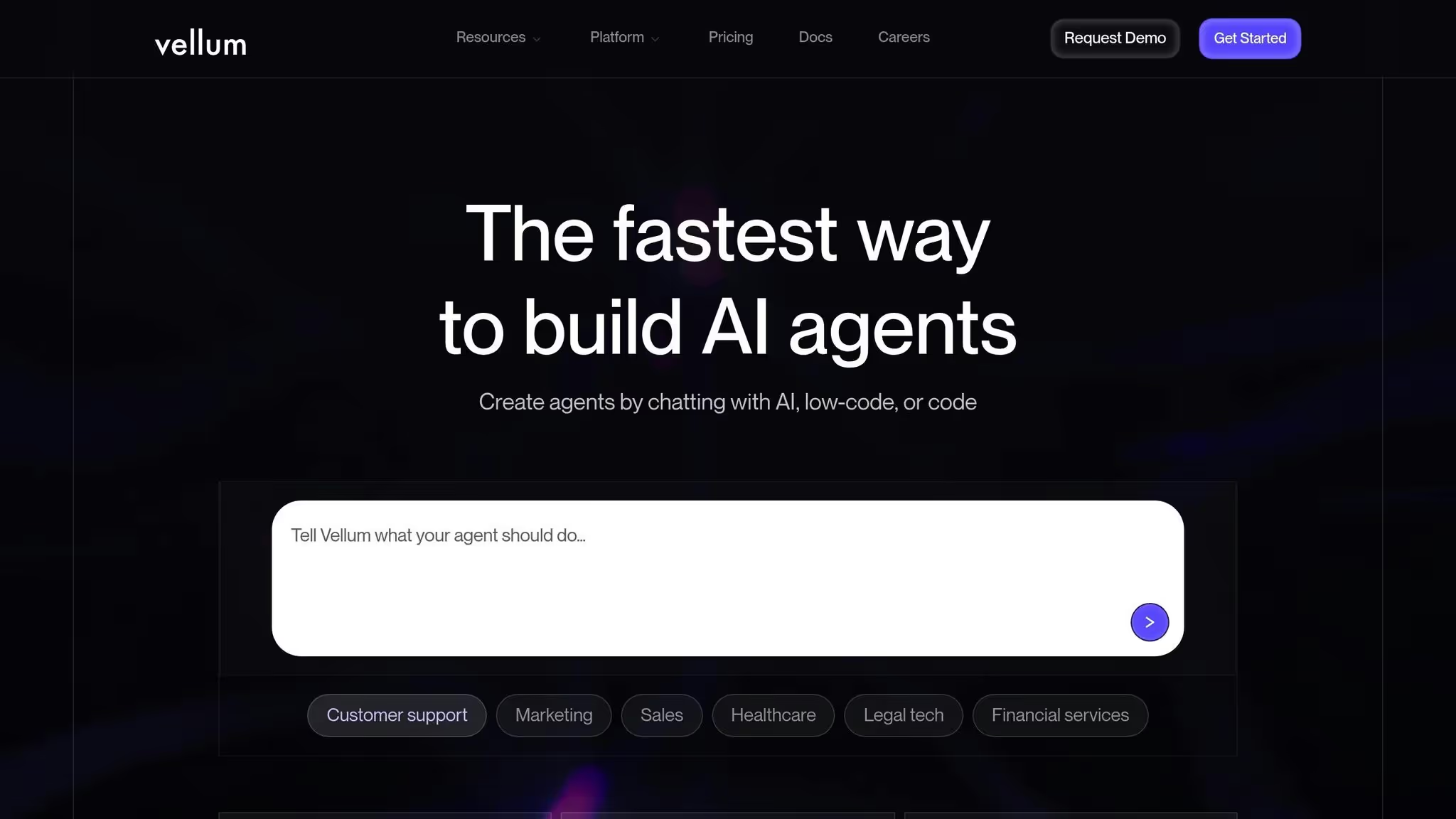
Vellum AI está diseñado para gestionar los flujos de trabajo de IA a nivel de producción y, al mismo tiempo, cumplir con los estrictos requisitos de seguridad y cumplimiento. Está diseñado para las organizaciones que gestionan flujos de trabajo de IA que exigen altos estándares de supervisión y responsabilidad.
Para satisfacer las necesidades de cumplimiento, Vellum AI emplea un enfoque estructurado para el control de acceso y la gestión de datos. La plataforma utiliza Control de acceso basado en roles (RBAC) para administrar los permisos y separar los entornos de desarrollo, preparación y producción. Esta separación minimiza los riesgos al garantizar que el trabajo experimental no interfiera con los flujos de trabajo en vivo, lo que crea un marco sólido para la seguridad de las operaciones.
Vellum AI prioriza la visibilidad y el control en sus medidas de gobierno y seguridad. Ofrece registros de auditoría detallados que rastrean las actividades de los usuarios, garantizando la transparencia y la responsabilidad en todos los flujos de trabajo. Para la información confidencial, como las claves de API y las credenciales, la plataforma utiliza gestión de secretos para almacenar e inyectar de forma segura estos detalles durante el tiempo de ejecución. Estas funciones se alinean con los altos estándares requeridos para la automatización empresarial, especialmente en las operaciones centradas en la IA.
Las organizaciones pueden implementar flujos de trabajo en la nube, dentro de un Nube privada virtual (VPC), o en las instalaciones. Esta flexibilidad garantiza que los datos confidenciales se mantengan dentro de los límites de seguridad predefinidos y cumplan con facilidad los requisitos reglamentarios y de residencia de los datos.
Vellum AI está diseñado para funcionar a la perfección con varios modelos y servicios de IA, y admite flujos de trabajo que aprovechan varios modelos lingüísticos. Su arquitectura permite una iteración fluida de tareas como la selección de modelos, el diseño rápido y las estrategias de recuperación, a la vez que mantiene los controles y salvaguardias de nivel empresarial.
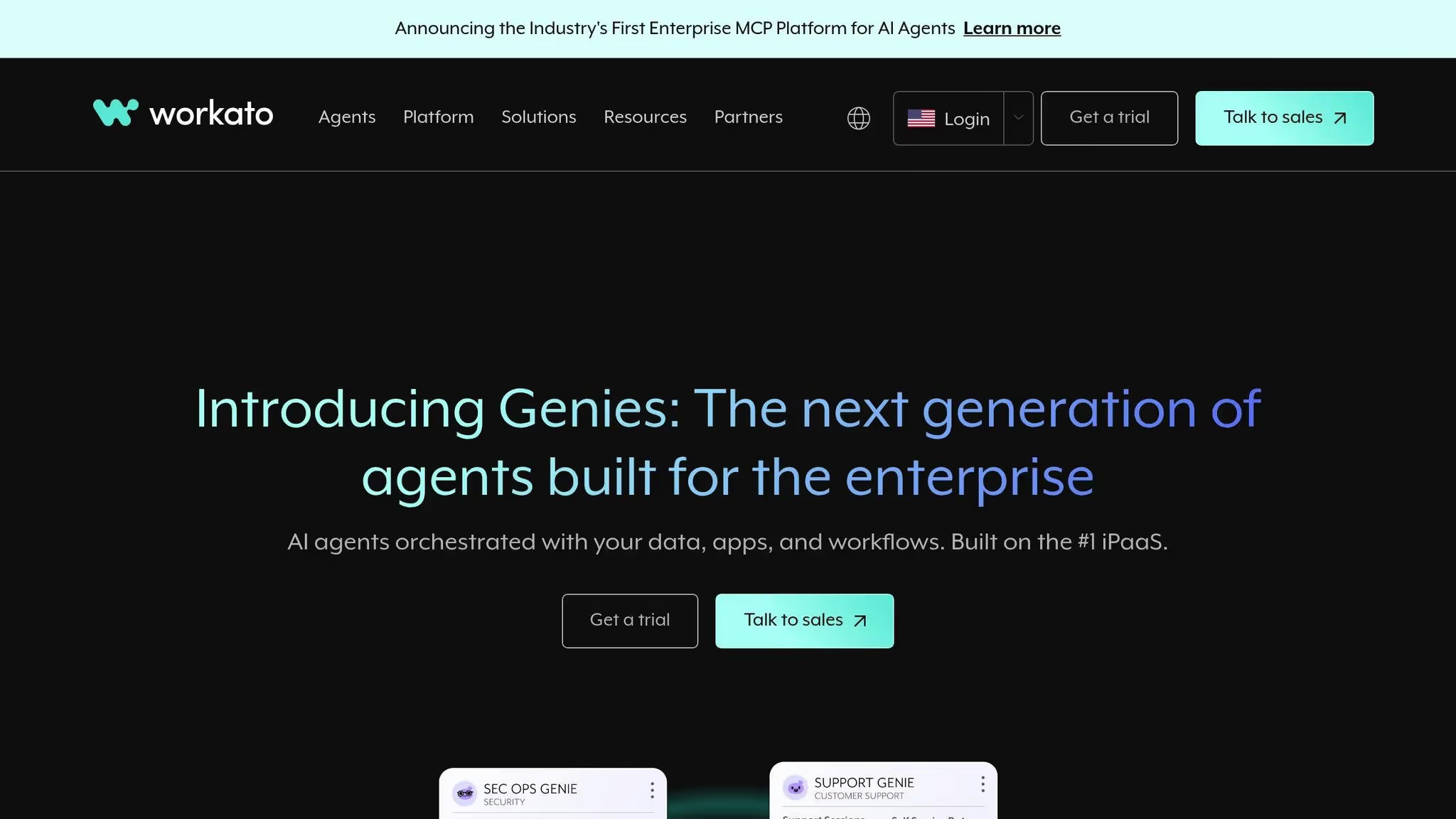
Workato es una plataforma de automatización empresarial diseñada para integrar el cumplimiento y la gobernanza en flujos de trabajo empresariales complejos. Basándose en las capacidades de plataformas como Prompts.ai y Vellum AI, Workato mejora los flujos de trabajo automatizados al combinar controles de datos avanzados con una conectividad perfecta. Está diseñado para gestionar integraciones complejas y, al mismo tiempo, cumplir con rigurosos estándares de seguridad, lo que lo hace ideal para industrias con requisitos normativos estrictos.
Workato garantiza el cumplimiento normativo mediante el seguimiento de los movimientos de datos con sólidos controles de gobierno. Mantiene registros detallados, lo que ayuda a las organizaciones a cumplir con estándares como el RGPD, la HIPAA y el SOC 2. Dentro de los flujos de trabajo, los usuarios pueden configurar el enmascaramiento y el cifrado de datos para proteger la información confidencial durante todo el proceso de automatización.
La plataforma también proporciona plantillas preconfiguradas alineadas con los marcos regulatorios comunes. Estas plantillas simplifican el cumplimiento al ofrecer una lógica estandarizada para administrar los datos personales, la información financiera y los registros de atención médica de acuerdo con las regulaciones específicas. En conjunto, estas características establecen una base sólida para la gobernanza.
Workato prioriza la seguridad mediante controles de acceso granulares y una supervisión integral del flujo de trabajo. La configuración de permisos limita quién puede crear, modificar o ejecutar los flujos de trabajo, lo que garantiza que solo el personal autorizado tenga acceso.
Un extenso registro de auditoría captura cada acción de la plataforma, incluidas las marcas de tiempo, las identidades de los usuarios y los cambios específicos realizados. Estos registros pueden exportarse para su almacenamiento a largo plazo o integrarse con los sistemas SIEM para facilitar las revisiones de seguridad y las auditorías de cumplimiento.
Para proteger las credenciales, Workato emplea el almacenamiento centralizado de secretos y cifra las claves de API, las contraseñas y los tokens. Al mantenerlos separados de la lógica del flujo de trabajo, la plataforma minimiza el riesgo de exposición accidental.
Workato se destaca en la integración, ya que conecta una amplia gama de aplicaciones y servicios, incluidos sistemas empresariales como Fuerza de ventas, SAVIA, y Jornada laboral, así como plataformas de nube modernas. El SDK del conector permite a las organizaciones crear integraciones personalizadas para sistemas propietarios o especializados, lo que garantiza la flexibilidad.
La plataforma también simplifica la administración de las API al gestionar automáticamente la limitación de la velocidad y la resolución de errores. En el caso de los flujos de trabajo relacionados con los servicios de inteligencia artificial, Workato organiza las llamadas a varios proveedores, gestiona las respuestas y distribuye los datos de acuerdo con una lógica empresarial predefinida.
Workato ofrece opciones de implementación flexibles, que incluyen soluciones basadas en la nube y agentes locales. Este enfoque híbrido permite conexiones de flujo de trabajo seguras entre sistemas con firewall, lo que ofrece tanto la seguridad de la red como las ventajas de la automatización en la nube.
Para las organizaciones con requisitos de residencia de datos, Workato ofrece opciones de implementación en regiones geográficas específicas, lo que garantiza que los datos del flujo de trabajo permanezcan dentro de las jurisdicciones requeridas.
Workato utiliza un modelo de precios basado en suscripciones vinculado al recuento de tareas, en el que cada tarea representa una sola acción dentro de un flujo de trabajo. Los conectores premium o las funciones avanzadas, como la sincronización de datos en tiempo real, pueden conllevar costes adicionales. Para obtener precios detallados y adaptados a las necesidades de automatización específicas, se recomienda a las organizaciones que se pongan en contacto directamente con Workato.
n8n es un plataforma de automatización del flujo de trabajo disponible en el origen diseñado teniendo en cuenta la flexibilidad y la transparencia. A diferencia de los sistemas propietarios, proporciona a los desarrolladores acceso directo a su base de código, lo que permite personalizar los flujos de trabajo y realizar auditorías de seguridad. La plataforma es compatible con ambos hospedado en la nube y hospedado por uno mismo modelos de implementación, que ofrecen a las organizaciones la posibilidad de elegir la configuración que se adapte a sus necesidades operativas y de cumplimiento.
n8n es Cumple con SOC 2, lo que confirma que la plataforma se adhiere a estrictos protocolos de seguridad para salvaguardar los datos de los clientes, garantizando su confidencialidad y disponibilidad. Su naturaleza de código abierto permite a los equipos realizar sus propias auditorías de seguridad, lo que proporciona una capa adicional de seguridad al verificar los flujos de datos e identificar las posibles vulnerabilidades desde el principio.
Para quienes optan por el alojamiento propio, la responsabilidad del cumplimiento recae en la organización. Esto incluye configurar los protocolos de seguridad, mantener los registros de auditoría y garantizar que el entorno de alojamiento cumpla con los estándares reglamentarios.
n8n refuerza su base de cumplimiento con sólidas funciones de gobierno. Es control de acceso basado en funciones (RBAC) el sistema permite a los administradores asignar permisos en función de las funciones laborales. Esto garantiza que los usuarios solo puedan ver, editar o ejecutar los flujos de trabajo que sean relevantes para sus responsabilidades.
Para proteger las credenciales confidenciales, n8n se integra perfectamente con las herramientas de administración de secretos más utilizadas, que incluyen Administrador de secretos de AWS, Gestor secreto de Google Cloud, Bóveda de claves de Azure, y Bóveda de HashiCorp. Estas herramientas mantienen las claves, contraseñas y tokens de API cifrados y separados de la lógica del flujo de trabajo, lo que reduce el riesgo de exposición de las credenciales.
La plataforma también incluye herramientas integradas de registro y depuración que rastrean las ejecuciones, los errores y las transformaciones de datos del flujo de trabajo. Estos registros tienen un valor incalculable para la resolución de problemas, el mantenimiento de la integridad del flujo de trabajo y la investigación de anomalías.
Sin embargo, la implementación de una gobernanza sólida a menudo requiere experiencia técnica. Las organizaciones pueden necesitar desarrolladores o administradores de sistemas para configurar los controles de seguridad, establecer prácticas de supervisión y garantizar que la plataforma satisfaga sus necesidades específicas de cumplimiento.
n8n destaca por su capacidad de conectarse con una amplia gama de aplicaciones y servicios a través de nodos prediseñados. Estos nodos cubren las herramientas empresariales, las bases de datos y las API de uso común. Para necesidades más personalizadas, los desarrolladores pueden usar JavaScript o Pitón para crear integraciones personalizadas. Esta adaptabilidad permite a los equipos crear automatizaciones complejas, combinando varios proveedores de IA, fuentes de datos y sistemas empresariales en flujos de trabajo fluidos.
Como la plataforma está disponible en el código fuente, los desarrolladores tienen la libertad de modificar o ampliar las integraciones. Si un nodo prediseñado no cumple con los requisitos específicos, los equipos pueden modificarlo o crear nodos completamente nuevos para que se adapten a la lógica de su flujo de trabajo.
n8n ofrece dos modelos de implementación para adaptarse a las diferentes necesidades organizativas. El opción alojada en la nube proporciona un entorno gestionado en el que n8n gestiona el mantenimiento, las actualizaciones y la disponibilidad de la infraestructura. Esto es ideal para los equipos que desean centrarse en crear flujos de trabajo sin preocuparse por la administración de los servidores.
El opción autohospedada brinda a las organizaciones un control total sobre su entorno de implementación. Los flujos de trabajo se pueden ejecutar localmente, detrás de firewalls corporativos o en entornos de nube privada, lo que garantiza que los datos confidenciales permanezcan dentro de la infraestructura de la organización. Esta opción es particularmente valiosa para los sectores con requisitos estrictos de residencia de datos o con altas exigencias normativas. Además, el alojamiento automático permite a las organizaciones modificar la base de código, implementar medidas de seguridad personalizadas e integrarse profundamente con los sistemas empresariales existentes, capacidades que a menudo no están disponibles en las plataformas propietarias.
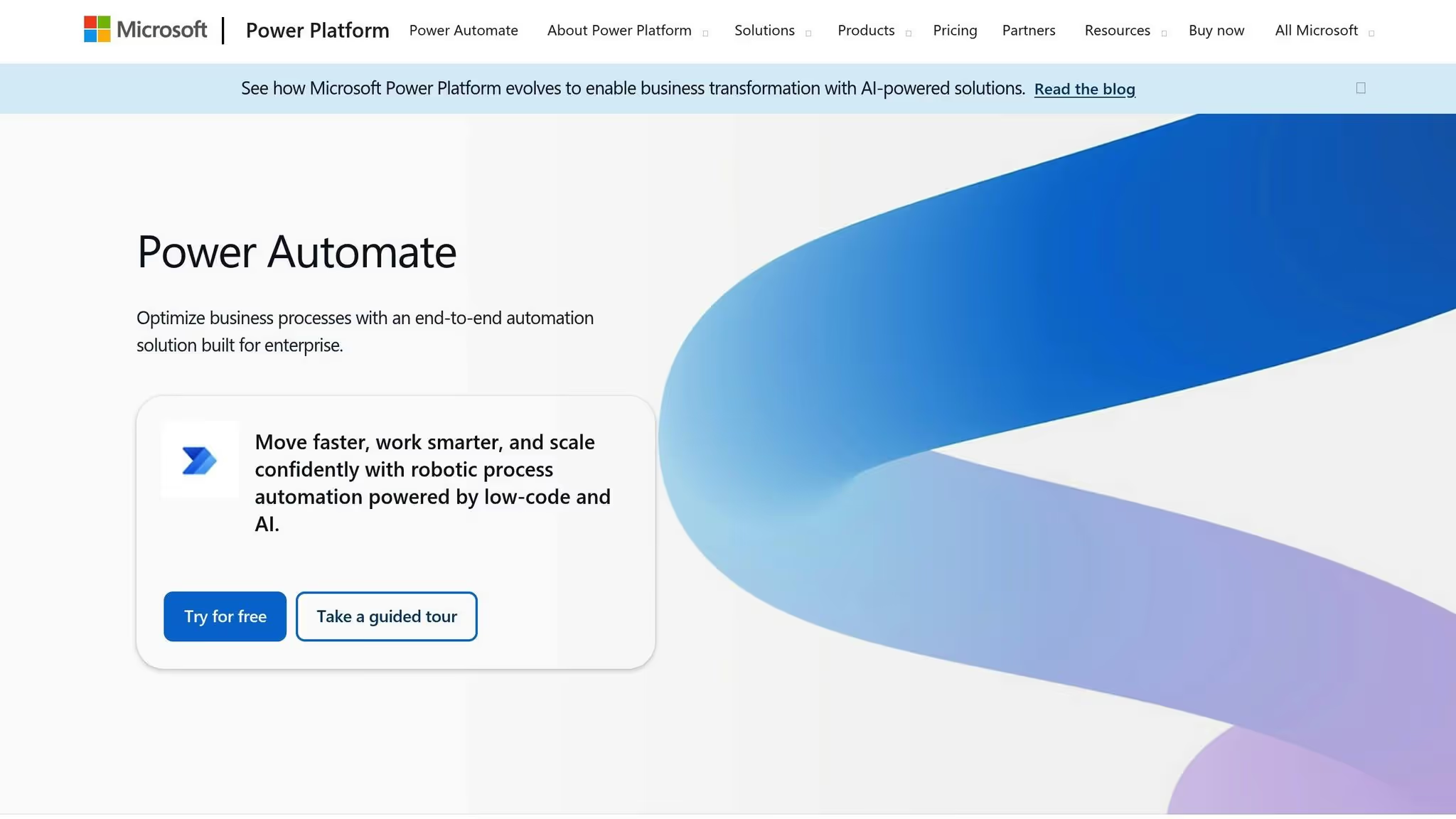
Microsoft Power Automate es una plataforma basada en la nube dentro del ecosistema de Microsoft diseñada para agilizar los procesos empresariales. Se integra a la perfección con herramientas como Microsoft 365, Dynamics 365, y Azure para mejorar las capacidades de automatización.
Power Automate funciona en conjunto con Perspectiva de Microsoft, lo que permite a las organizaciones gestionar la gobernanza de la IA y hacer cumplir las políticas de datos de forma eficaz. Esta integración permite la implementación de políticas de gobierno, clasificación y uso de los datos, lo que garantiza la protección de la información confidencial mientras fluye por los sistemas en la nube. La plataforma cumple con los principales estándares regulatorios, incluidos el SOC 2, la ISO 27001, el GDPR, la HIPAA y la CCPA, al tiempo que aborda las necesidades específicas del sector de la salud.
La plataforma admite el monitoreo, la generación de informes y la corrección automatizados del cumplimiento al conectarse con las fuentes de datos de cumplimiento, lo que ayuda a las organizaciones a anticiparse a los posibles riesgos.
Power Automate mejora la seguridad a través de herramientas de gobierno integrales. Proporciona controles de acceso basados en funciones (RBAC) y prevención de pérdida de datos (DLP) políticas. Estas funciones permiten a los administradores controlar quién puede crear, modificar o ejecutar flujos de trabajo, lo que protege los procesos de automatización confidenciales. El monitoreo y las alertas en tiempo real para detectar infracciones de cumplimiento garantizan que se puedan tomar medidas rápidas cuando surjan problemas.
La seguridad se refuerza aún más mediante la integración con Azure Active Directory y Microsoft Defender. El cifrado y el manejo seguro de los datos son estándar en todos los flujos de trabajo, y los registros de auditoría con paneles de cumplimiento ofrecen una visibilidad detallada de las actividades de automatización.
Power Automate se conecta con más de 1000 aplicaciones en la nube, incluidas Microsoft 365, Salesforce, SAP, Oracle y Workday. Su diseñador visual de flujo de trabajo y sus API REST lo hacen accesible tanto para usuarios técnicos como no técnicos. Esta flexibilidad permite integraciones fluidas en una amplia gama de herramientas y sistemas.
Power Automate es principalmente una solución basada en la nube y se ejecuta en la infraestructura Azure de Microsoft. Permite a las organizaciones implementar flujos de trabajo en regiones específicas para cumplir con los requisitos de residencia de datos. Funciones como el registro de auditorías y los informes de cumplimiento garantizan el cumplimiento de las normas reglamentarias en varios escenarios de implementación.
Para la automatización de procesos basada en equipos de escritorio, Power Automate ofrece una opción de implementación local mediante el agente de escritorio Power Automate, que admite la automatización supervisada y desatendida. Las opciones de implementación híbrida, que combinan elementos locales y en la nube, se adaptan a las organizaciones con necesidades de infraestructura mixtas.
Microsoft Power Automate utiliza una estructura de precios por niveles basada en el uso y la complejidad de los flujos de trabajo. Los flujos básicos en la nube comienzan en 15$ por usuario al mes. Los flujos de escritorio avanzados con automatización robótica de procesos (RPA) están disponibles a través de niveles de licencia premium. Las opciones de licencias empresariales con descuentos por volumen están disponibles para las organizaciones con grandes necesidades de automatización. También se ofrece un nivel gratuito, que proporciona ejecuciones de automatización y conectores limitados para probar los flujos de trabajo.
Para las organizaciones que ya utilizan Microsoft 365, es posible que se incluyan o se descuenten funciones de automatización del cumplimiento, lo que podría reducir los costos. Al evaluar los precios, las empresas deben tener en cuenta factores como la cantidad de flujos de trabajo, la frecuencia de ejecución y la necesidad de conectores de primera calidad. Al aprovechar los servicios de Microsoft existentes, las organizaciones suelen ahorrar costos en comparación con las herramientas de automatización independientes, lo que se beneficia de la reducción de los gastos de licencias, implementación y mantenimiento. Este enfoque de precios garantiza la escalabilidad y la seguridad, al tiempo que mantiene los costos de automatización manejables.
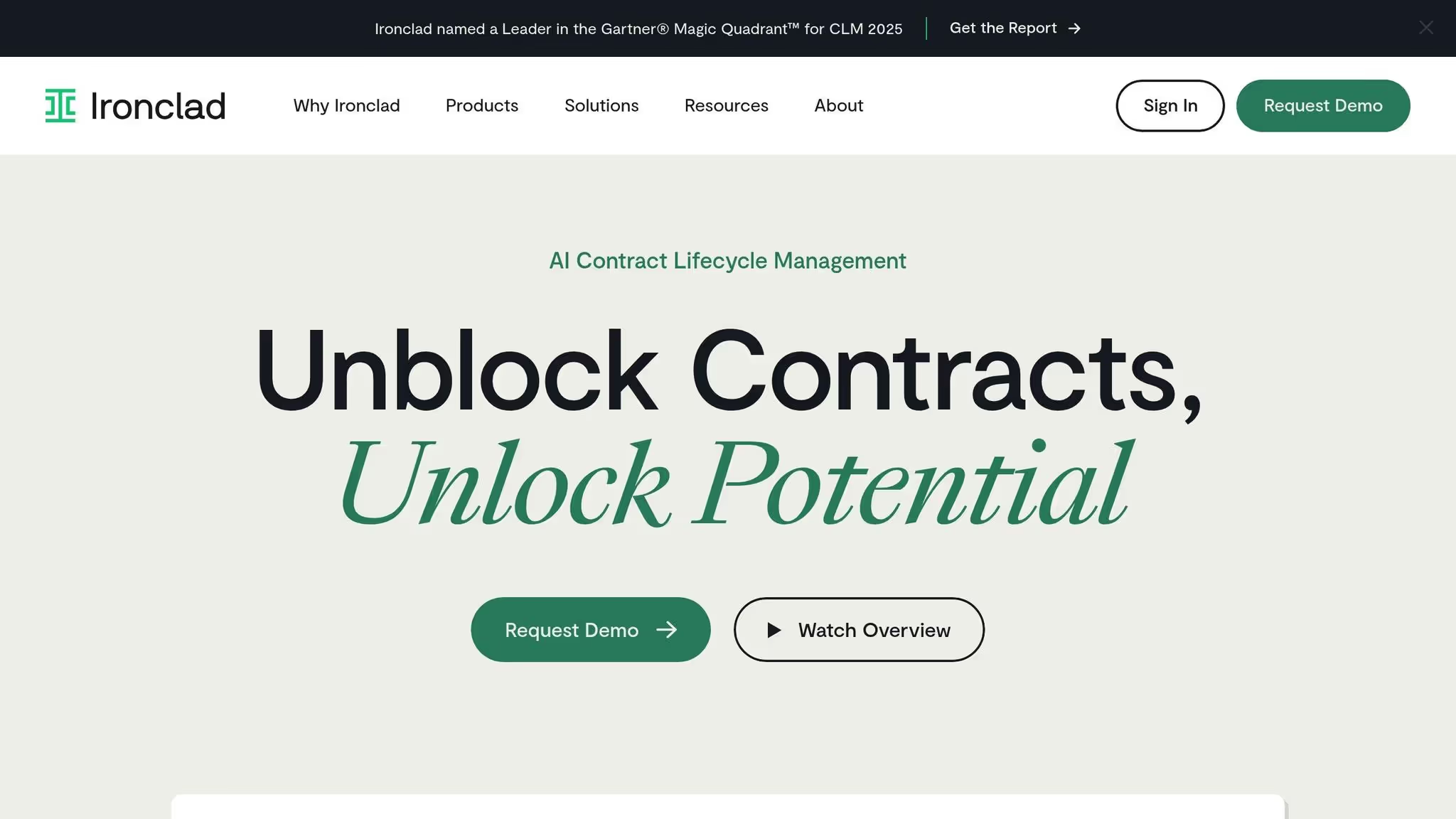
Ironclad es una plataforma de gestión del ciclo de vida de los contratos diseñada para simplificar la automatización del flujo de trabajo para los equipos legales y empresariales. Se centra en integrarse sin problemas en los sistemas empresariales existentes y, al mismo tiempo, garantizar que el cumplimiento sea siempre una prioridad.
Ironclad ofrece un marco de integración sólido que incluye integraciones nativas, conexiones iPaaS a más de 8000 aplicaciones empresariales y una API pública para el desarrollo personalizado. Estas herramientas permiten a los equipos gestionar de forma segura y eficiente los flujos de trabajo de los contratos. Por ejemplo, los usuarios pueden crear y gestionar contratos directamente en plataformas como Salesforce, Golpe, y Microsoft Word sin interrumpir sus procesos habituales. Sus opciones de integración abarcan la automatización, el CRM, la gestión de documentos, las firmas electrónicas y las herramientas de colaboración, lo que la hace adaptable a las diversas necesidades empresariales. Además, la API pública permite soluciones personalizadas para desafíos de flujo de trabajo únicos, lo que mejora su flexibilidad a la hora de gestionar procesos contractuales complejos.
«De hecho, es muy intuitivo una vez que lo empiezas a usar... Puedo iniciar y adaptar los flujos de trabajo de forma independiente».
Ezinne Okpo, vicepresidenta de Asuntos Jurídicos de Reonomy
«Sin Ironclad, los flujos de trabajo que requieren varios aprobadores se vuelven lentos e ineficientes».
Ken Hoang, gerente sénior de contratos de Intercom
La elección de la plataforma de cumplimiento de IA adecuada a menudo implica sopesar factores como la integración, la implementación, la gobernanza, la escalabilidad, los precios y la facilidad de uso. Estos elementos pueden ayudarlo a alinear una plataforma con las necesidades específicas de su organización, ya sea que se centre en la simplicidad, la personalización o los estrictos controles de privacidad de los datos.
Capacidades de integración difieren significativamente de una plataforma a otra. Algunas ofrecen amplios conectores prediseñados, lo que las hace ideales para usuarios sin conocimientos técnicos, mientras que otras ofrecen soluciones de API personalizadas para desarrolladores. Por ejemplo, algunas plataformas combinan herramientas visuales con soporte para la creación de scripts, lo que permite a los analistas empresariales y a los equipos de ingeniería personalizar los flujos de trabajo de forma eficaz. Este enfoque dual garantiza que los equipos diversos puedan colaborar sin problemas.
Métodos de despliegue son otra consideración clave. Las plataformas totalmente administradas en la nube minimizan la sobrecarga operativa y aceleran la implementación. Sin embargo, las organizaciones con necesidades normativas o de privacidad de datos estrictas suelen necesitar más control. Para abordar este problema, algunas plataformas ofrecen opciones de implementación flexibles, que incluyen configuraciones en la nube, de VPC privadas y locales. Estas opciones permiten a las empresas mantener los datos confidenciales dentro de su infraestructura y, al mismo tiempo, aprovechar la automatización. Esta flexibilidad es particularmente valiosa en los sectores con estrictas normas de residencia de datos.
Certificaciones de gobierno y cumplimiento varían según el enfoque de la plataforma y el público objetivo. Las soluciones de nivel empresarial suelen cumplir con marcos como el SOC 2 de tipo II, el RGPD y la HIPAA para aplicaciones sanitarias. También pueden diferir funciones como el registro de auditorías, los controles de acceso basados en funciones y los niveles de cifrado. Busque plataformas que proporcionen información en tiempo real sobre el acceso a los datos, los registros de cambios y el movimiento de información confidencial para garantizar el cumplimiento y la seguridad.
Escalabilidad es otro factor que diferencia a las plataformas. Algunas están diseñadas para la automatización sencilla de tareas, mientras que otras están diseñadas para gestionar flujos de trabajo complejos a escala empresarial. Las operaciones de gran volumen suelen requerir funciones avanzadas, como la gestión de errores, la lógica de reintentos y la supervisión del rendimiento. Las soluciones de nivel empresarial admiten la aprobación en varios pasos, el procesamiento masivo e incluso la integración de sistemas antiguos, aunque es posible que requieran más capacitación para utilizarlas de manera eficaz.
Estructuras de precios puede afectar significativamente a su elección. Los modelos basados en suscripciones ofrecen costos mensuales predecibles, pero pueden volverse costosos a medida que su equipo crece. Los modelos basados en el uso, que cobran en función de las llamadas a la API, las ejecuciones del flujo de trabajo o el volumen de datos, alinean los costos con el uso real, pero pueden resultar más difíciles de presupuestar. Prompts.ai, por ejemplo, utiliza un modelo de pago por uso con créditos TOKN, lo que elimina las tarifas de suscripción recurrentes y permite a las empresas ampliar el uso de la IA de forma flexible sin compromisos a largo plazo. Estas opciones de precios, junto con las funciones de bajo código y la facilidad de implementación, configuran el valor general que ofrece cada plataforma.
Las herramientas con poco código y sin código han hecho que la automatización sea más accesible para los usuarios no técnicos. Las interfaces de arrastrar y soltar simplifican la creación de flujos de trabajo, mientras que las opciones de codificación personalizadas permiten a los desarrolladores añadir funciones avanzadas cuando sea necesario. Esta combinación de simplicidad y extensibilidad es crucial para las organizaciones a la hora de ampliar sus esfuerzos de automatización y enfrentarse a situaciones en las que los conectores prediseñados pueden resultar insuficientes.
Facilidad de implementación a menudo depende de la experiencia técnica de su equipo y de la complejidad de sus flujos de trabajo. Las plantillas prediseñadas y los planos específicos del sector pueden acelerar la implementación en casos de uso estándar. Sin embargo, las necesidades empresariales específicas pueden requerir una mayor personalización. Algunas plataformas simplifican la configuración al ocultar las funciones avanzadas, mientras que otras ofrecen una capacidad de configuración total, lo que puede conllevar una curva de aprendizaje más pronunciada.
En última instancia, la mejor plataforma para su organización dependerá de sus prioridades. Los equipos que buscan una implementación rápida pueden preferir los servicios gestionados con amplios conectores prediseñados. Mientras tanto, las organizaciones con necesidades de cumplimiento complejas o procesos altamente personalizados pueden dar prioridad a las plataformas que ofrecen una gran capacidad de configuración, opciones de implementación flexibles y sólidas funciones de gobierno.
Esta revisión ha descrito cómo las diferentes plataformas abordan el cumplimiento de la IA, y ofrece información para ayudarlo a seleccionar una que se alinee con su experiencia técnica, requisitos reglamentarios y objetivos estratégicos.
Prompts.ai destaca por su capacidad para consolidar sistemas de IA dispersos y, al mismo tiempo, mantener los costos bajo control y garantizar una gobernanza adecuada. Al proporcionar un acceso unificado a los principales modelos de IA a través de su sistema de crédito TOKN de pago por uso, elimina la necesidad de múltiples suscripciones a medida que su equipo crece. Su capa FinOps integrada monitorea el uso de los tokens en tiempo real, vinculando el gasto en IA directamente con los resultados empresariales. Para las empresas que tienen que hacer malabares con varios proveedores de inteligencia artificial y costes ocultos, este modelo centralizado puede reducir los gastos de software hasta en un 98% y, al mismo tiempo, mantener los registros de auditoría y aplicar los controles de acceso basados en funciones.
Vitela AI está diseñado para equipos que se centran en la ingeniería rápida y la experimentación rápida. Su interfaz fácil de usar para desarrolladores agiliza la iteración y realiza un seguimiento de los cambios en las solicitudes y los resultados del modelo, lo que garantiza la trazabilidad durante todo el proceso.
Trabaja en se adapta a las organizaciones con sistemas SaaS empresariales establecidos. Su amplia biblioteca de conectores prediseñados simplifica la automatización de los flujos de datos entre herramientas como los sistemas de recursos humanos, los CRM y los repositorios legales, lo que la convierte en una opción sólida para los equipos de cumplimiento.
n8n atiende a equipos con experiencia técnica avanzada y estrictos requisitos de soberanía de datos. Como plataforma de código abierto, permite un control total sobre la implementación, ya sea en la nube, en una red virtual privada o in situ, al tiempo que evita la dependencia de un proveedor. Sin embargo, este nivel de flexibilidad requiere ingenieros cualificados para gestionar y escalar la plataforma. Cabe destacar que el 51% de las organizaciones que utilizan marcos de IA de código abierto reportan un ROI positivo, en comparación con el 41% que confía únicamente en soluciones patentadas.
Microsoft Power Automate es ideal para las organizaciones que ya han invertido en el ecosistema de Microsoft. Sus integraciones nativas con Office 365, Dynamics 365 y Azure reducen la complejidad de la configuración, lo que la hace eficaz para los flujos de trabajo que implican la aprobación de documentos, la administración de SharePoint y las notificaciones de Teams.
Acorazado atiende a los equipos legales y de adquisiciones que gestionan los flujos de trabajo de los contratos. Se integra perfectamente con las herramientas empresariales y ofrece análisis de contratos y enrutamiento de aprobación basados en inteligencia artificial, lo que la convierte en una excelente opción para garantizar el cumplimiento en la gobernanza de los contratos.
Estas evaluaciones destacan cómo cada plataforma equilibra la necesidad de flexibilidad y control. Al decidir entre plataformas de código abierto como n8n y soluciones propietarias, evalúe factores como las habilidades técnicas, el presupuesto, las necesidades de personalización, la soberanía de los datos y la velocidad de implementación de su equipo. Las herramientas de código abierto ofrecen una personalización sin igual y la oportunidad de desarrollar experiencia institucional, pero exigen importantes recursos técnicos. Las plataformas propietarias, por otro lado, suelen ofrecer una implementación más rápida, un soporte dedicado y una seguridad sólida y lista para usar.
Un enfoque híbrido podría ofrecer el mejor equilibrio, ya que combina la adaptabilidad de las herramientas de código abierto para la lógica personalizada con la estabilidad de las plataformas propietarias para las operaciones críticas. Dado que se prevé que las capacidades de inteligencia artificial aumentarán la productividad empresarial entre un 20 y un 45% de aquí a 2030, mantener las opciones abiertas es más crucial que nunca. La reducción de la brecha entre estos tipos de plataformas en cuanto a la preparación para la producción probablemente influya en los análisis de costo-beneficio de muchas organizaciones.
Para tomar la mejor decisión, evalúe cuidadosamente los costos totales de propiedad (incluidas las licencias, la infraestructura, el tiempo del personal y los costos de oportunidad) tanto para las opciones de código abierto como para las de propiedad exclusiva. La ejecución de programas piloto puede ayudar a confirmar el grado de integración y rendimiento de cada plataforma en la práctica. En última instancia, su elección debe alinearse con las prioridades principales de su organización: si el cumplimiento, el control de datos o los flujos de trabajo personalizados son esenciales, el código abierto puede ser la mejor opción (siempre que cuente con los recursos para respaldarlo). Para quienes priorizan la velocidad, la simplicidad y la confiabilidad, las herramientas patentadas pueden ofrecer una solución más rápida y de menor riesgo.
La plataforma adecuada complementará la experiencia de su equipo, cumplirá con los requisitos de cumplimiento y respaldará sus objetivos de IA a largo plazo. A medida que la adopción de la IA se acelera en todos los sectores, tomar una decisión informada nunca ha sido tan importante.
Al elegir una plataforma de cumplimiento de IA para respaldar los flujos de trabajo automatizados, es esencial priorizar las herramientas que proporcionan monitoreo continuo, gestión de auditorías, y análisis de datos. Estas capacidades garantizan que los estándares de cumplimiento se cumplan de manera uniforme en todas las operaciones. Además, las plataformas con herramientas sólidas de gestión de riesgos, alertas automatizadas, y funciones de remediación puede identificar y abordar rápidamente los posibles problemas antes de que se agraven.
Al aprovechar estas funciones, las empresas no solo protegen el cumplimiento normativo, sino que también mejoran la eficiencia general. Los sistemas automatizados reducen la necesidad de intervenciones manuales y agilizan los procesos, lo que ayuda a las organizaciones a mantener flujos de trabajo seguros, eficientes y conformes con las normas.
Las plataformas de cumplimiento de la IA están diseñadas para ayudar a las organizaciones a navegar por normativas como GDPR y HIPAA mediante el uso de tecnología avanzada para agilizar los esfuerzos de cumplimiento. Estas plataformas integran herramientas como las evaluaciones de riesgos automatizadas, el monitoreo en tiempo real y el análisis inteligente de documentos para identificar las vulnerabilidades y garantizar que los requisitos reglamentarios se cumplan de manera consistente.
Además, aprovechan análisis predictivo para pronosticar los posibles riesgos de cumplimiento y ofrecer información procesable. Este enfoque proactivo permite a las empresas abordar los problemas de manera temprana, evitando que se agraven. Al automatizar estos procesos, las plataformas de cumplimiento de la IA reducen significativamente las cargas de trabajo manuales y, al mismo tiempo, mejoran la eficiencia operativa, lo que simplifica el desafío de cumplir con marcos regulatorios complejos.
Las plataformas de cumplimiento de IA basadas en la nube brindan una variedad de beneficios que las convierten en una opción inteligente para muchas organizaciones. Una de sus características más destacadas es su capacidad para ahorrar costes al eliminar la necesidad de un hardware caro y de un mantenimiento continuo. En lugar de invertir en infraestructura física, las empresas pueden confiar en la nube para gestionar sus necesidades de manera eficiente.
Estas plataformas también son increíblemente adaptables, lo que permite a las empresas aumentar o reducir sus recursos a medida que cambian sus demandas. Esta flexibilidad garantiza que las empresas solo paguen por lo que utilizan, lo que facilita la gestión eficaz de los presupuestos.
Otra ventaja importante es la accesibilidad. Los equipos pueden conectarse a las herramientas y los datos desde prácticamente cualquier lugar con una conexión a Internet, lo que facilita el trabajo remoto y la colaboración. Además, las soluciones en la nube suelen venir equipadas con funciones de seguridad sólidas y sistemas de supervisión avanzados, que ayudan a proteger la información confidencial y, al mismo tiempo, garantizan el cumplimiento de los estándares del sector.
Para las organizaciones que buscan simplificar sus operaciones y mantener la capacidad de respuesta en un entorno acelerado, las plataformas de cumplimiento de IA basadas en la nube brindan una solución confiable y accesible.