Pay As You Go - AI Model Orchestration and Workflows Platform


AI tools are transforming how businesses operate, helping teams save time, reduce costs, and make better decisions. In this article, we compare eight platforms that automate workflows, integrate systems, and manage AI operations effectively. Here’s what you need to know:
Quick Comparison
| Platform | Key Features | Starting Price | Unique Strengths |
|---|---|---|---|
| Prompts.ai | Multi-model testing, governance tools | $99/month | Centralized AI management, cost tracking |
| Lindy | No-code AI assistants | Free | Pre-built agents for daily tasks |
| Gumloop | Real-time data processing | Included in plan | API costs covered, continuous agents |
| Zapier | 8,000+ app integrations | $20/month | Simplifies connecting diverse tools |
| n8n | Low-code workflows | Free | Flexible multi-step automation |
| Vellum AI | Details unavailable | N/A | N/A |
| Relevance AI | Details unavailable | N/A | N/A |
| Workato | Details unavailable | N/A | N/A |
These platforms cater to businesses of all sizes, from startups to enterprises. Whether you need simple task automation or advanced AI orchestration, there’s a tool to match your goals. Let’s explore how each can help you streamline operations and achieve measurable results.
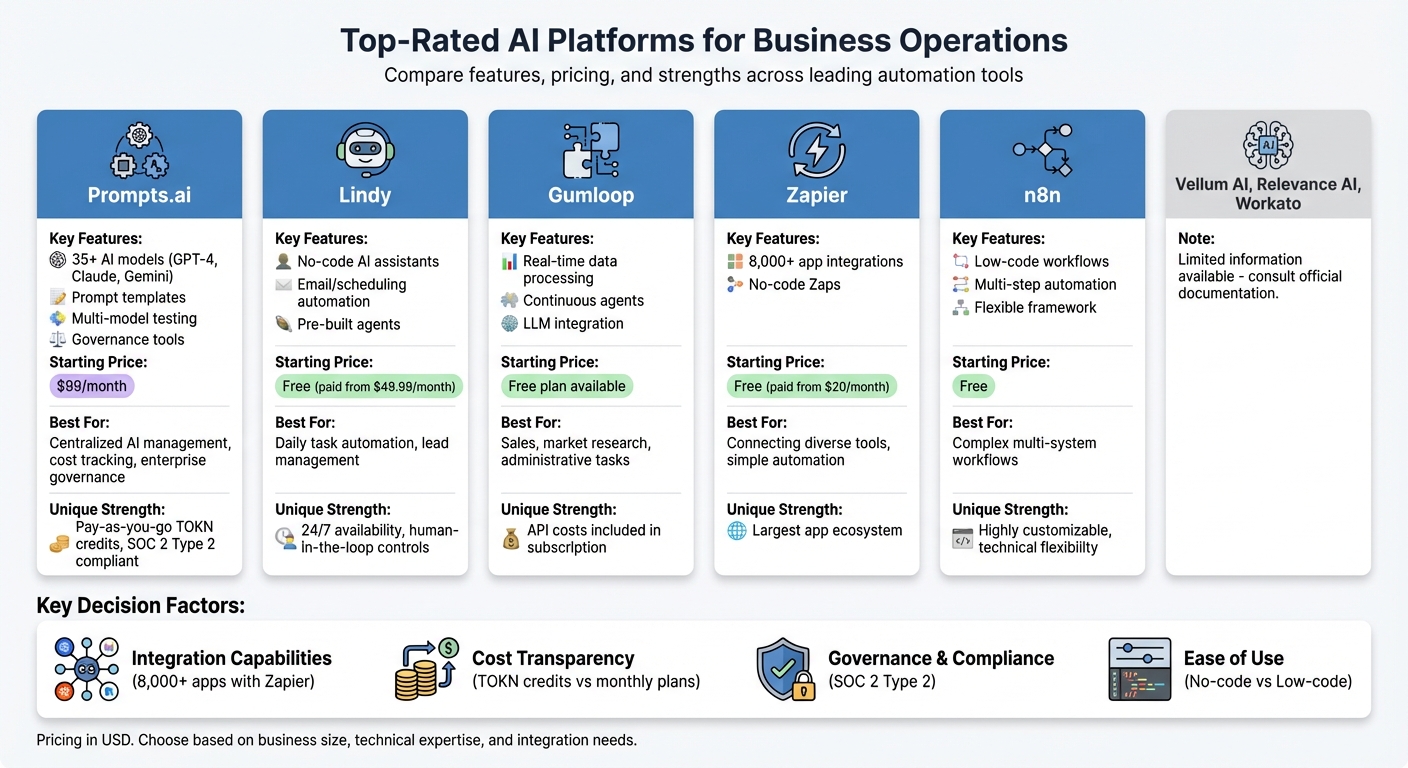
AI Business Operations Platforms Comparison: Features and Pricing
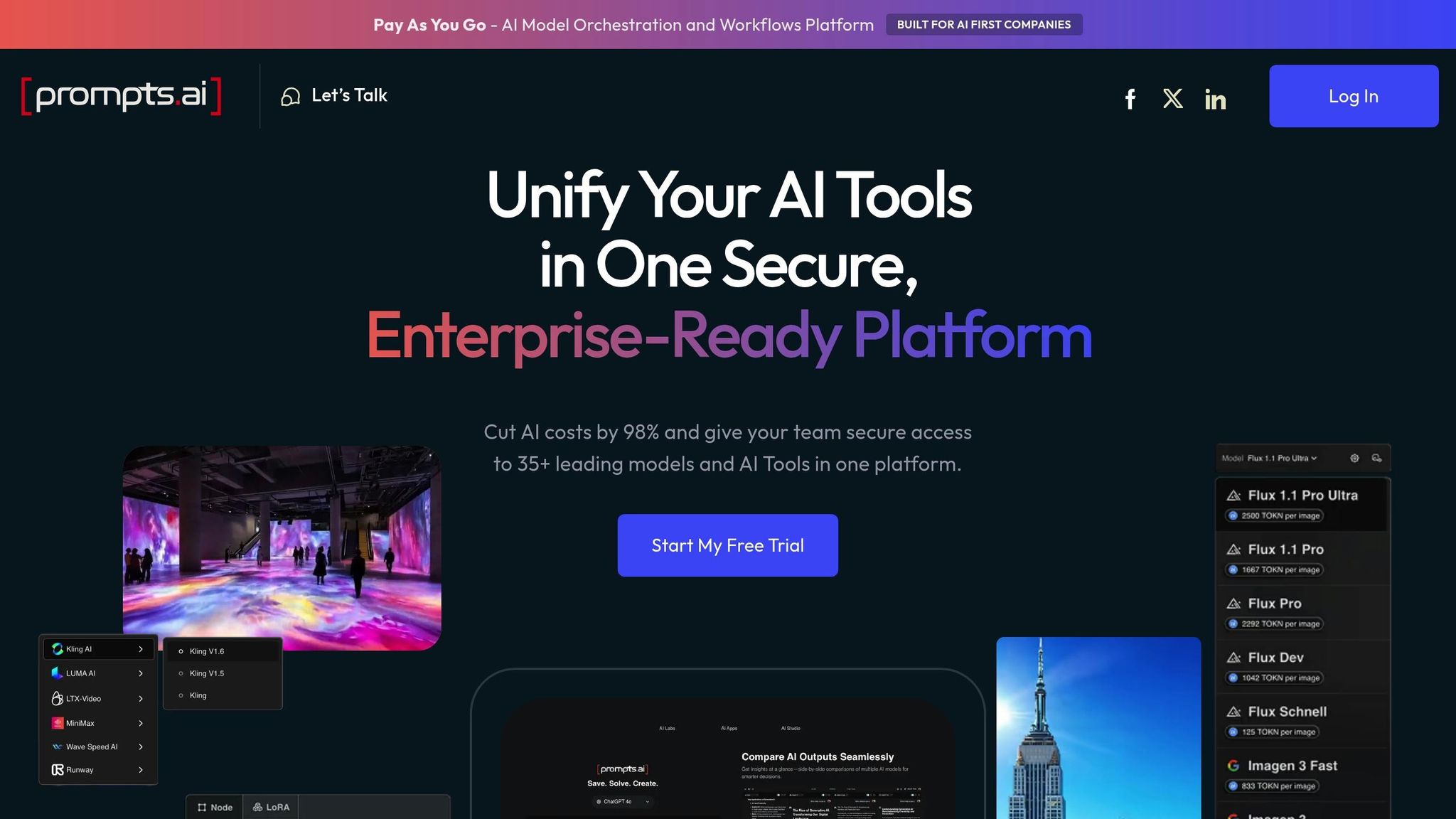
Prompts.ai stands out as a powerful tool for bridging business systems with leading language models. It offers access to over 35 advanced language models, all through a single, secure interface. Unlike standalone AI assistants or narrowly focused solutions, this platform serves as a management layer that connects your business systems - such as CRM, helpdesk, or internal tools - with LLM APIs. This approach allows operations teams to design, test, and deploy AI-driven prompts and workflows without the hassle of juggling multiple vendor accounts or dealing with scattered configurations.
One of the platform's standout features is its focus on prompt templates and versioning. Teams can create and manage templates for tasks like drafting emails, handling support tickets, qualifying leads, or summarizing documents - all without needing to write code. For instance, a support team might maintain a library of prompts tailored to specific ticket categories - billing inquiries, shipping questions, or account issues. With Prompts.ai, they can test different prompt and model combinations to find the best-performing setup that stays consistent with the company’s tone and policies.
Another key feature is multi-model experimentation, which lets teams test the same prompt across multiple models - like GPT-4, Gemini, or open-source options. This allows businesses to compare factors such as accuracy, response time, and cost before deciding on a production-ready solution. Built-in evaluation metrics make it easy to quantify performance using curated test sets. Additionally, the platform can centralize knowledge sources, such as FAQs, policy documents, or playbooks, and integrate them into prompts. This ensures that AI-generated responses are aligned with company policies and reflect the latest processes.
These capabilities make Prompts.ai a seamless addition to operational workflows.
Prompts.ai integrates effortlessly with backend systems and automation tools, enabling tasks like ticket triage or lead updates through API-first connections and low-code/no-code platforms like Zapier, n8n, or Workato. By acting as a centralized intelligence layer, the platform defines what the AI should do at each step, such as providing instructions, constraints, or formatting. Meanwhile, traditional automation tools handle when and where these steps are executed. Unlike building prompt logic directly into tools like Zapier, Prompts.ai simplifies maintenance - updating a single prompt eliminates the need to edit multiple workflows individually.
Prompts.ai is designed with robust governance features, making it ideal for regulated industries. It supports role-based access controls and audit trails to manage who can create, modify, or deploy prompts. It also segments environments - such as development, staging, and production - to ensure experimental prompts don’t interfere with live customer interactions. Comprehensive audit trails log details like prompt versions, changes, and usage, providing transparency into who deployed what and when. This supports internal audits and aligns with change-management protocols.
The platform also offers flexible data handling policies, allowing teams to decide whether user data is stored, anonymized, or passed through to LLM providers. These practices adhere to U.S. regulations on personally identifiable information. Additionally, Prompts.ai follows SOC 2 Type 2 standards and began its SOC 2 Type 2 audit process on June 19, 2025. A dedicated Trust Center (https://trust.prompts.ai/) provides real-time updates on security measures, policies, and compliance status.
Prompts.ai provides detailed insights into AI costs, displaying metrics like prompt-call counts, token usage, and estimated or actual spending per prompt, model, or workflow - all reported in U.S. dollars ($). Teams can label prompts by department (e.g., support, sales, finance) or workflow (e.g., ticket triage, forecasting), enabling finance teams to allocate AI expenses accurately. This level of tracking supports smarter cost decisions, such as downgrading models for non-critical tasks, batching requests to save on overhead, or shifting workloads to more affordable models without sacrificing quality.
The platform operates on a pay-as-you-go model using TOKN credits, eliminating recurring fees and aligning costs with actual usage. Pricing starts at $99 per member per month (Core plan, 250,000 TOKN credits) and goes up to $129 per member per month (Elite plan, 1,000,000 TOKN credits). Both plans include features like usage analytics, TOKN pooling, compliance monitoring, and governance tools.
These features will be directly compared to other platforms in subsequent sections.
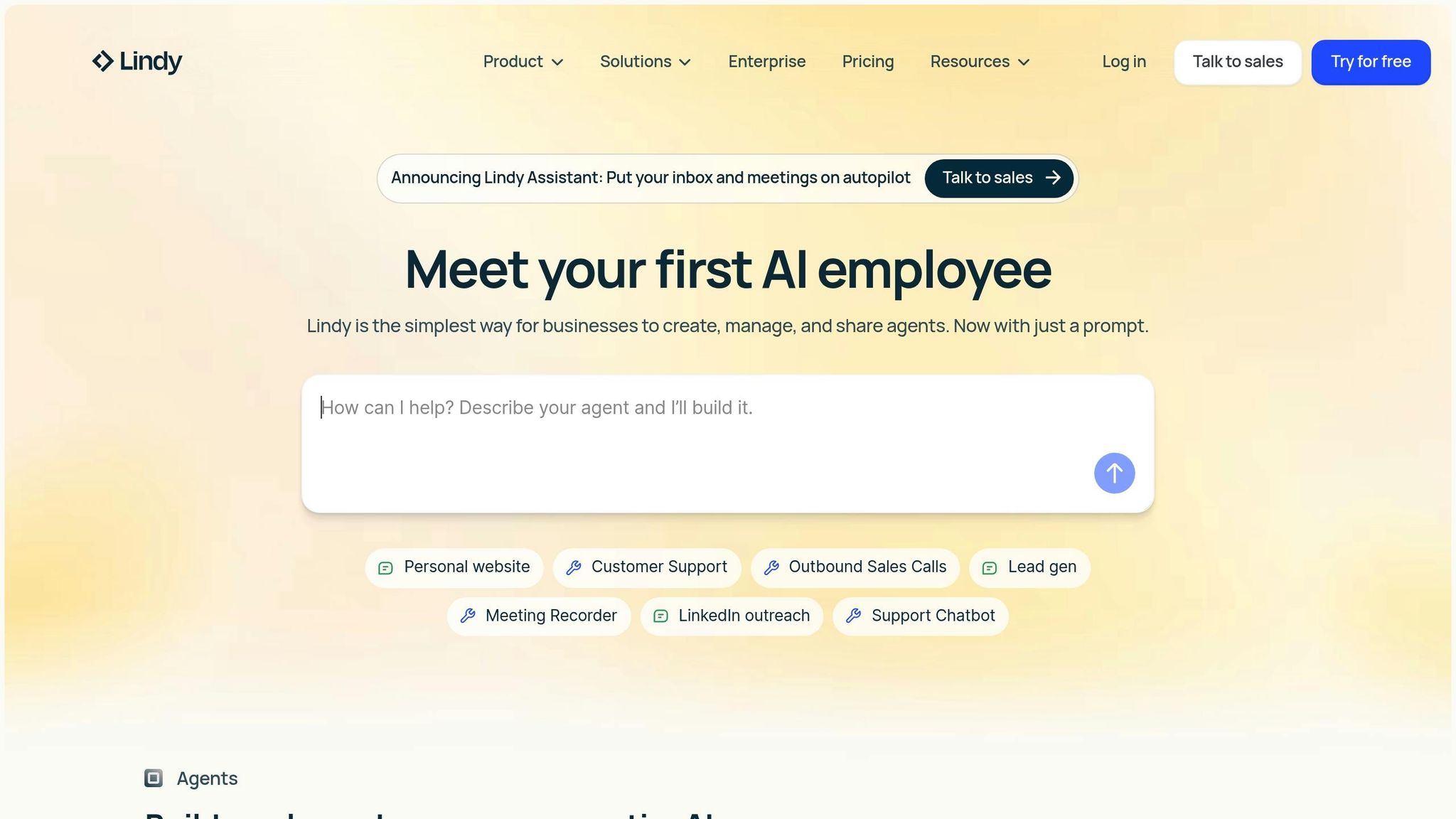
Lindy is a no-code AI executive assistant designed to simplify and automate business tasks. It handles repetitive chores like answering calls, routing leads, booking meetings, and managing support emails. Teams can describe their automation needs in plain language, eliminating the need for technical skills. Lindy integrates effortlessly with popular tools such as Gmail, Slack, Google Calendar, and CRMs. It also connects with specialized systems like electronic medical records (EMRs) for medtech companies, ensuring compatibility across various industries.
Lindy supports multi-modal workflows, covering calls, emails, and document processing. It leverages multiple AI models, including ChatGPT, Gemini, and Claude, to enhance natural language understanding and customer engagement. The platform comes equipped with pre-built AI agents tailored for specific tasks:
Clients have noted that Lindy’s automated receptionist and outreach tools help manage lead overflow and streamline outbound sales efforts.
Lindy is designed to handle complex, multi-step workflows without requiring multiple applications or additional staff. It empowers non-technical users to set up automation simply by using plain language commands - no coding necessary. By integrating with essential business tools, Lindy automates tasks like follow-ups and meeting bookings. To ensure a smooth onboarding process, it offers hands-on assistance and customizable templates, making it easy to scale operations as needed.
Lindy operates on a credit-based pricing model, offering plans to suit various needs:
Lindy’s flexible pricing and robust features make it a valuable tool for businesses looking to automate and optimize their operations.
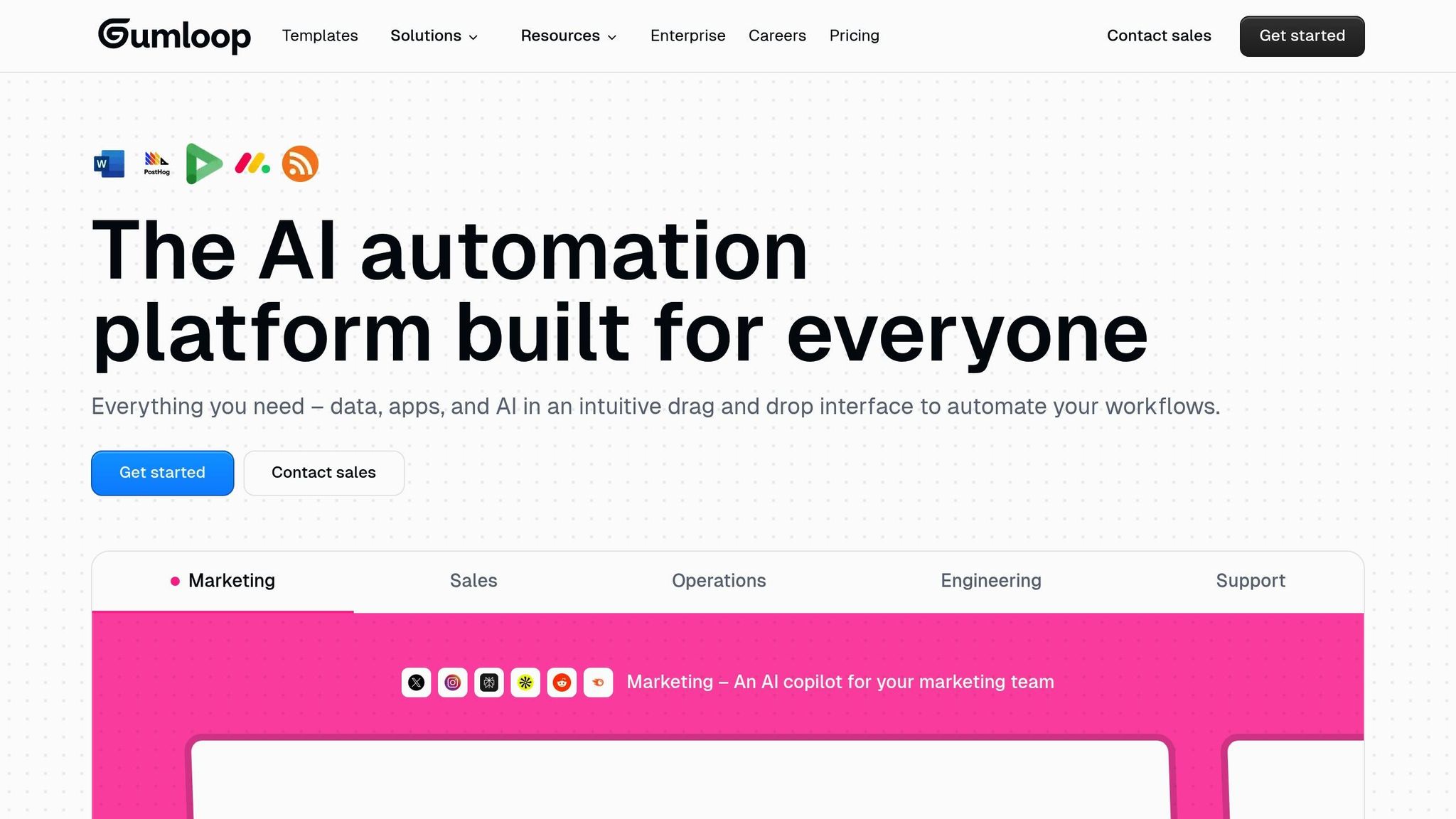
Gumloop stands out as a platform that uses AI to seamlessly integrate with your existing business tools, taking operational efficiency to the next level.
This AI automation platform connects large language models like GPT-4, Claude, and Grok directly to your business systems. Trusted by industry leaders such as Webflow, Instacart, and Shopify, Gumloop enhances operations by combining traditional automation with advanced AI decision-making.
Gumloop simplifies access to top-tier LLMs by managing API keys on your behalf. Its AI-driven features include sentiment analysis, where it gathers product reviews from social media and sorts them into positive and critical categories. It can also scrape content from websites and apps, sending the data to tools like Notion, Slack, or Google Sheets. With real-time continuous agents, Gumloop processes new data instantly, making it a go-to for sales, market research, and administrative tasks. These tools enable robust multitasking, which is a cornerstone of Gumloop’s orchestration capabilities.
The platform allows businesses to design multi-step automations that run continuously without manual input. By connecting various LLMs with internal systems, Gumloop creates workflows that analyze data and take action automatically. Marketing teams can enhance campaign intelligence, while sales teams deploy agents that act on new leads in real time. Its intuitive interface has been widely praised for being user-friendly, even for team members without technical expertise.
Gumloop removes the hassle of managing API costs by covering premium LLM access fees. Omid G, a contributor at MarketerMilk, highlights this benefit:
And the amazing thing too is that you don't need your own OpenAI or Anthropic API keys - Gumloop gives you access to premium LLMs right out of the box and they eat the costs. It's all baked in.
The platform offers a generous free plan and a 20% discount code (MARKETERMILK) for those looking to upgrade to a monthly subscription.
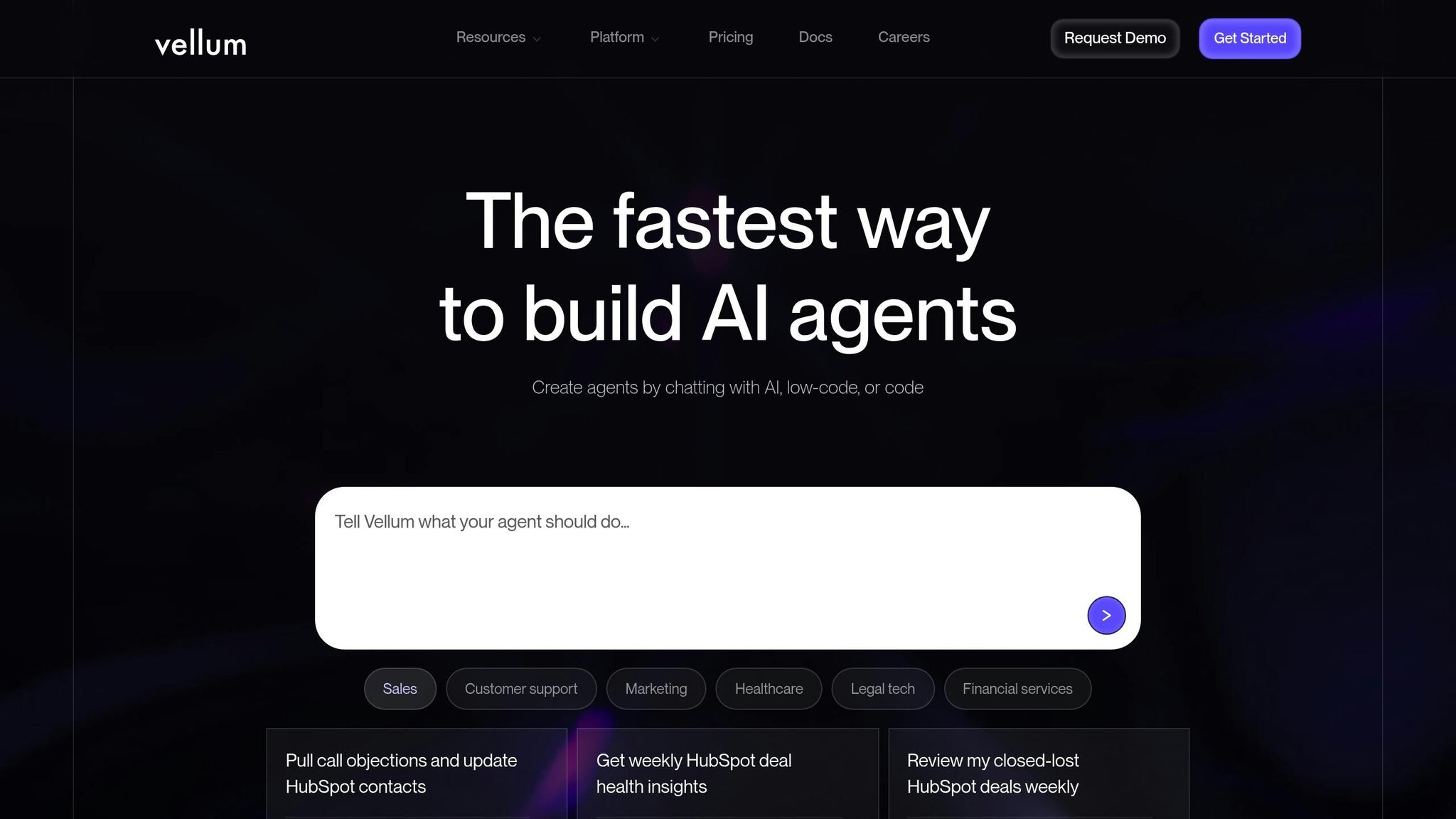
At this time, there’s no confirmed information available regarding Vellum AI’s features, potential applications in business operations, or specifics about its AI capabilities, workflow integration, or governance. For the latest updates, it’s best to refer to official sources. Next, we’ll dive into Relevance AI, which offers well-documented details about its features and integrations.
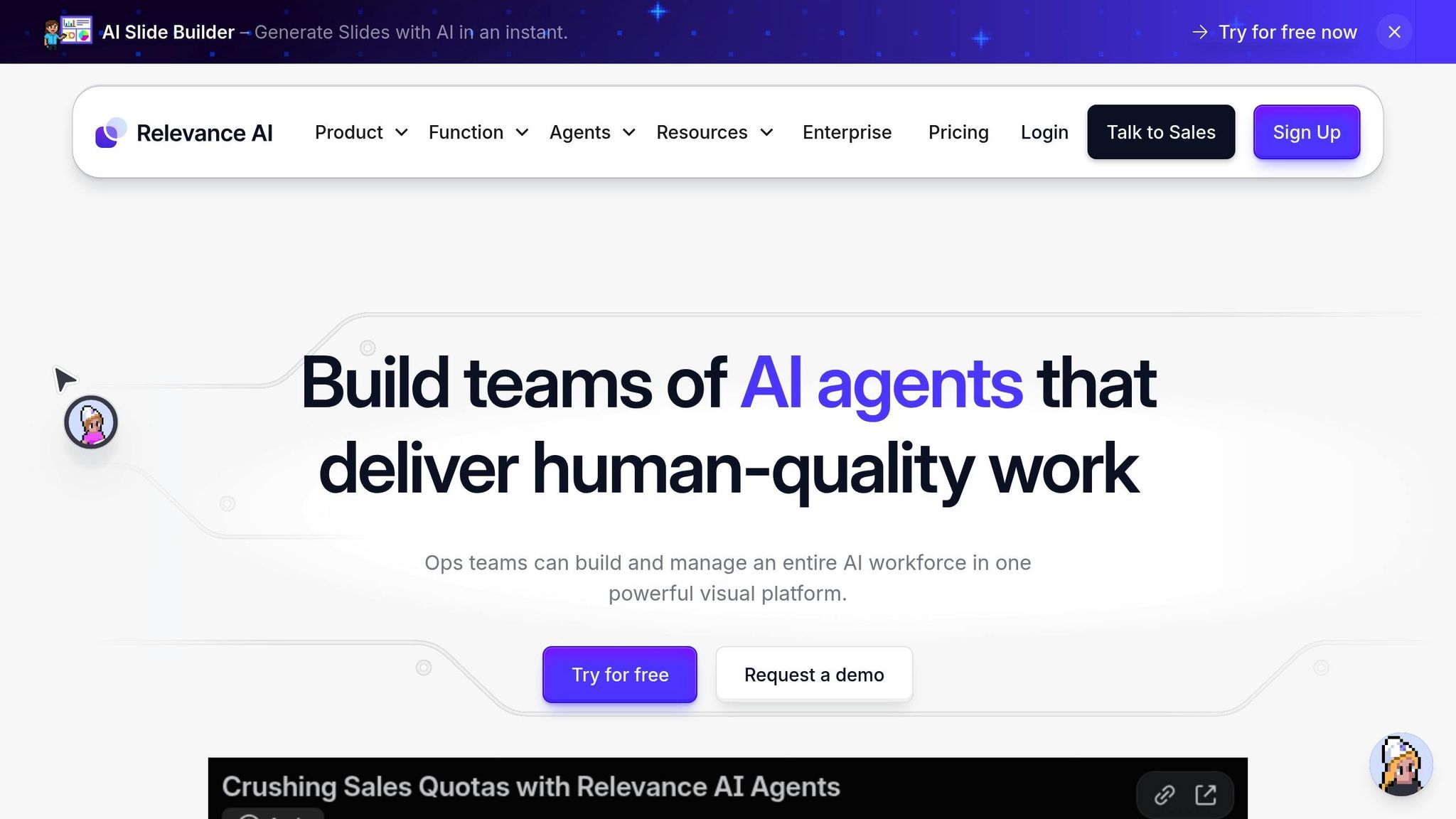
At this time, specific details about Relevance AI's features, applications, and workflow orchestration are not provided. For the most accurate and up-to-date information, businesses are encouraged to consult Relevance AI's official documentation before considering its implementation. Up next, we’ll dive into n8n’s workflow automation capabilities in greater detail.
n8n is an automation platform designed to help businesses connect their software tools and automate repetitive tasks with ease. By focusing on workflows that require minimal coding, it caters to both technical and non-technical teams, making automation accessible across various roles. This approach enables seamless orchestration across multiple applications.
n8n is built to streamline operations by connecting business systems and automating processes. Its workflow orchestration tools let businesses design automated sequences that respond to events, process data, and carry out specific tasks. This reduces the need for manual effort in routine operations, saving time and resources.
The platform excels at managing complex workflows involving multiple systems. From collecting and transforming data to sending notifications, n8n eliminates the hassle of manual integration, handling the intricacies of connecting diverse tools and applications.
Thanks to its adaptable framework, n8n is a fit for numerous business needs, including managing customer data, automating reports, and ensuring synchronization across platforms. As business demands shift, companies can easily tweak their workflows, updating automation rules and connections without overhauling the entire setup.
Zapier connects more than 8,000 apps to help automate workflows, making it a powerful tool for streamlining business processes. By focusing on seamless integration, it allows businesses to enhance efficiency without the need for complex coding. This makes it particularly appealing for small to medium-sized teams looking to eliminate repetitive tasks.
Zapier leverages AI to manage interactions between models and business applications. It can automatically trigger AI-powered processes based on events in connected apps, ensuring smooth integration with existing systems.
With Zapier, users can create tailored workflows, known as "Zaps", to connect actions across various platforms. For example, when an event occurs in one app, Zapier retrieves the necessary data and initiates related processes in other tools. Its no-code interface empowers teams to design workflows without technical expertise, seamlessly linking tools like CRM systems, accounting software, and communication platforms. This approach not only simplifies task execution but also provides clarity around operational expenses.
Zapier offers a tiered pricing model to cater to different automation needs. Each tier includes a free plan, allowing businesses to explore basic automation features without upfront costs. While the free tier is suitable for simple tasks, higher levels of usage come with additional fees.
Based on available information, there is little detail about Workato's AI features, workflow automation processes, or governance tools. To gain a clearer understanding of its offerings, it’s recommended to refer directly to Workato's official documentation or resources.
Each platform brings its own set of advantages and challenges, making the choice highly dependent on specific needs. Prompts.ai excels in consolidating over 35 top-tier models, including GPT-5, Claude, and Gemini, into one secure and streamlined interface. Its pay-as-you-go TOKN credit system can reduce AI costs by up to 98%. Additionally, the platform’s real-time FinOps layer provides detailed tracking of every token, offering businesses full visibility into spending and performance. This feature is particularly valuable for turning experimental AI projects into consistent, compliant workflows.
Lindy shines with its real-time human-in-the-loop controls and 24/7 availability. Pricing starts at $49.99 per month for 5,000 credits, making it accessible for smaller teams. However, its wide array of customization options can be overwhelming for new users during the setup phase, potentially delaying implementation.
Zapier connects over 8,000 apps, offering a free tier alongside paid plans starting at $20 per month. This makes basic automation affordable and easy to access. That said, costs can climb quickly with higher usage, and more complex workflows may still require manual oversight to ensure smooth operation.
Beyond individual features, platform selection often comes down to strategic trade-offs. While natural language interfaces make these tools approachable for non-technical users, the depth of analysis and content accuracy often set platforms apart. Integration remains a persistent challenge, especially for small businesses that need tools requiring minimal technical expertise.
For meaningful ROI, automating entire end-to-end processes is far more effective than focusing on isolated tasks. Another game-changer is the rise of agentic AI capabilities, where AI can autonomously perform multi-step actions. This shift is redefining how these platforms deliver value.
When evaluating platforms, consider factors like integration capabilities, scalability, customization options, data privacy, ease of use, cost, vendor support, and transparency. The most effective solutions balance powerful functionality with straightforward deployment, allowing teams to prioritize innovation and measurable outcomes instead of struggling with disconnected tools. These factors highlight the transformative potential of these platforms in optimizing operational workflows.
As highlighted in the platform comparisons, selecting the right AI solution can significantly enhance your operations by integrating effortlessly and delivering measurable returns. It’s crucial to choose a platform that aligns with both your current needs and long-term goals. For small to medium-sized businesses aiming for cost efficiency and quick results, look for platforms that demonstrate measurable returns within 90 days. These tools should save time, improve decision-making, and drive revenue growth, all while being user-friendly and requiring minimal technical expertise.
When evaluating options, prioritize platforms that integrate smoothly with your existing technology stack to avoid creating data silos. For example, tools like Zapier excel at connecting diverse systems, while solutions like Lindy are ideal for teams relying on widely-used applications such as Gmail, Slack, and CRMs. The goal is to ensure that automated workflows cover your entire operational ecosystem.
Prompts.ai provides enterprises with unified access to over 35 leading models, including GPT-5, Claude, and Gemini, without the hassle of juggling multiple subscriptions. Its pay-as-you-go TOKN credit system, combined with real-time FinOps tracking, offers complete transparency into AI spending. This setup not only justifies investments but also supports scalable growth. For organizations focused on governance, cost management, and the flexibility to switch between models as needs evolve, this solution transforms one-off experiments into dependable, repeatable workflows.
Long-term success lies in selecting platforms that balance powerful features with straightforward deployment. Solutions that automate entire processes, empower teams across the board, and provide precise AI cost controls can turn operational hurdles into opportunities for growth. By aligning your AI strategy with these principles, you can transform isolated efforts into a sustainable competitive edge.
Prompts.ai caters specifically to the demands of regulated industries by providing enterprise-level security, comprehensive compliance tools, and centralized governance. These features empower businesses to maintain tight control over their workflows while protecting sensitive data.
By offering access to more than 35 AI models, Prompts.ai enables organizations to harness cutting-edge technology without compromising on industry-specific regulatory requirements. Its secure infrastructure and privacy-first approach make it a dependable solution for businesses focused on safeguarding data and meeting compliance standards.
Prompts.ai provides complete cost clarity through its straightforward pay-as-you-go model, making it easy for businesses to expand their AI usage without worrying about hidden fees or surprise charges. With secure access to more than 35 AI models in one unified platform, Prompts.ai simplifies operations and can help cut costs by as much as 98%. This pricing structure allows companies to stay in control of their budgets while getting the most out of powerful AI tools.
Prompts.ai brings together more than 35 AI models and tools into one secure platform, designed specifically for enterprise needs. By consolidating these resources, it tackles the problem of tool overload, simplifies management, and ensures better oversight across your operations.
This platform enables businesses to streamline their workflows and automate tasks with greater ease, fostering seamless system collaboration and boosting overall efficiency.