Pay As You Go - AI Model Orchestration and Workflows Platform


Teams often struggle with scattered AI prompts, leading to inefficiencies and lost productivity. Centralized platforms solve this by consolidating prompts, improving version control, and enhancing collaboration. Below are three platforms designed to address these challenges:
Quick Comparison:
| Platform | Key Features | Collaboration Tools | Security Features | Starting Price |
|---|---|---|---|---|
| Prompts.ai | Centralized CMS, 35+ AI models | Shared libraries, versioning | AES-256, GDPR/CCPA compliant | $29/month (creator) |
| PromptFlow | Workflow creation, debugging tools | CI/CD integration, Azure | AES-256, GDPR/CCPA compliant | Free tools; Azure pricing |
| PromptBase | Marketplace for pre-built prompts | Public sharing, reviews | Terms of Service protections | Free (fees apply) |
Centralized prompt tools save time, boost productivity, and improve consistency. Choose based on your team’s needs: whether it’s advanced workflows, pre-built templates, or robust security.

AI Prompt Management Platforms Comparison: Features, Pricing & Security

Prompts.ai brings all your prompts under one roof with a centralized CMS, offering seamless access to over 35 AI models, including GPT-5, Claude, LLaMA, and Gemini. This eliminates the hassle of switching between tools and streamlines your workflow.
With its side-by-side comparison feature, users can easily evaluate prompt and model outputs, improving efficiency by up to 10×. The platform’s automation tools allow teams to turn one-off tasks into repeatable workflows, ensuring successful prompts are preserved as part of your team’s knowledge base rather than lost in the shuffle.
These features are complemented by advanced collaboration tools designed to keep teams in sync.
Prompts.ai simplifies teamwork with shared libraries and organized group structures based on projects, departments, or specific use cases. Role-based permissions and detailed version tracking ensure secure collaboration with a full history of prompt updates.
TOKN Pooling and Storage Pooling further streamline operations by allowing teams to share credits and storage across workspaces, eliminating the complexity of managing individual accounts.
"With Prompts.ai's LoRAs and workflows, he now completes renders and proposals in a single day - no more waiting, no more stressing over hardware upgrades."
In addition to its collaborative tools, the platform prioritizes robust security measures to protect your work.
Prompts.ai employs AES-256 encryption to secure all prompts at rest and complies with both GDPR and CCPA standards. The platform guarantees that user data remains private - your prompts are never shared with third parties or used to train AI models.
For enterprise teams, the platform offers centralized governance tools, including compliance monitoring and full visibility into AI interactions. This ensures transparency and control over all activities.
Prompts.ai caters to a wide range of users, from individuals to large enterprises, with flexible pricing options:
These tiers ensure scalability, allowing users to choose the plan that best suits their needs, whether they’re solo creators or part of a large team.
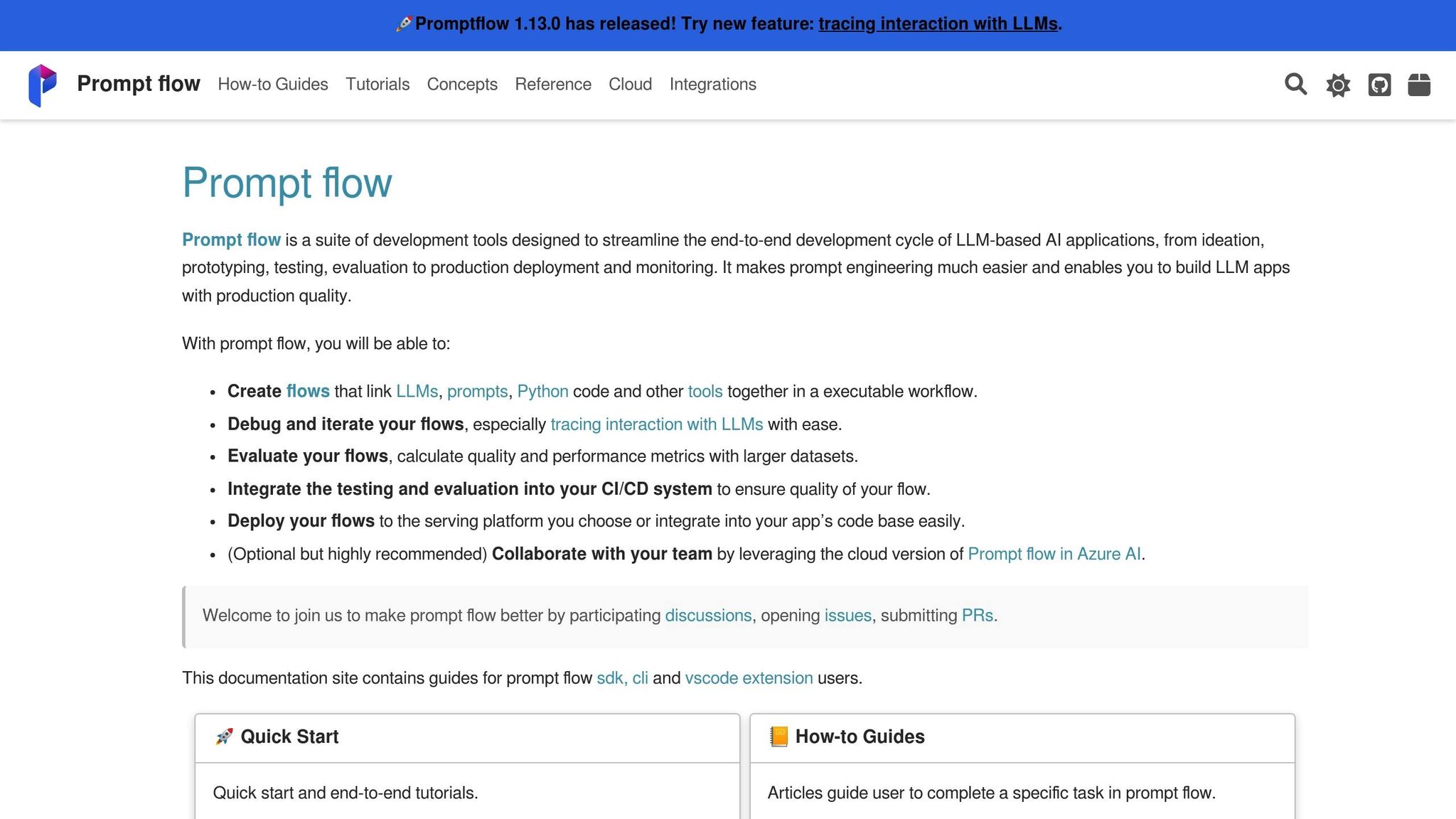
PromptFlow transforms prompts into executable workflows by combining LLM calls, Python code, and additional tools into what it calls "flows." These flows link all components into a single, cohesive workflow, bridging the gap between experimental prompt engineering and production-ready solutions.
The platform offers iterative debugging tools that trace LLM interactions, making it easier to refine prompt logic quickly. Teams can also run automated evaluation flows on large datasets to measure performance metrics like accuracy and latency. This ensures that prompts are thoroughly tested and optimized before deployment. The flows are displayed as Directed Acyclic Graphs (DAGs), providing a clear visual representation of complex AI logic. This makes it easier for team members to understand and navigate workflows, even when created by others. By integrating with collaboration tools, PromptFlow streamlines team operations and enhances productivity.
PromptFlow is designed with teamwork in mind, integrating seamlessly with the Microsoft Foundry portal and Azure Machine Learning studio. While the SDK, CLI, and VS Code extension are available as open-source tools for individual developers, the Azure AI cloud version is tailored for team collaboration.
Teams can debug, share, and refine flows within a unified environment that includes built-in version control to track all changes. This shared workspace allows multiple users to collaborate on the same projects, ensuring a centralized knowledge base. The platform also supports CI/CD integration, making it possible to incorporate prompt testing and evaluations directly into existing software development workflows. This ensures that updates to prompts maintain application quality. Alongside these features, robust security measures protect data, combining efficiency with peace of mind.
PromptFlow prioritizes data security by encrypting all stored prompts using AES-256 standards. User data is kept proprietary and is never used for model training purposes. The platform also complies with GDPR and CCPA standards, ensuring it meets regulatory requirements for teams working in sensitive or regulated industries.
The platform offers a flexible pricing model. The SDK, CLI, and VS Code extension are free and available on GitHub, allowing developers to experiment without cost. For larger teams and enterprises, the Azure AI cloud version is priced based on resource usage, making it scalable for both small-scale experimentation and enterprise-level operations. This dual approach caters to individual developers while providing enterprise teams with the tools and governance needed for consistent workflows across varying team sizes.
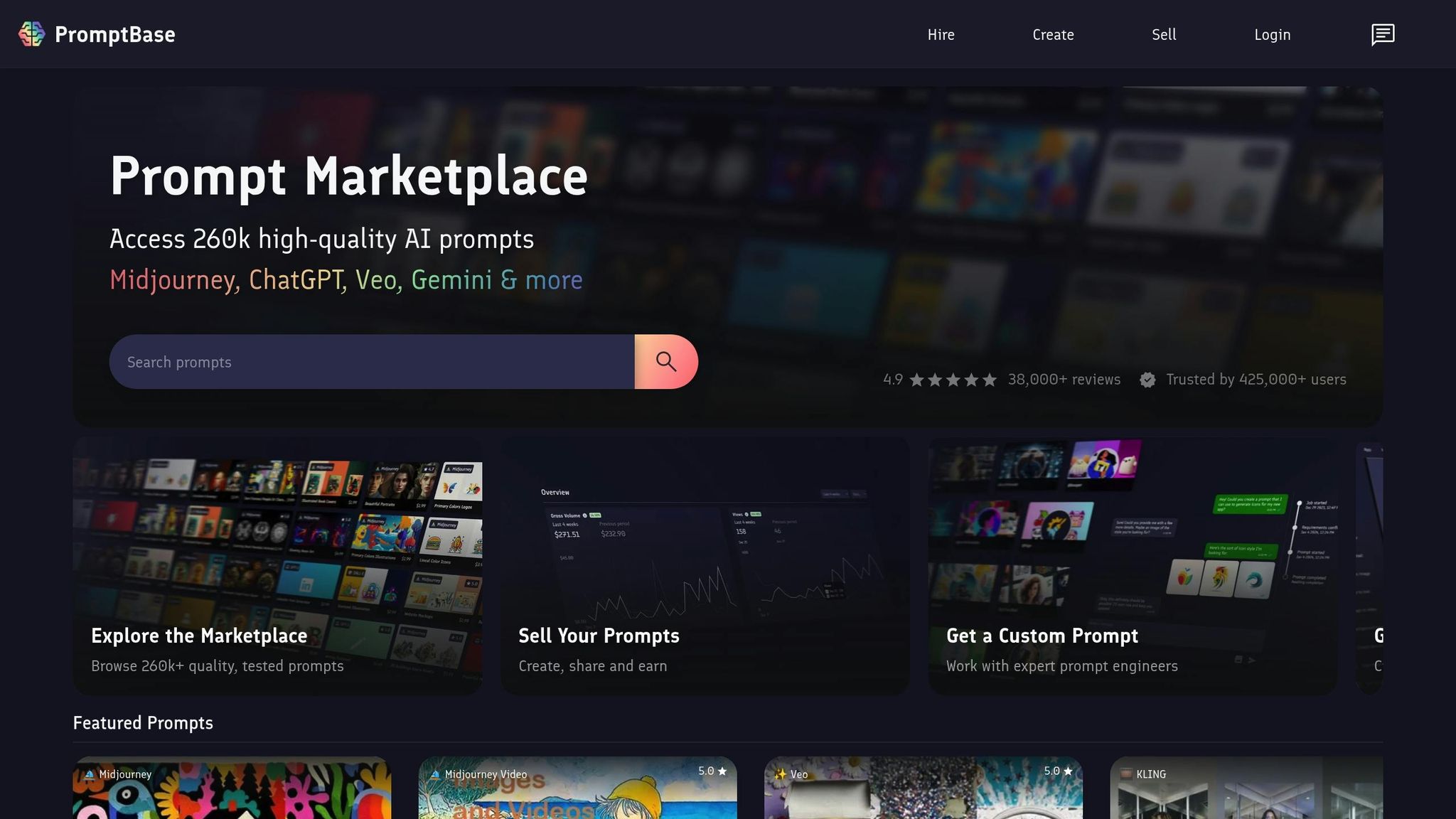
PromptBase simplifies the process of managing and organizing AI prompts by centralizing pre-built options in one place. Instead of relying on scattered spreadsheets or documents, it provides a dedicated content management system (CMS) that categorizes prompts by AI model, use case, and project type. This structure makes it easy to retrieve templates quickly, saving time and ensuring consistency across teams. By streamlining how prompts are accessed and used, PromptBase supports a more efficient and secure workflow, helping teams stay productive and collaborative.
PromptBase prioritizes security and accountability through its Terms of Service, which users must agree to before buying or sharing prompts. This legal framework ensures clear guidelines for prompt usage within the marketplace. To further protect users, the platform offers a money-back guarantee, giving teams confidence that their purchases will meet quality expectations.
To maintain trust and transparency, PromptBase uses a "Verified Purchase" badge for reviews. This feature ensures that feedback comes from real customers who have actually used the prompts, enabling teams to make better-informed decisions.
The platforms discussed earlier each offer unique strengths and challenges, making it essential to evaluate them based on your team's specific needs. For instance, PromptFlow stands out by catering to both technical and non-technical users. This makes it a great option for cross-functional teams, allowing marketers and engineers to collaborate seamlessly on prompt creation in real time.
On the other hand, PromptBase operates on a marketplace model, offering over 500 ready-made templates for quick deployment. While these templates enable faster implementation, the platform may fall short for larger teams due to its limited versioning and approval workflows.
Centralizing tools through CMSs with AES-256 encryption and role-based permissions can significantly streamline operations, cutting time-to-production by 40–60%. Pricing models also play a key role in decision-making. Flat-fee pricing, like PromptFlow's $49/month plan, is often better suited for larger teams, while per-user pricing can become expensive as team size grows.
For organizations that prioritize security, platforms with Single Sign-On (SSO) and detailed audit trails are crucial. This is particularly relevant since around 67% of companies cite governance and compliance as major hurdles in adopting AI. Below is a table summarizing the benefits and limitations of each platform:
| Platform | Prompt Management | Collaboration | Security Features | Starting Price |
|---|---|---|---|---|
| Prompts.ai | Unlimited prompts (paid), bulk CSV/JSON import | Supports up to 25 team members with role-based permissions | AES-256 encryption, API access | $0 (25 prompts); $20/month (Team); $99/month (Pro) |
| PromptFlow | Visual editor, no coding required | Real-time co-editing for diverse users | Standard encryption, request logging | $49/month (flat fee) |
| PromptBase | Marketplace with 500+ templates | Public sharing, user reviews | Framework-based protections | Free (marketplace fees apply) |
Each platform offers a mix of features that cater to different priorities, whether it's collaboration, security, or cost.
Centralized prompt management plays a critical role in boosting consistency and improving team productivity. The platforms available cater to different needs - some focus on technical workflows and tools like visual debugging, while others lean toward offering accessible marketplaces and pre-built templates. These differences make it essential to choose a platform that matches your team’s specific workflow and technical requirements.
To make an informed choice, start by pinpointing your team’s top priorities. Are you focused on quick deployment, maintaining strict version control, or fostering seamless collaboration across departments? Many teams find that creating a solid prompt library with just 10–15 impactful prompts during the first week helps them evaluate whether a platform fits their needs before making a long-term commitment.
Look for a platform that reduces complexity, works well with your existing tools, and provides clear insights into performance to ensure you’re getting the most out of your prompts.
To ensure consistency in prompts, consider using a centralized prompt management platform. For instance, tools like Prompts.ai provide features such as organized repositories, version control, shared libraries, and collaboration tools. These allow teams to create, tag, and manage prompts in one centralized location, streamlining workflows. Additional features like live co-editing, permissions, and prompt variables enhance real-time collaboration, ensuring uniformity and boosting efficiency across projects.
Effective prompt version control relies on tools that make managing, tracking, and rolling back changes straightforward. Prioritize solutions that let you create, compare, and label versions tailored to different environments, such as production and development. Features like automated versioning, built-in collaboration tools (e.g., commenting capabilities), and seamless integration with testing and deployment workflows are crucial. These elements help maintain consistency, ensure audit trails, and support reproducibility across AI operations.
To maintain the privacy and compliance of prompts, implement role-based permissions, utilize secure cloud storage, and enable audit trails. These tools help manage access, monitor changes, and safeguard data within team workflows.