AI governance software is now essential for managing workflows, ensuring compliance, and controlling costs as businesses integrate artificial intelligence. This article compares prompts.ai, Workato, n8n, and MuleSoft to help you find the best solution for your organization's needs.
| Platform | Best For | Key Features | Starting Price |
|---|---|---|---|
| prompts.ai | Unified LLM management | 35+ models, cost tracking, secure workflows | Pay-as-you-go ($0) |
| Workato | Large enterprises, strict governance | RBAC, lifecycle management, strong connectors | Quote-based |
| n8n | Technical, budget-conscious teams | Open-source, 500+ integrations, customizable | Free; Cloud ~$20/mo |
| MuleSoft | Enterprise-level API governance | Scalability, hybrid deployments, compliance | ~$80,000/year |
Each platform addresses different needs - select based on your budget, team size, and compliance requirements.

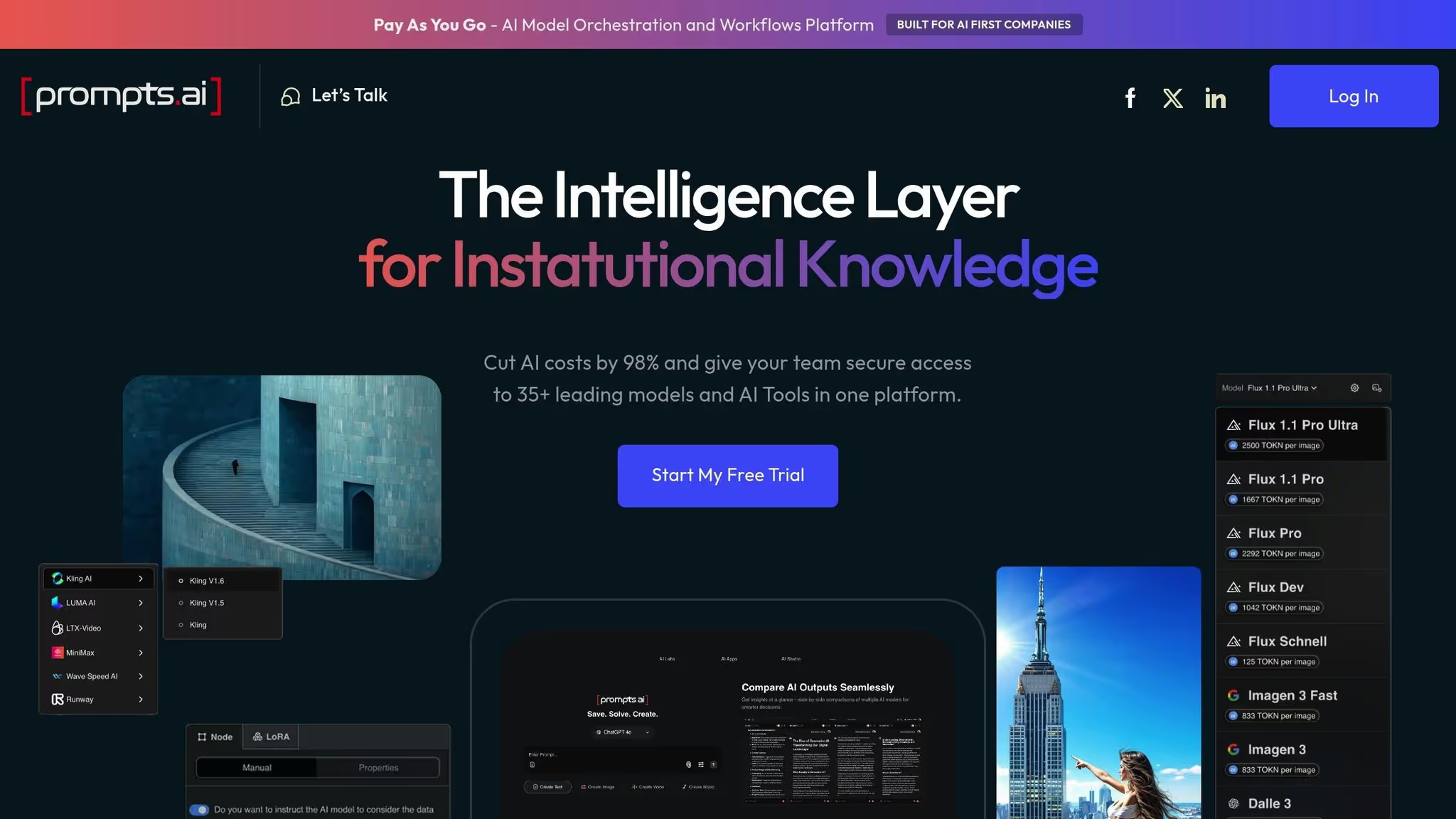
In our comparative review, prompts.ai stands out for its ability to streamline AI workflows. By integrating over 35 advanced language models - such as GPT-5, Claude, LLaMA, and Gemini - into a single, secure platform, it helps organizations cut down on tool sprawl while enforcing strict governance over AI operations.
The platform simplifies tasks like model selection, prompt management, and real-time cost tracking, transforming one-off AI experiments into structured, repeatable processes - all without compromising sensitive data security.
Prompts.ai prioritizes security and compliance, drawing from established frameworks like SOC 2 Type II and HIPAA to protect organizational data. The platform began its SOC 2 Type II audit on June 19, 2025, showcasing its dedication to high security standards.
Key features include robust access controls, end-to-end encryption, and detailed audit logs. These capabilities are particularly beneficial for industries like healthcare and finance, where compliance breaches can lead to severe penalties.
For added transparency, prompts.ai offers a Trust Center (https://trust.prompts.ai/), where users can monitor the platform's security measures, policies, and compliance updates. Continuous monitoring through Vanta ensures ongoing validation of these controls.
One U.S. healthcare provider leveraged prompts.ai's secure access controls and audit trails to cut manual errors by 30% and successfully pass a regulatory audit with zero findings. This commitment to security is paired with clear cost management tools, making it an essential choice for modern AI governance.
Prompts.ai offers detailed analytics and cost dashboards, linking spending directly to workflows, users, or departments. Its Pay-As-You-Go TOKN credit model eliminates recurring fees, aligning costs with actual usage and potentially cutting AI software expenses by up to 98%.
A built-in FinOps layer tracks token usage across models and workflows, offering unmatched cost visibility. This enables organizations to tie AI spending to specific business outcomes, making it easier to justify investments and identify areas for optimization.
Prompts.ai also excels in scalability and integration, critical for expanding AI initiatives. The platform supports horizontal scaling across cloud and on-premises environments, with pre-built connectors and APIs for seamless integration into tools like Salesforce, Microsoft 365, and AWS. This makes it suitable for organizations ranging from small teams to Fortune 500 companies.
Analysts have praised prompts.ai for its granular policy controls and integration flexibility, which are especially valuable for enterprises with complex governance demands. However, some experts note that advanced customization may require technical expertise, potentially posing challenges for smaller organizations without dedicated IT teams.
To address diverse security, compliance, and operational needs, prompts.ai offers multiple deployment models, including fully managed SaaS, private cloud, and on-premises options. Its privacy-by-design framework incorporates data minimization and user consent management, ensuring compliance with U.S. privacy regulations like CCPA. This flexibility allows organizations to choose the deployment strategy that best aligns with their operational priorities.

Workato provides a cloud-based solution tailored for enterprises that need AI governance without the hassle of managing infrastructure. Below, we break down its key features, including security, deployment, costs, and scalability.
Workato prioritizes security with SOC 2 Type II compliance and robust safeguards. It employs role-based access control (RBAC) to set detailed permissions for different departments. A centralized governance dashboard ensures clear oversight of workflow activities, while guaranteed SLAs for uptime and support add an extra layer of reliability.
Workato operates exclusively as a managed SaaS platform, eliminating the need for organizations to oversee their own infrastructure. This cloud-first model ensures that updates, security patches, and new features are handled automatically, allowing businesses to focus entirely on their AI governance strategies without worrying about system maintenance.
Pricing for Workato is tailored to each organization and depends on factors like the number of automated tasks, connectors, and users. For a specific quote, businesses are encouraged to contact the sales team.
Workato is built with a scalable architecture that maintains reliable performance, even when deployed across multiple departments or locations. Its design ensures seamless integration and adaptability to meet the needs of large enterprises.

n8n is an open-source workflow automation platform designed to help technical teams create custom AI workflows while maintaining full control over their data.
n8n offers two deployment choices: self-hosted using Docker or Kubernetes, giving complete control over infrastructure and data, or a managed cloud service, starting at approximately $20 per month.
The platform provides a free open-source version with core features, making it accessible to teams with budget constraints. For the self-hosted option, costs are limited to infrastructure and maintenance, offering a flexible and scalable solution without hidden expenses.
n8n supports over 500 integrations, allowing teams to connect various tools seamlessly. Workflows can be created through a visual interface or custom code, catering to users with varying levels of technical expertise. This dual approach enables teams to design simple workflows or implement advanced customizations as needed.
While n8n delivers powerful automation features, organizations are responsible for implementing their own governance and observability frameworks. For self-hosted deployments, teams must set up monitoring, logging, and compliance systems tailored to their industry requirements. This approach ensures flexibility in meeting specific security and data handling standards but requires dedicated effort to maintain these measures independently.

MuleSoft's Anypoint Platform offers a robust solution for organizations seeking enterprise-level AI governance with a focus on security and compliance. As a subsidiary of Salesforce, MuleSoft supports over 1,600 organizations worldwide, spanning industries such as finance, healthcare, and retail.
MuleSoft emphasizes security through features like role-based access control (RBAC), data encryption (both in transit and at rest), and detailed audit logging. These tools help organizations comply with regulations such as GDPR, HIPAA, and CCPA by ensuring data privacy and traceability. Its API-led approach allows businesses to manage data flows and enforce security policies at every integration point. For example, in 2024, HSBC implemented the Anypoint Platform to integrate AI-driven fraud detection workflows across its global operations. This initiative reduced manual fraud review time by 30% while enhancing compliance with international data privacy standards. These capabilities form the backbone of MuleSoft's adaptable deployment strategies.
MuleSoft supports various deployment models, including cloud (SaaS), on-premises, and hybrid setups. This flexibility allows organizations to tailor their approach to meet specific security, compliance, and operational requirements. For instance, sensitive data can remain on-premises while cloud environments handle less critical workloads, ensuring scalability without compromising governance. This adaptability is particularly useful for businesses with complex infrastructures, enabling smooth integration across diverse systems while maintaining consistent governance practices.
Built for scalability, the Anypoint Platform seamlessly integrates with enterprise systems, databases, and AI services in both cloud and on-premises environments. With a library of pre-built connectors and support for custom API development, the platform enables connections to leading AI platforms like AWS, Azure, and Google Cloud. In June 2023, Unilever utilized MuleSoft to streamline AI-powered supply chain workflows, connecting tools like SAP, Salesforce, and custom AI models. This initiative boosted supply chain efficiency by 15% and saved $12 million annually in operational costs.
MuleSoft provides clear insights into API consumption and integration workloads through detailed analytics, dashboards, and billing reports. Pricing starts at approximately $80,000 per year for basic API management, with costs increasing based on advanced features and higher usage levels.
When evaluating platforms for AI governance, it's essential to consider their unique benefits, limitations, and how well they align with your specific needs.
prompts.ai offers a powerful solution for enterprises grappling with tool sprawl. By consolidating over 35 leading language models into a single, secure interface, it simplifies management and enhances efficiency. Its standout feature is cost savings - potentially reducing expenses by up to 98% through a pay-as-you-go TOKN system and real-time FinOps controls that provide detailed usage tracking. However, as a relatively new entrant focused on LLM orchestration, it may lack the more advanced workflow automation features found in older, more established platforms.
On the other hand, Workato shines in addressing enterprise-level governance and security needs. It provides robust role-based access control (RBAC), comprehensive lifecycle management, an extensive connector catalog, and strong SDK capabilities. These features make it a solid choice for large organizations with strict compliance requirements. However, its premium pricing and enterprise-focused sales model can be a hurdle for small and medium-sized businesses (SMBs).
For teams seeking affordability and customization, n8n offers a compelling open-source platform. Its visual workflow builder, self-hosting capabilities, and the ability to extend functionalities through custom nodes, APIs, and scripts make it a favorite among technical teams. With support for over 300 integrations and an active community, it provides flexibility for those willing to manage its DIY governance. Cloud plans start at approximately $20 per month, making it an attractive option for technically skilled teams.
The right platform depends on your organization's size, budget, technical expertise, and governance requirements. Large enterprises with complex compliance needs may prefer Workato, while cost-conscious teams with technical expertise might lean toward n8n or prompts.ai's innovative approach to AI workflow management. Below is a detailed comparison of the platforms.
| Platform | Best For | Strengths | Primary Limitations | Starting Price | Deployment Options |
|---|---|---|---|---|---|
| prompts.ai | Organizations seeking unified LLM management | Cost savings (up to 98%), access to 35+ models, real-time FinOps controls | Newer platform, primarily LLM-focused | $0/month (Pay-as-you-go) | Cloud |
| Workato | Large enterprises with strict governance needs | Enterprise RBAC, lifecycle management, extensive connectors | High cost; less accessible for SMBs | Quote-based | Cloud |
| n8n | Technical teams wanting open-source control | Self-hosting, 300+ integrations, active community | Steep learning curve; self-managed governance | Free OSS; cloud from ~$20/month | Self-host, Cloud |
When selecting an AI governance platform, it's essential to weigh your budget, technical expertise, and compliance requirements. Here’s a breakdown to guide your decision:
Ultimately, your decision should align with your organization's specific needs. Whether you prioritize cost savings, operational unification, customization, or compliance, there’s a platform designed to meet those goals.
As the AI landscape continues to evolve, platforms that support flexible model selection and offer clear, transparent pricing are likely to provide the most enduring value. Keeping these factors in mind will help you maintain a competitive edge in this dynamic space.
When selecting AI governance software, it's important to prioritize reliability and compliance readiness to ensure the tool aligns with regulatory standards and your organization's specific needs. Check how seamlessly the software integrates with your current systems and whether it offers real-time risk monitoring with alerts to flag potential problems early. Features that emphasize transparency and explainability are also essential, as they provide clarity into how AI systems make decisions. Lastly, assess the software's ability to scale and accommodate your organization's growth and changing demands over time.
prompts.ai adheres to rigorous security and compliance standards, implementing frameworks like SOC 2 Type II, HIPAA, and GDPR. These protocols are designed to meet the demands of industries requiring strict regulatory adherence, ensuring sensitive data remains well-protected.
For ongoing oversight, prompts.ai partners with Vanta to provide real-time monitoring of its security controls. On June 19, 2025, the platform also began its SOC 2 Type II audit process, reinforcing its dedication to upholding top-tier data security and compliance practices.
Smaller organizations often encounter hurdles like a lack of technical expertise, tight budgets, or challenges in merging prompts.ai into their current workflows. Yet, with a thoughtful strategy, these challenges can be addressed effectively.
For teams with limited technical know-how, prompts.ai's intuitive interface and robust support options make it easier to get started. Budget constraints? No problem - opt for scalable, entry-level plans that offer access to AI governance tools without stretching finances. When it comes to integration, take it step by step. Begin with a single workflow, refine the process, and expand gradually to ensure minimal disruption and smoother adoption.