Pay As You Go7 天免费试用;无需信用卡
获取我的免费试用版
November 21, 2025

Best Orchestration Solutions for Machine Learning Projects

Chief Executive Officer

December 20, 2025

Machine learning orchestration tools simplify workflows by automating, scheduling, and monitoring tasks. This article compares leading platforms to help you choose the right solution for your needs. Key highlights:

  • Prompts.ai: Access 35+ AI models in one platform, automate workflows, and save up to 98% on AI costs.
  • Kubeflow: Open-source, Kubernetes-based orchestration for scalable ML workflows. Requires Kubernetes expertise.
  • Apache Airflow: Workflow management with ML extensions for pipeline integration.
  • Domino Data Lab: Enterprise-focused platform for scalable ML, with limited public documentation on orchestration.
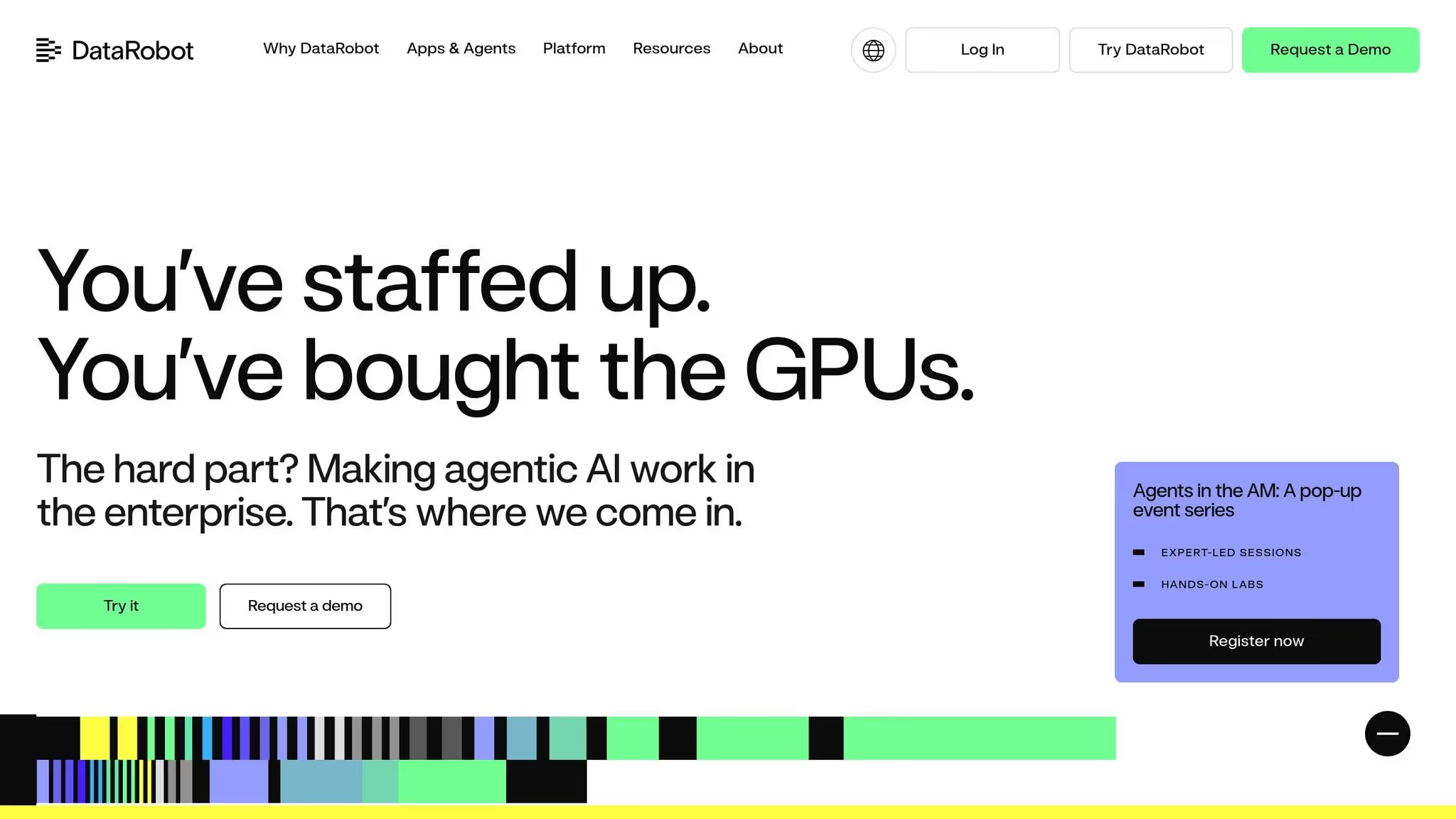
  • DataRobot: Automated ML with a focus on governance and ease of use for business teams.
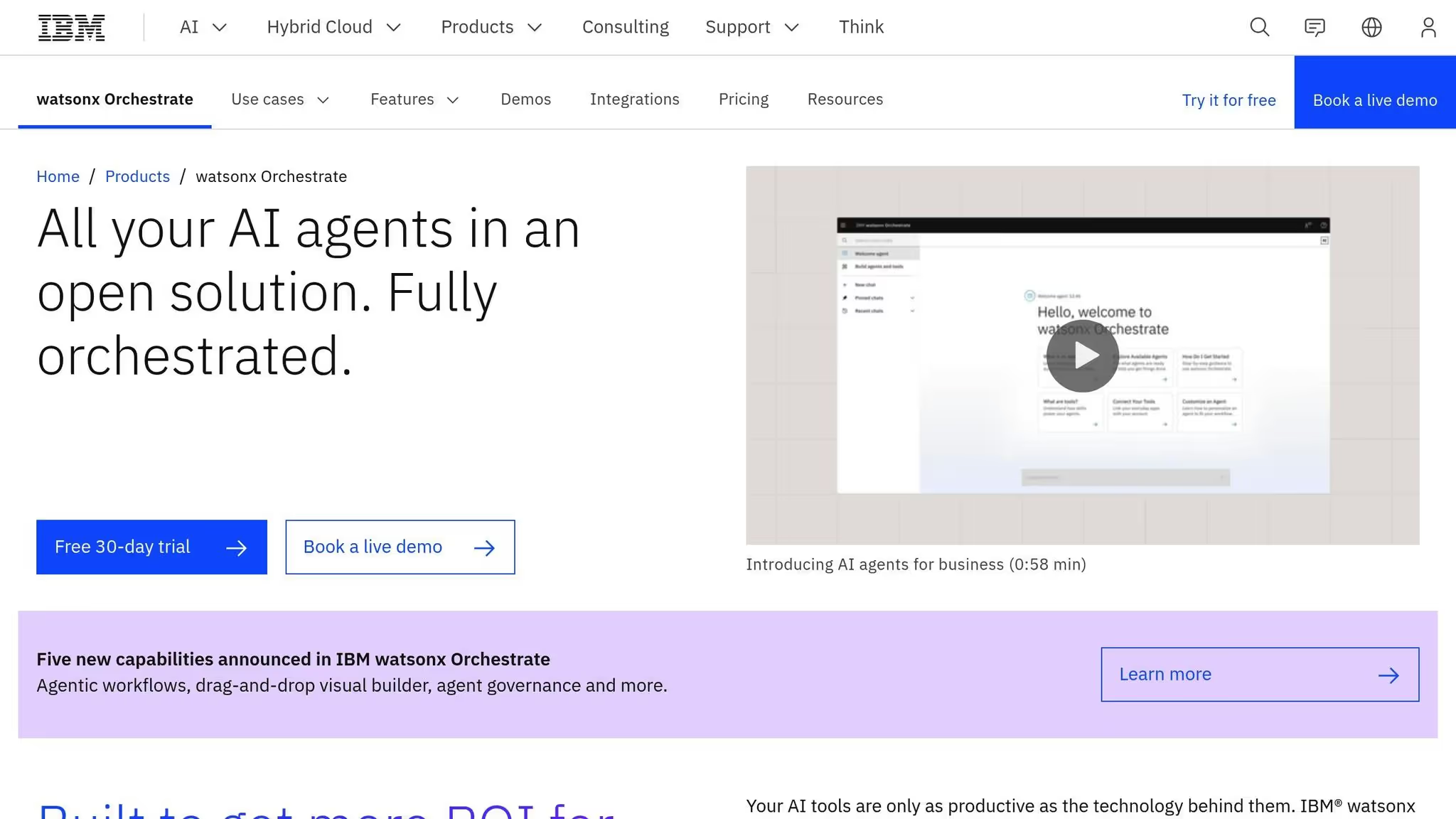
  • IBM watsonx Orchestrate: Enterprise-grade compliance and hybrid deployment options.
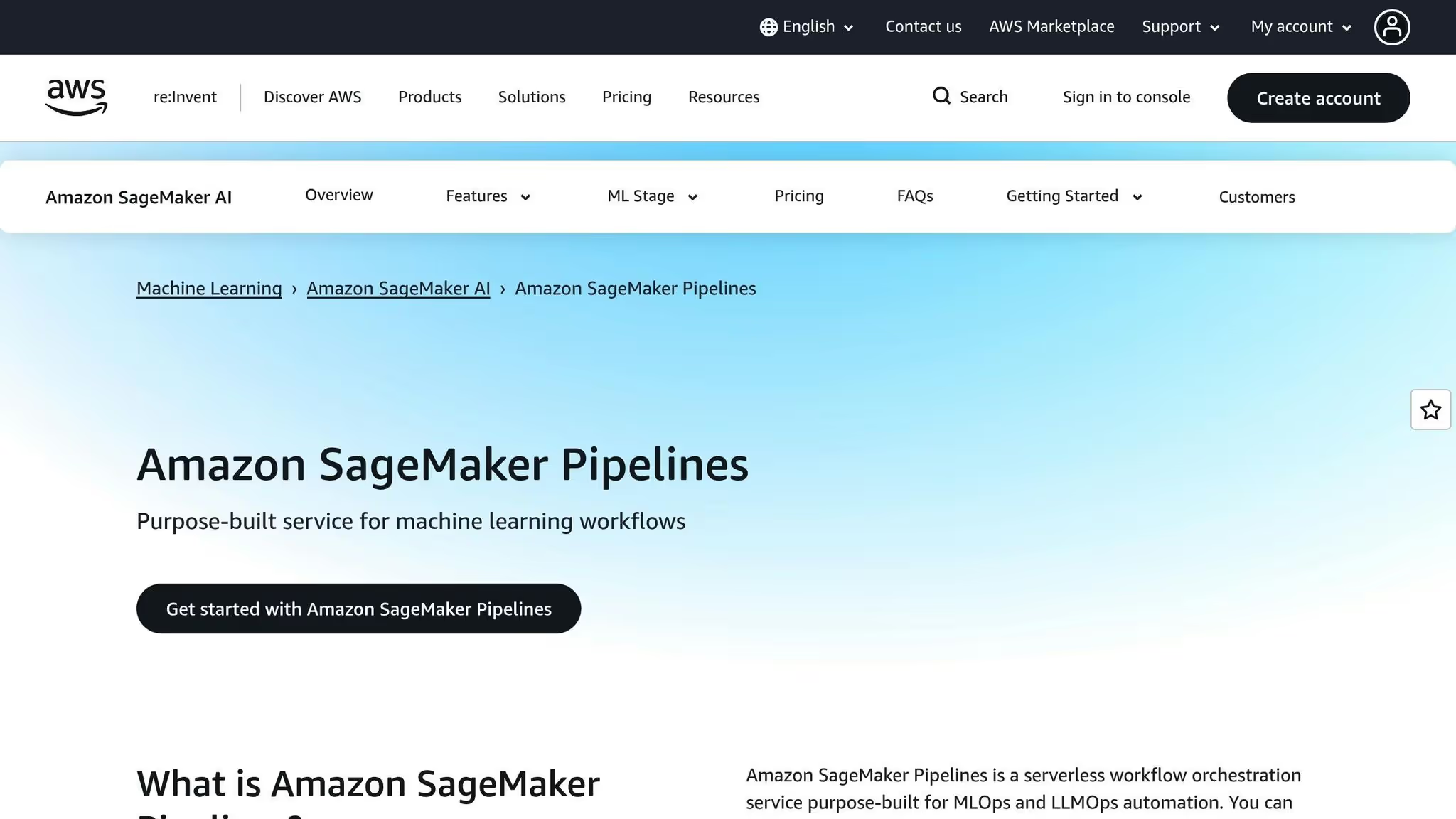
  • AWS SageMaker Pipelines: Automates ML workflows with deep AWS integration.
  • Azure Machine Learning MLOps: Combines automation with strong compliance features in the Microsoft ecosystem.

Quick Comparison

Platform Key Features Limitations Best For
Prompts.ai Unified AI models, cost savings Subscription-based Cost-conscious teams, enterprises
Kubeflow Open-source, Kubernetes-native Complex setup Technical teams
Apache Airflow Workflow scheduling, ML extensions Needs additional ML tools Data engineers
Domino Data Lab Enterprise ML governance High cost, limited public details Enterprises
DataRobot Automated ML, audit trails Limited customization Business teams
IBM watsonx Compliance, hybrid deployments Complex pricing Regulated industries
AWS SageMaker AWS ecosystem integration AWS dependency AWS users
Azure ML MLOps Compliance, big data support Azure-centric Microsoft users

Each platform has unique strengths, from cost efficiency to enterprise-grade governance. Whether you need open-source flexibility, cloud-native integration, or compliance-focused tools, this guide helps you make an informed decision.

Kubeflow vs MLflow vs Airflow (2025) – Best MLOps Tool for Machine Learning Pipelines?

Kubeflow

1. Prompts.ai

Prompts.ai

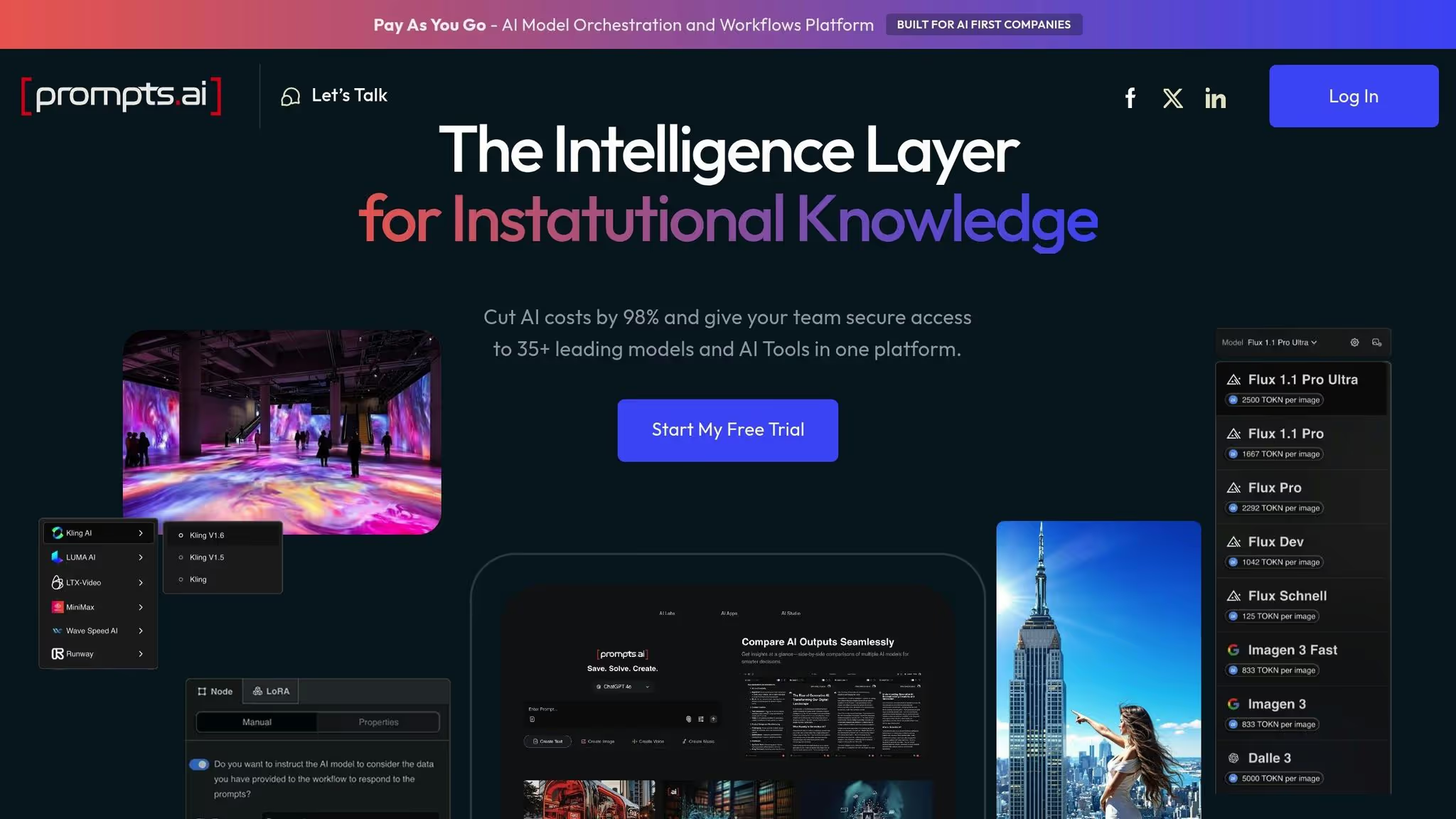
Prompts.ai is a unified AI orchestration platform designed to simplify the complexities of managing multiple machine learning tools. With secure access to over 35 leading AI models, including GPT-4, Claude, LLaMA, and Gemini, all through a single interface, the platform helps organizations streamline AI projects and tackle the challenge of tool overload. Let’s dive into the features that make Prompts.ai a standout solution.

Model Interoperability

One of the platform’s key strengths is its ability to integrate a variety of AI frameworks into a single, cohesive system. Prompts.ai connects users with tools for tasks like image generation and animation, featuring integrations with Midjourney, Google DeepMind ImageFX, Flux 1 via ComfyUI, Reve AI, Kling AI, Luma AI, and Google DeepMind Veo2. For instance, Johannes V., a Freelance AI Director, demonstrated the platform’s versatility by combining multiple tools to create a promotional video for Breitling and a LoRA-enhanced BMW concept car video.

Pipeline Automation

Prompts.ai transforms scattered AI tasks into streamlined, repeatable processes through its powerful workflow automation features. Its "Interoperable Workflows" allow users to build AI Agents that handle complex, multi-step processes automatically. Depending on the subscription level, teams can either utilize prebuilt workflows on a Pay-As-You-Go basis or design custom workflows with varying degrees of flexibility.

Governance and Compliance

Prompts.ai places a strong emphasis on enterprise governance. Built with compliance in mind, the platform incorporates best practices from SOC 2 Type II, HIPAA, and GDPR frameworks to ensure data security. It has also initiated its SOC 2 Type II audit process and works with Vanta for ongoing control monitoring. Users can track their security status in real time through the Trust Center (https://trust.prompts.ai/), which provides updates on policies, controls, and compliance measures. For businesses, additional features like "Compliance Monitoring" and "Governance Administration" offer comprehensive oversight of all AI activities.

"Govern at Scale: Full visibility and auditability across all AI interactions." – Prompts.ai

Cost Management

Managing costs is a critical focus of Prompts.ai. By centralizing access to over 35 AI tools and replacing disconnected subscriptions, the platform claims to reduce AI expenses by 98% and cut overall costs by 95%. Its Pay-as-You-Go TOKN model aligns spending with actual usage, making it particularly advantageous for teams with fluctuating workloads.

"With Prompts.ai's LoRAs and workflows, he now completes renders and proposals in a single day - no more waiting, no more stressing over hardware upgrades." – Steven Simmons, CEO & Founder

Deployment Flexibility

Prompts.ai caters to a variety of infrastructure needs with flexible deployment options. Personal plans range from free to $99 per month, while business plans are priced between $99 and $129 per member monthly. Additionally, the platform includes a feature for side-by-side comparisons of large language models, which reportedly enhances team productivity by 10×.

"An architect blending AI with creative vision, once had to rely on time-consuming drafting processes. Now, by comparing different LLM side by side on Prompts.ai, allows her to bring complex projects to life while exploring innovative, dreamlike concepts." – Ar. June Chow, Architect

2. Kubeflow

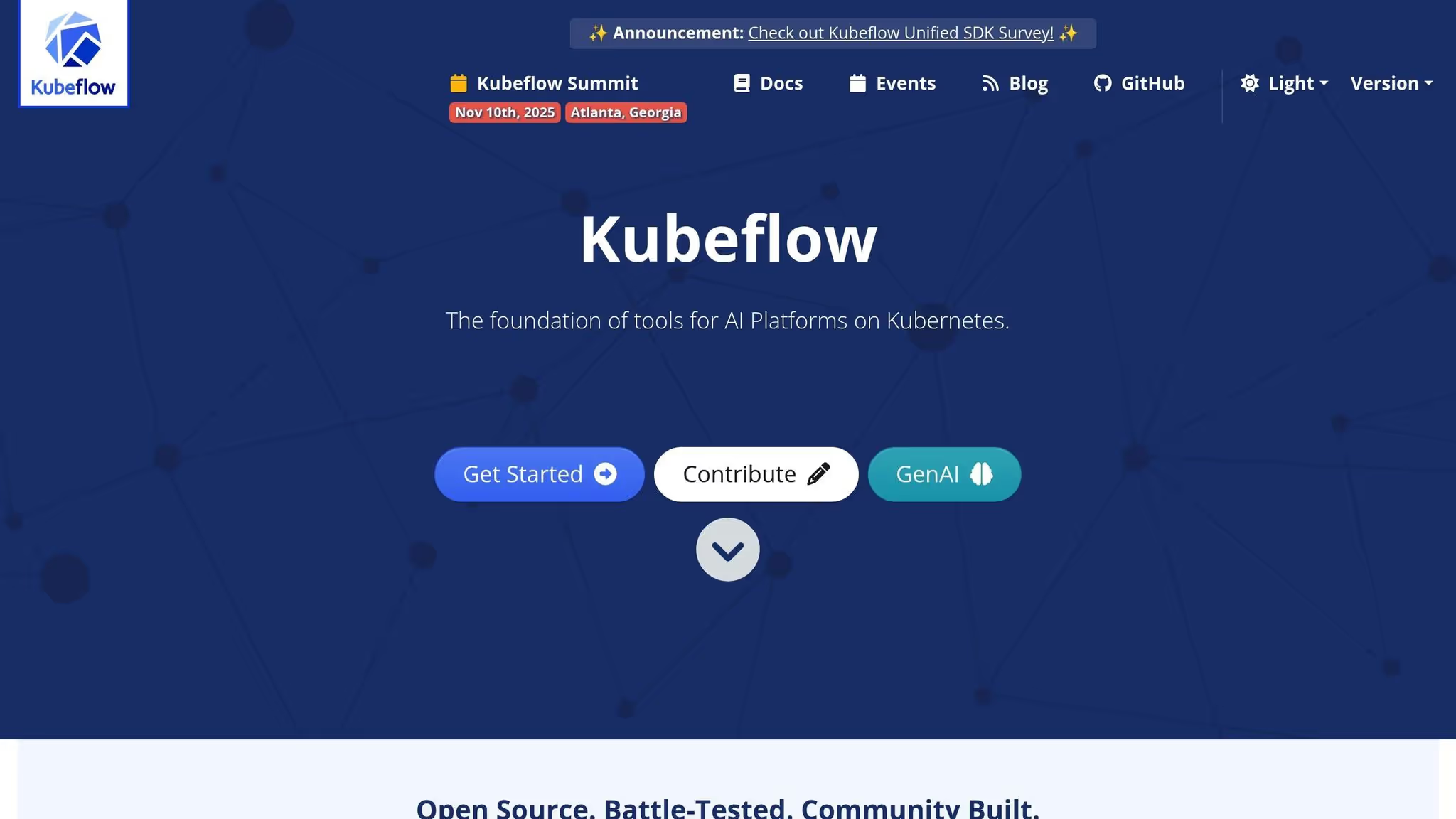
Kubeflow is an open-source platform built on Kubernetes, designed to streamline and scale machine learning (ML) workflows by utilizing container orchestration. It has gained traction among organizations managing large-scale ML operations.

Pipeline Automation

With Kubeflow, data science teams can automate complex ML workflows by defining pipelines that seamlessly integrate various stages, such as data preprocessing, model training, validation, and deployment. For instance, Kubeflow can handle the entire ML lifecycle - from preparing data and conducting distributed GPU training to validating models and deploying them - while also managing tasks like resource allocation, versioning, and retraining models when fresh data becomes available.

Deployment Flexibility

Kubeflow stands out for its ability to deploy ML workflows across diverse environments, whether locally, on-premises, or in the cloud, without significant architectural adjustments. Its Kubernetes-native framework integrates smoothly with the Kubernetes ecosystem and major cloud providers, enabling teams to scale their operations across multiple infrastructures. This flexibility supports a range of deployment needs, though keeping costs manageable presents its own considerations.

Cost Management

As an open-source tool, Kubeflow eliminates licensing fees, meaning costs are primarily tied to Kubernetes and cloud resource usage. Its efficient resource management helps reduce compute expenses. However, setting up and maintaining Kubeflow requires expertise in Kubernetes, which may lead to additional staffing or training investments.

3. Apache Airflow (with ML Extensions)

Apache Airflow

Apache Airflow is an open-source platform designed to programmatically author, schedule, and monitor workflows, making it a powerful tool for managing data pipelines. With the addition of ML Extensions, it goes a step further by enabling smooth integration of tasks like model training, evaluation, and deployment directly within the Airflow environment.

These extensions elevate Apache Airflow into a comprehensive solution for orchestrating complete machine learning pipelines, streamlining the process from start to finish.

4. Domino Data Lab

Domino Data Lab

Domino Data Lab offers a platform tailored to enterprise data science, designed to support scalable machine learning workflows. While it simplifies ML processes at the enterprise level, its publicly available documentation falls short in addressing critical orchestration elements. Key areas such as automated pipeline management, governance measures, multi-cloud deployment capabilities, and cost management are not thoroughly detailed. To gain a deeper understanding of these features, it's advisable to explore the vendor's proprietary resources. Compared to other platforms with more transparent feature descriptions, this lack of public detail may require additional research to fully assess its suitability for enterprise applications.

5. DataRobot AI Platform

DataRobot

The DataRobot AI Platform is designed for enterprises seeking to streamline machine learning processes while maintaining strict oversight. It focuses on automating machine learning tasks and ensures transparency and control at every stage of the development lifecycle.

Governance and Compliance

With a strong emphasis on governance, the platform automatically tracks and records every step of model development, creating detailed audit trails. This not only supports accountability but also simplifies compliance with regulatory requirements. Additionally, built-in tools help identify and address potential biases in model predictions, while role-based access controls protect sensitive data and ensure only authorized users have access. These features work together to uphold high regulatory and security standards.

6. IBM watsonx Orchestrate

IBM watsonx Orchestrate

IBM watsonx Orchestrate is designed with enterprise security and compliance at its core. Unlike developer-focused tools, this platform is tailored for IT and business teams seeking a reliable solution to automate AI workflows while maintaining strict governance. It integrates seamlessly with existing systems, making it an ideal choice for organizations where security and compliance are top priorities.

Emerging from IBM's watsonx AI and data platform ecosystem, watsonx Orchestrate emphasizes transparency in AI operations. Its focus on trust and governance makes it especially suitable for industries like financial services, healthcare, and government, where regulatory requirements are critical.

Pipeline Automation

The platform shines in automating intricate enterprise AI workflows by connecting various steps such as data preprocessing, model deployment, and performance monitoring. It links data sources, processing tools, and business applications, enabling workflows to move smoothly across departments without manual intervention.

A standout feature is its ability to manage complex dependencies and trigger actions based on workflow results. Conditional logic allows teams to create workflows that adapt dynamically to changing conditions or data quality concerns, ensuring efficient and responsive operations.

Governance and Compliance

Governance is a cornerstone of IBM watsonx Orchestrate. It includes role-based access controls to manage permissions across workflows, data, and model outputs. Every action is automatically logged through audit trails, helping organizations meet compliance standards. Features like just-in-time approvals and a built-in policy engine enforce operational safeguards, making compliance processes easier for regulated industries.

These robust governance tools set it apart from traditional open-source options, which often fall short in meeting the stringent compliance needs of industries like finance and healthcare.

Deployment Flexibility

IBM watsonx Orchestrate offers flexibility with hybrid cloud and on-premises deployment options, catering to varying security and performance requirements. Its REST API supports integration with a wide range of enterprise systems, ensuring scalability as organizational needs evolve.

This flexibility allows businesses to adopt advanced orchestration capabilities without compromising their existing security and compliance measures, bridging the gap between innovation and risk management.

7. AWS SageMaker Pipelines

AWS SageMaker Pipelines

AWS SageMaker Pipelines streamlines the process of automating machine learning workflows, offering a secure and efficient solution for enterprise needs. By leveraging a visual designer and SDK, it transforms labor-intensive tasks into repeatable, automated processes. The service ensures smooth execution by automatically managing dependencies, running each step only when its required conditions are fulfilled. This approach to visual design and automated workflows reflects the growing demand for seamless and interconnected AI systems.

8. Azure Machine Learning MLOps

Azure Machine Learning MLOps

Azure Machine Learning MLOps offers a robust solution for managing machine learning workflows on Azure. By blending advanced automation with enterprise-level governance, it caters to organizations that prioritize compliance and operational efficiency.

Pipeline Automation

Azure Machine Learning MLOps simplifies the creation and management of machine learning pipelines through Azure Data Factory (ADF). With both visual and code-based tools, ADF enables users to design, schedule, and orchestrate end-to-end workflows effortlessly.

For large-scale, distributed AI workflows, the platform incorporates SynapseML. This integration utilizes Apache Spark and cloud data warehouses to handle big data environments, ensuring scalable model deployment and analytics. Additionally, the platform supports MLflow client integration, enabling users to log experiments, models, and metrics consistently via the MLflow API. This ensures smooth tracking and coordination across all stages of the machine learning lifecycle. These automation tools work seamlessly alongside Azure’s compliance features.

Governance and Compliance

Azure Machine Learning MLOps addresses the stringent requirements of regulated industries by implementing role-based access controls, encryption, and thorough data versioning to track changes and facilitate rollbacks. It also incorporates tools for responsible AI, including model explainability, bias detection, and fairness metrics, helping organizations maintain ethical and transparent AI practices.

Advantages and Disadvantages

Every solution comes with its own set of strengths and compromises, making the choice highly dependent on your specific needs, budget, and technical expertise. Below is a breakdown of the key takeaways from the solution reviews.

Enterprise-grade platforms, such as Prompts.ai, simplify workflows by unifying multiple AI models and can slash AI costs by up to 98%.

Open-source solutions, including Kubeflow and Apache Airflow, provide flexibility and customization, backed by strong community support. However, they demand significant setup effort and advanced technical skills.

Cloud-native offerings like AWS SageMaker Pipelines and Azure Machine Learning MLOps integrate seamlessly into their respective ecosystems but can lead to vendor lock-in and higher costs for multi-cloud environments.

Platform Key Strengths Primary Limitations
Prompts.ai 35+ unified models, up to 98% cost savings, enterprise governance -
Kubeflow Open-source flexibility, Kubernetes-native, high customization Complex setup; requires Kubernetes expertise
Apache Airflow Mature ecosystem, flexible scheduling, strong community Not tailored for ML; needs additional ML tooling
Domino Data Lab Comprehensive MLOps, collaboration tools, model governance High cost; enterprise-focused pricing
DataRobot Automated ML, user-friendly for business teams Limited customization; proprietary approach
IBM watsonx Enterprise AI governance, hybrid cloud support Complex pricing; steep learning curve
AWS SageMaker Deep AWS integration, scalable, managed infrastructure Dependency on AWS ecosystem; cost complexity
Azure ML MLOps Microsoft ecosystem integration, compliance features, SynapseML Azure-centric approach; learning curve for non-Microsoft users

This table highlights each platform's strengths and limitations, focusing on factors like cost, complexity, and governance.

The differences in cost structures, technical demands, and governance capabilities are striking. For instance, pay-as-you-go platforms like Prompts.ai align expenses with actual usage, while open-source options such as Kubeflow require advanced expertise for setup and management. Enterprise platforms typically include built-in audit trails and role-based access controls, whereas open-source tools often need custom compliance solutions. These distinctions can guide you toward the best choice for your machine learning project.

Conclusion

Choosing the right orchestration solution for machine learning projects hinges on your organization's unique priorities, technical expertise, and budget.

  • Cost-conscious teams can take advantage of Prompts.ai's pay-as-you-go model, which eliminates recurring fees while offering access to 35+ unified models and cutting costs by up to 98%.
  • Enterprises with strict compliance needs may prefer platforms like Prompts.ai, IBM watsonx Orchestrate, or Domino Data Lab, which provide built-in audit trails, role-based access controls, and strong data security measures.
  • Organizations tied to specific cloud ecosystems might find AWS SageMaker Pipelines or Azure Machine Learning MLOps to be a natural fit for seamless integration. However, these options may come with the risk of vendor lock-in, making it essential to weigh platform compatibility against long-term flexibility.
  • Technical teams seeking full customization can explore open-source solutions such as Kubeflow or Apache Airflow. While these tools offer unparalleled flexibility, they demand significant effort for setup and ongoing maintenance.
  • Business-focused teams may lean toward platforms like DataRobot, which simplifies the machine learning process through automation, reducing technical barriers while delivering effective results.

Ultimately, the best choice lies in aligning the platform's features with your organization's goals and resources.

FAQs

What should I look for in an orchestration solution for my machine learning projects?

When choosing an orchestration solution for your machine learning projects, it's important to prioritize factors that match your team's workflow and project objectives. Start by ensuring compatibility with your current tech stack - this will make integration seamless and reduce setup headaches. Equally important is ease of use, which allows your team to get up to speed with the platform quickly and efficiently.

Look for features like workflow automation, real-time monitoring, and alerting tools to simplify operations and tackle potential issues before they escalate. Lastly, assess whether the solution can handle scalability and support your team's growth as your machine learning initiatives expand over time.

How does Prompts.ai maintain compliance and governance for enterprise machine learning workflows?

Prompts.ai upholds top-tier compliance standards such as SOC 2 Type II, HIPAA, and GDPR, ensuring your data remains secure at every stage. By integrating with Vanta, the platform enables continuous monitoring of security controls, offering ongoing assurance of compliance.

As part of its dedication to strong governance and enterprise-level security, Prompts.ai began its SOC 2 Type II audit process on June 19, 2025.

How does Prompts.ai help reduce costs, and what are its pricing options?

Prompts.ai enables you to cut costs by up to 95% by bringing together over 35 AI tools into one efficient platform. By consolidating these tools, you can eliminate the hassle and expense of managing multiple subscriptions while simplifying your operations.

With its pay-as-you-go pricing model, you only pay for what you use, giving you the flexibility to align expenses with your needs. For even greater savings, you can opt for the annual plan, which comes with a 10% discount, making it a smart option for long-term commitments.

Related Blog Posts

SaaSSaaS
Quote

Streamline your workflow, achieve more

Richard Thomas