Pay As You Go7 दिन का फ़्री ट्रायल; किसी क्रेडिट कार्ड की आवश्यकता नहीं



AI orchestration tools simplify managing complex workflows by connecting AI models, datasets, and applications. These platforms reduce tool sprawl, streamline processes, and ensure security and compliance. In 2026, five leading platforms stand out, each catering to different needs:
These tools vary in technical complexity, cost structures, and scalability, making it essential to match them with your team's expertise and goals.
Each platform offers unique strengths, whether you need no-code simplicity, developer flexibility, or enterprise-grade compliance. Choose based on your team's needs and technical expertise.
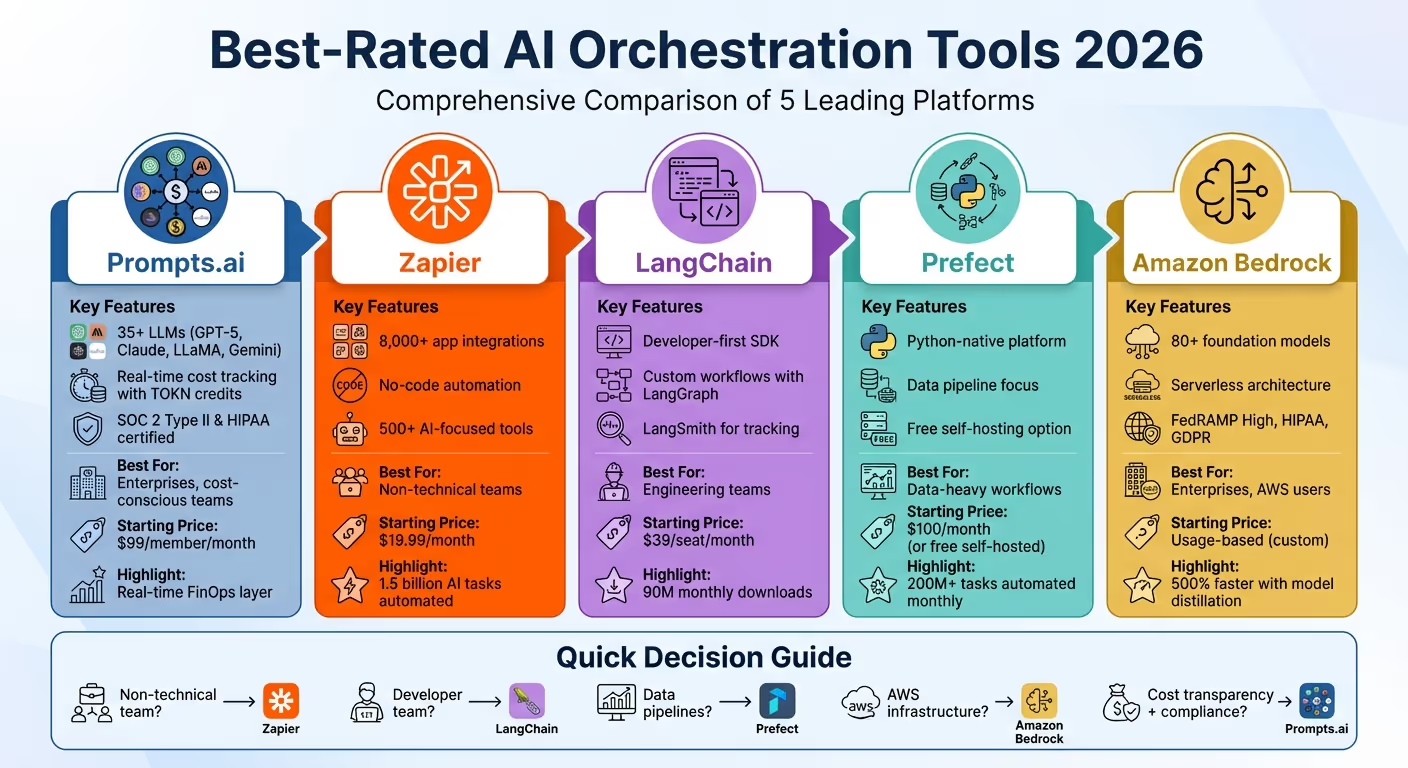
AI Orchestration Tools 2026: Feature and Pricing Comparison
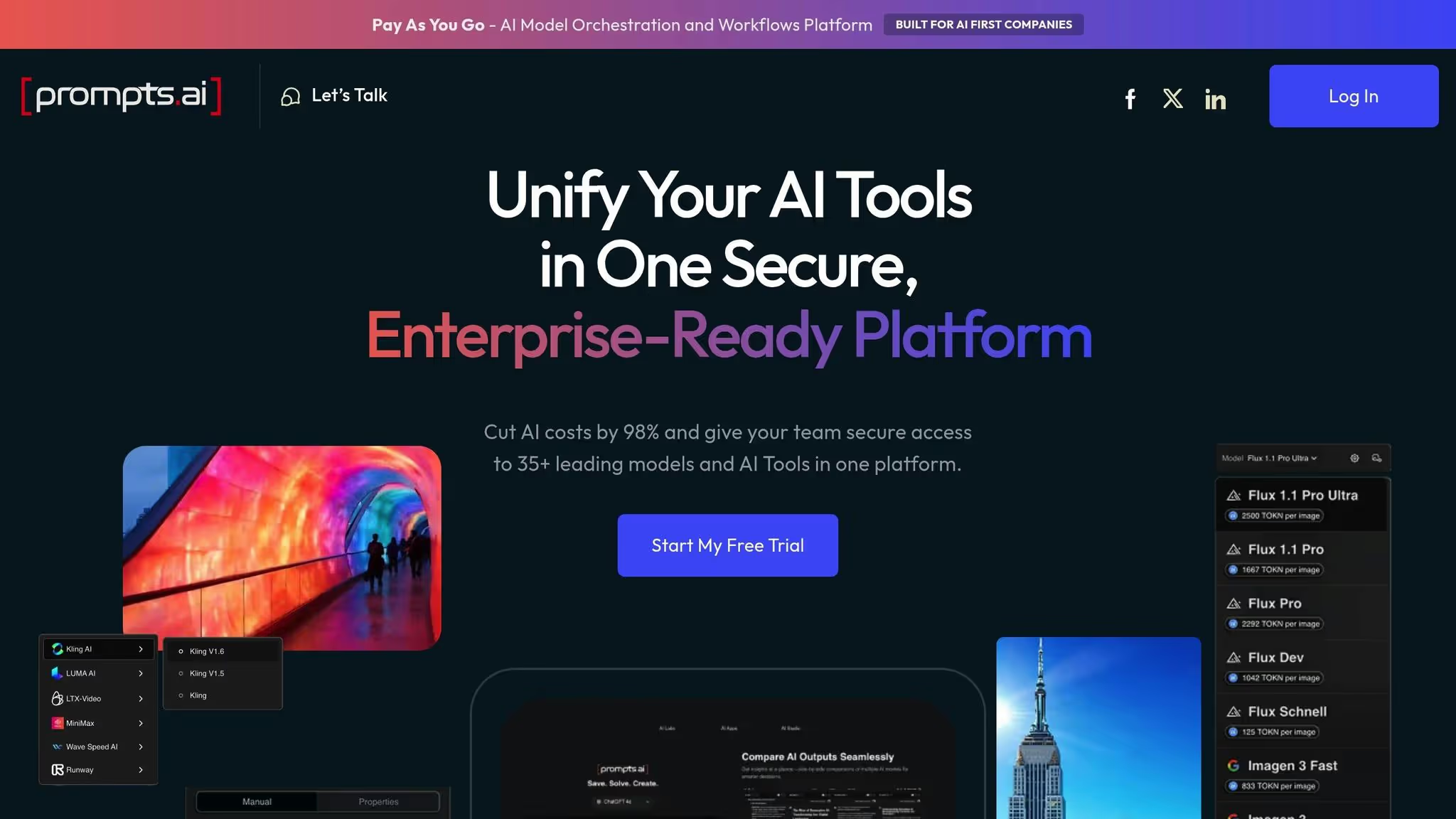
Prompts.ai brings together 35+ top-tier LLMs - including GPT-5, Claude, LLaMA, and Gemini - into one streamlined platform. Forget managing multiple logins for providers like OpenAI, Anthropic, and Google; this unified interface gives teams seamless access to every model in one place, eliminating unnecessary hurdles.
With its centralized access, Prompts.ai simplifies model comparisons. The side-by-side comparison tool allows teams to test the same prompt across different models simultaneously. This feature is invaluable for making informed decisions - whether you're assessing GPT-5 for creative tasks or Claude for technical writing, you can evaluate their performance without toggling between systems or juggling API keys.
Prompts.ai replaces the hassle of multiple subscriptions with a pay-as-you-go TOKN credit system. This system tracks real-time spending across all models, offering transparency through a built-in FinOps layer. Teams can monitor token usage by project, department, or user, while finance teams benefit from a consolidated dashboard that highlights spending patterns. This setup makes it easier to identify cost-heavy workflows and choose models based on actual usage, maximizing efficiency.
Designed for industries with strict regulatory demands, Prompts.ai is SOC 2 Type II and HIPAA certified, with continuous monitoring by Vanta. The platform includes role-based access controls (RBAC) and detailed audit trails, ensuring every AI interaction is logged and traceable. These features are critical for organizations needing to demonstrate compliance during audits or reviews, and they’re built directly into the platform's infrastructure.
Starting at $99 per member per month for the Core plan, Prompts.ai scales effortlessly to meet growing needs. Pro and Elite tiers are available at $119 and $129, respectively. The platform’s architecture is designed to handle expanding teams, users, and models, making it a flexible solution for businesses looking to grow their AI capabilities over time.
Zapier connects more than 8,000 apps, including over 500 AI-focused tools like ChatGPT, Claude, Gemini, and Perplexity. With over 1.5 billion AI tasks automated and more than 1 million companies relying on its services, Zapier has become a trusted name in automation. Impressively, 87% of the Forbes Cloud 100 companies use Zapier, highlighting its role in streamlining business operations. This extensive connectivity makes it a go-to solution for integrating AI into workflows.
Zapier’s “AI by Zapier” feature simplifies access to large language models (LLMs) without the hassle of managing separate API keys. Its Model Context Protocol (MCP) enables external AI tools like ChatGPT and Claude to securely perform over 30,000 actions within Zapier’s ecosystem. Teams can even create autonomous Zapier Agents, capable of handling research and executing multi-step tasks based on natural language commands.
In 2025, Marcus Saito, Head of IT and AI Automation at Remote, implemented an AI-driven system using Zapier that saved the equivalent of 2,200 workdays per month. This automation also resolved 28% of support tickets, allowing a small three-person team to effectively manage support for 1,700 employees. As Saito put it:
"Zapier makes our team of three feel like a team of ten".
These integrations not only enhance efficiency but also significantly reduce workflow costs by cutting down on manual configurations.
Zapier’s no-code tools eliminate the need for expensive developer support when building integrations. Features like token limits and filters allow users to prioritize high-value tasks, while Zapier Tables and Interfaces - whose triggers and actions don’t count as tasks - help reduce costs further. The platform’s analytics dashboard provides insights into cost per run, enabling teams to measure ROI effectively.
Jacob Sirrs, Marketing Operations Specialist at Vendasta, used Zapier to automate administrative tasks, saving 282 days of manual work annually and reclaiming $1 million in potential revenue. By automating processes, the team also saved 15 minutes per sales call, streamlining their operations.
Zapier prioritizes security and compliance, holding certifications like SOC 2 Type II, SOC 3, GDPR, and CCPA. For enterprise users, data is automatically excluded from training third-party AI models, and other users can manually opt out. The platform also offers robust features such as role-based permissions, single sign-on (SSO/SAML), SCIM for automated provisioning, and detailed audit logs to monitor automation activities. IT administrators can further control access to specific third-party AI tools through Application Controls.
Connor Sheffield, Head of Marketing Ops and Automation at Zonos, emphasized:
"Customers trust us to keep their data secure and safe. I have 100% confidence that Zapier handles that data with the utmost security".
Zapier’s modular design ensures it scales effortlessly with growing businesses. Its architecture supports horizontal scalability, maintaining performance even as workflow volumes increase. Teams can break down workflows into reusable components, making it easier to expand AI initiatives across different departments. With Zapier Canvas, users can visually design and refine complex processes before rolling them out.
Spencer Siviglia, Director of Operations at Toyota of Orlando, leveraged Zapier Agents to manage over 30,000 lead records. This automation saved his team more than 20 hours each week by identifying data inconsistencies and generating actionable insights.
Plans start at $19.99 per month for the Professional tier (billed annually), with Team plans at $69 per month, and custom pricing available for Enterprise users.
LangChain stands as the most downloaded agent framework worldwide, boasting an impressive 90 million monthly downloads and over 100,000 GitHub stars. It's a trusted solution for AI orchestration, utilized by top tech companies like Replit, Cloudflare, Workday, Klarna, and Elastic. Its approach simplifies AI workflow management, making it an essential tool for enterprises.
LangChain provides a unified abstraction layer, enabling seamless model integration from providers such as OpenAI, Anthropic, and Google. For handling complex workflows, it employs LangGraph, which creates stateful, multi-step pipelines with durable execution and manual checkpoints.
To ensure reliable performance, LangSmith offers insights into agent execution paths and runtime metrics. A user aptly described its utility:
"LangChain is the easiest way to start building agents and applications powered by LLMs."
However, the platform does come with a steeper learning curve, favoring those with engineering expertise over those focused on simple prompt design. These technical capabilities are complemented by robust security features tailored for enterprise needs.
LangSmith delivers top-tier security with certifications like SOC 2 Type 2, HIPAA, and GDPR compliance, along with tracing capabilities that provide a clear audit trail - critical for industries with strict regulatory requirements. LangGraph also supports manual approval of critical AI actions, adding an extra layer of control.
As noted in the documentation:
"LangSmith meets the highest standards of data security and privacy with HIPAA, SOC 2 Type 2, and GDPR compliance."
LangChain is designed with scalability in mind. LangSmith Deployment offers horizontally scalable, production-ready infrastructure with auto-scaling APIs to handle long-running workflows. Additionally, LangGraph's persistent checkpoints allow workflows to resume smoothly after interruptions.
Pricing includes a free tier with 5,000 traces per month, a Plus Plan starting at $39 per seat per month, and custom Enterprise pricing available upon request.
Prefect offers a Python-focused solution for streamlining workflows into efficient AI-driven processes. With simple decorators like @flow and @task, it turns Python code into production-ready workflows without the need for complex YAML configurations. Every month, Prefect automates over 200 million data tasks for more than 25,000 practitioners.
Prefect's FastMCP integration directly provides context to AI agents, enabling strong LLM loops with human-in-the-loop controls. Its MCP server allows real-time monitoring and debugging, while durable execution ensures workflows can resume from failure points by saving intermediate results.
The platform’s hybrid execution model keeps sensitive data and LLM API keys secure within your infrastructure. Workers retrieve instructions by polling the Prefect API, transmitting only metadata to the control plane. This architecture has been instrumental for organizations like Snorkel AI, where Smit Shah, Director of Engineering, remarked:
"We improved throughput by 20x with Prefect. It's our workhorse for asynchronous processing - a Swiss Army knife".
Their team now handles over 1,000 workflows per hour using Prefect’s open-source engine.
Prefect’s zero-trust security model eliminates the need for inbound network connections, maintaining firewall integrity as workers poll for scheduled tasks. Enterprise-grade features include Single Sign-On (SSO), Role-Based Access Control (RBAC) at both account and workspace levels, and detailed audit logs for all actions. Prefect also meets strict compliance standards such as FedRAMP, HIPAA, and PCI-DSS, with deployment options that include Hybrid, PrivateLink, and Customer-Managed setups.
At Cash App, ML Engineer Wendy Tang utilized Prefect to modernize fraud prevention workflows, highlighting its role in improving infrastructure provisioning. Built-in lineage tracking further simplifies root cause analysis, especially in regulated environments.
The release of Prefect 3.0 in 2024 dramatically reduced runtime overhead by up to 90%. Its work pools separate workflow logic from execution environments, making it easy to switch between Docker, Kubernetes, or serverless platforms like AWS ECS without modifying code. Prefect’s dynamic runtime execution adapts tasks based on live data or LLM outputs, bypassing the limitations of rigid DAG structures found in other tools.
This flexibility and improved performance translate into measurable cost savings. Endpoint achieved a 73.78% reduction in invoice costs while tripling production capacity. Similarly, Rent The Runway cut orchestration costs by 70%, managing data for 2.5 million customers and over 750 brands. Prefect offers a free open-source core with full VPC control, alongside a managed Prefect Cloud option that includes a free tier for individual developers.
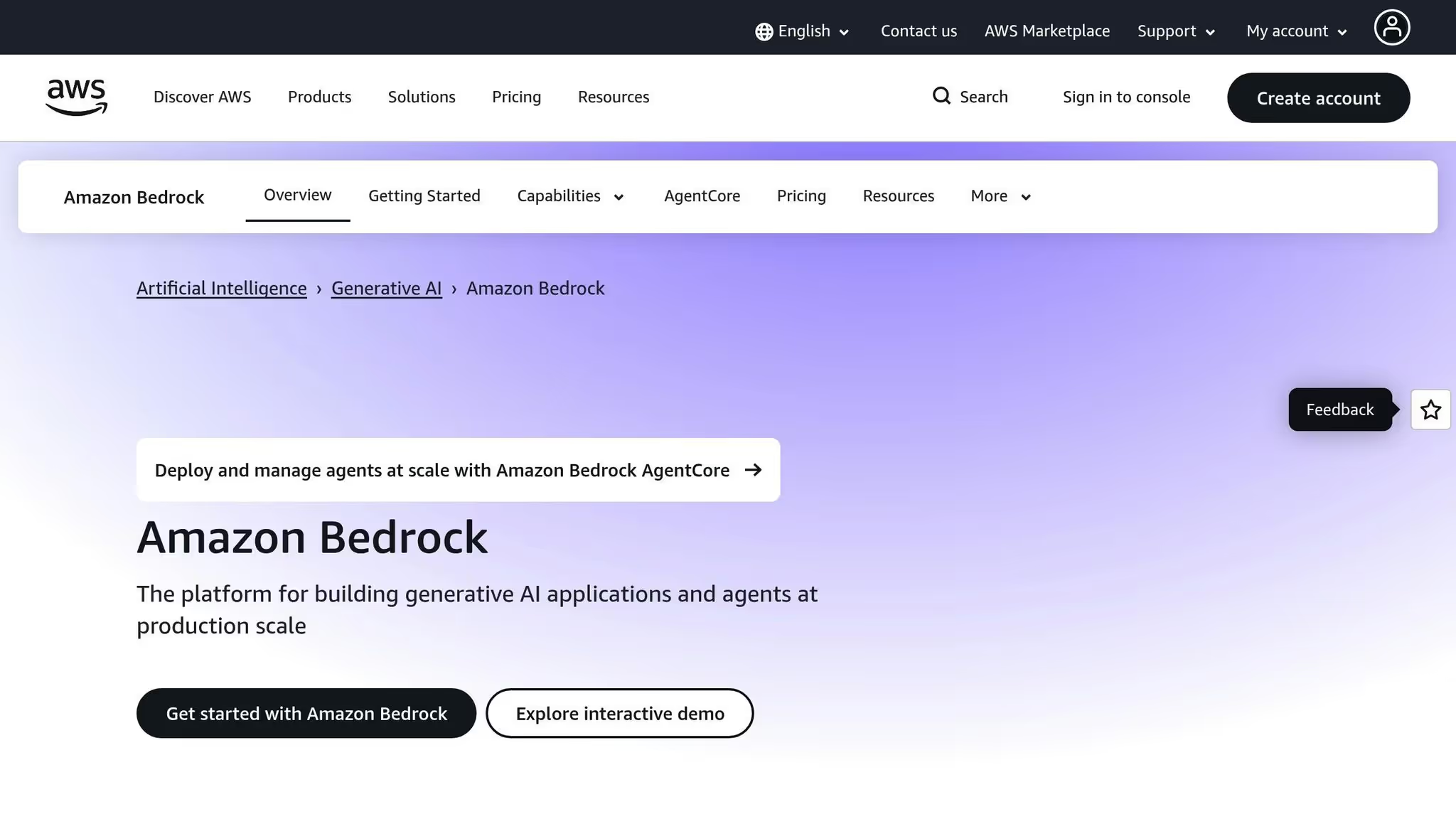
Amazon Bedrock stands out as a serverless platform tailored to meet the demands of scalability and regulatory compliance. With access to over 80 foundation models - including Anthropic, Meta, Mistral AI, and Amazon - through a single API, it offers a streamlined approach for businesses. Designed with enterprise-grade security, the platform is particularly suited for industries with strict regulatory requirements.
Bedrock Flows provides a visual interface to connect foundation models, prompts, and AWS services. Laura Skylaki, VP of Artificial Intelligence at Thomson Reuters, highlighted its value:
"Bedrock Flows will enable us to create complex, flexible, multi-prompt workflows which we can easily evaluate, compare and version. We can also quickly integrate flows with our applications using the SDK APIs for serverless flow execution - without wasting time in deployment and infrastructure management".
Bedrock Agents manage interactions between models and data sources using Action Groups defined through OpenAPI schemas, executed via Lambda functions. The AgentCore Gateway ensures secure access to enterprise data through the Model Context Protocol. For example, marketing firm Epsilon cut their agent development time from months to weeks and automated complex campaign workflows using AgentCore. This integration mirrors the seamless workflows found in other leading platforms, enhancing productivity.
Bedrock employs several cost-saving strategies to maximize efficiency:
Robinhood scaled from 500 million to 5 billion tokens daily in just six months using Bedrock, achieving an 80% reduction in AI costs and halving development time. Dev Tagare, Head of AI at Robinhood, shared:
"Amazon Bedrock's model diversity, security, and compliance features are purpose-built for regulated industries".
These features reinforce Bedrock’s focus on efficiency and cost transparency.
For industries with strict regulatory needs, Bedrock provides robust guardrails. Bedrock Guardrails filter 88% of harmful content and use Automated Reasoning to verify model responses with up to 99% accuracy. For retrieval-augmented generation (RAG) workloads, contextual grounding checks filter over 75% of hallucinated responses. Importantly, customer data is never stored or used to train models, and all data is encrypted both in transit and at rest. Bedrock complies with ISO, SOC, CSA STAR Level 2, GDPR, FedRAMP High standards, and is HIPAA eligible.
Bedrock’s serverless architecture scales effortlessly to meet demand. The AgentCore Runtime integrates with AWS Lambda and Amazon ECS, adjusting agent behavior dynamically. Using AWS Step Functions, the platform can execute workflows for each S3 array item, enabling distributed mapping for thousands of concurrent workflows without manual oversight. This ensures businesses can handle extensive workloads with ease.
Selecting the best AI orchestration tool hinges on your team's technical expertise, budget priorities, and compliance needs. Each platform has its own strengths and limitations, making it crucial to align capabilities with your specific goals.
The comparison table below evaluates five platforms based on four key performance factors. Prompts.ai stands out with access to over 35 LLMs and a built-in FinOps layer for real-time cost tracking, making it a strong choice for organizations needing cost transparency and robust compliance (SOC 2 Type II, HIPAA, and GDPR). Zapier, with its 8,000+ app integrations, is perfect for non-technical teams seeking quick implementation, though its task-based billing can lead to unexpected costs when AI agents retry actions during reasoning - each retry adds to the bill. LangChain offers granular cost and latency metrics through LangSmith, giving developers detailed insights to refine workflows, but it requires technical expertise to fully leverage its features. Prefect provides a self-hosting option to avoid subscription fees, though this comes at the expense of managed features like webhooks and automations. Lastly, Amazon Bedrock scales seamlessly with AWS and employs a usage-based pricing model, but smaller teams may find cost monitoring challenging at high volumes. These highlights provide a snapshot before diving deeper into specific use cases.
A recent Atlassian State of Product Report (2026) revealed that 46% of product teams cite poor integration with existing workflows as the biggest hurdle to AI adoption. This underscores the importance of choosing tools that align with team capabilities - Zapier works well for non-technical teams needing fast deployment, while LangChain suits engineering teams requiring deep customization and performance tuning.
Data also shows that organizations partnering with external orchestration solutions double their success rates compared to the typical 5% of AI pilots that reach production. To accurately assess total costs, consider more than just subscription fees - watch for hidden expenses like premium connectors and per-run execution charges. For tools like Zapier, implementing human-in-the-loop checkpoints can prevent runaway AI retries that inflate costs. In regulated industries, platforms with built-in audit trails and automated compliance features are essential for meeting strict legal standards.
This comparison blends feature overviews with strategic insights, helping businesses select the orchestration tool that best fits their technical expertise and operational goals. Matching the platform to your team's capabilities ensures smoother implementation and better results.
Selecting the right AI orchestration tool depends on your team's expertise, budget, and security requirements, as well as the unique strengths of each platform. Prompts.ai stands out for organizations that value cost clarity and access to multiple LLMs. With a unified interface to over 35 models, real-time FinOps tracking, and pay-as-you-go TOKN credits - eliminating recurring subscription fees - it offers a practical solution for managing AI workflows efficiently. For smaller businesses or non-technical teams on tighter budgets, Zapier provides an easy starting point with its free tier and wide range of app integrations.
Different platforms cater to varying needs based on team size and technical demands:
ये जानकारियां प्रत्येक टूल की विशेषताओं और व्यावहारिक अनुप्रयोगों के गहन मूल्यांकन को दर्शाती हैं। विशेष रूप से, बाहरी ऑर्केस्ट्रेशन भागीदारों के साथ सहयोग करने वाले संगठनों की सफलता दर मानक 5% AI पायलटों की तुलना में दोगुनी दिखाई देती है, जो उत्पादन में अपनी जगह बनाते हैं। यह शुरुआत से ही आपकी परिचालन आवश्यकताओं के अनुरूप टूल चुनने के महत्व को रेखांकित करता है। सोच-समझकर चयन करके, आप एक प्रभावी, स्केलेबल और सुरक्षित AI वर्कफ़्लो इकोसिस्टम के लिए मंच तैयार करते हैं, जैसा कि इस समीक्षा में बताया गया है।
AI ऑर्केस्ट्रेशन टूल का चयन करते समय, इसके साथ शुरुआत करना आवश्यक है एकीकरण क्षमताएं। प्लेटफ़ॉर्म को आपके मौजूदा इकोसिस्टम के साथ आसानी से कनेक्ट होना चाहिए - चाहे वह डेटा स्रोत, API, या DevOps सिस्टम हो - व्यापक कस्टम सेटअप की आवश्यकता के बिना वर्कफ़्लो को सुचारू रूप से चलाने की अनुमति देता है। इसके अतिरिक्त, इसे ऑन-प्रिमाइसेस और क्लाउड परिनियोजन दोनों का समर्थन करना चाहिए, जिससे आपकी टीम को लागतों को संतुलित करने और अनुपालन आवश्यकताओं को पूरा करने की सुविधा मिल सके।
पर पूरा ध्यान दें स्केलेबिलिटी, गवर्नेंस, और लागत प्रबंधन। संसाधन उपयोग में स्पष्ट दृश्यता प्रदान करते हुए बढ़ते डेटा और वर्कलोड को संभालने के लिए टूल को सुसज्जित किया जाना चाहिए। रीयल-टाइम खर्च ट्रैकिंग आपको आश्चर्य से बचने में मदद कर सकती है, जबकि भूमिका-आधारित एक्सेस कंट्रोल, ऑडिट लॉग और अनुपालन जांच जैसी सुविधाएँ सुरक्षा और विनियामक मानकों का पालन सुनिश्चित करती हैं।
अंत में, नज़रअंदाज़ न करें प्रयोज्यता और समर्थन। एक सरल इंटरफ़ेस, संपूर्ण दस्तावेज़ीकरण, और रेस्पॉन्सिव ग्राहक सेवा सीखने की अवस्था को कम करने और आपकी टीम को कुशल बनाए रखने में महत्वपूर्ण बदलाव ला सकती है। एक मजबूत समुदाय या पार्टनर नेटवर्क तक पहुंच से अतिरिक्त इंटीग्रेशन की पेशकश करके और सर्वोत्तम प्रथाओं को साझा करके प्लेटफ़ॉर्म का मूल्य भी बढ़ाया जा सकता है।
AI ऑर्केस्ट्रेशन टूल किसके साथ बनाए गए हैं सुरक्षा और अनुपालन सर्वोच्च प्राथमिकताओं के रूप में। वे रोल-आधारित एक्सेस कंट्रोल, डेटा एन्क्रिप्शन (ट्रांज़िट और रेस्ट दोनों में), और अपरिवर्तनीय ऑडिट लॉग जैसी मजबूत सुविधाओं से लैस हैं। ये लॉग हर क्रिया को सावधानीपूर्वक रिकॉर्ड करते हैं, जिसमें मॉडल का उपयोग, डेटा ट्रांसफ़र और कॉन्फ़िगरेशन परिवर्तन शामिल हैं। इस तरह के तंत्र नीतियों का सख्ती से प्रवर्तन सुनिश्चित करते हैं, जैसे कि संवेदनशील डेटा को स्वीकृत मॉडल तक सीमित करना, जबकि किसी भी गैर-अनुपालन गतिविधियों को स्वचालित रूप से रोकना। यह दृष्टिकोण SOC 2, ISO 27001, GDPR, और HIPAA जैसे महत्वपूर्ण मानकों के पालन का समर्थन करता है।
इसके अलावा, ये प्लेटफ़ॉर्म रीयल-टाइम अनुपालन डैशबोर्ड, लागत-ट्रैकिंग टूल और ऑडिट-तैयार रिपोर्ट प्रदान करते हैं, जिससे विनियामक प्रक्रियाएं अधिक प्रबंधनीय हो जाती हैं। कई AI मॉडल के प्रबंधन को एक ही नियंत्रण प्रणाली में समेकित करके, वे सुरक्षा प्रथाओं को मानकीकृत करते हैं, क्रेडेंशियल रोटेशन को स्वचालित करते हैं, और ऑडिट के लिए टैम्पर-प्रूफ लॉग जेनरेट करते हैं। ये क्षमताएं व्यवसायों को उद्योग की आवश्यकताओं के अनुरूप रहते हुए आत्मविश्वास के साथ अपने AI वर्कफ़्लो को कारगर बनाने के लिए सशक्त बनाती हैं।
Prompts.ai उन टूल और सिस्टम के साथ आसानी से काम करने के लिए बनाया गया है जिन पर आपका व्यवसाय पहले से निर्भर है। इसका एकीकृत इंटरफ़ेस पायथन और जावास्क्रिप्ट एसडीके, और वेबहुक कार्यक्षमता के साथ एक मजबूत REST API का समर्थन करता है। यह लचीलापन डेवलपर्स को मौजूदा अनुप्रयोगों को न्यूनतम कोड समायोजन के साथ जोड़ने की अनुमति देता है।
प्लेटफ़ॉर्म व्यापक रूप से उपयोग किए जाने वाले क्लाउड स्टोरेज, डेटा वेयरहाउस और CI/CD सिस्टम के लिए पूर्व-निर्मित कनेक्टर भी प्रदान करता है। ये कनेक्टर आपके मौजूदा वर्कफ़्लो में डेटा अंतर्ग्रहण, मॉडल प्रशिक्षण और परिनियोजन जैसे कार्यों को एकीकृत करना आसान बनाते हैं। साथ ही, एक एंडपॉइंट के माध्यम से 35 से अधिक बड़े भाषा मॉडल तक पहुंच के साथ, अपनी AI क्षमताओं को अपडेट करना या उनका विस्तार करना एक सरल प्रक्रिया बन जाती है, जो आपके मौजूदा ऑपरेशन को बाधित नहीं करेगी।
आपकी टीम किस पर निर्भर करती है अपाचे एयरफ्लो, कुबेरनेट्स, या कस्टम-निर्मित स्क्रिप्ट, Prompts.ai आपके वर्कफ़्लो में मूल रूप से फिट बैठता है। यह रियल-टाइम कॉस्ट ट्रैकिंग और गवर्नेंस टूल भी प्रदान करता है जो आपके मौजूदा मॉनिटरिंग सिस्टम के साथ एकीकृत होते हैं। जटिल मिडलवेयर की आवश्यकता को समाप्त करके, प्लेटफ़ॉर्म व्यवसायों को दक्षता का अनुकूलन करते हुए तेज़ी से परिणाम प्राप्त करने में मदद करता है।