Pay As You GoEssai gratuit de 7 jours ; aucune carte de crédit requise



Les outils d'orchestration de l'IA simplifient et unifient les flux de travail complexes, aidant les entreprises à gérer efficacement les modèles, les données et les applications d'IA. Ce guide compare les six meilleures plateformes : Prompts.ai, Kubiya AI, Domo, Flux d'air Apache, Kubeflow, et IBM Watsonx Orchestrate - sur la base de l'intégration, de l'évolutivité, de la gouvernance et des principaux cas d'utilisation. Chaque outil permet de relever des défis tels que la multiplication des outils, le suivi des coûts et la conformité de manière unique. Voici un bref aperçu :
Chaque plateforme possède des atouts uniques en fonction des objectifs, de l'expertise technique et des besoins réglementaires de votre équipe. Choisissez en fonction de vos priorités, qu'il s'agisse de réduction des coûts, de centralisation de l'IA ou de conformité.
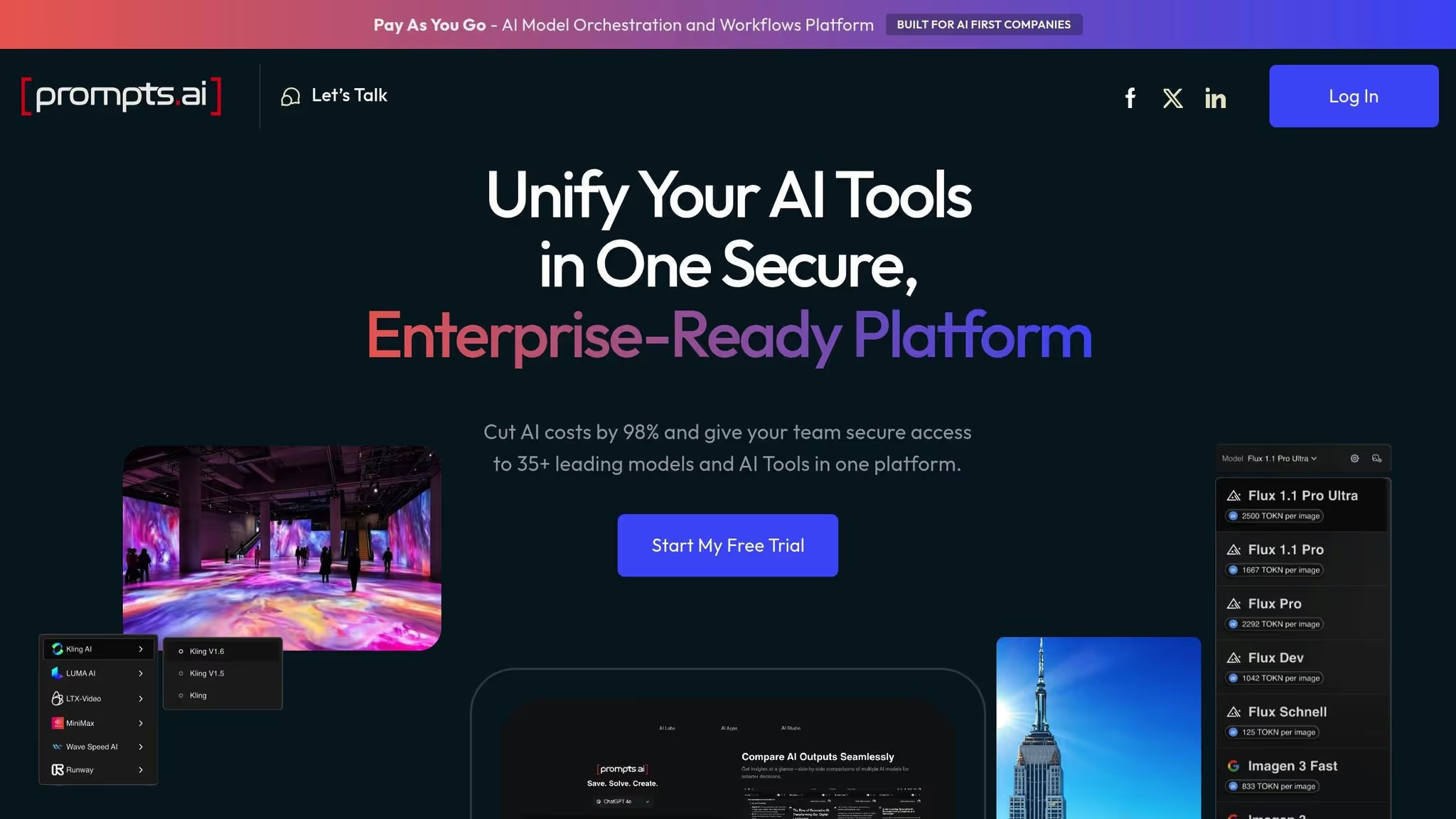
Prompts.ai est un plateforme d'orchestration de l'IA d'entreprise conçu pour rassembler plus de 35 grands modèles linguistiques de premier plan, tels que GPT-5, Claude, Lama, Gémeaux, Grok-4, Flux Pro, et Kling - en une seule interface fluide. En consolidant l'accès, la plateforme élimine le besoin de jongler entre plusieurs abonnements, connexions et systèmes de facturation, simplifiant ainsi les opérations d'IA pour les organisations.
Prompts.ai se concentre sur modèles unificateurs plutôt que de s'appuyer sur des intégrations fragmentées. Au lieu de gérer des comptes séparés pour des fournisseurs tels que IA ouverte, Anthropic et Google, la plateforme permet aux équipes d'accéder à tous ces modèles en un seul endroit. Par exemple, une équipe marketing peut générer du contenu avec Claude, les développeurs peuvent utiliser GPT-5 pour le codage et les chercheurs peuvent expérimenter avec LLama, le tout dans un seul espace de travail utilisant une authentification et une facturation cohérentes.
En outre, Prompts.ai propose comparaisons de performances côte à côte, permettant aux équipes de tester plusieurs modèles en suivant les mêmes instructions sans quitter la plateforme. Cette fonctionnalité est particulièrement utile pour sélectionner le modèle le mieux adapté à des tâches spécifiques ou pour garantir un rapport qualité-prix maximal.
La plateforme comprend également un bibliothèque de flux de travail rapide avec des modèles prédéfinis appelés « Time Savers ». Ces modèles capturent des techniques d'ingénierie rapides éprouvées, permettant aux équipes de standardiser leurs flux de travail d'IA et d'éviter la duplication des efforts. Cette approche rationalisée favorise l'évolutivité et garantit la sécurité dans tous les services.
Prompts.ai est conçu pour la croissance, à l'aide d'un système de crédit TOKN à paiement à l'utilisation qui supprime le besoin de licences traditionnelles par siège. Les équipes peuvent acheter des crédits qui sont partagés au sein de l'organisation, ce qui facilite l'évolution sans négociations complexes en matière d'approvisionnement ou de budget. Par exemple, une entreprise du Fortune 500 peut démarrer modestement et se développer sans effort en ajoutant des crédits si nécessaire.
Lorsque de nouveaux modèles de langage de grande taille arrivent sur le marché, Prompts.ai les intègre directement dans son interface. Cela permet aux utilisateurs d'accéder aux outils les plus récents sans avoir à apprendre de nouveaux systèmes ou flux de travail, ce qui permet de préparer les opérations pour l'avenir dans le paysage rapide de l'IA.
Pour les organisations gérant des opérations à grande échelle, la plateforme comprend un couche FinOps en temps réel qui suit l'utilisation des jetons sur tous les modèles et utilisateurs. Cette fonctionnalité fournit des informations détaillées sur les dépenses, aidant les équipes à identifier les modèles les plus rentables et les domaines dans lesquels les ressources sont consommées. Grâce à cette visibilité, les entreprises peuvent gérer plus efficacement leurs budgets d'IA.
Prompts.ai intègre gouvernance au niveau de l'entreprise pour relever les défis liés à la mise à l'échelle sécurisée de l'IA. Construite sur des frameworks tels que SOC 2 Type II, HIPAA et GDPR, la plateforme garantit la protection des données sensibles dans l'ensemble des flux de travail d'IA. Au 19 juin 2025, Prompts.ai a lancé un audit SOC 2 de type 2 et collabore avec Vanta pour une surveillance continue.
La plateforme fournit visibilité et auditabilité complètes pour toutes les interactions avec l'IA, en conservant un enregistrement détaillé de l'accès au modèle, de son utilisation rapide et des sorties. Cela est particulièrement important pour les secteurs réglementés où la conformité nécessite une supervision stricte des systèmes d'IA.
Les utilisateurs peuvent surveiller les pratiques de sécurité de Prompts.ai via son centre de gestion de la confidentialité à l'adresse trust.prompts.ai, qui propose des mises à jour en temps réel sur les politiques, les contrôles et les efforts de conformité. Cette transparence permet aux équipes de sécurité d'évaluer la plateforme par rapport à leurs besoins sans avoir à remplir de longs questionnaires.
Tous les plans d'affaires incluent Surveillance de la conformité et administration de la gouvernance fonctionnalités, garantissant que la gouvernance est prioritaire quelle que soit la taille de l'organisation. Cette approche globale simplifie la gestion de l'IA en appliquant des politiques cohérentes pour toutes les interactions.
Prompts.ai est conçu pour les entreprises ayant des exigences de conformité élevées et des outils d'IA fragmentés. En consolidant l'accès, en évoluant sans effort et en maintenant une gouvernance stricte, la plateforme est idéale pour les secteurs réglementés tels que les services financiers, la santé et le droit, où les pistes d'audit et la protection des données sont essentielles. Au lieu de gérer des dizaines d'outils distincts, les équipes chargées de la conformité peuvent se concentrer sur une seule plateforme qui applique des politiques uniformes.
La plateforme fournit également une solution rentable aux organisations qui cherchent à réduire les dépenses liées aux logiciels d'IA. La consolidation de plusieurs abonnements sur une seule plateforme avec une tarification à l'utilisation permet aux entreprises de rationaliser les coûts par rapport à la gestion de comptes individuels auprès de chaque fournisseur.
Prompts.ai répond en outre au défi de partager l'expertise en matière d'IA grâce à son programme de certification Prompt Engineer et à ses flux de travail gérés par la communauté. En formant des experts internes capables de créer et de diffuser des instructions efficaces, les organisations peuvent optimiser l'impact de leurs investissements dans l'IA sans que chaque employé ne soit obligé de maîtriser l'ingénierie rapide.
Kubiya AI est un plateforme d'orchestration multi-agents modulaire conçu pour simplifier et automatiser les tâches DevOps. En s'intégrant parfaitement à l'infrastructure cloud et aux outils DevOps, il permet aux équipes d'exécuter des flux de travail complexes à l'aide de commandes en langage naturel. Les ingénieurs peuvent initier des modifications d'infrastructure directement via des plateformes telles que Slack ou Microsoft Teams, rationalisant considérablement les opérations.
Kubiya AI se connecte aux principaux services cloud tels que AWS et Kubernetes, ainsi que des outils de collaboration et des systèmes de surveillance. Les équipes peuvent associer leurs comptes cloud en toute sécurité, y compris AWS, Kubernetes, GitHub, et Jira - via le tableau de bord Kubiya ou son interface de ligne de commande (CLI). Cela élimine les tracas liés à la commutation entre différents systèmes pour gérer l'infrastructure.
La plateforme fonctionne sur structure multi-agents modulaire, où des agents spécialisés s'occupent de tâches spécifiques (par exemple, Terraforme, Kubernetes, GitHub, CI/CD) et coordonnez parfaitement. Les ingénieurs peuvent déclencher des flux de travail en saisissant des commandes en langage naturel, telles qu'un message Slack, que Kubiya interprète et exécute à l'aide de son SDK Python intégré et d'agents modulaires. Pour encourager la personnalisation et l'implication de la communauté, la plateforme propose des outils CLI open source et des modèles d'agents via l'organisation Kubiya GitHub.
Les agents peuvent à la fois être créés par API et configurables à l'aide de YAML, ce qui donne aux équipes la liberté d'adapter les flux de travail d'automatisation à leur infrastructure unique et à leurs besoins opérationnels. Cette adaptabilité garantit que la plateforme évolue sans effort à mesure que les besoins en infrastructure augmentent.
Kubiya AI est conçu avec Évolutivité native de Kubernetes, en lui permettant de gérer des charges de travail accrues à mesure que les organisations se développent. Cela en fait un choix fiable pour les entreprises qui ont besoin d'une automatisation sécurisée et évolutive pilotée par l'IA dans le cadre de déploiements d'infrastructures de grande envergure.
Grâce à sa conception modulaire, les équipes peuvent commencer à petite échelle (avec seulement quelques agents chargés de tâches spécifiques) et se développer progressivement pour répondre à des flux de travail plus complexes en fonction de l'évolution de leurs besoins. Cette approche incrémentielle évite de devoir procéder à des révisions perturbatrices lors de l'extension des opérations.
Kubiya AI donne la priorité à la sécurité grâce à une Architecture Zero Trust, intégrant un contrôle d'accès basé sur les rôles, une authentification unique et des pistes d'audit. Les approbations juste à temps garantissent que toutes les modifications critiques sont correctement autorisées.
La plateforme intègre les règles d'organisation directement dans les flux de travail à l'aide de politique en tant que code. Son moteur de politiques garantit que toutes les actions automatisées sont conformes aux normes de sécurité et de conformité, offrant une gouvernance robuste avec des journaux détaillés. Le modèle d'exécution déterministe de Kubiya garantit des résultats cohérents et prévisibles, ce qui est essentiel pour maintenir la sécurité et la fiabilité dans les environnements sensibles.
Par exemple, en 2025, une grande entreprise a été confrontée à des retards et à des erreurs dans le provisionnement de l'infrastructure cloud en raison de flux de travail manuels et de longs processus d'approbation. En adoptant Kubiya, les développeurs pouvaient demander des configurations d'infrastructure complexes via des commandes en langage naturel dans Slack. Le système d'orchestration de Kubiya a interprété les demandes, appliqué des politiques organisationnelles, coordonné les déploiements de Terraform et géré les approbations automatiquement. Cela a non seulement permis de renforcer les règles de sécurité et de conformité, mais également d'assurer une auditabilité complète grâce à des journaux détaillés et à des mises à jour en temps réel dans Slack.
Kubiya AI excelle dans Automatisation DevOps, ce qui en fait un outil puissant pour automatiser des tâches telles que le provisionnement de l'infrastructure avec Terraform, la gestion des pipelines CI/CD, la gestion des réponses aux incidents et la rationalisation des flux de travail d'approbation. En permettant aux développeurs d'utiliser le provisionnement en libre-service sans avoir besoin de scripts ou de connaissances techniques approfondies, Kubiya accélère l'automatisation de l'infrastructure.
Un exemple d'entreprise montre comment Kubiya a réduit les temps de configuration de l'infrastructure de plusieurs jours à quelques heures seulement. Les développeurs ont été autorisés à approvisionner l'infrastructure de manière indépendante tout en maintenant des normes de sécurité et de conformité strictes grâce à l'application automatisée des politiques. Cette approche en libre-service est particulièrement avantageuse pour les organisations qui gèrent des exigences réglementaires complexes et des opérations d'infrastructure à grande échelle.
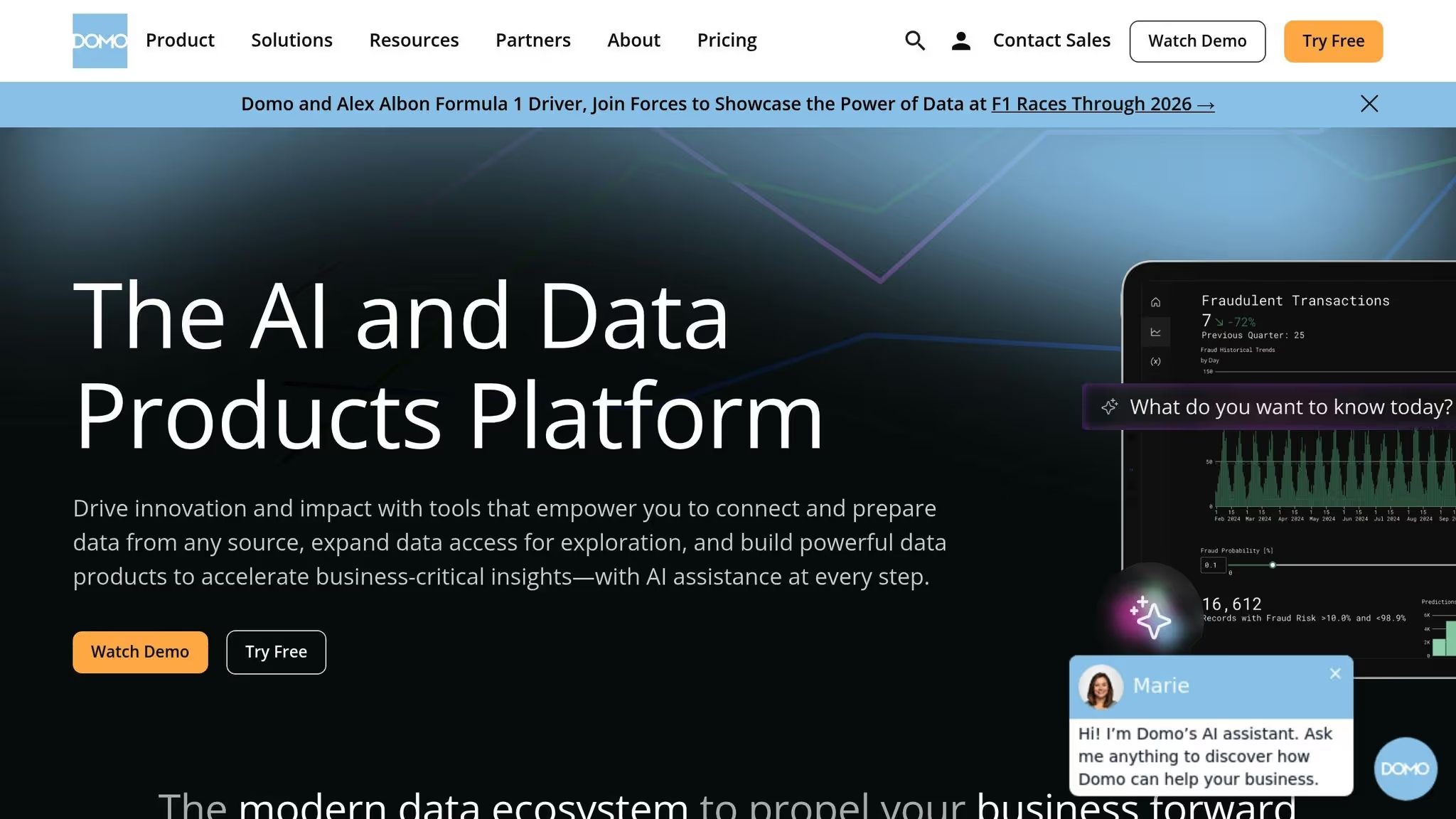
Domo constitue une plateforme puissante pour orchestrer l'IA et transformer de vastes flux de données en informations exploitables. Il connecte les données provenant de l'ensemble de l'écosystème d'une organisation, en les reliant à des flux de travail d'IA capables de prédire les résultats, d'automatiser les processus et d'adapter les expériences utilisateur. Reconnue comme leader pendant 31 trimestres consécutifs, Domo a atteint le statut de leader à l'automne 2025 dans des catégories telles que la BI intégrée, les plateformes d'analyse, la BI, les outils ETL, la préparation des données et la gouvernance des données.
Domo se distingue par sa capacité à intégrer de manière fluide diverses sources de données. Il regroupe des pipelines de données, des modèles d'IA et des systèmes provenant de plateformes cloud, sur site et tierces. Sa vaste bibliothèque de connecteurs prend en charge les principaux outils tels que Salesforce, SÈVE, Excel, Google Sheets, Big Query et MySQL. Grâce à la fonctionnalité ETL par glisser-déposer, il simplifie la préparation des données, garantissant des ensembles de données propres et fiables pour les applications pilotées par l'IA. Par exemple, un détaillant peut utiliser Domo pour intégrer les données sur les ventes, les stocks et les clients, ce qui permet de prévoir la demande, d'optimiser les prix et de recommander des produits automatiquement.
Conçu pour gérer les opérations d'entreprise à grande échelle, Domo s'adapte sans effort aux besoins croissants en matière de données. La plateforme inclut des fonctionnalités de gouvernance avec des alertes proactives pour garantir la qualité des données et minimiser les risques. Il alloue les ressources informatiques de manière dynamique, en s'adaptant à des environnements hybrides ou multicloud pour gérer les fluctuations des charges de travail. Grâce à l'analyse prédictive en temps réel, les entreprises peuvent accéder à des informations immédiates, améliorant ainsi l'efficacité opérationnelle. Malgré son évolution, Domo maintient une gouvernance stricte pour garantir la sécurité des données.
Domo donne la priorité à la sécurité et à la gouvernance, en proposant des outils robustes pour protéger les informations sensibles dans les flux de travail d'IA. La plateforme comprend des contrôles complets de conformité, d'audit et de sécurité, ce qui en fait un choix fiable pour les secteurs soumis à des exigences réglementaires strictes. Sa reconnaissance en tant que leader en matière de gouvernance des données à l'automne 2025 souligne son engagement à maintenir des normes de sécurité élevées.
Domo convient particulièrement aux entreprises qui cherchent à centraliser des sources de données dispersées et à les connecter à des flux de travail basés sur l'IA. En combinant une intégration fluide des données, une évolutivité dynamique et une gouvernance solide, il fournit des informations unifiées qui permettent de prendre des décisions critiques et de rationaliser les opérations entre les services.
Apache Airflow est un outil open source largement utilisé dont les ingénieurs de données et les développeurs s'appuient pour coordonner des flux de données complexes et d'IA. Sa nature open source permet aux organisations de contrôler totalement leurs pipelines d'orchestration sans avoir à payer de frais de licence. Airflow gère diverses tâches, notamment la gestion des pipelines de données, la formation à l'apprentissage automatique (ML), les déploiements et les flux de travail de génération augmentée. Contrairement aux plateformes propriétaires, Airflow se distingue en offrant une flexibilité et un contrôle complets sans frais supplémentaires.
L'une des caractéristiques remarquables d'Airflow est sa vaste bibliothèque de connecteurs créés par la communauté, qui permet une intégration fluide avec un large éventail de systèmes et de plateformes. Il fonctionne avec les principaux fournisseurs de cloud tels qu'AWS, Google Cloudet Azure, ainsi que des systèmes sur site. Construit sur Python, Airflow permet de créer des pipelines hautement dynamiques grâce à des opérateurs personnalisés. Les flux de travail sont structurés sous forme de graphes acycliques orientés (DAG), offrant une représentation visuelle claire des dépendances entre les tâches. Ce niveau d'intégration fait d'Airflow un outil clé pour connecter divers systèmes, tout comme les autres plateformes d'orchestration évoquées précédemment.
Airflow est conçu pour s'adapter à différents environnements, ce qui le rend adapté aux projets de toutes tailles, qu'il s'agisse de petits efforts de développement ou d'opérations d'entreprise à grande échelle. Les tâches sont réparties entre plusieurs collaborateurs, ce qui permet un traitement simultané et une exécution efficace des tâches. Les équipes peuvent commencer par configurer une seule machine et passer à des configurations distribuées au fur et à mesure de l'évolution des besoins. Son interface Web intuitive permet une surveillance en temps réel, permettant aux utilisateurs de suivre l'avancement des tâches, de consulter les journaux et de déclencher manuellement des exécutions, le tout à partir d'un tableau de bord centralisé.
En tant que plateforme open source, Airflow est gratuite, ce qui permet aux organisations de contrôler totalement leurs flux de travail. Cependant, il ne dispose pas de certaines des fonctionnalités de sécurité avancées présentes sur les plateformes spécialisées, telles que des pistes d'audit détaillées, des contrôles d'accès améliorés et des certifications de conformité. Pour les secteurs tels que la santé ou la finance, qui opèrent selon des normes réglementaires strictes, des mesures de sécurité supplémentaires peuvent devoir être mises en œuvre pour répondre aux exigences de conformité.
Airflow se distingue en proposant une alternative open source aux solutions d'orchestration professionnelles. Il convient particulièrement aux équipes d'ingénierie des données chargées de créer et de gérer des pipelines de données complexes. Grâce à ses fonctionnalités de planification robustes, Airflow excelle dans l'orchestration de flux de travail flexible et pilotée par code. Les équipes maîtrisant Python y trouveront un avantage particulier, car il permet une personnalisation poussée. Bien qu'il ne soit pas spécifiquement conçu pour les flux de travail ML, son adaptabilité le rend compatible avec les outils de ML spécialisés. Bien que la courbe d'apprentissage puisse être longue, les puissantes fonctionnalités d'orchestration d'Airflow sont bien équipées pour répondre aux exigences des opérations de l'entreprise.
Kubeflow est une plateforme open source conçue pour l'apprentissage automatique (ML) sur Kubernetes. Il permet aux data scientists et aux ingénieurs ML de créer, déployer et gérer des modèles prêts pour la production. Conçu pour les grandes entreprises, il offre des fonctionnalités MLOps avancées et nécessite l'assistance des équipes d'ingénierie de la plateforme pour une utilisation optimale.
Kubeflow se distingue dans l'orchestration des flux de travail de machine learning grâce à son architecture native de Kubernetes. Cette conception garantit la portabilité dans différents environnements, que ce soit sur des plateformes cloud telles qu'AWS, Google Cloud et Azure, ou dans des centres de données privés. En permettant aux équipes de définir les flux de travail une seule fois et de les exécuter de manière cohérente sur ces systèmes, Kubeflow élimine le risque de dépendance vis-à-vis d'un fournisseur. Il prend également en charge les frameworks populaires tels que TensorFlow, PyTorch, et scikit-learn, qui crée une couche d'orchestration unifiée pour divers outils.
Par exemple, une grande organisation gérant plusieurs projets de machine learning peut utiliser Kubeflow pour rationaliser les flux de travail de bout en bout. La plateforme gère l'allocation des ressources, la gestion des versions et la mise à l'échelle de manière fluide. Il surveille également les performances et peut déclencher une reconversion automatique lorsque de nouvelles données sont disponibles, ce qui permet aux équipes de se concentrer sur l'affinement des modèles sans se soucier de la complexité de l'infrastructure.
Avec Kubernetes comme épine dorsale, Kubeflow est conçu pour gérer des charges de travail de formation complexes et des pipelines en plusieurs étapes. Il prend en charge la formation et les services distribués, en adaptant automatiquement les ressources pour répondre aux demandes de charge de travail. Dans un cas, une société de services financiers du Fortune 500 a réduit le temps de déploiement de son modèle de 75 % en 2025 en adoptant une approche structurée avec Kubeflow. Cette capacité à évoluer sans effort entre les équipes et les projets en fait un outil précieux pour les entreprises qui déploient de nombreux modèles simultanément.
Kubeflow exploite les fonctionnalités de sécurité robustes de Kubernetes pour fournir une gouvernance de niveau entreprise. Les organisations peuvent intégrer leurs politiques de sécurité des conteneurs, leurs contrôles d'accès basés sur les rôles et leurs pratiques d'isolation réseau existants directement dans leurs flux de travail de machine learning. Cela simplifie la conformité pour les secteurs tels que la finance et la santé, où les réglementations sont strictes. En outre, Kubeflow applique des politiques cohérentes pour la gestion des versions, l'allocation des ressources et les approbations de déploiement, ainsi que des pistes d'audit détaillées pour garantir la responsabilité.
Kubeflow convient parfaitement aux organisations dotées d'équipes de machine learning orientées DevOps ou à celles qui disposent de ressources d'ingénierie de plateforme dédiées à la gestion d'opérations de machine learning complexes. Il est particulièrement efficace pour les entreprises qui utilisent déjà Kubernetes, car il étend l'infrastructure existante pour prendre en charge les flux de travail d'apprentissage automatique. Les équipes expérimentées dans l'orchestration de conteneurs et l'infrastructure en tant que code trouveront l'approche de Kubeflow intuitive et efficace. Sa nature open source permet également aux entreprises de déployer des modèles auprès de plusieurs fournisseurs de cloud avec des flux de travail cohérents, offrant ainsi la flexibilité nécessaire aux stratégies multicloud ou aux migrations futures.

IBM Watsonx Orchestrate est une plateforme conçue pour les entreprises, qui transforme de simples invites de chat en flux de travail entièrement opérationnels en reliant de manière fluide les décisions pilotées par l'IA aux règles métier et aux systèmes existants. Il est conçu pour apporter de l'ordre et de l'efficacité aux opérations d'IA tout en travaillant au sein de l'infrastructure technologique existante d'une organisation.
IBM Watsonx Orchestrate se distingue par sa capacité à connecter des flux de travail d'IA à la fois à des applications SaaS basées sur le cloud et à des systèmes sur site. En transformant les instructions de chat de base en flux de travail prêts pour la production, la plateforme intègre les décisions prises par l'IA aux règles métier établies. Il garantit également une sécurité de niveau professionnel et tient à jour des journaux détaillés à des fins d'audit. Cette intégration est soutenue par un cadre de sécurité robuste qui régit chaque étape, garantissant des opérations fluides et sécurisées.
Watsonx Orchestrate donne la priorité à la sécurité et à la conformité. La plateforme fonctionne dans un environnement sécurisé avec une supervision centralisée, une application automatisée des politiques et des journaux d'audit complets. Ces caractéristiques sont particulièrement intéressantes pour les entreprises des secteurs réglementés.
« Les entreprises des secteurs réglementés sont attirées par l'offre d'IBM en raison de son solide cadre de gouvernance. Des fonctionnalités telles que les contrôles d'accès basés sur les rôles, les options de déploiement de cloud hybride et la conformité de niveau entreprise en font la solution idéale pour les organisations où la sécurité et la transparence ne sont pas négociables. »
Le cadre de gouvernance inclut des contrôles d'accès basés sur les rôles pour gérer qui peut créer, modifier ou exécuter des flux de travail spécifiques. En outre, des garde-fous de conformité intégrés vérifient automatiquement les flux de travail par rapport aux politiques organisationnelles et aux exigences réglementaires avant leur exécution. Cette approche proactive améliore la conformité aux politiques et minimise les risques en intégrant la gouvernance directement dans le processus de flux de travail.
En mettant l'accent sur l'intégration, la sécurité et la conformité, watsonx Orchestrate est particulièrement adapté aux grandes entreprises des secteurs réglementés. Son approche structurée fournit des pistes d'audit complètes et garantit la conformité réglementaire à chaque étape, ce qui la rend inestimable pour les organisations ayant des besoins de gouvernance stricts.
La plateforme est particulièrement avantageuse pour les institutions financières, les prestataires de soins de santé et les agences gouvernementales, des secteurs où la conformité, la sécurité et la transparence sont primordiales. Ces organisations disposent souvent d'équipes dédiées à la conformité et de protocoles de sécurité rigoureux. Avec watsonx Orchestrate, ils peuvent étendre leurs cadres de gouvernance existants aux opérations d'IA, garantissant ainsi une application cohérente des politiques de sécurité sur tous les flux de travail. Cela en fait une solution idéale pour les environnements où la responsabilité et la transparence sont essentielles.
Chaque outil d'orchestration de l'IA présente ses propres avantages et limites, déterminés par sa conception et son public cible. En comprenant ces nuances, vous pouvez mieux adapter une plateforme aux besoins spécifiques de votre organisation, qu'il s'agisse de donner la priorité au contrôle des coûts, à la personnalisation des développeurs ou à la conformité au niveau de l'entreprise.
Voici un aperçu des points forts et des points faibles de certains des principaux outils, en mettant l'accent sur l'intégration, la facilité d'utilisation, l'évolutivité et la sécurité :
Ces comparaisons révèlent comment chaque outil répond à différentes priorités, aidant les utilisateurs à évaluer l'intégration, l'évolutivité et la gouvernance lors de la sélection d'une plateforme.
D'ici 2025, le marché de l'orchestration de l'IA continuera de se diviser entre les systèmes existants et les solutions natives de l'IA. Selon une enquête menée par O'Reilly en 2024, les équipes automatisant les flux de travail basés sur l'IA constatent une amélioration de 40 % de la collaboration entre les services, une réduction de 25 % des coûts d'exploitation et contribuent à un marché qui devrait croître de 23 % par an, pour atteindre 11,47 milliards de dollars.
Votre choix de plateforme doit refléter la maturité de votre organisation en matière d'IA et ses besoins opérationnels. Des flux de travail plus simples et guidés sont idéaux pour ceux qui découvrent l'IA, tandis que les équipes DevOps expérimentées peuvent préférer la flexibilité des options open source. Pour les secteurs réglementés, les fonctionnalités de conformité et de solides capacités d'audit sont cruciales.
Les approches en matière de sécurité varient considérablement. Les plateformes d'entreprise sont souvent dotées de protections intégrées, tandis que les solutions open source peuvent nécessiter une configuration manuelle. L'intégration est un autre facteur essentiel. Par exemple, la vaste bibliothèque de connecteurs de Domo est idéale pour gérer diverses sources de données, tandis que les intégrations natives de Kubiya AI avec les principaux fournisseurs de cloud et les outils de collaboration permettent une automatisation DevOps rationalisée. Des plateformes telles que Prompts.ai simplifient les opérations en consolidant l'accès à plusieurs LLM, éliminant ainsi les tracas liés à la gestion de relations avec des fournisseurs distincts tout en garantissant l'accès à des modèles de pointe.
L'évolutivité dépend également de l'architecture de la plateforme. Les outils natifs de Kubernetes tels que Kubeflow excellent en termes de mise à l'échelle horizontale mais nécessitent des connaissances avancées en matière d'infrastructure. D'autre part, les solutions basées sur le cloud gèrent la mise à l'échelle automatiquement mais peuvent introduire des dépendances vis-à-vis des fournisseurs. Ces compromis soulignent l'importance d'aligner le choix de votre plateforme sur l'expertise, les exigences de conformité et les objectifs à long terme de votre équipe.
Cette revue met en évidence la manière dont les différents outils répondent de manière unique à l'intégration, à l'évolutivité et à la gouvernance. Le choix du bon outil d'orchestration de l'IA dépend de votre expertise technique, de votre budget et de vos exigences de conformité. Le marché de l'orchestration de l'IA connaît une croissance rapide, les prévisions indiquant une hausse de 2,8 milliards de dollars en 2022 à 14,4 milliards de dollars d'ici 2027, reflétant un taux de croissance annuel composé (TCAC) de 38,2 %.
Prompts.ai se distingue par sa rapidité et sa simplicité, en offrant un accès unifié aux principaux modèles et un suivi des coûts en temps réel. C'est un paiement à l'utilisation Crédit TOKN le système permet une mise à l'échelle sans avoir besoin d'engagements d'abonnement à long terme.
Pour les équipes qui souhaitent automatiser l'infrastructure, Kubiya AI excelle grâce à son infrastructure multi-agents qui simplifie les opérations dans le cloud. Il s'intègre parfaitement aux principaux fournisseurs de cloud et à des outils tels que Slack, tandis que son modèle de sécurité Zero Trust et ses contrôles d'accès basés sur les rôles répondent aux exigences des entreprises qui appliquent des normes de conformité strictes.
Si votre équipe maîtrise Python et les outils open source, Flux d'air Apache fournit une solution d'orchestration évolutive et flexible. Il est particulièrement efficace pour gérer des pipelines complexes, même s'il nécessite généralement des ressources dédiées à la gestion de l'infrastructure.
Les organisations exploitant des pipelines d'apprentissage automatique à grande échelle peuvent trouver Kubeflow pour être un ajustement solide. Sa conception native de Kubernetes prend en charge le suivi des versions et la reproductibilité, essentiels à la gouvernance. Cependant, le déploiement de Kubeflow nécessite une expertise avancée de Kubernetes et une configuration d'orchestration de conteneurs existante.
Pour les équipes de business intelligence qui cherchent à rendre l'IA accessible à tous les services, Domo propose une interface sans code et une bibliothèque complète de connecteurs. Bien qu'il soit principalement connu comme un outil de BI plutôt que comme une plate-forme d'orchestration, ses fonctionnalités de visualisation permettent aux utilisateurs non techniques de générer des informations exploitables.
Dans des secteurs hautement réglementés tels que la finance et la santé, IBM Watsonx Orchestrate fournit une gouvernance de niveau professionnel avec des fonctionnalités telles que des contrôles d'accès basés sur les rôles et des journaux d'audit détaillés, garantissant la conformité aux normes industrielles les plus strictes.
Les recherches suggèrent que 75 % des entreprises accordent la priorité à l'intégration, signalant des améliorations en termes de chiffre d'affaires, de satisfaction client et d'efficacité. En outre, compte tenu du coût moyen d'une violation de données 4,35 millions de dollars, investir dans de solides mesures de sécurité n'est pas facultatif, c'est essentiel.
Avant de vous engager dans une solution, il est sage de procéder à une validation de concept avec vos deux principales options. Évaluez les coûts totaux, y compris la configuration, la maintenance et la mise à l'échelle, et établissez des indicateurs de performance clés clairs pour mesurer l'impact.
Le bon outil d'orchestration peut transformer les initiatives expérimentales d'IA en processus évolutifs, conformes et reproductibles. Il s'agit d'une étape clé vers l'unification des efforts fragmentés en matière d'IA en une opération cohérente qui favorise le succès à long terme.
Les plateformes d'orchestration de l'IA telles que Prompts.ai permettent aux entreprises de gérer et d'intégrer efficacement plusieurs modèles d'IA. En automatisant les flux de travail et en garantissant une communication fluide entre les systèmes, ces outils simplifient la gestion de diverses technologies, ce qui rend le processus plus rationalisé et plus efficace.
Prompts.ai améliore les opérations pilotées par l'IA en :
Grâce à ces fonctionnalités, Prompts.ai simplifie les opérations, réduit les erreurs et aide les entreprises à tirer le meilleur parti de leurs investissements dans l'IA.
Lors du choix d'une plateforme d'orchestration d'IA pour les secteurs réglementés, il est essentiel de se concentrer sur les solutions qui offrent de solides fonctionnalités de sécurité, de gouvernance et de conformité. Les principaux éléments à prendre en compte incluent le cryptage, les contrôles d'accès basés sur les rôles et les pistes d'audit complètes pour protéger les données sensibles et maintenir la traçabilité.
Il est tout aussi important de s'assurer que la plateforme permet intégration fluide des données et est conforme aux réglementations spécifiques à l'industrie telles que HIPAA, GDPR ou SOC 2. Ces fonctionnalités sont essentielles pour répondre aux exigences réglementaires tout en rationalisant et en automatisant efficacement les flux de travail liés à l'IA.
Le système de crédit TOKN à paiement à l'utilisation in Prompts.ai offre aux organisations un moyen intelligent de contrôler leurs dépenses en ne facturant que les ressources qu'elles utilisent réellement. Cela élimine la pression liée aux investissements initiaux ou aux contrats à long terme contraignants, ce qui aide les entreprises à rester financièrement flexibles et à respecter leur budget.
De plus, le système est conçu dans un souci d'évolutivité. Les entreprises peuvent facilement ajuster leur utilisation en fonction de l'évolution de leurs besoins, qu'il s'agisse d'une expansion ou d'un changement d'orientation. Cela garantit que les flux de travail d'IA peuvent se développer efficacement sans risque de dépenses excessives ou de laisser des ressources inutilisées.