Pay As You GoEssai gratuit de 7 jours ; aucune carte de crédit requise



Dans le paysage actuel piloté par l'IA, la gestion de plusieurs modèles dans les flux de travail est un défi. Cet article passe en revue six outils de premier plan pour la gouvernance de l'IA et l'orchestration des modèles, en mettant l'accent sur le contrôle des coûts, la conformité et la transparence opérationnelle. Qu'il s'agisse de centraliser l'utilisation de l'IA, de garantir le respect des réglementations ou de rationaliser les flux de travail, ces plateformes proposent des solutions distinctes. Voici les principaux points à retenir :
Chaque outil répond différemment aux défis de gouvernance. Vous trouverez ci-dessous une comparaison rapide pour vous aider à choisir celle qui correspond à vos besoins.
Pour une gouvernance de l'IA évolutive, sécurisée et conforme, le choix du bon outil dépend de vos priorités : rentabilité, exigences réglementaires ou personnalisation technique.
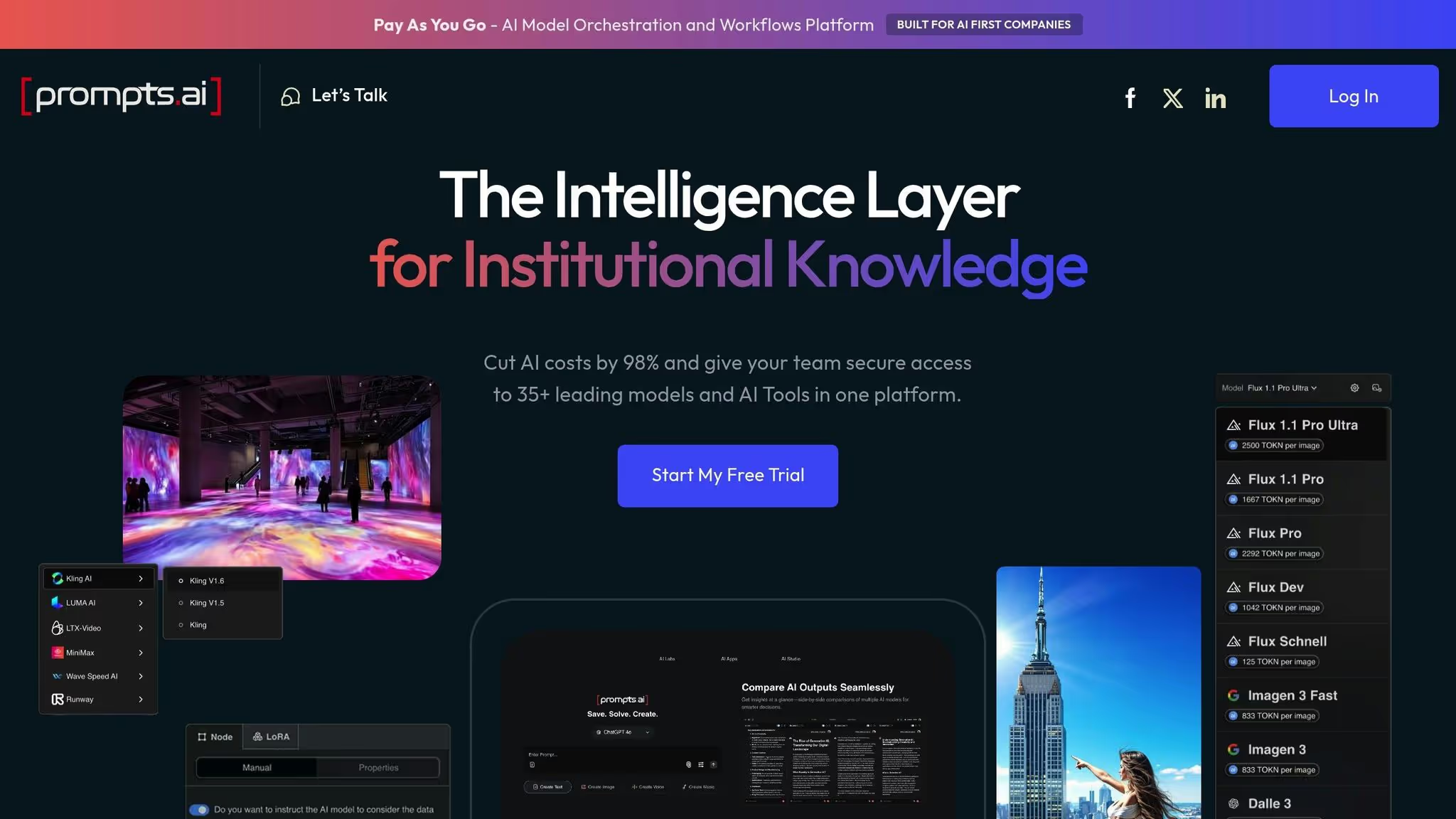
Prompts.ai permet d'accéder à plus de 35 modèles linguistiques de premier plan, tels que GPT-5, Claude, Lama, et Gémeaux - via une plateforme unique et sécurisée. Au lieu de gérer plusieurs abonnements et connexions, les organisations peuvent rationaliser leur utilisation de l'IA tout en maintenant une supervision et une gouvernance strictes de toutes les activités.
Prompts.ai donne la priorité visibilité et auditabilité complètes pour chaque interaction avec l'IA. Chaque invite, chaque appel de modèle et chaque exécution de flux de travail sont enregistrés, créant ainsi une piste d'audit détaillée qui répond aux besoins de conformité et facilite les examens des incidents.
L'administration de la gouvernance est incluse dans tous les plans tarifaires, qu'il s'agisse de l'option Pay As You Go à 0 $/mois ou des abonnements destinés aux entreprises. Cela garantit que les équipes de toutes tailles peuvent mettre en œuvre une gouvernance efficace sans s'engager dans des contrats coûteux. La plateforme surveille quels modèles sont utilisés, qui les utilise et à quelles fins, éliminant ainsi la fragmentation qui se produit souvent lorsque les services s'appuient sur des outils distincts.
Ce niveau de supervision est associé à des mesures de conformité et de sécurité strictes pour protéger les données et les opérations.
Prompts.ai est conforme aux normes SOC 2 Type II, HIPAA et GDPR pour garantir la protection des données. La société a commencé son audit SOC 2 de type II le 19 juin 2025 et collabore avec Vanta pour une surveillance continue des contrôles. Les utilisateurs peuvent accéder aux informations de sécurité et de conformité de la plateforme en temps réel via le Trust Center à l'adresse https://trust.prompts.ai/, qui fournit des informations transparentes sur les politiques, les contrôles et les progrès. Ce niveau d'accessibilité est particulièrement crucial pour des secteurs tels que la santé et la finance, où une sécurité et une conformité strictes ne sont pas négociables. Que vous utilisiez GPT-5 pour le support client ou Claude pour l'analyse des documents, le cadre de conformité unifié de la plateforme garantit une protection cohérente.
Ces mesures de sécurité robustes sont conçues pour compléter la conception évolutive et les capacités d'intégration de la plateforme.
L'architecture de Prompts.ai favorise une évolutivité fluide, permettant aux équipes de développer leurs initiatives d'IA sans effort. La plateforme s'intègre à des outils commerciaux largement utilisés tels que Slack, Gmail, et Trello, transformant des expériences d'IA isolées en flux de travail reproductibles et évolutifs dans des organisations entières.
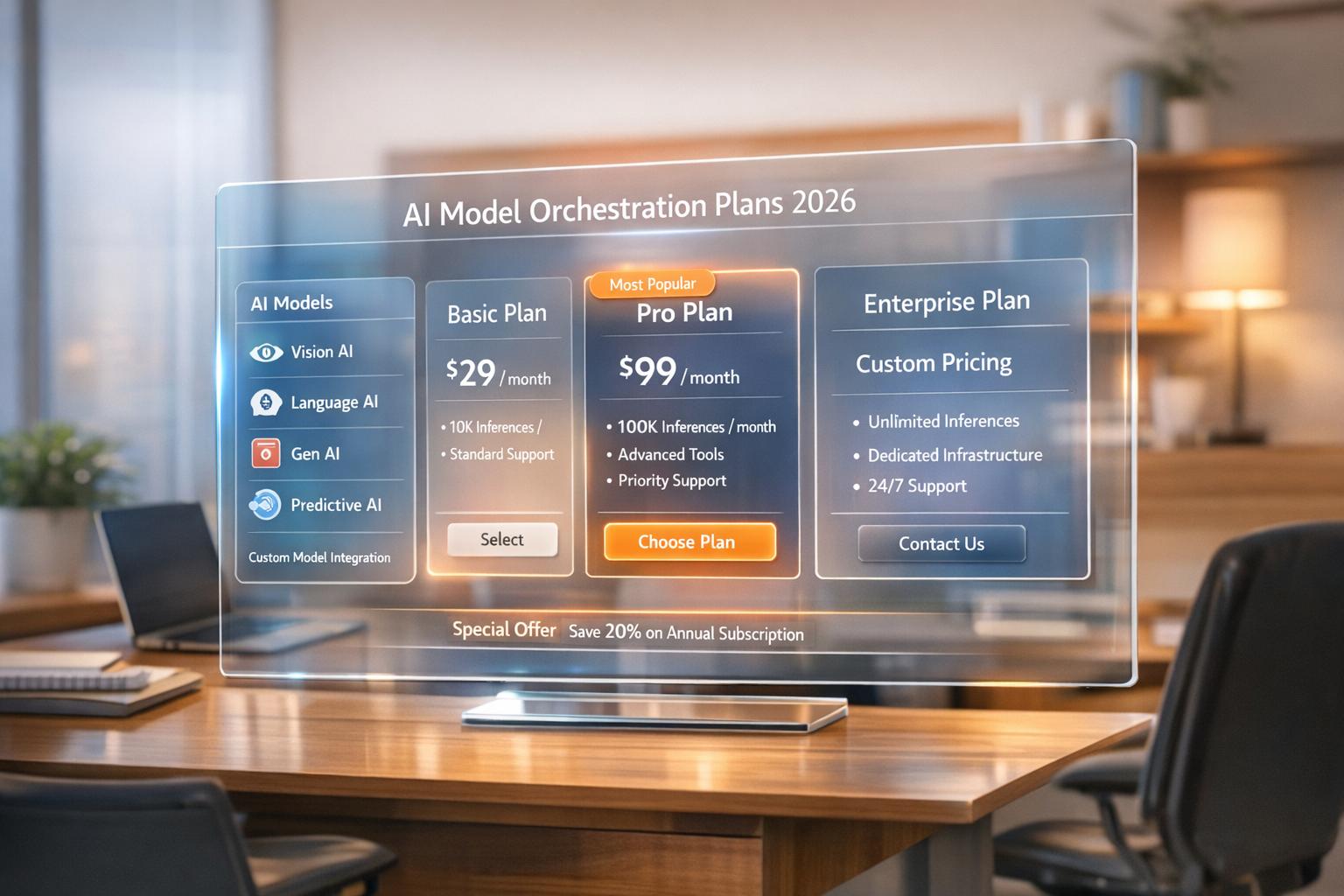
Par exemple, le plan Problem Solver inclut 500 000 crédits TOKN, prend en charge jusqu'à 99 collaborateurs et permet des flux de travail illimités pour 99$ par mois (89$ par mois avec facturation annuelle). Les forfaits Business - Core à 99$ par membre et par mois, Pro à 119$ par membre et par mois et Elite à 129$ par membre et par mois - offrent des fonctionnalités supplémentaires telles que des espaces de travail illimités, un nombre illimité de collaborateurs et des flux de travail interopérables. Ces options permettent aux équipes de créer des processus d'IA multimodèles plus avancés sans obstacles administratifs inutiles.
Le modèle de tarification de Prompts.ai met l'accent sur la clarté en liant directement les dépenses à l'utilisation réelle. La plateforme utilise un Système de crédit TOKN, qui lie les coûts à la consommation plutôt qu'à des licences forfaitaires par siège. Cette approche transparente permet aux organisations de surveiller l'utilisation des jetons dans différents modèles, équipes et projets, ce qui permet d'identifier plus facilement les applications d'IA qui génèrent les meilleurs rendements et celles qui ne justifient pas nécessairement leurs coûts.
Le prix commence à 0$ par mois pour une utilisation exploratoire et va jusqu'à 129$ par membre et par mois pour le plan Elite, qui comprend 1 000 000 de crédits TOKN. Les forfaits personnels commencent à 29 dollars par mois pour les créateurs individuels et à 99 dollars par mois pour les familles, tandis que les forfaits professionnels incluent 10 Go de stockage dans le cloud et des fonctionnalités de gouvernance à tous les niveaux, garantissant flexibilité et contrôle pour tous les utilisateurs.
Kubiya AI fournit une solution robuste pour gérer les flux de travail d'IA avec une gouvernance au niveau de l'entreprise. Il est conçu pour les organisations qui doivent respecter des exigences de conformité strictes tout en adaptant leurs opérations d'IA à diverses équipes et systèmes.
Kubiya AI intègre la conformité dans les flux de travail de l'IA grâce à Politique en tant que code approche, garantissant l'application automatique des règles de sécurité et opérationnelles. Son moteur de politiques intégré applique en permanence les normes organisationnelles, gère les approbations et gère des pistes d'audit détaillées avec des mises à jour en temps réel, ce qui est idéal pour les secteurs réglementés. Des fonctionnalités telles que le contrôle d'accès basé sur les rôles (RBAC) limitent l'accès à des flux de travail spécifiques, tandis que les approbations Just-In-Time (JIT) sécurisent les opérations sensibles. Ces outils fonctionnent ensemble pour aider les entreprises à minimiser les risques de conformité en automatisant l'application des politiques et les processus d'approbation.
Kubiya AI est conçu pour répondre aux exigences de sécurité des secteurs réglementés. Avec Authentification unique (SSO) intégration, il centralise l'authentification afin de réduire les risques liés à la dispersion des informations d'identification. Des journaux d'audit complets suivent les actions des utilisateurs et leurs résultats, offrant transparence et responsabilité. En intégrant des mesures de sécurité et de conformité directement dans les flux de travail, Kubiya AI garantit que les organisations respectent les exigences réglementaires sans compromettre leur efficacité.
Conçu pour les entreprises nécessitant une automatisation sécurisée et évolutive de l'IA, Kubiya AI garantit que la gouvernance reste intacte à mesure que les opérations se développent. Qu'il s'agisse de processus simples ou de flux de travail multimodèles complexes, la plateforme applique des normes de conformité cohérentes, ce qui permet aux organisations de passer plus facilement des projets pilotes à petite échelle à des déploiements d'IA à grande échelle. Cette évolutivité est cruciale car le maintien de la visibilité et du contrôle devient de plus en plus difficile avec la croissance. Le cadre évolutif de Kubiya AI favorise une gouvernance fluide, renforçant ainsi sa valeur en tant que plateforme fiable pour la gestion de l'IA en entreprise.
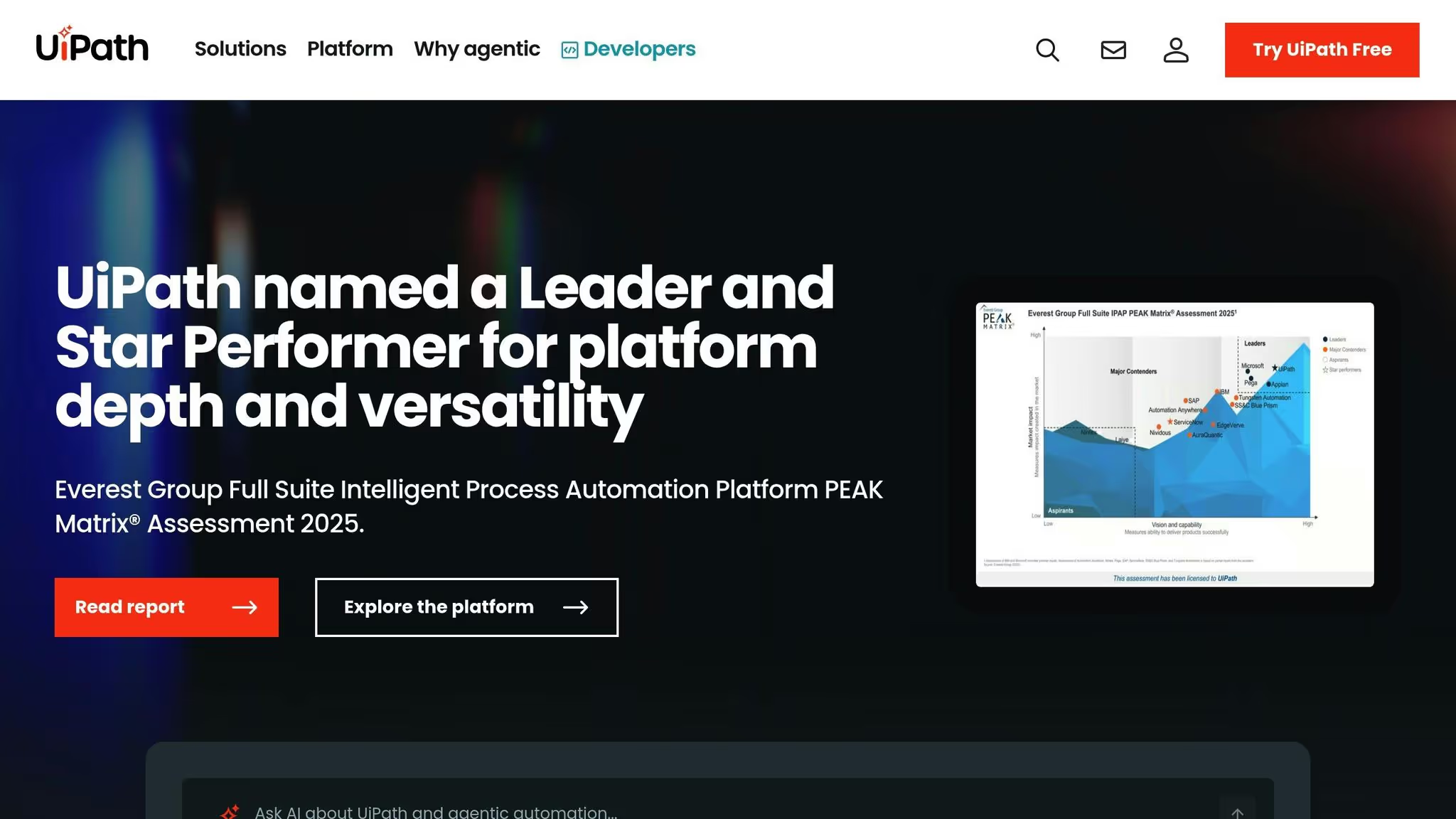
UiPath Agentic Automation apporte un avantage plus intelligent aux flux de travail en intégrant l'orchestration des agents d'IA. Cela permet aux robots d'aller au-delà des tâches de base basées sur des règles, leur permettant de prendre des décisions éclairées et de gérer des processus complexes en plusieurs étapes sur différents systèmes. En combinant l'automatisation traditionnelle à la prise de décision basée sur l'IA, la plateforme devient une solution clé pour les entreprises qui répondent à des besoins complexes d'orchestration de modèles.
Offres UiPath tableaux de bord centralisés qui fournissent une vision claire des opérations d'IA, permettant aux organisations de surveiller les performances des flux de travail automatisés et d'évaluer où les mesures de gouvernance sont en place. La couche d'orchestration gère les flottes de robots, planifie les tâches, suit l'exécution grâce à des journaux détaillés et applique les règles de conformité pendant l'exécution. Ce système vérifie automatiquement que les flux de travail sont conformes aux normes réglementaires avant que les tâches ne soient terminées, garantissant ainsi la documentation et la traçabilité des décisions. En coordonnant efficacement les composants de l'IA, la couche d'orchestration garantit la précision et l'efficacité des décisions, renforçant ainsi la gouvernance et la fiabilité opérationnelle.
Ce contrôle centralisé s'étend naturellement à de strictes mesures de conformité.
Pour les opérations à enjeux élevés comme le traitement des prêts, les robots RPA traditionnels s'occupent de l'extraction et de la validation des données, tandis que les modèles d'IA évaluent les risques de crédit, identifient les anomalies et signalent les cas inhabituels nécessitant une intervention humaine. La couche d'orchestration intègre parfaitement ces éléments, garantissant ainsi un flux de travail fluide et sécurisé.
S'appuyant sur ses capacités de gouvernance, la plateforme UiPath est conçue pour être évolutive, prenant en charge à la fois a participé (assisté par l'homme) et sans surveillance scénarios d'automatisation (entièrement autonomes). Cette capacité d'adaptation permet aux entreprises de passer de l'automatisation des tâches de base à une automatisation intelligente à l'échelle de l'entreprise sans avoir à revoir leurs systèmes existants.
La plateforme s'intègre également à des frameworks d'IA largement utilisés et propose une vaste bibliothèque de composants d'automatisation prédéfinis, ce qui réduit considérablement le temps de configuration. Les accélérateurs spécifiques à chaque secteur simplifient encore le déploiement, permettant aux entreprises d'adapter la plateforme à leurs besoins uniques avec un minimum de personnalisation.
Cependant, l'intégration de modèles d'IA dans les flux de travail RPA ajoute une couche de complexité qui nécessite du personnel qualifié à la fois pour la configuration initiale et la gestion continue. Les entreprises doivent se préparer à une période d'apprentissage et s'assurer qu'elles disposent de l'expertise technique requise pour tirer pleinement parti des fonctionnalités avancées de la plateforme.
OneTrust AI Governance présente une approche supplémentaire pour superviser les modèles d'IA, en complément des cadres fournis par des plateformes telles que Prompts.ai, Kubiya AI et UiPath. Bien que son rôle dans le soutien à la gouvernance de l'IA soit reconnu, les informations accessibles au public sur ses fonctionnalités spécifiques, ses cadres de conformité et ses options d'intégration sont assez rares. Pour obtenir les informations les plus précises et les plus récentes, il est préférable de consulter la documentation officielle de OneTrust. Ce bref aperçu fournit une base pour explorer plus en profondeur les avantages et les limites de ces outils de gouvernance.

IBM Watsonx Orchestrate se distingue en tant que plateforme conçue pour répondre aux besoins de gouvernance exigeants des secteurs réglementés. Elle donne la priorité à la sécurité et à la transparence, offrant aux organisations une solution fiable pour gérer les modèles d'IA dans des conditions réglementaires strictes.
Le cadre de gouvernance de la plateforme comprend contrôles d'accès basés sur les rôles, détaillé journaux d'audit, complet rapports de conformité, et intégré garde-corps. Ces fonctionnalités garantissent que les flux de travail d'IA respectent systématiquement les politiques internes et les normes réglementaires externes.
Spécialement conçu pour les environnements hautement réglementés, watsonx Orchestrate intègre la conformité et la sécurité à chaque niveau de ses opérations. Des garde-fous prédéfinis aident à appliquer les politiques, à atténuer les risques et à maintenir la flexibilité. Son architecture de sécurité met l'accent sur la protection des données sensibles et le contrôle de l'accès, tandis que ses rapports de conformité fournissent la documentation nécessaire aux audits et aux examens réglementaires.
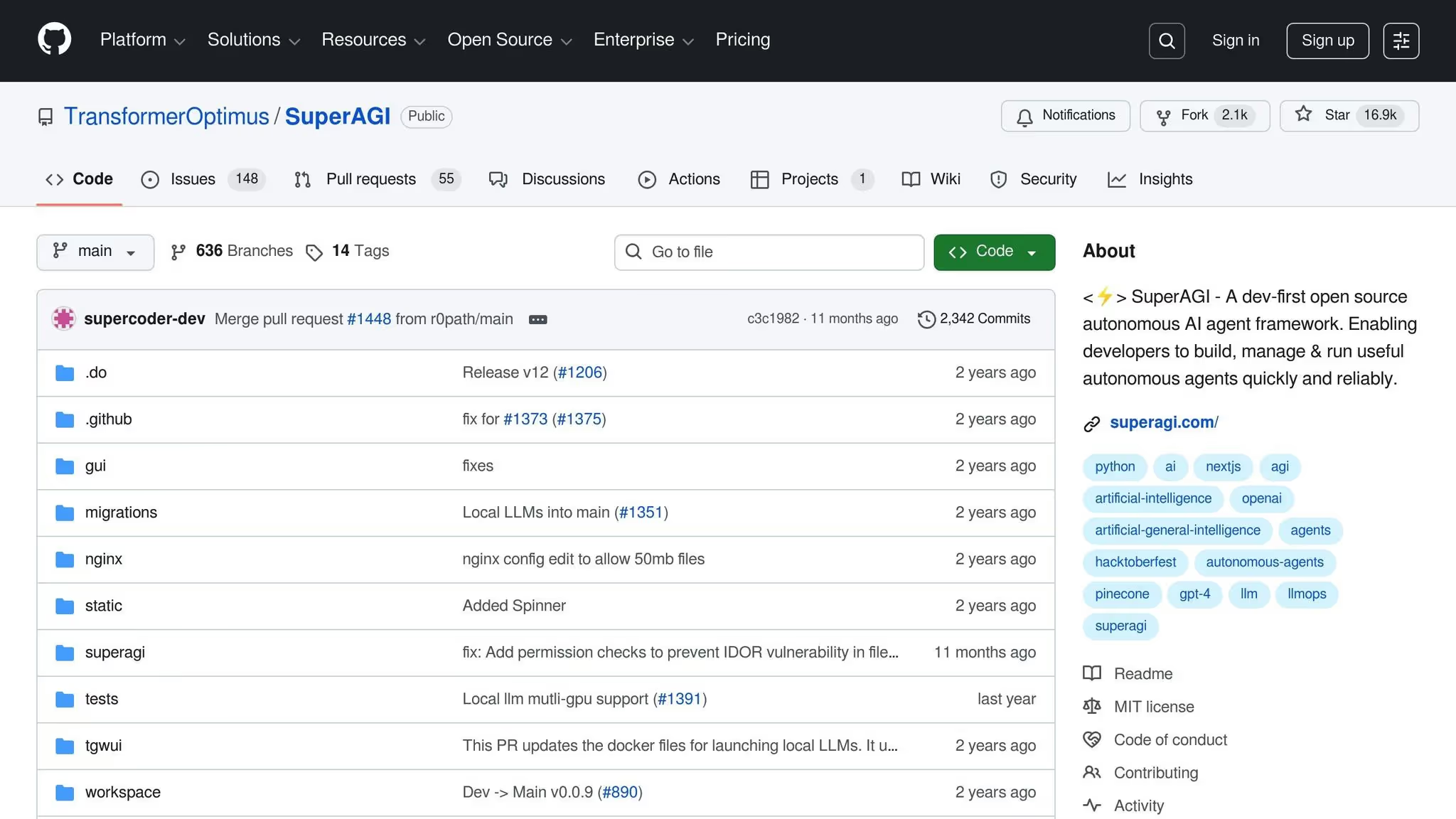
SuperAGI est une plateforme open source conçue pour gérer et coordonner des systèmes d'IA multi-agents autonomes. Il donne la priorité à la transparence et garantit une gestion fluide des flux de travail complexes liés à l'IA.
SuperAgi propose des tableaux de bord de surveillance qui fournissent aux équipes une vision claire des performances des agents. Ces outils permettent de suivre facilement la progression de l'exécution et de résoudre rapidement tout problème. Sa nature open source encourage la responsabilisation, permettant aux développeurs de revoir le code et de bénéficier de la supervision de la communauté. En coordonnant plusieurs agents d'IA, la plateforme gère la planification et l'exécution de tâches complexes tout en favorisant l'apprentissage continu et l'alignement sur les politiques organisationnelles.
L'évolutivité et l'intégration sont au cœur de la conception de SuperAgi. Son architecture de plug-in flexible prend en charge des API tierces, des outils de flux de travail et des modules personnalisés, permettant aux équipes de personnaliser les flux de travail d'IA pour répondre à des besoins spécifiques. Une place de marché intégrée ajoute encore plus de fonctionnalités, permettant aux utilisateurs d'intégrer facilement de nouveaux outils et intégrations à mesure que leurs besoins augmentent. Grâce à sa configuration modulaire, SuperAGI peut faire évoluer efficacement les réseaux d'agents et les charges de travail, ce qui permet une délégation dynamique des tâches et favorise la collaboration entre les agents. Il garantit également une intégration fluide avec des API et des services externes, améliorant ainsi sa polyvalence.
Chaque outil apporte des avantages et des compromis distincts à l'orchestration des modèles. Vous trouverez ci-dessous une comparaison qui vous aidera à évaluer des caractéristiques telles que la conformité, la transparence et l'efficacité. Cet aperçu côte à côte s'appuie sur les descriptions détaillées précédentes.
Le meilleur choix dépend des priorités de votre organisation. Si rentabilité et flexibilité sont essentielles, les plateformes comme Prompts.ai se démarquent, en particulier pour la gestion de plusieurs LLM dans des cas d'utilisation variés. Pour industries hautement réglementées, l'approche de OneTrust axée sur la conformité peut valoir les compromis opérationnels. Les entreprises avec infrastructure d'automatisation existante pourraient étendre leurs investissements avec UiPath, tandis que équipes à forte intensité de développement disposant de ressources techniques pourraient bénéficier du framework open source personnalisable de SuperAGI.
Les considérations budgétaires sont également essentielles. Les modèles de paiement à l'utilisation permettent d'aligner les dépenses sur l'utilisation réelle, évitant ainsi les coûts cachés associés à la prolifération des outils.
Les besoins de transparence varient d'une équipe à l'autre. Les groupes de recherche peuvent avoir besoin de mesures de performance détaillées, tandis que les utilisateurs professionnels préfèrent souvent des tableaux de bord simples et axés sur les résultats. Les meilleurs outils répondent à ces exigences en offrant transparence en couches - des données détaillées pour les utilisateurs techniques et des résumés accessibles pour les décideurs.
Ces comparaisons fournissent une base pour évaluer la plateforme qui correspond le mieux à vos besoins.
Choisir le meilleur outil de gouvernance de l'IA pour l'orchestration des modèles signifie aligner les besoins de votre organisation sur les capacités des plateformes disponibles. Les six outils présentés ici permettent de relever divers défis en matière de gouvernance, qu'il s'agisse de gérer les coûts, de prendre en charge divers modèles, de garantir la conformité ou de fournir des solutions d'automatisation. Vous trouverez ci-dessous un bref récapitulatif des principaux atouts de chaque outil pour relever ces défis.
Prompts.ai simplifie la gestion multimodèle en proposant une interface centralisée qui intègre plus de 35 grands modèles linguistiques de premier plan, ainsi qu'un suivi transparent des coûts et une supervision sécurisée.
Gouvernance de l'IA OneTrust met l'accent sur la conformité et la protection des données, ce qui en fait un excellent choix pour les organisations des secteurs hautement réglementés.
Pour les entreprises qui tirent déjà parti de l'automatisation, Automatisation des agences UiPath améliore les flux de travail RPA existants en intégrant des fonctionnalités de gouvernance de l'IA, permettant une adoption fluide sans refonte des systèmes actuels.
Super Agi, avec son framework open source, s'adresse aux équipes férues de technologie qui recherchent la personnalisation et l'absence de dépendance vis-à-vis d'un fournisseur. Cependant, la création et la maintenance de solutions que les plateformes commerciales proposent souvent prédéfinies nécessitent des ressources d'ingénierie importantes.
Au-delà des fonctionnalités individuelles, les capacités d'intégration et d'automatisation sont essentielles lors de l'évaluation de ces outils. Recherchez des plateformes qui prennent en charge les environnements hybrides et multicloud, proposent des flux de travail pilotés par les événements et incluent des fonctionnalités telles que le contrôle des versions pour minimiser les efforts manuels. La sécurité doit également être une priorité absolue : assurez-vous que les plateformes fournissent des contrôles d'accès, un cryptage et des pistes d'audit basés sur les rôles pour protéger les données sensibles et répondre aux exigences de conformité. Outils conçus de manière modulaire et prenant en charge les normes ouvertes telles que ONNX peut vous aider à éviter la dépendance vis-à-vis d'un fournisseur au fur et à mesure que votre écosystème d'IA se développe.
La mise en place d'une gouvernance efficace de l'IA à grande échelle nécessite de la transparence, une efficacité opérationnelle et de solides mesures de sécurité. Les meilleures plateformes fournissent des mesures d'utilisation en temps réel, automatisent les processus répétitifs et garantissent la conformité sans entraver l'innovation. Les entreprises en phase de démarrage peuvent tirer le meilleur parti des plateformes unifiées qui réduisent la complexité et améliorent la visibilité, tandis que les équipes plus avancées peuvent avoir besoin d'outils spécialisés adaptés à leurs défis de gouvernance. En fin de compte, la bonne solution transforme les efforts expérimentaux d'IA en flux de travail structurés et conformes qui fournissent des résultats commerciaux mesurables.
Lors du choix d'un outil de gouvernance basé sur l'IA pour gérer l'orchestration des modèles, il est essentiel de se concentrer sur les fonctionnalités garantissant efficacité et conformité. Optez pour des outils qui peuvent intégrer en douceur avec vos systèmes actuels, offrez des solutions robustes capacités d'automatisation pour améliorer l'efficacité du flux de travail et donner la priorité à une sécurité et gouvernance pour protéger les informations sensibles.
Il est également important d'évaluer les évolutivité pour répondre à la croissance future, ses design convivial pour que votre équipe puisse l'adopter facilement et pour garantir la disponibilité de options de personnalisation pour répondre à vos besoins uniques. Enfin, fiable assistance aux fournisseurs et des prix transparents sont essentiels pour une mise en œuvre sans heurts et une valeur durable dans le temps.
Prompts.ai donne la priorité à la conformité, en respectant des normes essentielles telles que SOC 2 Type II, GDPR, et HIPAA. Ces cadres sont parfaitement intégrés à ses outils de gouvernance afin de respecter des protocoles stricts de protection des données, de confidentialité et de sécurité.
Grâce à la gestion automatisée de la conformité, la plateforme simplifie les processus complexes, garantit la transparence et permet des flux de travail sécurisés. Cela signifie que vous pouvez déployer et superviser des modèles d'IA en toute confiance, même dans des environnements très réglementés.
L'utilisation d'une plateforme open source telle que SuperAGI pour gérer la gouvernance de l'IA et orchestrer les modèles présente plusieurs avantages évidents. Pour commencer, il propose plus de flexibilité et la possibilité de personnaliser, permettant aux organisations d'adapter la plateforme à leurs exigences opérationnelles et de conformité spécifiques. Grâce à des outils open source, transparence constitue un autre avantage remarquable : les utilisateurs peuvent consulter le code eux-mêmes pour s'assurer qu'il répond aux normes de gouvernance et aux directives éthiques.
Un autre avantage important est économies de coûts. Les plateformes open source éliminent souvent les frais de licence, ce qui en fait un choix abordable pour les entreprises, quelle que soit leur taille. De plus, la nature collaborative des communautés open source entraîne des améliorations continues, les développeurs du monde entier apportant régulièrement des mises à jour et des améliorations.