Pay As You Go - AI Model Orchestration and Workflows Platform


AI workflow platforms are transforming how enterprises manage tasks, integrate tools, and scale operations. By 2026, businesses are prioritizing platforms that simplify processes, connect multiple systems, and ensure strict compliance. Here’s a quick overview of the top platforms driving this shift:
These platforms redefine enterprise AI workflows, helping businesses cut costs, boost efficiency, and meet compliance standards.
| Platform | Integration Strength | Governance & Security Focus | Pricing Model | Ideal For |
|---|---|---|---|---|
| Prompts.ai | 35+ LLMs, APIs, and SDKs | SOC 2, GDPR, HIPAA compliance | Pay-as-you-go TOKN | Fortune 500, research labs |
| Microsoft Power Automate | 400+ connectors, Azure/365 tools | Microsoft compliance, 99.9% uptime | Usage-based premium | Microsoft-centric enterprises |
| Google Cloud Vertex AI | Google tools and APIs | Google IAM, VPC security | Usage-based | Data-driven enterprises |
| AWS Bedrock AgentCore | AWS ecosystem | AWS IAM, encryption, certifications | Pay-per-use | AWS-native, regulated industries |
| Workato | 1,200+ SaaS connectors | SOC 2, GDPR, RBAC | Custom pricing | Large enterprises, SaaS-heavy teams |
| Tray.io | Low-code, 621+ integrations | HIPAA, SOC 2, GDPR compliance | Custom pricing | IT and operations teams |
| Salesforce Agentforce | Salesforce CRM integration | Salesforce Shield encryption | Pay-per-action credits | Salesforce customers |
| IBM Watsonx Orchestrate | IBM Cloud, hybrid systems | Strong governance focus | Custom pricing | Regulated industries, IBM customers |
These platforms empower enterprises to unify tools, automate tasks, and scale workflows securely and efficiently.
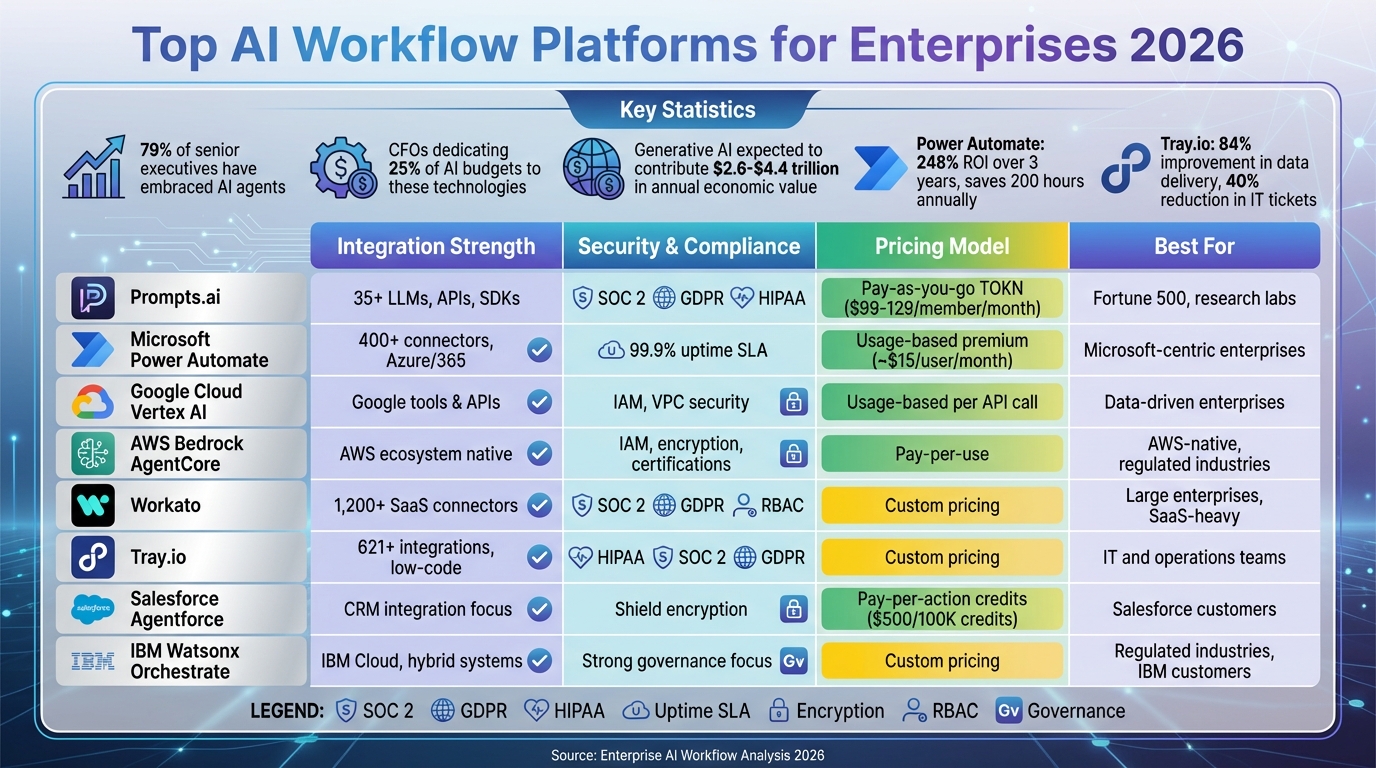
AI Workflow Platforms Comparison: Features, Pricing, and Best Use Cases for Enterprises 2026
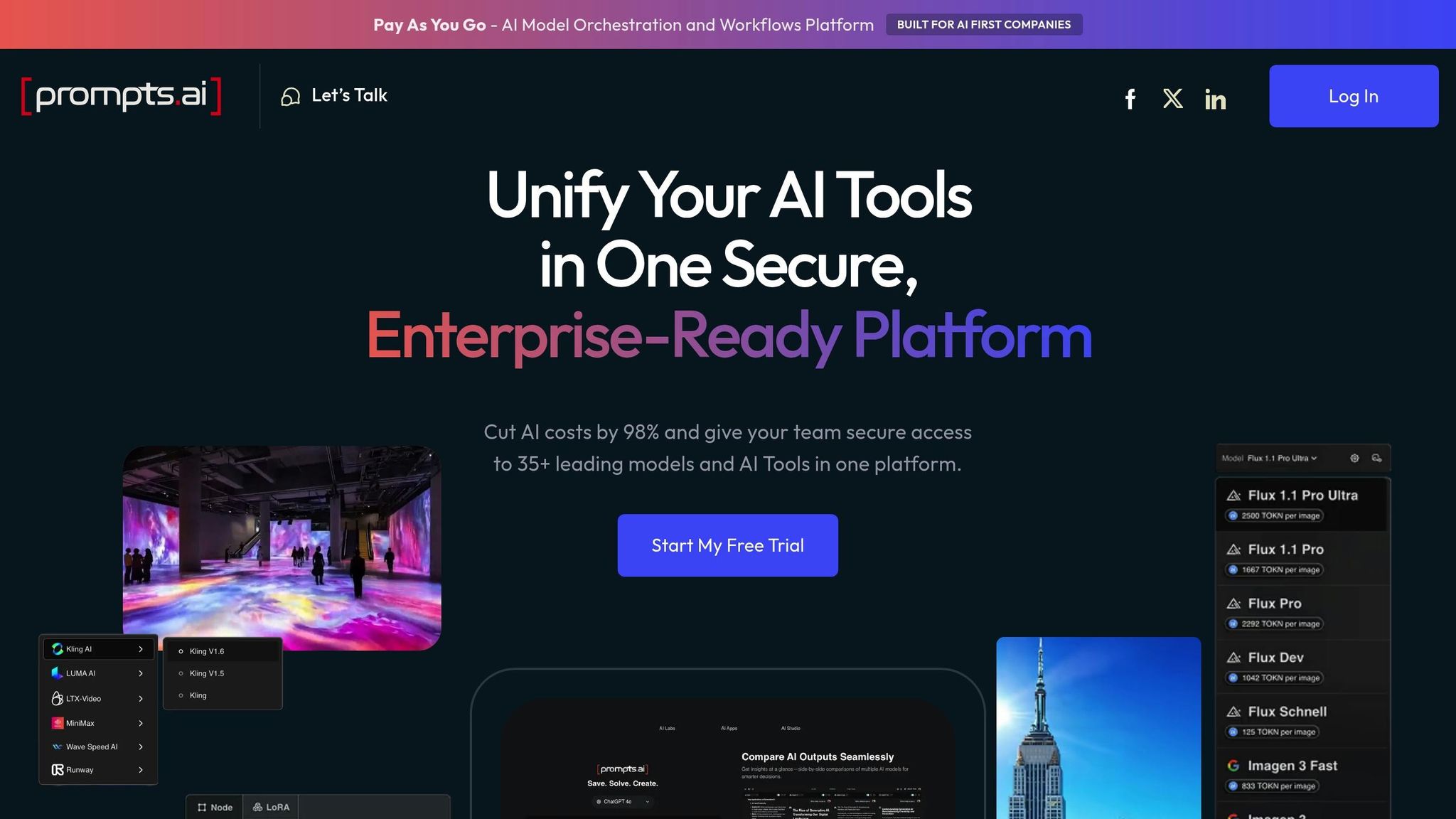
Prompts.ai serves as a central hub for AI orchestration, simplifying how enterprises manage and integrate their AI tools. Instead of juggling numerous subscriptions and interfaces, businesses can access over 35 top-tier AI models - including GPT-5, Claude, LLaMA, and Gemini - all within a single, unified workspace. This streamlined setup tackles a major challenge for U.S. enterprises: tool sprawl, which disrupts workflows and drives up software costs. By consolidating tools, Prompts.ai enables smoother integrations and efficient model management.
The platform offers instant AI integrations, allowing teams to automate workflows by seamlessly connecting tools like Salesforce, Slack, Gmail, and Trello directly with AI models. Routine tasks can be transformed into automated processes, saving time and resources. With APIs and pre-built connectors, Prompts.ai bridges existing systems with AI capabilities, enhancing current tech stacks without requiring major overhauls.
Prompts.ai empowers users to compare multiple LLMs instantly, helping teams choose the most accurate and cost-effective model for specific tasks. This flexibility eliminates vendor lock-in and enables workflows to leverage the best AI for the job. The platform also supports the training and fine-tuning of LoRAs (Low-Rank Adaptation), letting organizations tailor models to their unique needs without starting from scratch.
Prompts.ai has initiated its SOC 2 Type 2 audit process, working with Vanta to ensure continuous monitoring of controls. The platform adheres to best practices from SOC 2 Type II, HIPAA, and GDPR to protect data. Through the Trust Center, users can monitor their security posture in real time, tracking progress on policies and controls. Comprehensive audit logs provide full visibility into AI interactions, enabling robust governance and compliance, particularly in regulated industries.
Built to handle high-demand workflows, Prompts.ai employs a pay-as-you-go TOKN system, charging only for actual usage. This flexible model scales effortlessly to meet growing teams or seasonal spikes, ensuring businesses pay solely for the compute they use. By centralizing model access and offering real-time FinOps controls, the platform helps organizations monitor usage, manage costs, and maintain reliability - even during peak periods.
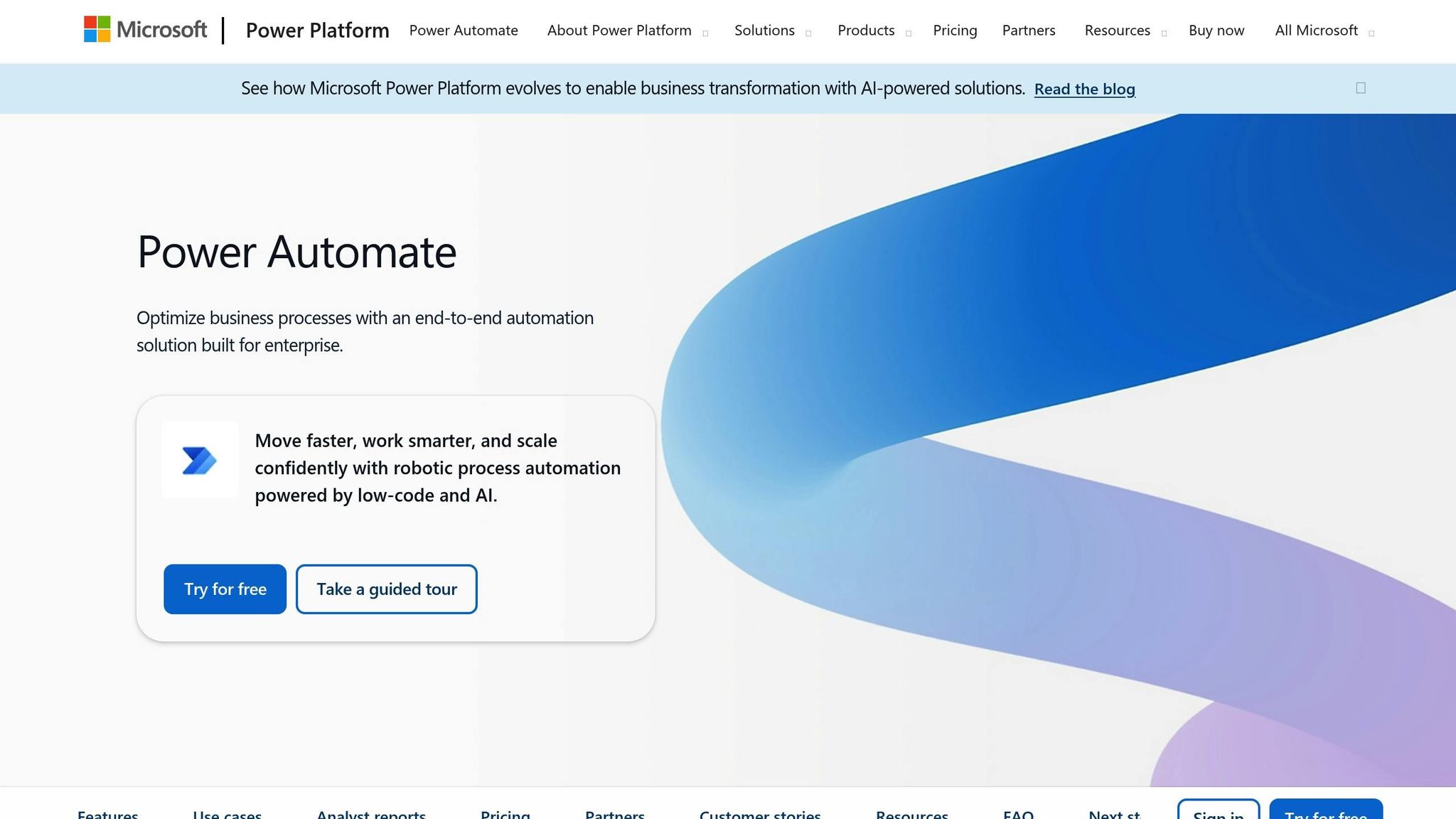
Microsoft Power Automate is a low-code platform designed to seamlessly integrate with Office 365, Dynamics, and Azure. For businesses already using Microsoft tools, this platform simplifies workflows by connecting the systems they depend on every day. Its integration capabilities create a unified environment, enabling a wide range of connectors and custom AI-driven solutions.
Power Automate provides access to over 400 prebuilt connectors, linking popular SaaS tools like Jira, Slack, GitHub, and ServiceNow to streamline enterprise operations. For unique business needs, custom connectors allow integration with proprietary systems. With Microsoft Copilot Studio, teams can go a step further by building tailored AI agents that integrate directly with Microsoft 365, Teams, and Dynamics. Additionally, its "computer use" feature automates processes in legacy systems that lack APIs, ensuring older applications can still be part of modern workflows.
Power Automate offers enterprise-level reliability, backed by a 99.9% uptime SLA and robust Microsoft support plans. Features like 360-degree live monitoring, advanced exception handling, and centralized governance through the Automation Center ensure businesses can oversee and manage automation at scale. The Automation Center provides in-depth visual insights to identify trends and issues, while the Repair with Copilot feature addresses UI control challenges in RPA scenarios, reducing downtime and improving efficiency.
The platform’s hosted infrastructure automatically scales to meet demand, balancing workloads dynamically to handle peaks without requiring manual adjustments. This scalability has delivered impressive results for businesses: Uber saved 3,400 hours and $30 million annually, while Aon eliminated 20,000 redundant processes, achieving an 8% reduction in costs. Premium plans start at $15 per user per month, with additional options at approximately $150 per bot, making it an economical choice for large-scale operations. According to a July 2024 Forrester Consulting study, adopting Power Automate led to a 248% ROI over three years, saving employees 200 hours annually in high-impact RPA tasks.
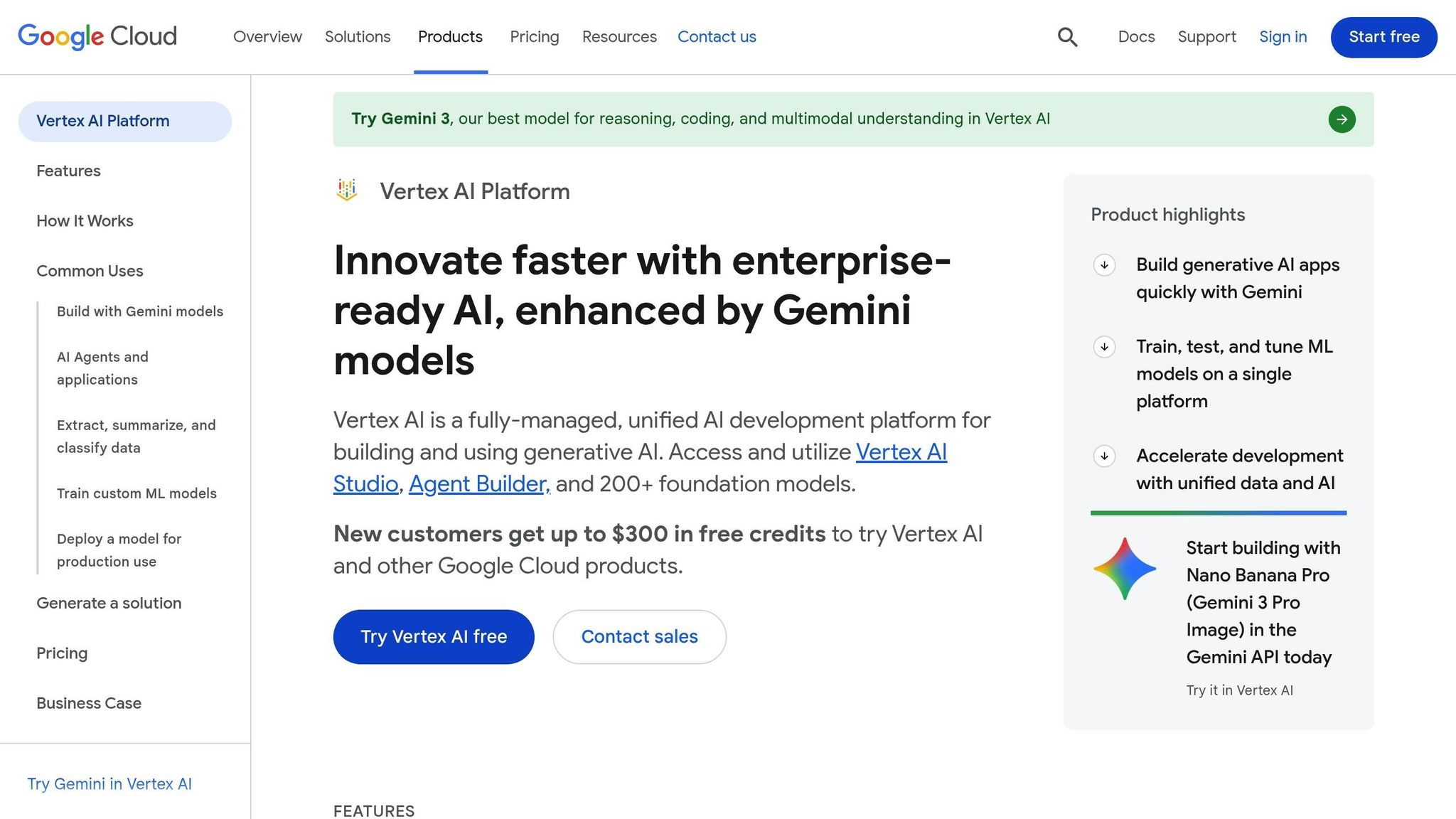
Google Cloud's Vertex AI Agent Builder offers a low-code toolkit designed to simplify AI integration within the Google Cloud ecosystem. It allows teams to connect with cloud data and models efficiently, reducing external hurdles and streamlining operations.
One of the standout features of Vertex AI Agent Builder is its seamless connection to Google's AI tools and GCP services. By keeping your data and models within the Google ecosystem, it reduces delays caused by data transfers and supports a variety of custom models. However, this deep integration could lead to increased reliance on Google Cloud for your operations.
The platform includes built-in governance features that ensure a baseline level of security without requiring major adjustments. For more advanced capabilities, though, teams will need a deeper understanding of GCP's tools and configurations.
Vertex AI Agent Builder offers usage-based pricing, making it cost-efficient by charging only for what you use. It also supports automatic scaling within the Google Cloud infrastructure, but the specifics of service-level agreements (SLAs) depend on your chosen GCP setup.
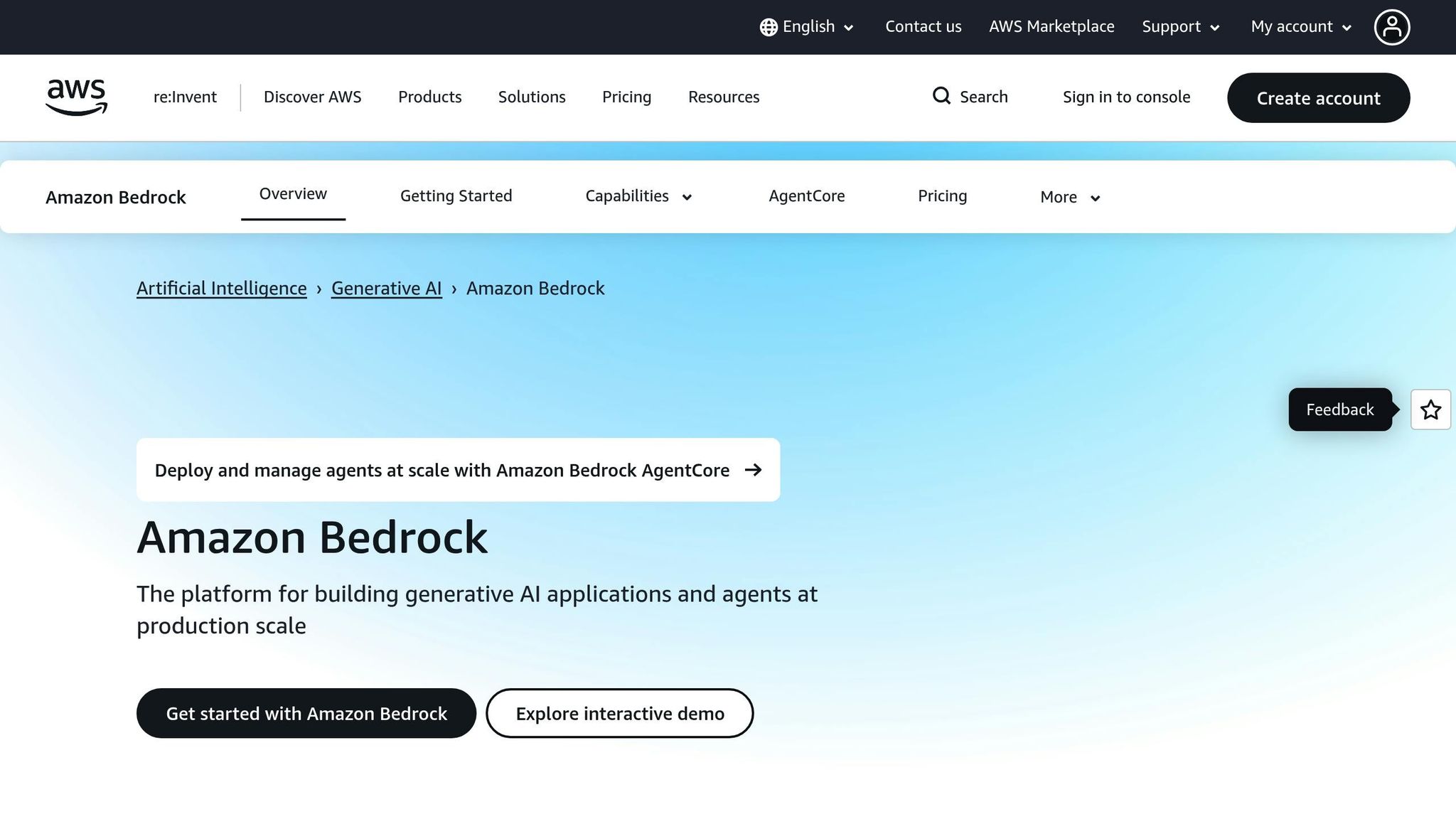
AWS Bedrock AgentCore serves as a powerful orchestration layer within the AWS ecosystem, designed to help teams build and deploy AI agents seamlessly. By leveraging its native integration with AWS services, it simplifies the process of embedding AI into enterprise workflows.
Each feature of Bedrock AgentCore is crafted to address key challenges faced by enterprises.
Bedrock AgentCore tightly integrates with AWS services, enabling AI agents to connect directly to your existing AWS infrastructure. However, this close alignment with AWS means portability to other cloud platforms can be challenging, potentially increasing complexity for teams using non-AWS environments.
The platform supports a variety of foundation models, giving enterprises the flexibility to customize AI capabilities for tasks such as natural language processing, data analysis, and decision-making automation.
Security and compliance are at the core of Bedrock AgentCore. Features like Virtual Private Cloud (VPC) for isolated environments, PrivateLink for secure connections, CloudFormation for infrastructure management, and detailed tagging options ensure robust governance and security for enterprise operations.
AWS Bedrock AgentCore is built to handle demanding workflows with its usage-based pricing model. It scales effortlessly to accommodate high data volumes and multiple AI agents, making it a dependable solution for enterprises with extensive processing needs.
Workato drives automation across various departments, catering to enterprise-level operations. It connects seamlessly with over 1,200 applications, covering a broad spectrum of SaaS platforms and enterprise data sources. As a proprietary solution, it offers a robust library of pre-built connectors. However, its inline code customization is somewhat limited, and it does not provide source-available licensing.
Workato ensures enterprise-grade security with features like SOC 2 Type II compliance, detailed role-based access control (RBAC), and centralized governance dashboards. These tools give administrators complete visibility into workflow operations. The platform also upholds strict service level agreements (SLAs) for uptime and support, with 24/7 enterprise support that includes monitoring and escalation protocols. Together, these elements create a secure and scalable environment tailored for large organizations [2, 6].
Designed for handling high-volume workflows, Workato supports unlimited recipes, parallel task execution, and hybrid deployment options that span both cloud and on-premises setups. Its architecture is built to meet the needs of large enterprises. Pricing is determined by task volume, advanced connector usage, and the number of users. For specific details, you’ll need to contact their sales team. With its solid operational framework, Workato sets the stage for advancements in AI-driven workflow orchestration.
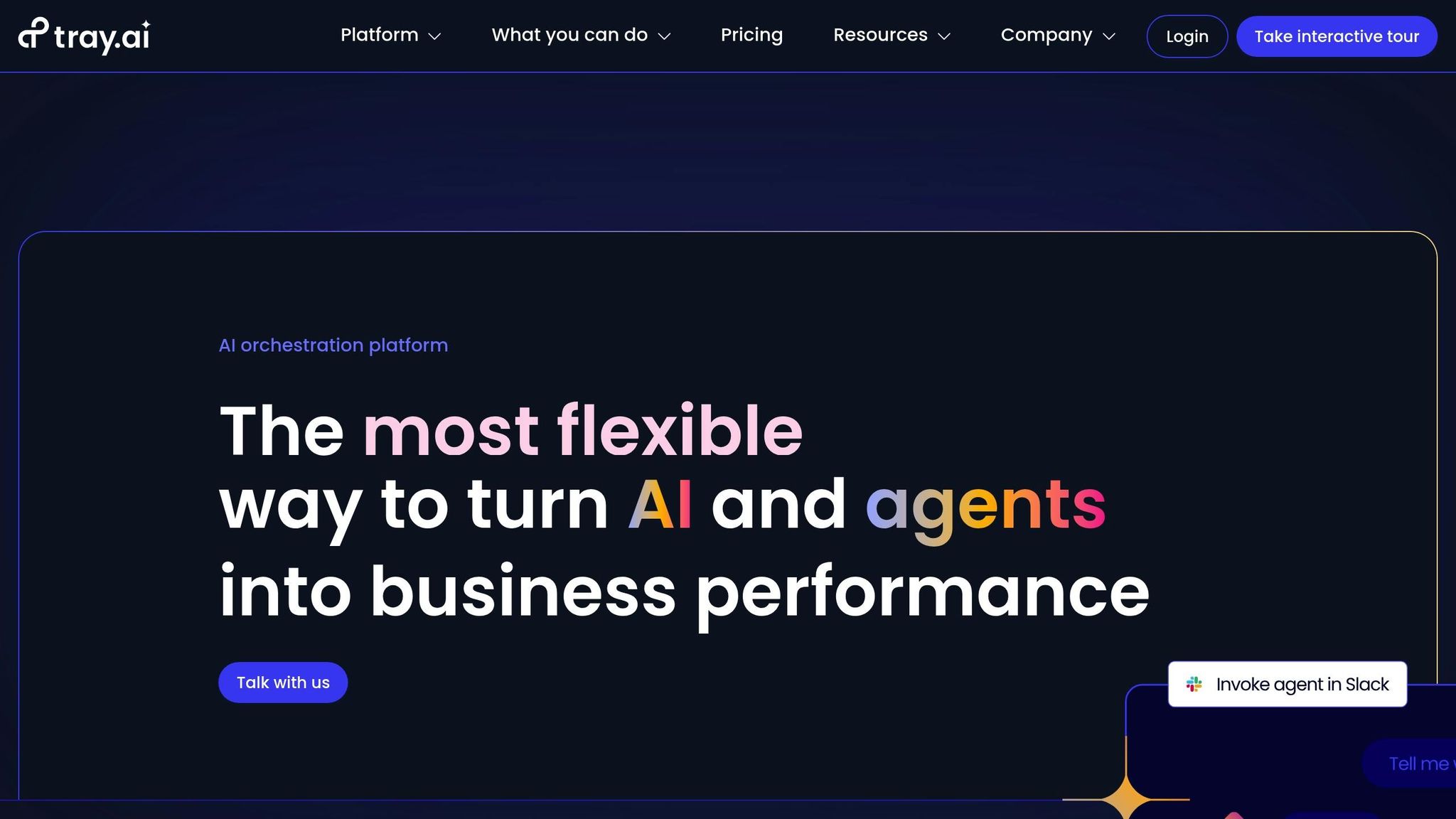
Tray.io stands out as an AI-ready Integration Platform as a Service (iPaaS), seamlessly connecting AI agents across an enterprise's entire technology stack. With over 621 integrations and more than 1 million customers, it bridges diverse applications to streamline workflows and boost efficiency. Its Merlin Agent Builder deploys AI agents to APIs, web applications, and Slack, ensuring they operate with full enterprise data context. This integration framework supports interoperability, enforces governance, and delivers scalable performance.
Tray.io's low-code builder simplifies integration delivery, catering to both business technologists and development teams. Its Agent Accelerators include pre-built connections for popular SaaS tools like Workday and BambooHR, enabling HR automation, as well as integrations for ITSM and customer support systems. By channeling data from internal documents and enterprise sources into agents and workflows, Tray.io ensures secure and efficient data use across the technology stack.
The Tray Agent Gateway empowers IT teams to govern and deploy multi-cloud policies (MCP) across the enterprise. The platform's Enterprise Core ensures governance and scalability for all solutions, while Merlin Guardian safeguards sensitive data within AI-driven processes. These tools enforce governance policies, ensuring agents remain secure and manageable as they scale, enabling reliable and trusted AI data integration.
Tray.io enhances operational efficiency with an 84% improvement in data delivery and reporting. For instance, Apollo leveraged Tray agents to handle high-volume operations, reducing 40% of IT tickets by starting with an IT agent and later expanding to sales and support functions. The platform's composable design ensures it can scale to meet the needs of large user bases while managing diverse integration demands, making it a dependable solution for AI, integration, and automation efforts.
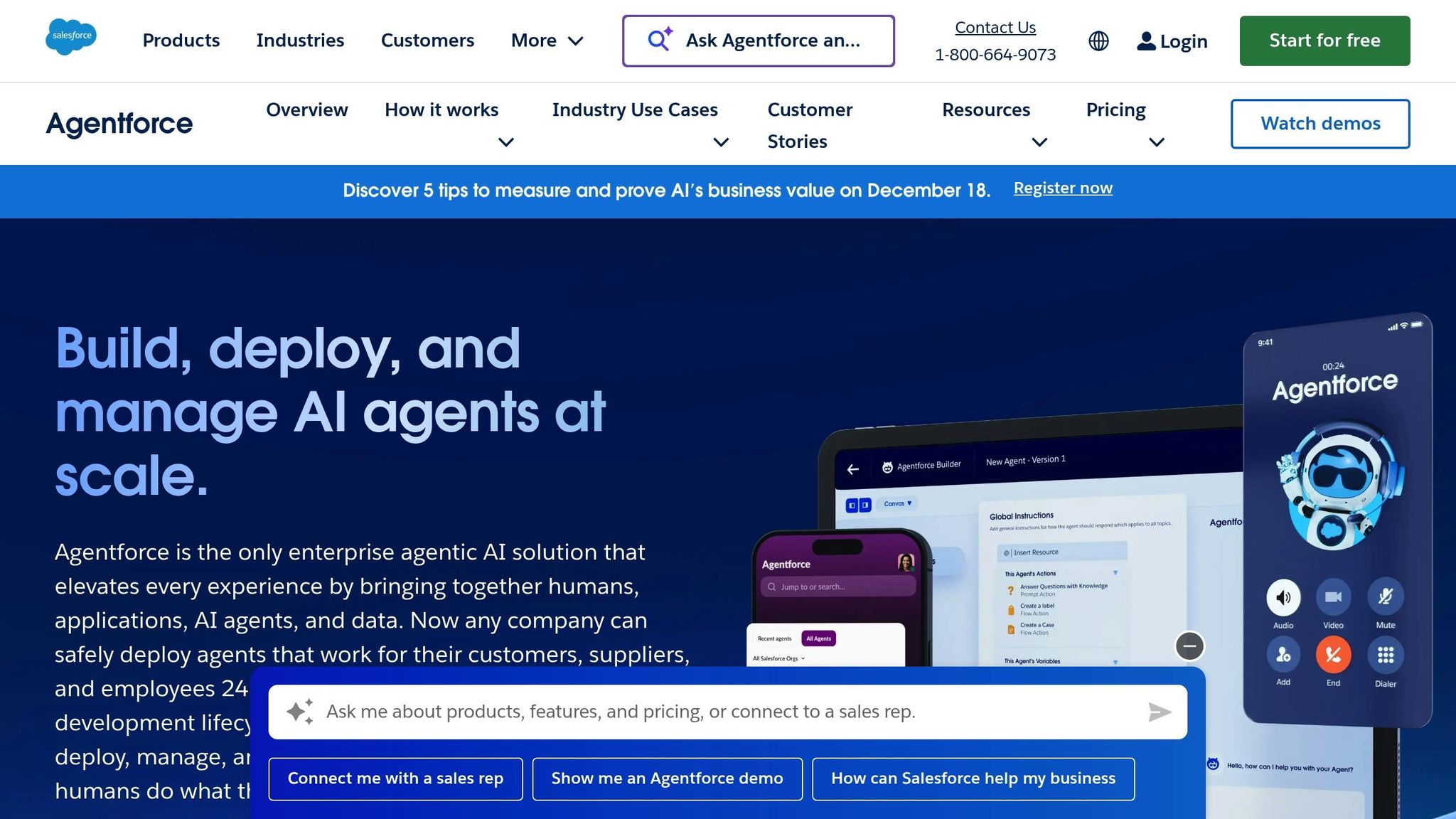
Salesforce Agentforce streamlines workflows by combining Salesforce CRM, Data Cloud, and low-code builders. It taps into CRM data and low-code tools to set up customer automations, supports MCP capabilities, and coordinates multiple agents with built-in AI voice features.
Agentforce is designed to work seamlessly within Salesforce environments, making it highly effective for internal integrations. Tools like Salesforce Flow highlight its strength in automation within the Salesforce ecosystem. However, as a closed system, it offers limited flexibility for external integrations.
Agentforce operates on a pay-per-action model called Flex Credits, starting at $500 for 100,000 credits and $2 per conversation. This pricing structure emphasizes affordability and scalability for AI-driven workflows. However, a Salesforce-led study found that multi-step agents may face challenges with complex tasks. Businesses should carefully assess Agentforce's reliability when planning for high-volume operations.
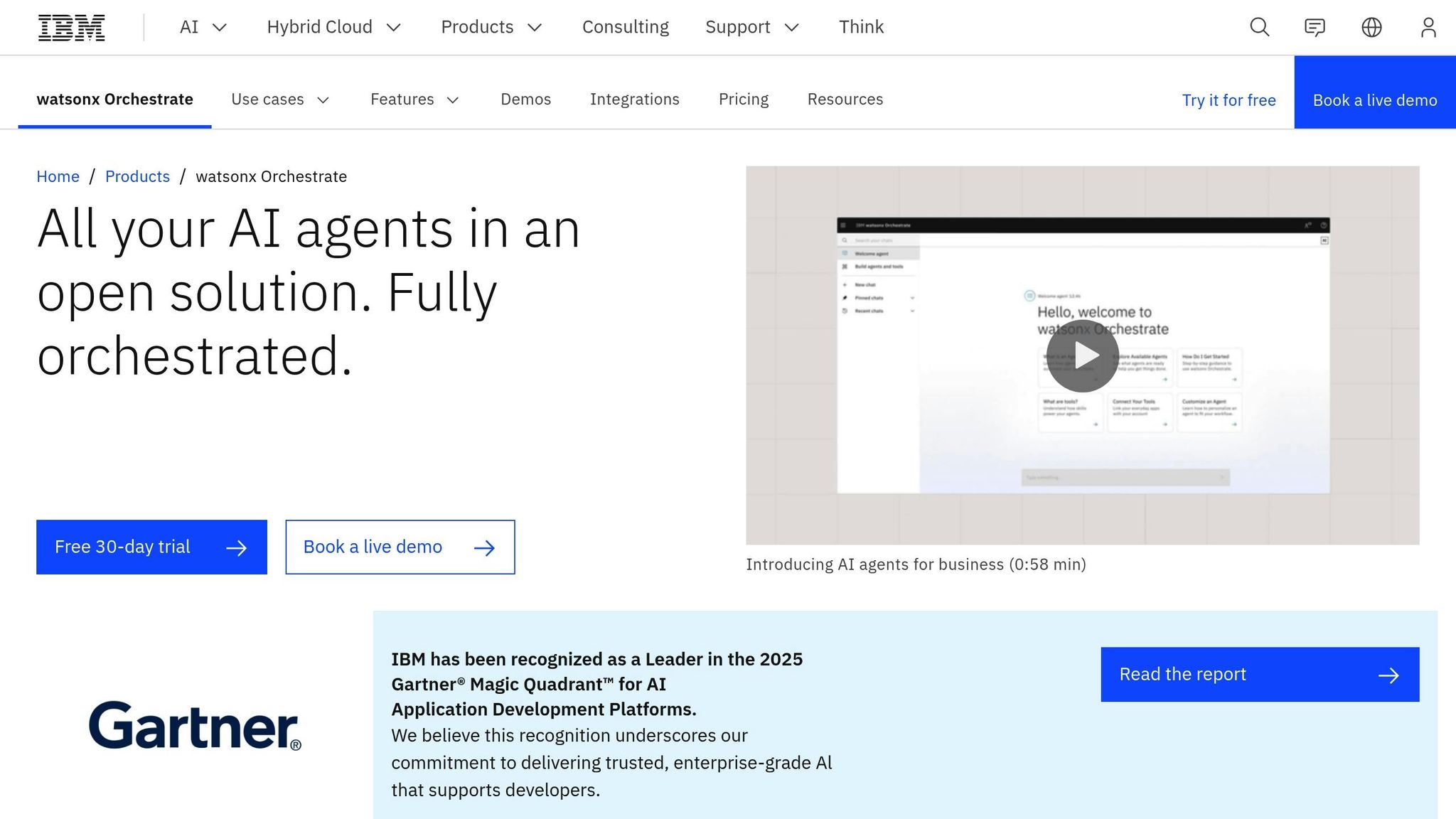
IBM Watsonx Orchestrate simplifies enterprise workflows by using prebuilt agents to handle complex processes. It’s particularly beneficial for organizations operating on IBM Cloud or hybrid cloud setups.
The platform’s orchestration framework seamlessly coordinates AI agents to handle enterprise tasks. By integrating multiple language models (LLMs), it enables businesses to automate intricate operations efficiently, streamlining processes across various departments.
With a strong focus on governance and compliance, Watsonx Orchestrate ensures that automated workflows remain secure and adhere to organizational and regulatory standards. This structured oversight helps maintain control and accountability within AI-driven processes.
Built to perform in IBM Cloud and hybrid environments, Watsonx Orchestrate delivers reliable scalability for large enterprises. Its robust architecture ensures consistent and dependable management of AI agents, even in demanding operational settings.
When selecting an AI platform, it's essential to weigh factors like interoperability, orchestration capabilities, security, scalability, target audience, and pricing. Below is a detailed comparison of eight leading platforms tailored to U.S. enterprises in 2026.
Prompts.ai stands out with its pay-as-you-go TOKN credits, eliminating recurring fees. In contrast, cloud-native solutions from Microsoft and Google offer tight ecosystem integration, while Salesforce Agentforce focuses on CRM workflows, and IBM Watsonx Orchestrate prioritizes robust governance.
Pricing structures differ significantly. Some platforms charge per user, others per API call, and many require custom contracts. For U.S. enterprises, understanding these models upfront is critical to avoiding unforeseen expenses as AI adoption grows.
| Platform | Interoperability | LLM Orchestration | Governance & Security | Scalability | Target Enterprise | U.S. Pricing |
|---|---|---|---|---|---|---|
| Prompts.ai | Supports over 35 LLMs; integrates via APIs and SDKs | Multi-model orchestration with side-by-side model comparisons | Enterprise-grade audit trails, RBAC, and compliance tools | Scales instantly; add users and models in minutes | Fortune 500 companies, creative agencies, research labs | Pay-as-you-go TOKN credits; Core: $99/member/month, Pro: $119/member/month, Elite: $129/member/month |
| Microsoft Power Automate with AI Capabilities | Extensive Power Platform connectors; integrates with Microsoft 365, Teams, Dynamics, and Azure | Copilot Studio for multi-agent workflows | Microsoft 365 compliance, Azure security, RBAC | Cloud-native scalability on Azure | Microsoft-centric enterprises and hybrid cloud users | Usage-based pricing for premium features |
| Google Cloud Vertex AI Agent Builder | Seamless Google Workspace and Cloud integration with open APIs | Supports multiple LLMs, including Gemini models | Google Cloud IAM, VPC support, and data residency controls | Auto-scales on Google Cloud infrastructure | Data-driven enterprises and Google Cloud customers | Usage-based pricing per API call and compute time |
| AWS Bedrock AgentCore | Deep AWS integration (e.g., S3, Lambda, RDS) with extensive third-party connectors | Orchestrates multiple foundation models via AWS Bedrock | AWS IAM, encryption, and compliance certifications (e.g., HIPAA, SOC 2) | Elastic scaling across AWS regions | AWS-native enterprises and regulated industries | Pay-per-use model |
| Workato | Numerous pre-built connectors for SaaS and enterprise apps (CRM, ERP, ITSM) | AI-powered recipe builder with LLM integration | Enterprise-grade security with SOC 2 and GDPR compliance, plus RBAC | Designed for high workflow volumes with enterprise-grade infrastructure | Mid-to-large enterprises across industries | Custom enterprise pricing |
| Tray.io / Tray AI | Universal API connectivity with a low-code builder and extensive app library | AI-assisted workflow creation and optimization | SOC 2, GDPR, and HIPAA compliance with granular access controls | Cloud-native scalability for high-volume automation | Enterprise IT and operations teams | Custom enterprise pricing based on workflow volume |
| Salesforce Agentforce and Einstein Orchestration | Native Salesforce CRM integration, supported by MuleSoft for external systems | Einstein AI orchestrates multi-agent CRM workflows | Salesforce Shield encryption, compliance tools, and field-level security | Scales within the Salesforce ecosystem | Salesforce customers and CRM-focused enterprises | Custom pricing – contact Salesforce for details |
| IBM Watsonx Orchestrate | IBM Cloud and hybrid integration with prebuilt agents for enterprise processes | Multi-LLM orchestration framework | Strong governance, audit trails, and regulatory compliance focus | Enterprise-scale on IBM Cloud and hybrid environments | IBM customers, regulated industries, and hybrid cloud users | Custom enterprise pricing – contact IBM |
This comparison highlights how different platforms cater to enterprise needs. Cloud-native solutions from Microsoft, Google, and AWS thrive within their ecosystems, while Prompts.ai excels with model-agnostic orchestration and flexible usage-based pricing. Meanwhile, Workato and Tray.io shine with their extensive connector libraries and ability to handle complex integrations.
When selecting an AI workflow platform, it's crucial to choose one that not only grows with your business but also adheres to stringent governance and security requirements. The platforms discussed here each offer their own advantages, from cloud-based solutions like Microsoft Power Automate and Google Cloud Vertex AI to CRM-centered tools like Salesforce Agentforce, and the model-agnostic orchestration capabilities provided by Prompts.ai.
Statistics show that 79% of senior executives have embraced AI agents, with CFOs dedicating 25% of AI budgets to these technologies. This shift signals that AI is no longer in the experimental phase. Enterprises are moving toward standardized infrastructures that connect to real-world data, execute meaningful actions, and meet the highest standards of security, compliance, and reliability. These figures highlight the growing emphasis on enterprise-wide AI solutions over isolated pilot programs.
When evaluating platforms, prioritize factors like interoperability, adaptability, and transparent pricing. With generative AI expected to contribute between $2.6 and $4.4 trillion in annual economic value, your choice of platform will directly impact your ability to remain competitive. Consider whether you need seamless integration within a specific ecosystem or the flexibility to orchestrate across 35+ models without being tied to a single vendor.
The evolution of AI workflow platforms is also changing the way businesses approach automation. The question is no longer "What can we automate?" but rather "What tasks should AI manage by default?" As autonomous agents begin handling end-to-end operations, platforms that blend no-code tools, multi-model orchestration, and enterprise-grade controls are setting the standard for tomorrow's digital workforce.
When deciding on an AI workflow platform, businesses should prioritize three critical aspects:
By aligning these considerations with your business objectives, you can select a platform that enhances workflows and supports sustainable growth.
AI workflow platforms prioritize data security and compliance by employing role-based access controls, which regulate user permissions and block unauthorized access. To ensure transparency and accountability, they also maintain comprehensive audit trails that log user activities.
These platforms follow stringent governance policies, addressing critical areas like data residency, privacy laws, and ethical AI practices. By aligning with industry regulations and legal standards, they provide a secure foundation for enterprise workflows, ensuring both safety and compliance.
Usage-based pricing models bring a range of advantages for enterprises working with AI platforms. One standout benefit is cost efficiency. With this model, businesses pay only for the resources they actually use, helping to cut down on unnecessary expenses and align spending with real operational needs. This approach is especially helpful for organizations dealing with fluctuating workloads or seasonal shifts in demand.
Another significant advantage is scalability. This model allows companies to expand or reduce their AI operations as needed, without being tied to rigid pricing structures. Such flexibility ensures that businesses can respond swiftly to changing requirements while keeping their budgets in check.
Lastly, usage-based pricing promotes fairness and transparency. By clearly outlining how costs are calculated based on usage metrics, this model builds trust and enables organizations to make well-informed decisions about how they allocate resources and use the platform.