Pay As You Go - AI Model Orchestration and Workflows Platform



AI tools are transforming how startups operate, helping small teams save time, reduce costs, and streamline processes. Whether you're automating emails, integrating disconnected tools, or ensuring compliance in regulated industries, there's an AI solution tailored to your needs. Here's a quick breakdown of the top platforms:
Quick Comparison
| Platform | Starting Price (USD) | Best For | Key Strengths | Compliance |
|---|---|---|---|---|
| prompts.ai | $0/month (Pay-As-You-Go) | AI-powered startups | Multi-model access, cost control | SOC 2 Type II, audit trails |
| Zapier | $19.99/month | Early-stage startups | 7,000+ app integrations | Basic security |
| Make | $9/month | Custom workflows | Drag-and-drop builder | GDPR compliant |
| Microsoft Power Automate | $15/user/month | Microsoft ecosystem users | AI Builder for custom models | Azure-grade security |
| Workato | $10,000/year | Growth-stage startups | Advanced integrations, real-time triggers | SOC 2 Type II, HIPAA, GDPR |
| n8n | $0 (self-hosted)/$20/month | Technical teams | Open-source flexibility | Self-managed security |
| Zenphi | Usage-based | Google Workspace users | Native Google Workspace integration | Built-in compliance |
AI adoption can double productivity, reduce costs, and attract investors. Choose the platform that fits your stage, budget, and goals to transform your workflows.
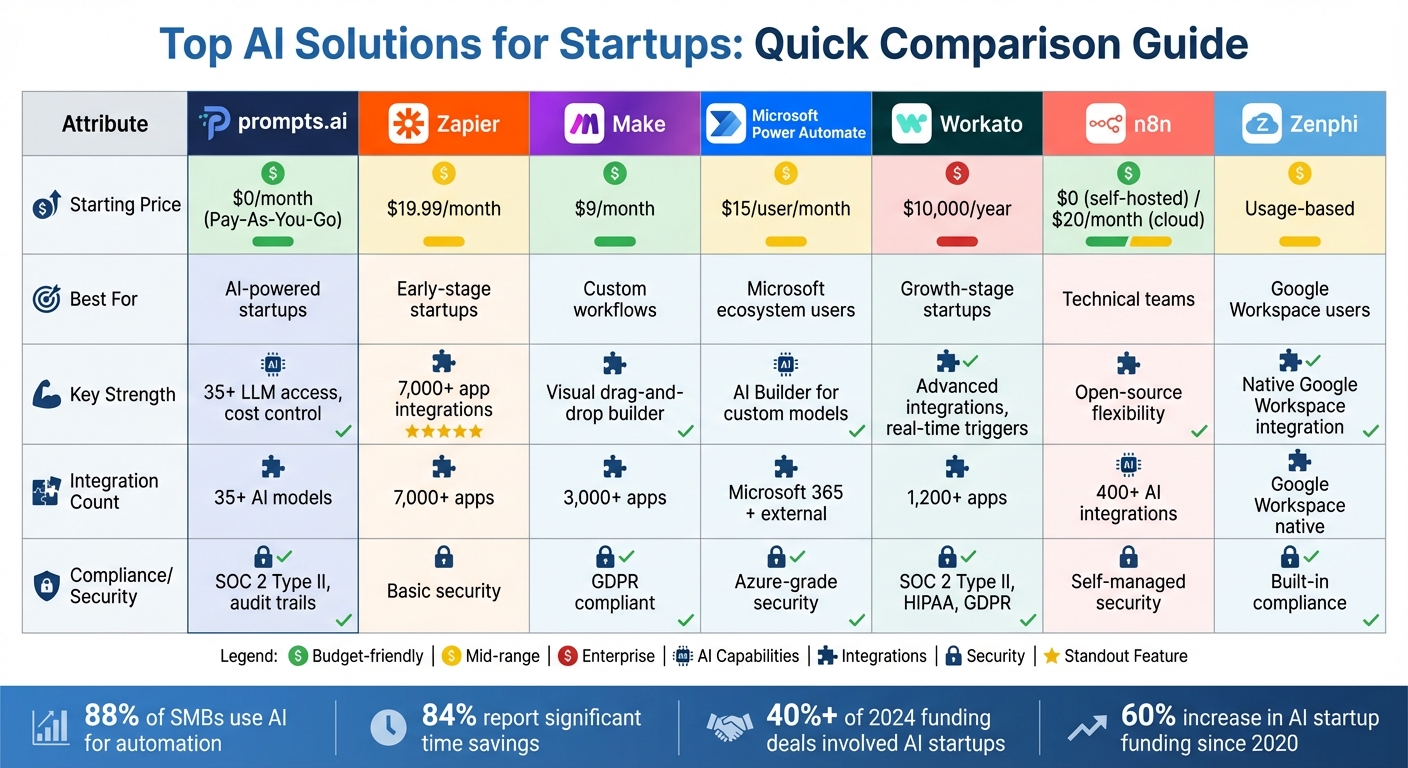
AI Automation Platform Comparison for Startups: Features, Pricing & Best Use Cases
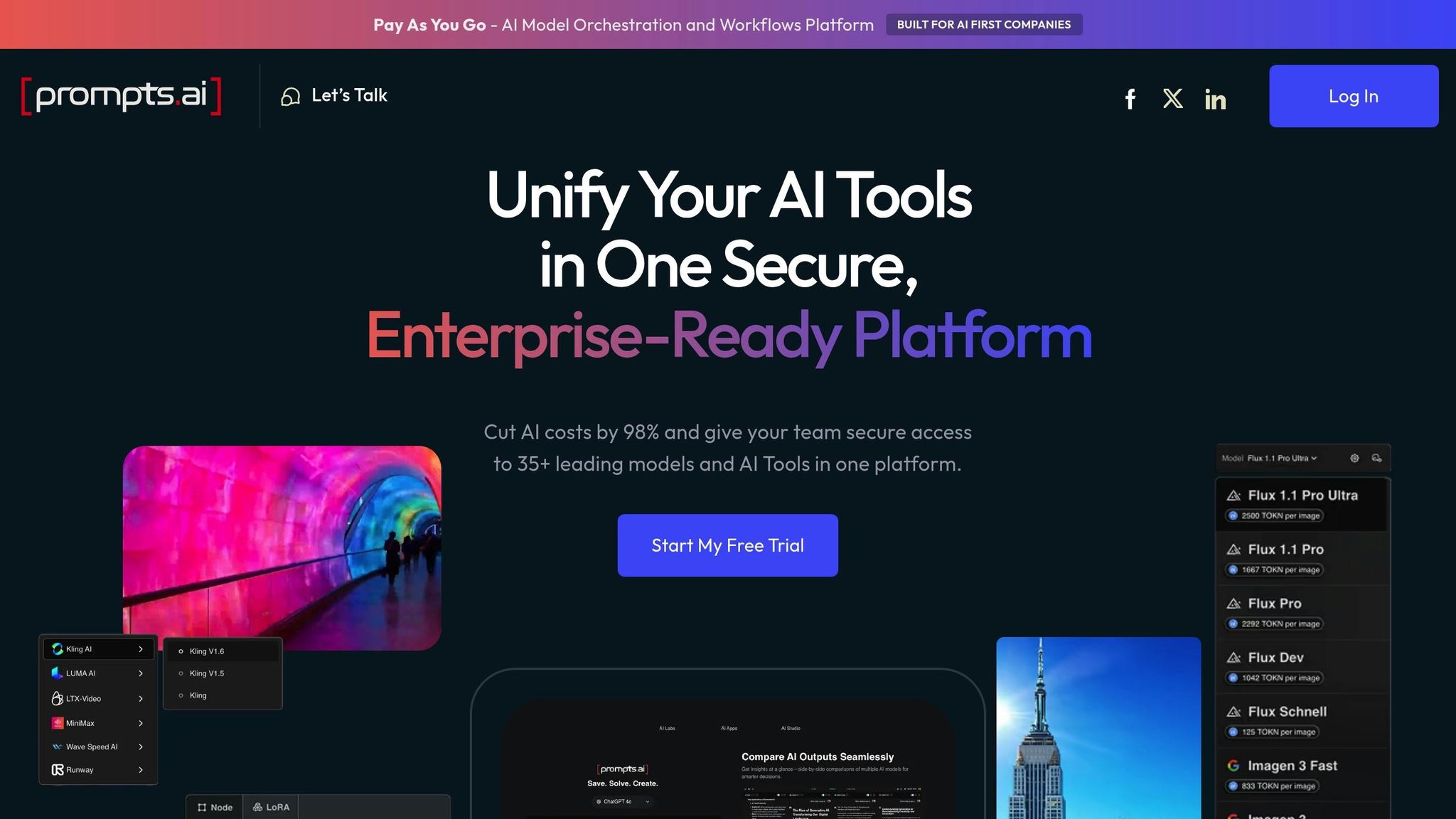
prompts.ai is a powerful AI platform designed for enterprise use, connecting your team to over 35 top-tier large language models, including GPT‑5, Claude, LLaMA, and Gemini. Through a single, secure interface, it centralizes scattered subscriptions and prompts into one streamlined workspace. This setup not only simplifies operations but also offers a critical cost-saving edge. Let’s take a closer look at how this platform can enhance your workflow.
The platform supports integration via API and SDK, enabling your backend services - whether built with Node.js, Python, or serverless functions - to interact with prompts.ai endpoints instead of connecting directly to LLM providers. This flexibility allows you to switch models or experiment with new providers without the hassle of rewriting code. For startups leveraging automation tools like Zapier or Make, prompts.ai also supports webhook-based connections, enabling AI-driven tasks to be triggered directly from tools like Slack or Gmail. With prompt templates that can be parameterized for variables such as customer details or subscription tiers, you can deploy them across multiple products for tasks like crafting personalized sales emails, generating customer support responses, or enhancing in-app onboarding - all without duplicating efforts.
prompts.ai offers budget-friendly pricing tailored to startups, featuring a usage-based, pay-as-you-go model starting at $0 per month. This entry-level plan includes limited credits and one workspace, ideal for exploring the platform at minimal cost. For more robust needs, the Creator plan is available at $29 per month (or $25 per month when billed annually), offering 250,000 credits, up to five workspaces, and five collaborators. As your team expands, the Problem Solver plan, priced at $99 per month, provides 500,000 credits, unlimited workspaces, 99 collaborators, and endless workflow creation. This tier ensures that your expenses grow only as your usage increases, keeping costs aligned with your business needs.
As your team expands, prompts.ai adapts with features like role-based access control and prompt versioning. Non-technical team members can safely propose and test prompt updates in staging environments, while engineers retain control over production deployments. Shared libraries, use-case tagging, and detailed change histories ensure consistent AI behavior across distributed teams. The platform’s architecture is designed to handle increasing call volumes and larger prompt repositories, making it a reliable tool from your MVP stage to full-scale operations.
For U.S. startups working with enterprise clients or operating in regulated industries such as finance or healthcare, prompts.ai is built with robust compliance features. It aligns with SOC 2 Type II standards, with active audit processes accessible through its Trust Center at https://trust.prompts.ai/. The platform encrypts data both in transit and at rest, maintains detailed audit logs that track changes to prompts, and supports approval workflows to minimize risks in production environments. These governance tools reduce compliance burdens while offering the documentation needed for security reviews, investor evaluations, and regulatory audits. By incorporating these features, prompts.ai ensures that startups can scale securely and confidently as they grow.
Zapier simplifies app integration for startups, connecting over 7,000 apps without requiring custom coding. For businesses juggling tools like CRMs, email platforms, and analytics dashboards, Zapier automates repetitive tasks and eliminates the need for manual data transfers. Its AI-driven features, such as Zapier Central and the AI Copilot, empower users to create automated workflows known as "Zaps".
Zapier is particularly effective at linking various software systems into a cohesive network. For instance, it can categorize incoming leads by persona and intent, then automatically send that data to your CRM. At the same time, it ensures billing and analytics platforms remain in sync. Its extensive library of templates streamlines tasks like data management, marketing campaigns, and customer support. Additionally, Zapier Central allows users to build AI assistants capable of handling routine inquiries and engaging with leads 24/7.
Zapier’s pricing structure is designed with startups in mind, offering scalability and flexibility. Startups can begin with a free plan to explore automation at no initial cost. For those requiring more advanced features, the Professional plan is available for $19.99 per month, the Team plan for $69 per month, and an Enterprise plan is available upon request.
Make offers a user-friendly, visual approach to workflow automation through its drag-and-drop interface, connecting with over 3,000 apps. It’s particularly effective for creating multi-step automations that handle complex data transformations and ensure seamless file synchronization across your tools.
Make works seamlessly with popular platforms like OpenAI (ChatGPT, DALL‑E, Whisper), HubSpot CRM, Salesforce, Slack, and monday.com. It also provides access to more than 400 pre-built AI integrations and external AI model connectors, bringing AI functionality directly into your workflows. Additionally, it supports custom system integrations, allowing you to adjust quickly to changing market needs.
Make’s pricing structure is designed with startups in mind. It uses a credit-based system, offering a free plan with 1,000 credits per month. For more advanced needs, the Core plan starts at $9 per month (billed annually) and provides 10,000 credits monthly, unlimited active scenarios, and API access. Each workflow step consumes credits, with AI-powered steps typically requiring more than one credit. As your automations grow, keeping an eye on credit usage becomes essential to manage costs effectively.
For growing teams, Make provides tools to streamline collaboration and maintain oversight. Shared workflows and the "Grid" feature offer enterprise users a clear view of agents, apps, and workflows, making it easier to monitor and troubleshoot as operations expand. While the credit-based model can make budgeting more complex as workflows scale, the platform's flexibility ensures your automation strategy evolves alongside your business.
Microsoft Power Automate serves as a powerful solution for startups looking to streamline their operations. By integrating seamlessly with Microsoft tools and widely-used third-party apps, it provides automation capabilities suited for businesses at any stage. With pre-built connectors and open APIs, the platform simplifies the process of linking workflows, systems, and data across your entire tech ecosystem.
Power Automate works effortlessly with Microsoft 365 applications like Outlook, Teams, SharePoint, and Excel - tools that many startups already rely on. Additionally, it supports integrations with external platforms such as Salesforce, Slack, Google Workspace, and Dropbox. A standout feature is the AI Builder, which allows startups to add AI-driven functionalities like text recognition, form processing, and predictive modeling into workflows - all without needing coding expertise. Real-time data synchronization ensures all teams, from marketing to sales, have access to the same customer insights, breaking down information silos and enhancing collaboration. This level of integration positions the platform as a flexible and scalable choice for startups.
While specific pricing details for Power Automate aren't publicly available, most automation solutions for startups typically fall within the $50–500 per month range. Startups can also take advantage of free trials to explore the platform's capabilities before committing.
As your startup grows, Power Automate's cloud-based infrastructure is designed to scale alongside your needs. It can manage complex, multi-step workflows and handle increasing data demands, allowing teams to collaborate on shared automation processes. The platform evolves to support your business as operations become more intricate over time.
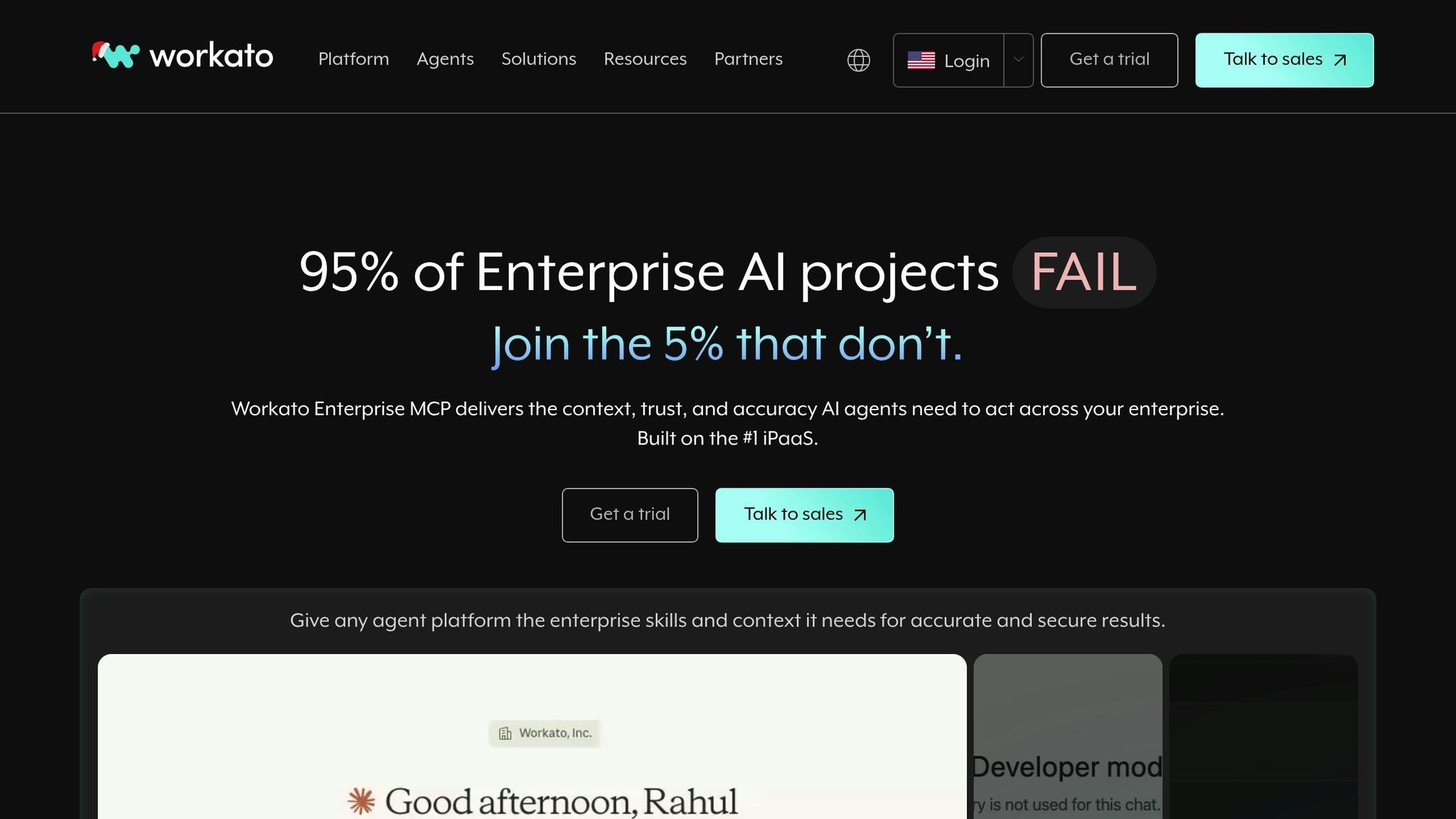
Workato offers a powerful integration platform tailored for startups aiming for rapid growth while managing complex systems. With connectivity to over 1,200 applications, it ensures seamless operation across your tech stack. Its Multi-Cloud Platform (MCP) and Agent Library, featuring prebuilt agents known as "Genies", enable advanced AI-driven workflows.
Workato works effortlessly with widely-used enterprise tools like Salesforce, Workday, Slack, and NetSuite. It supports custom AI models, allowing startups to create workflows that meet their unique needs. This capability is particularly valuable for fostering collaboration between departments like sales and marketing, ensuring smooth data sharing and automation. With real-time triggers and conditional workflows, the platform keeps data flowing efficiently. These features support its premium pricing structure, aimed at teams ready to scale their operations.
Workato’s pricing starts at $10,000 annually, reflecting its enterprise-grade functionalities. While this cost may challenge early-stage startup budgets, it varies based on factors like task volume, advanced connectors, and user accounts. A free trial with demo access is available, giving teams a chance to evaluate its capabilities. One user, Christoffer A., shared their experience:
"Workato is an incredibly flexible and scalable platform that allows us to build tailored automation solutions with ease. The user-friendly interface makes it simple to work with, even for complex workflows. Additionally, the support from our Customer Success Manager has been fantastic! Whether it's setting up workshops or helping us refine our processes, they've been instrumental in improving our ways of working."
Workato is designed to grow alongside your business. It handles increasingly complex automation workflows without compromising performance. As your startup expands, the platform supports more advanced integrations and greater data volumes. Its architecture enables different departments to create and manage their own automation workflows while maintaining centralized oversight, ensuring operational efficiency as your team scales.
For startups in regulated industries or those dealing with sensitive data, Workato provides robust security measures. It meets SOC 2 Type II standards and aligns with HIPAA and GDPR requirements. Role-based access control (RBAC) and centralized governance dashboards give technical teams complete visibility over automation processes. Additionally, Service Level Agreements (SLAs) ensure uptime and reliable support, critical for growing operations. These features make Workato a dependable choice for startups prioritizing secure and compliant growth.
n8n is a source-available automation platform designed to help startups tailor their workflows to meet specific needs.
n8n makes it easy to integrate with existing tools, offering a library of over 4,000 community-contributed starter templates. These templates span a variety of use cases, from AI chatbots to social media automation. Users can also incorporate custom JavaScript or Python code when necessary. For example, one template guides users on how to scrape recent company news via newsapi.org before a sales call and send insights via Gmail. Another automates the creation and posting of AI-generated content and images on platforms like Twitter, LinkedIn, and Facebook, while keeping records organized in Google Sheets. Additionally, n8n enables direct embedding of AI APIs for tasks such as data classification or enrichment, offering flexibility to adapt workflows to specific goals. Startups can also benefit from pricing plans tailored to their budgets.
n8n pairs its integration capabilities with pricing that caters to startups. A free tier allows businesses to begin automating without any initial investment, while paid plans start at $20 per month (billed annually), making it an affordable choice for early-stage companies. For those requiring self-hosted solutions, n8n offers custom options through direct consultation. With a 4.8/5 rating on G2, users frequently highlight its dependability and thoughtful design. As Brandon N. put it:
"n8n seamlessly combines advanced automation with AI integration, offering a sophisticated solution that elevates basic workflows."
Zenphi is a no-code automation platform built specifically for operational teams like IT, Finance, and HR. What sets it apart is its Google-native design, making it a natural fit for organizations entrenched in the Google Workspace ecosystem. Unlike platforms that rely solely on external AI models via connectors, Zenphi embeds AI directly into workflows, utilizing deterministic logic to craft smarter, more adaptable processes.
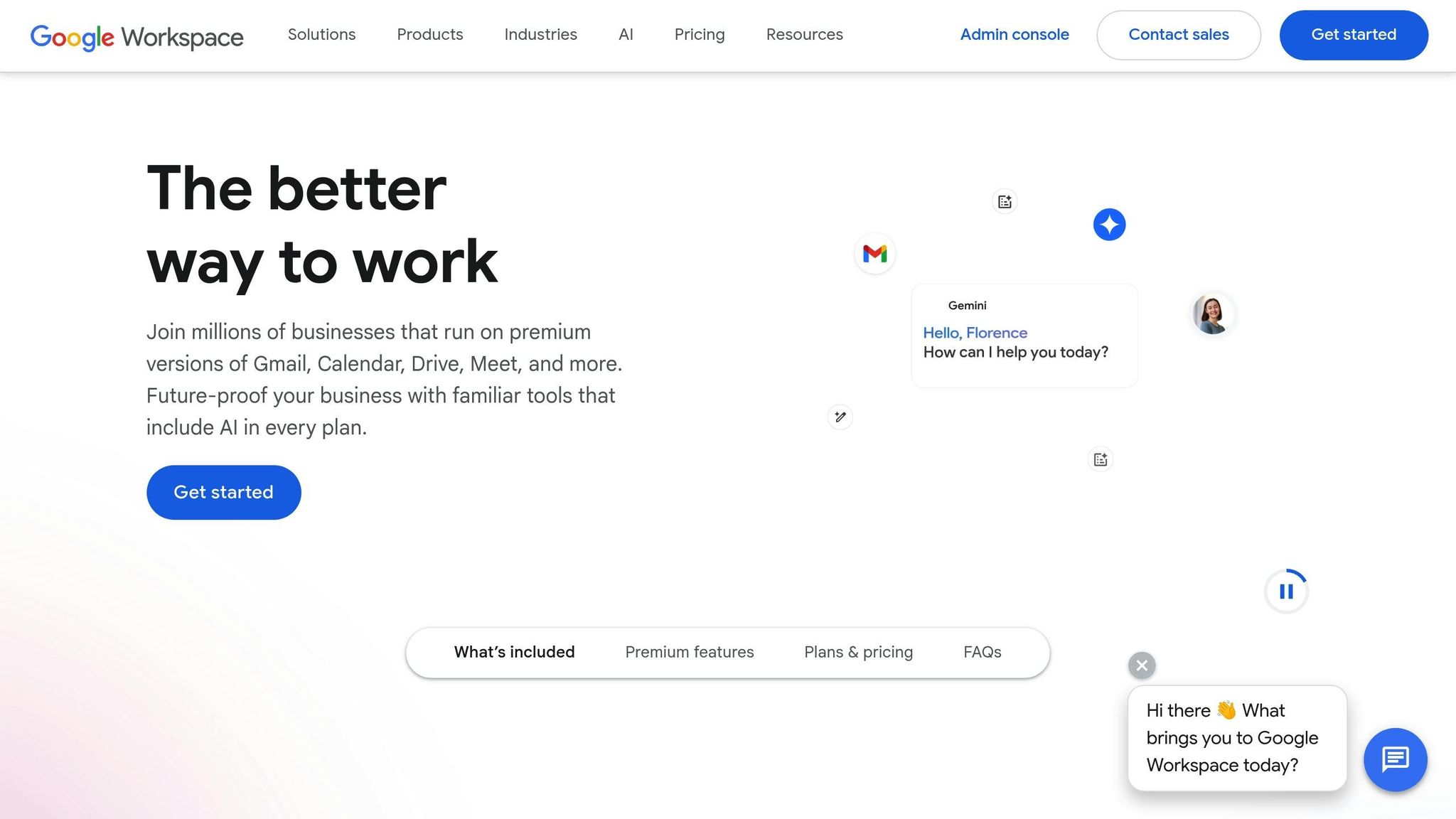
For startups that live and breathe Google Workspace, Zenphi’s native integration with tools like Gmail, Google Drive, Google Sheets, Google Admin, and Google Docs is a game-changer. This deep compatibility ensures that teams can automate workflows without disrupting their existing processes. Additionally, Zenphi simplifies email-based workflows by using AI to extract structured data from emails, eliminating the need for tedious manual data entry. While its focus is operational workflows rather than marketing, its seamless integration and straightforward functionality make it an attractive option for startups.
Zenphi’s pricing model is designed with startups in mind. It offers flat, usage-based rates in USD, starting at entry-level with no per-seat fees. This flexibility allows businesses to scale their automation efforts as needed, making it easier for early-stage companies to manage costs while expanding their capabilities.
For startups in industries with strict regulatory requirements - such as finance or healthcare - Zenphi offers strong compliance features. Its embedded AI ensures workflows adhere to governance standards, providing peace of mind when handling sensitive data. These capabilities make Zenphi particularly appealing for organizations that must balance innovation with regulatory compliance.
Source:
To help you choose the right AI solution, here’s a detailed breakdown of features, pricing, and security across various platforms. This comparison highlights the strengths and use cases for each option, making it easier to find the best fit for your needs.
| Platform | Starting Price (USD) | Key Strengths | Best For | Governance & Security |
|---|---|---|---|---|
| prompts.ai | $0/month (Pay-As-You-Go) | Access to 35+ LLMs, FinOps cost tracking, up to 98% cost savings, no recurring fees with TOKN credits | Startups scaling AI with multi-model access and tight budgets | Enterprise-grade audit trails, compliance enforcement, secure data handling |
| Zapier | $19.99/month | 7,000+ app integrations, beginner-friendly interface, quick setup | Early-stage startups automating simple workflows | Basic security features, suitable for non-sensitive data |
| Make | $9/month | Visual workflow builder, handles complex logic, affordable pricing | Startups needing custom automation with moderate tech skills | Standard security protocols, GDPR compliant |
| Microsoft Power Automate | $15/user/month | Deep integration with Microsoft 365, AI Builder for custom models | Startups embedded in the Microsoft ecosystem | Enterprise compliance, Azure security standards |
| Workato | Custom pricing (enterprise-focused) | Advanced integrations, recipe templates, robust API connections | Growth-stage startups with complex integration needs | Strong governance, SOC 2 Type II certified |
| n8n | $0 (self-hosted) / $20/month (cloud) | Open-source flexibility, full workflow customization, self-hosting option | Technical teams seeking complete control over automation | Self-managed security for self-hosting, standard cloud security |
| Zenphi | Flat usage-based rates | Native to Google Workspace, AI-powered email data extraction, no per-seat fees | Startups using Google Workspace, regulated industries | Built-in compliance for finance and healthcare sectors |
This table offers a clear comparison to help you evaluate which platform aligns with your technical needs, budget, and security requirements.
Selecting the right AI solution isn’t about chasing the platform with the most features - it’s about aligning tools with your startup’s current growth stage and tackling specific operational hurdles. For instance, a seed-stage startup focused on automating customer emails has vastly different priorities than a Series B company managing intricate data pipelines.
Today, 88% of small and medium businesses rely on AI for tasks like data integration and automating processes, with 84% reporting significant time savings that free up hours each week for more strategic work. Startups that embraced AI in their operations or products by early 2025 were twice as likely to secure follow-on funding compared to others. Notably, over 40% of funding deals in 2024 involved AI-driven startups - a sharp 60% increase since 2020. These figures highlight how adopting AI strategically can attract investor confidence and fuel growth.
However, successful AI adoption isn’t just about having the technology - it’s about implementing it wisely. Seamless integration with your existing tools is crucial to avoid IT bottlenecks that could slow progress. Additionally, managing costs effectively and ensuring compliance with security and regulatory standards are essential, especially as your business scales.
Different AI platforms cater to varying needs. Early-stage startups often benefit from straightforward automation tools that don’t require deep technical expertise, while growth-stage companies might seek advanced integrations. Technical teams may lean toward platforms offering open-source flexibility or self-hosting options. The key is to evaluate your current challenges, identify essential features, and ensure the platform can scale alongside your business.
Define what success means for your team - whether it’s shortening customer response times, automating repetitive tasks, or gaining actionable insights from data. The right AI tools don’t just streamline workflows; they transform them, turning manual processes into scalable, intelligent systems that grow with your ambitions.
To choose the right AI platform for your startup, begin by clearly defining your objectives. Are you aiming to streamline workflows, enhance customer interactions, or gain insights from data? Once you have a clear focus, search for platforms that provide intuitive tools, such as pre-trained models or low-code interfaces, to make implementation smoother and reduce technical hurdles.
Make sure to select options that are built to grow with your business, offer robust security, and integrate seamlessly with your current systems. Look for platforms that can deliver tangible results quickly, ensuring a faster return on your investment. If you're feeling uncertain about where to start, reaching out to industry experts or collaborating with academic institutions can help bridge any gaps in expertise.
The cost of deploying AI solutions in a startup can fluctuate widely, typically ranging from $20,000 to over $500,000. This depends on factors like project complexity, data needs, and infrastructure requirements. Beyond initial expenses, startups should also budget for ongoing costs such as cloud services, acquiring data, and hiring or upskilling AI professionals.
To keep expenses under control, consider using pre-built AI models, optimizing cloud resources, and gradually scaling your solutions. Thoughtful planning and focusing on must-have features can help you maintain your budget while still delivering meaningful outcomes.
AI tools are transforming how businesses navigate compliance in regulated industries. By automating tasks such as monitoring, detecting anomalies, and managing documentation, these tools minimize the chances of human error while ensuring consistency across operations. With real-time data analysis, businesses can quickly spot and address potential issues, staying ahead of compliance challenges. Additionally, automated systems help enforce regulations and maintain comprehensive audit trails.
These capabilities not only simplify compliance efforts but also give businesses the assurance they need to meet industry standards with confidence.