Pay As You Go - AI Model Orchestration and Workflows Platform



AI orchestration platforms simplify and manage the growing complexity of artificial intelligence tools, models, and workflows. By centralizing operations, these platforms help businesses reduce costs, maintain security, and improve efficiency. Choosing the right platform can save up to 98% on AI-related expenses while ensuring compliance and scalability. Here's a quick look at the top players in this space:
| Platform | Key Strengths | Pricing Model | Deployment Options |
|---|---|---|---|
| Prompts.ai | 35+ LLMs, TOKN credits, cost savings | Pay-as-you-go | Cloud-based, scalable |
| IBM Watsonx | Governance, hybrid deployments | Custom enterprise | Hybrid, single-tenant |
| Microsoft Copilot | Microsoft ecosystem integration | Subscription-based | Cloud, hybrid |
| Palantir AIP | Data integration for large enterprises | Custom enterprise | Customizable |
| Google Vertex AI | GCP integration, low-code workflows | Usage-based | Cloud-native |
| Appian | Private AI, process automation | Enterprise-grade | Cloud, on-premises, hybrid |
| Kore.ai | Multi-agent orchestration, templates | Flexible enterprise | Cloud, hybrid, on-premise |
Each platform caters to specific business needs, from cost management to robust governance. Evaluate your priorities - cost, compliance, or integration - and select the platform that aligns with your goals.
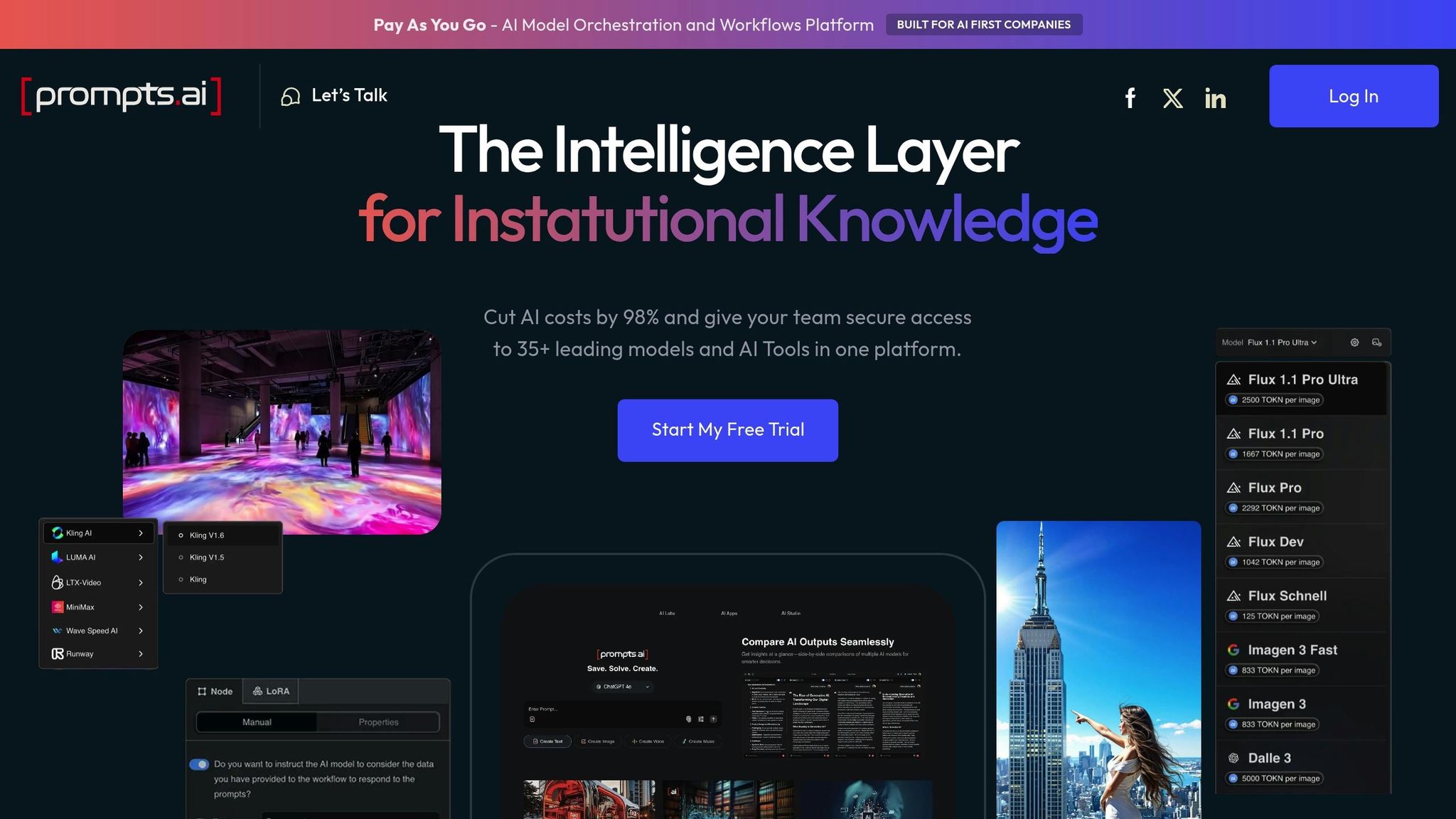
Prompts.ai serves as a powerful enterprise-grade platform designed to bring together over 35 top-tier large language models within a single, secure interface. By addressing the challenges of managing multiple AI tools and navigating governance complexities, it simplifies operations for organizations ranging from Fortune 500 companies to creative agencies, helping them streamline their workflows and improve efficiency.
Prompts.ai provides access to an impressive lineup of over 35 advanced AI models, including GPT-4, Claude, LLaMA, Gemini, and newer additions like GPT-5 and Grok-4. Its side-by-side comparison tool allows teams to quickly test and identify the best model for their specific needs, enhancing productivity by up to 10x. The platform also enables seamless switching between models or combining them within orchestrated workflows, ensuring compliance and performance requirements are met effortlessly. This extensive model library forms the backbone of its workflow automation capabilities.
Prompts.ai transforms one-off tasks into streamlined, repeatable workflows. By integrating with widely used business tools such as Slack, Gmail, and Trello, it enables automation across various departments. In 2025, prominent industry leaders like Mohamed Sakr (Founder, The AI Business) and Steven Simmons (CEO & Founder) leveraged features like "Time Savers" and LoRAs to significantly cut project timelines.
"With Prompts.ai's LoRAs and workflows, he now completes renders and proposals in a single day - no more waiting, no more stressing over hardware upgrades." - Steven Simmons, CEO & Founder
The platform offers different workflow creation capabilities based on subscription plans, ranging from basic functionality to unlimited workflow creation for enterprise users.
Governance is a core component of Prompts.ai's design. It incorporates best practices from SOC 2 Type II, HIPAA, and GDPR frameworks to ensure compliance and security. On June 19, 2025, the platform launched its SOC 2 Type II audit process, with continuous monitoring provided by its partnership with Vanta. A dedicated Trust Center offers real-time updates on the platform’s security posture, policies, and compliance, giving users full visibility and auditability of all AI interactions.
Prompts.ai takes a unique approach to cost management with its TOKN credit system, eliminating traditional subscription fees in favor of a pay-as-you-go model. This structure aligns costs with actual usage, helping organizations avoid the inefficiencies of conventional software licensing. By replacing over 35 disconnected AI tools, businesses can reduce software expenses by up to 95% in less than 10 minutes. The platform’s built-in FinOps tools provide real-time cost tracking and offer optimization strategies, ensuring every dollar spent on AI contributes directly to business goals.
The platform offers flexible deployment solutions to suit different organizational requirements. It supports cloud-based deployments with robust security controls and scalability to accommodate growing teams and expanding model usage. Pricing starts at $99 per member per month for business plans, while personal users can opt for a free Pay-As-You-Go plan.
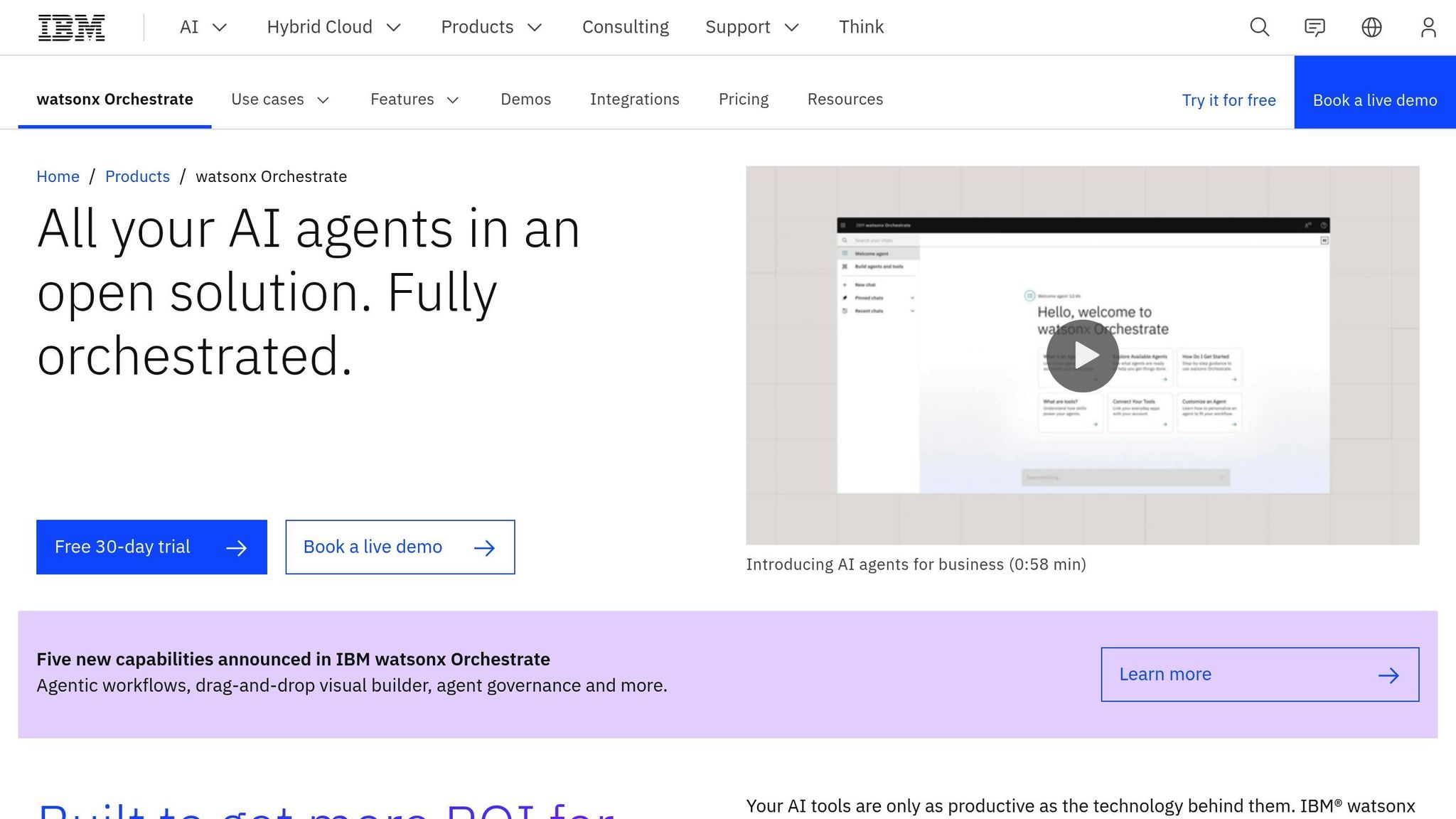
IBM Watsonx Orchestrate is an enterprise-grade AI orchestration platform that brings together watsonx.ai, watsonx.data, and watsonx.governance to simplify complex workflows, particularly in industries with strict regulatory requirements. By leveraging this integrated framework, Watsonx Orchestrate turns intricate operations into streamlined, automated processes.
Watsonx Orchestrate enhances efficiency by automating business workflows. It integrates AI capabilities directly with enterprise systems, enabling seamless multi-step processes without the need for extensive coding expertise.
Watsonx Orchestrate prioritizes governance and security through role-based access controls (RBAC), ensuring that AI workflows and sensitive data remain secure in highly regulated industries.
"Features like role-based access controls, hybrid cloud deployment options, and enterprise-grade compliance make it a fit for organizations where security and transparency are nonnegotiable." - Domo
The platform also provides detailed audit trails for all AI interactions and workflow executions. This feature is particularly vital for sectors such as financial services, healthcare, and government, where accountability and transparency are essential.
IBM offers a range of deployment configurations, including hybrid, single-tenant, and customer-managed cloud solutions, all of which are compatible with Red Hat OpenShift. These options address key concerns like data sovereignty, compliance, and operational stability.
"IBM combines watsonx Orchestrate with watsonx.ai, watsonx.data, and watsonx.governance, delivering strong governance, evaluation tooling, and hybrid deployment options that resonate with regulated industries." - MarketsandMarkets
This flexibility allows organizations to maintain control over their data while taking advantage of cloud-based AI orchestration. It’s an ideal balance for companies seeking to innovate while adhering to regulatory standards.
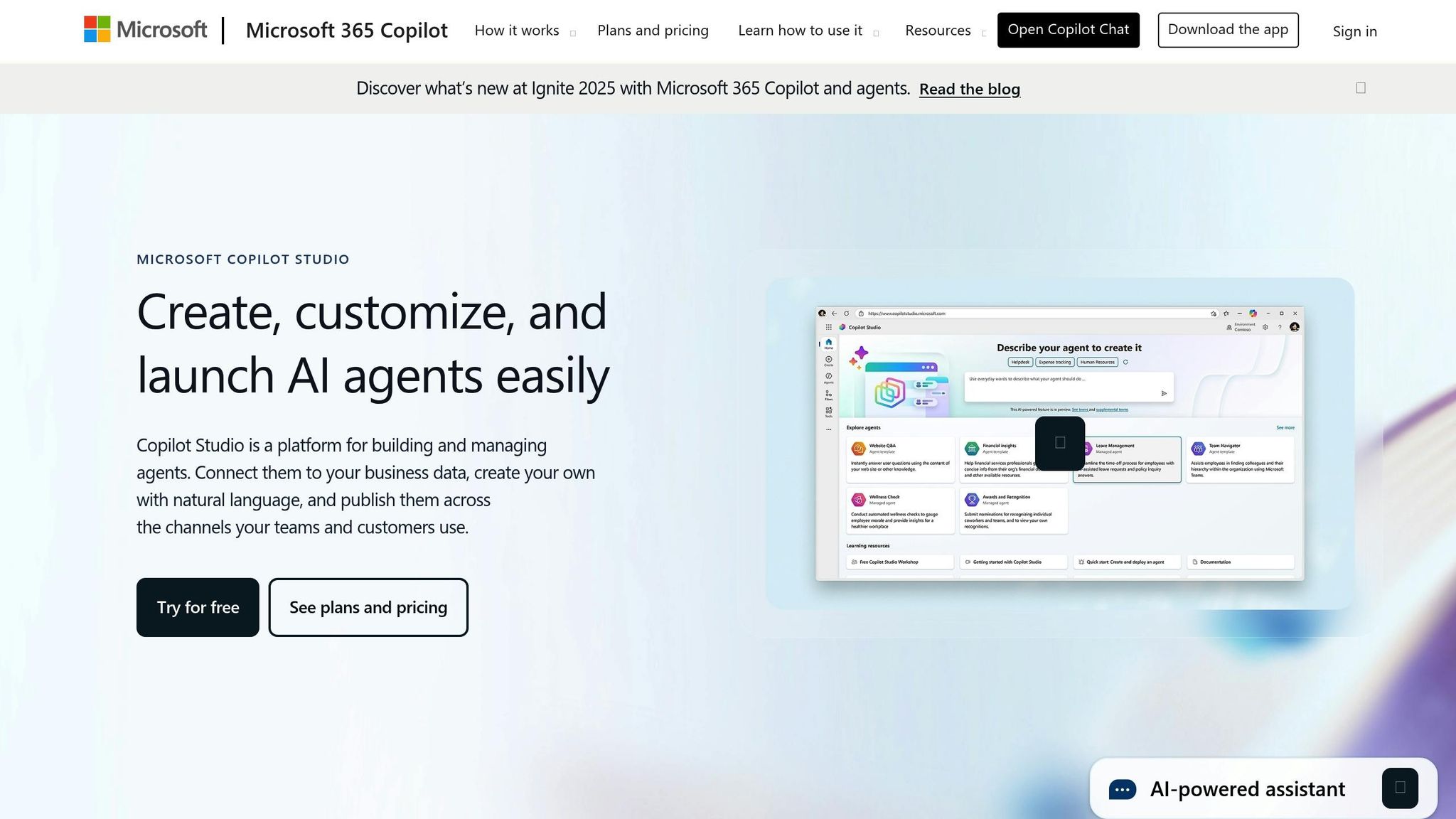
Microsoft Copilot Studio simplifies AI operations by tapping into its native ecosystem, making it a go-to solution for enterprises already using Microsoft services. This low-code platform is designed to build AI-powered conversational agents and automate workflows seamlessly within the Microsoft environment. With deep integration into Microsoft 365, Power Platform, and Azure, it caters to businesses that rely heavily on Microsoft's tools.
Copilot Studio incorporates GPT-4 and Azure OpenAI models, while also leveraging Azure Cognitive Services for specialized AI capabilities. Through Microsoft Graph connectors, the platform allows custom AI agents to access data from key tools like SharePoint, Teams, and Outlook.
For companies requiring diverse language models or specific functionalities, Azure AI Studio enables integration with external models. This flexibility ensures businesses can tailor their AI solutions while maintaining a unified orchestration strategy.
The platform shines in creating conversational workflows that streamline tasks across Microsoft services. AI agents can be programmed to handle a variety of actions, such as scheduling meetings, updating Dynamics 365 records, generating Power BI reports, or initiating Power Automate approvals.
With its visual workflow designer, even users without extensive coding expertise can build multi-step processes. The platform supports both synchronous tasks requiring immediate responses and asynchronous operations for background processes, making it adaptable to different business needs.
Security and compliance are core to Copilot Studio's design. It integrates Azure Active Directory for single sign-on and identity management, ensuring secure access. The platform also adheres to key compliance standards, including SOC 2, ISO 27001, and GDPR, while offering data residency controls.
To protect sensitive information, Data Loss Prevention (DLP) policies can be applied to AI interactions. Additionally, audit logging tracks all activities and user interactions, enabling detailed compliance reporting.
Deployment is highly flexible, with support for Microsoft Teams, web portals, mobile apps, and custom sites. Organizations can opt for cloud-hosted solutions through Microsoft's global data centers or hybrid deployments that keep sensitive data on-premises while utilizing cloud-based AI features.
The platform also accommodates multi-tenant and single-tenant setups, allowing businesses to balance cost efficiency with data isolation. Integration with Microsoft Viva ensures AI assistance is embedded directly into daily workflows, enhancing productivity within the employee experience platform.
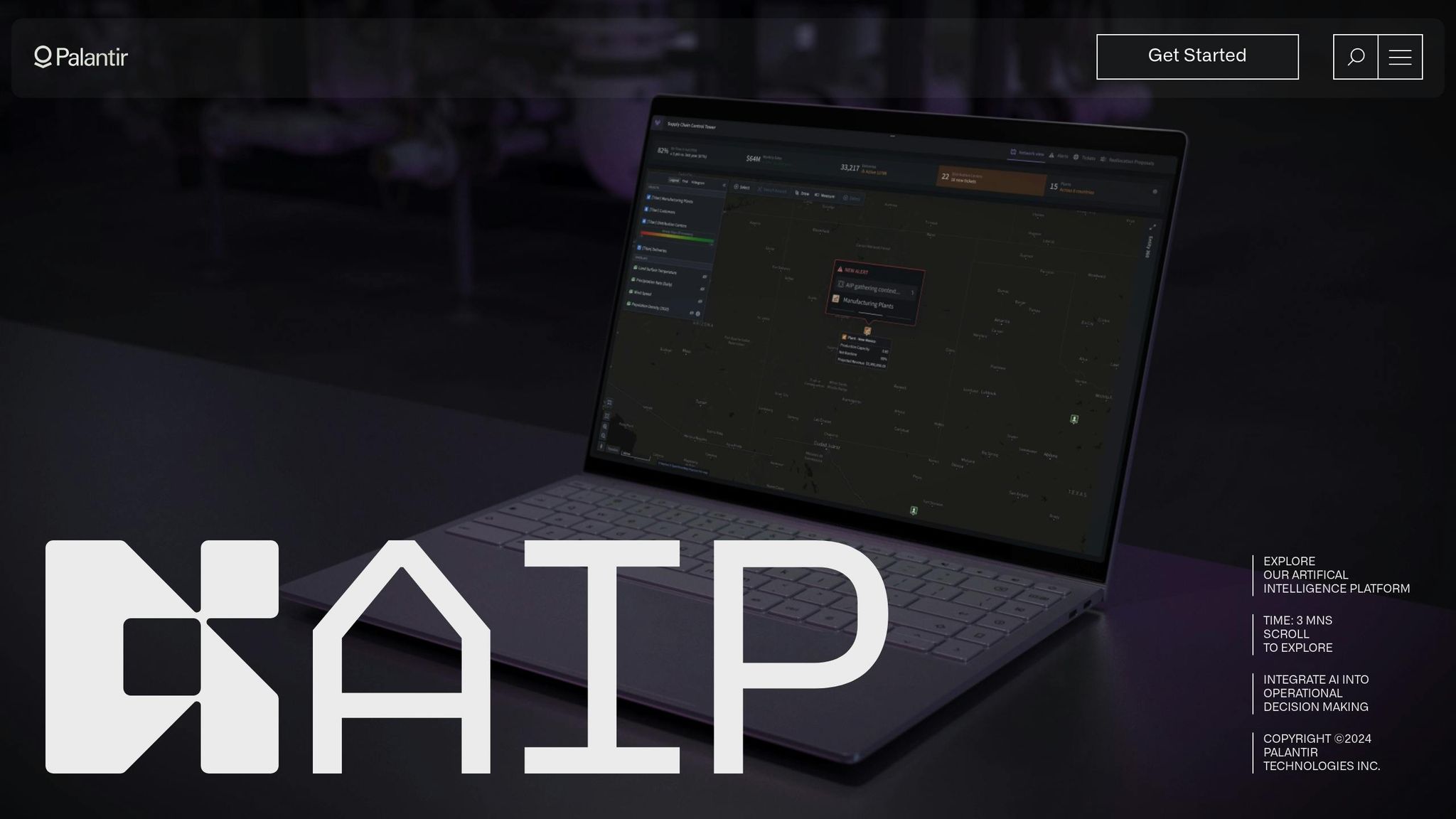
Palantir AIP (Artificial Intelligence Platform) is designed with enterprise needs in mind, offering robust support for large-scale, high-stakes operations. Drawing on Palantir's extensive background in data integration and analytics, this platform simplifies AI workflows, even in the most intricate, multi-domain settings.
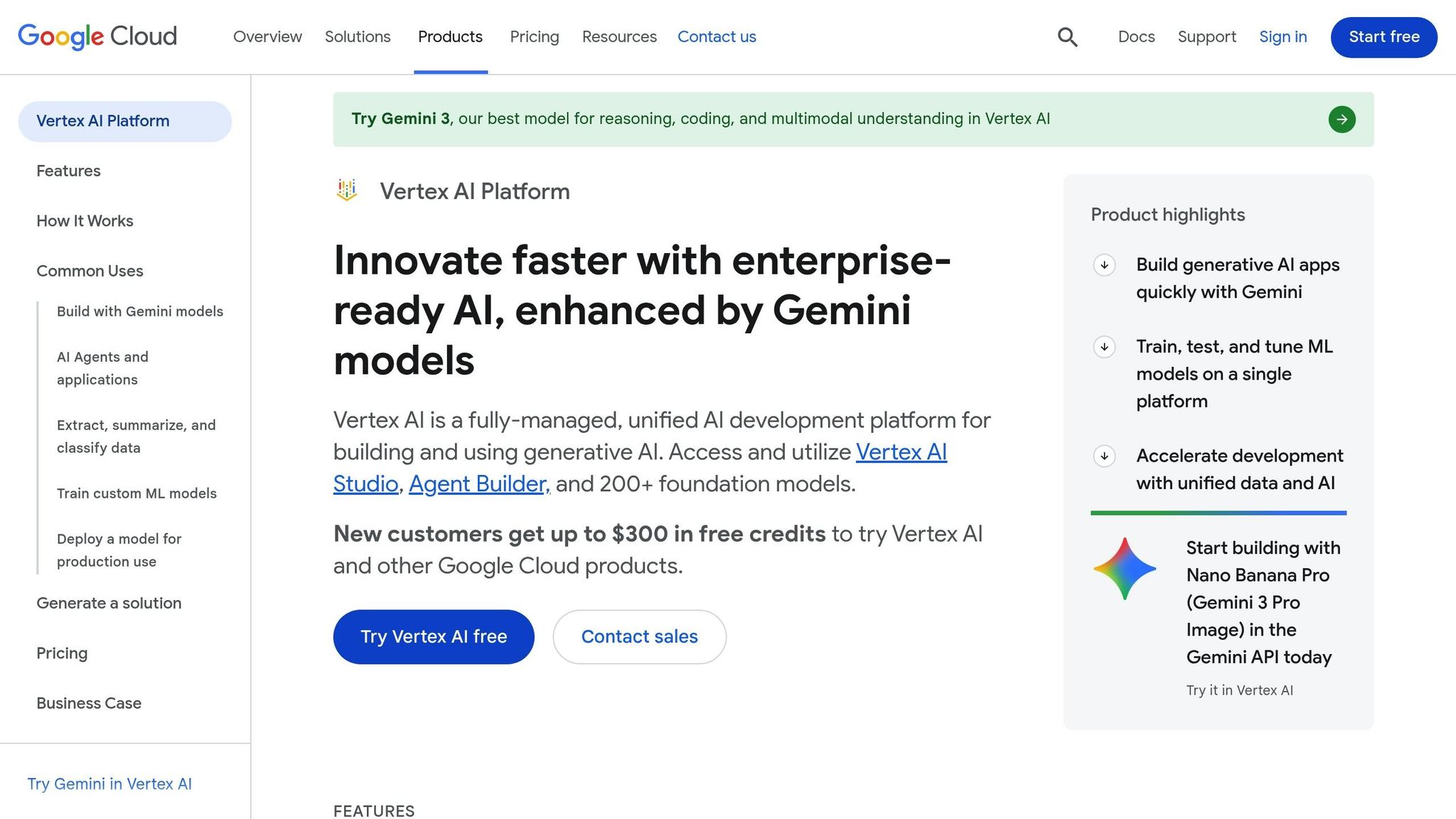
Google Vertex AI Agent Builder is a toolset designed for AI automation, deeply integrated into the Google Cloud Platform (GCP) ecosystem. With a 4 out of 5 stars rating for enterprise AI automation, it stands out as a reliable option for businesses.
The platform simplifies the creation of AI agents with its low-code features, enabling teams to build workflows without extensive coding. Its seamless connection to GCP data and models enhances development efficiency.
Vertex AI Agent Builder integrates tightly with Google's AI ecosystem, offering access to both multi-modal and custom models. This flexibility allows businesses to create tailored, fine-tuned solutions.
The low-code design of Vertex AI makes it accessible for teams without deep technical expertise. Acting as a workflow builder, it connects directly to GCP data and models, reducing latency and improving performance. This setup enables workflows to leverage existing GCP services while supporting governance controls for better oversight.
Vertex AI includes built-in data governance capabilities tailored for AI agents. These features ensure organizations can maintain control and compliance in their AI implementations.
As a cloud-native platform, Vertex AI Agent Builder integrates seamlessly with GCP infrastructure. For companies already using GCP, this means operational ease and consistent governance. However, the reliance on GCP could lead to vendor lock-in, which organizations should carefully consider.
"Vertex AI excels in Google Cloud–based AI development." - vellum.ai
The platform follows a usage-based pricing model that aligns with GCP's billing structure. For organizations familiar with GCP's cost management, this approach makes expenses more predictable.
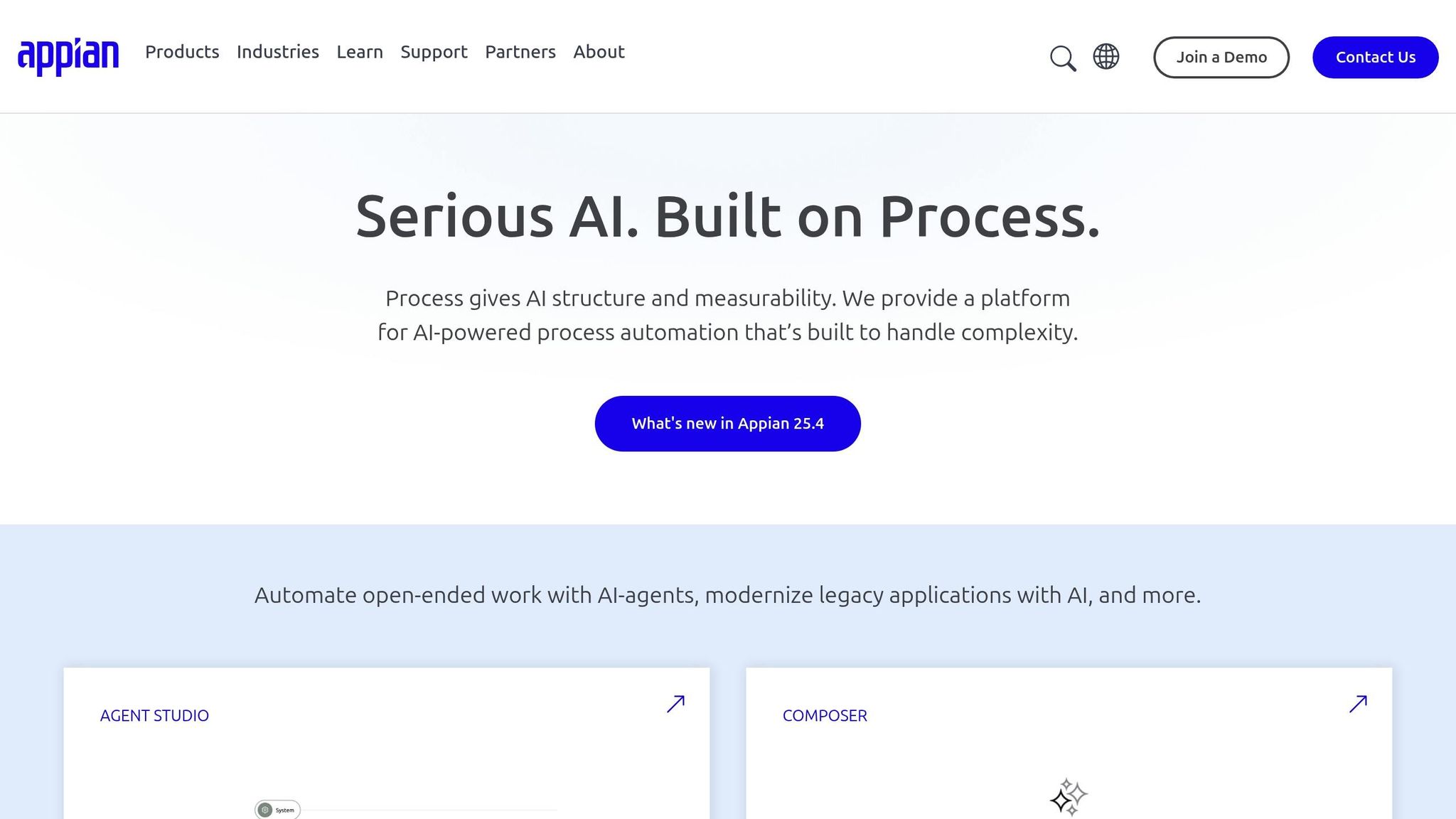
Appian stands out among AI orchestration platforms with its emphasis on process automation and its use of "private AI" to improve operations, cut costs, and enhance customer interactions. This AI-powered platform is built to simplify organizational complexities by combining process orchestration, data unification, and AI integration into seamless workflows.
Appian streamlines intricate operations by embedding AI into workflows that connect various systems. Its data fabric eliminates data silos, making automated decision-making more efficient and accessible.
With a focus on "private AI", Appian prioritizes data privacy and security, ensuring sensitive information remains protected throughout AI-driven processes.
Appian caters to mid-to-large enterprises with enterprise-grade pricing. While it offers flexibility in deployment, specific options - such as cloud, on-premises, or hybrid - are not detailed.
Details about Kubiya AI's methods for workflow automation, governance, and deployment are sparse. For the most accurate and up-to-date information, it's best to refer directly to the company's official resources. This limited availability of information sets it apart from other platforms that provide more in-depth insights.
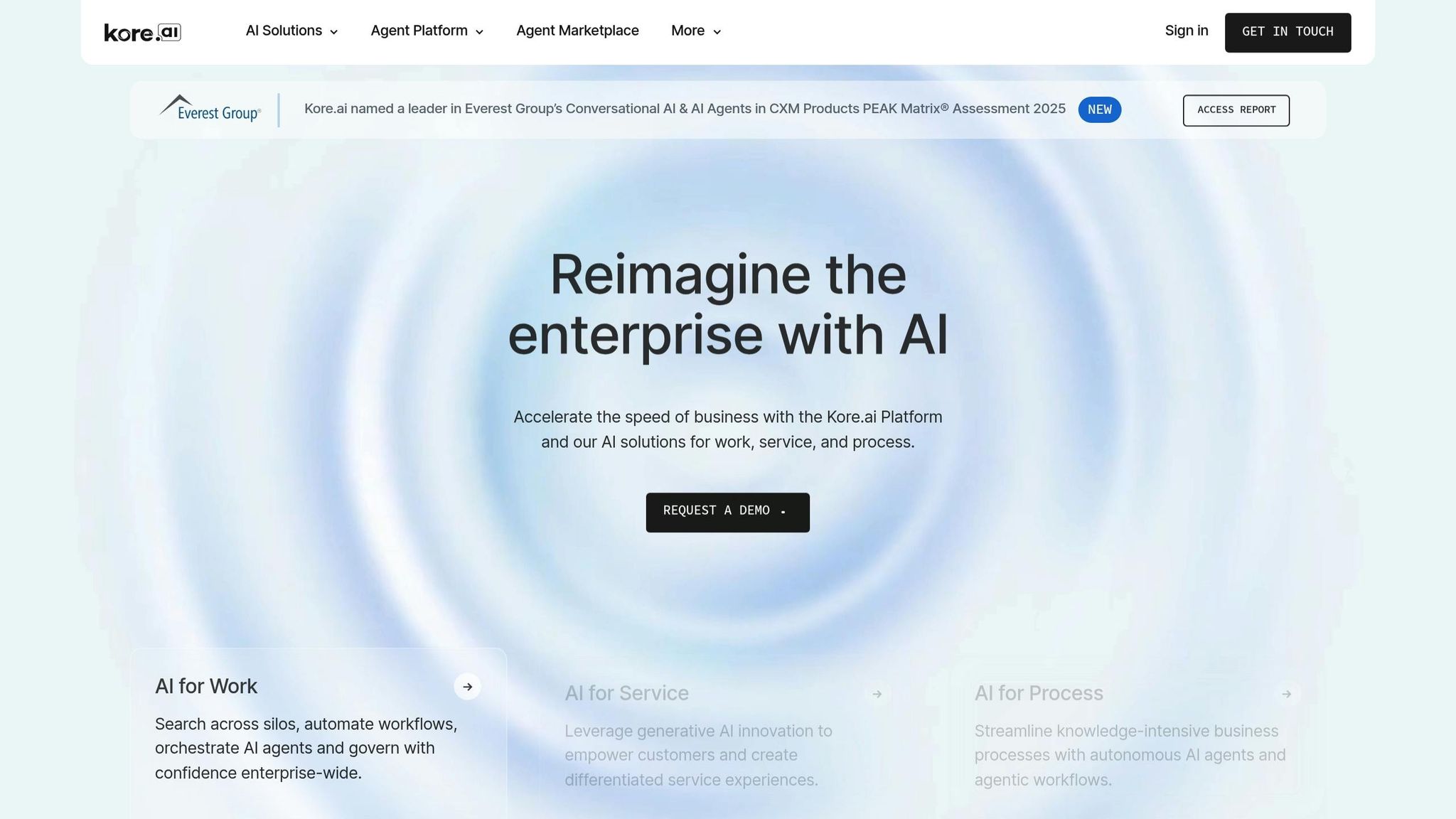
Kore.ai stands out as an AI orchestration platform designed to help enterprises deploy autonomous AI agents across various functions. Its focus on multi-agent orchestration enables AI agents to collaborate effectively, share both long- and short-term memory, and manage tasks ranging from straightforward operations to intricate decision-making.
Pfizer has implemented 60 AI agents globally across its research, development, medical, commercial, and manufacturing divisions. Vik Kapoor from Pfizer shared:
"Since we started with Kore.ai, we've deployed 60 AI agents across the enterprise - covering research, development, medical, commercial, and manufacturing across global markets and multiple languages. We needed a scalable platform, and these agents will only continue to become more intelligent."
This endorsement illustrates Kore.ai's ability to support large-scale enterprise operations and highlights its strong workflow automation capabilities.
Kore.ai's AI for Work solution connects seamlessly with business systems to activate agentic RAG (retrieval-augmented generation) searches. Meanwhile, its AI for Process feature simplifies complex tasks through user-friendly no-code or pro-code tools. Users can design workflows with the help of AI agent templates and over 100 pre-built components, speeding up automation. The platform coordinates multiple AI agents to handle large-scale business operations efficiently.
The impact is evident in real-world applications: Eli Lilly's Tech@Lilly service desk now resolves 70% of requests autonomously, while Autodoc achieved a 74% first-call resolution rate, significantly reducing costs.
Kore.ai pairs its advanced automation with a strong emphasis on governance and security. The platform offers enterprise-grade features like role-based access control (RBAC), versioning, and detailed audit logs. It also includes observability tools such as agent tracing, real-time analytics, and event monitoring. Highlighting its commitment to secure AI adoption, Microsoft noted in a strategic partnership:
"Our strategic partnership with Kore.ai marks a significant milestone in our mission to accelerate enterprise AI transformation. By integrating Kore.ai's advanced conversational and GenAI capabilities with Microsoft's robust cloud and AI services, we are enabling enterprises to adopt AI at scale and with enterprise-grade security."
Kore.ai provides flexible deployment options to ensure smooth integration with existing systems. The platform supports AWS, Microsoft Azure, Google Cloud, and on-premise setups. Strategic partnerships further enhance its capabilities: Kore.ai integrates with AWS services like Amazon Bedrock, Amazon Q, and Amazon Connect, as well as Microsoft's Azure AI Foundry, Microsoft Teams, Microsoft 365 Copilot, and Microsoft Copilot Studio. Nitin Rakesh, CEO of Mphasis, remarked:
"We are proud to be a strategic implementation partner of Kore.ai, and we feel especially confident knowing that Kore.ai's foundation on AWS, delivering unmatched reliability and scalability."
Kore.ai's ecosystem-agnostic approach ensures seamless integration with core business applications like Salesforce, SAP, and Epic, as well as unstructured data sources such as SharePoint, Slack, Confluence, and Google Drive. This flexibility allows enterprises to implement AI orchestration without disrupting their existing workflows.
Selecting the right AI orchestration platform means carefully weighing factors like cost, model options, workflow automation, integration capabilities, and governance.
Prompts.ai offers a compelling solution with its enterprise-grade platform that unifies multiple top-tier AI models into one secure, user-friendly interface. Its pay-as-you-go pricing structure ensures costs align with actual usage, which could lead to savings of up to 98%. This practical approach to cost management sets a high standard for comparison with other platforms.
Other platforms bring their own strengths to the table, such as robust enterprise integration, low-code automation tools, and advanced analytics. To find the best fit, consider how each platform aligns with your existing technology stack, budget, and operational workflows. Ensuring the platform supports scalable, compliant AI adoption is essential for long-term success.
Ultimately, balancing cost efficiency, model flexibility, and seamless workflow integration will guide organizations toward the platform that best meets their needs.
The AI orchestration landscape offers a range of solutions tailored to meet diverse organizational priorities. For enterprises operating under strict regulations, selecting a platform with strong governance capabilities - such as detailed audit trails and robust data security - is essential for maintaining compliance and deploying AI responsibly.
For those prioritizing cost management, Prompts.ai stands out with its flexible pay-as-you-go TOKN credit system, which ties expenses directly to actual usage. This approach simplifies budgeting while supporting scalable AI adoption. It's also important to assess how well a platform integrates with your existing technology stack. Some solutions are optimized for specific infrastructures, while others excel in handling data-heavy tasks and advanced machine learning workflows. Comparing fixed monthly pricing with usage-based models can further ensure your financial planning aligns with your operational goals.
Ultimately, choosing the right AI orchestration platform means finding the right balance between security, compliance, integration, and cost efficiency. Taking the time to evaluate these factors - alongside the platform’s learning curve and available support - can pave the way for a successful and sustainable AI strategy.
When choosing an AI orchestration platform, it’s important to focus on factors that align with your business needs. Start with integration capabilities - the platform should connect effortlessly with your current tools and systems to avoid disruptions. Automation features are another key aspect, as they streamline workflows and cut down on manual tasks.
Equally important are security and governance measures. Protecting sensitive data and staying compliant with regulations should be non-negotiable. Also, evaluate the platform’s scalability and flexibility to ensure it can grow alongside your business. Finally, don’t overlook ease of use. A straightforward, intuitive interface can simplify adoption and save your team valuable time.
AI orchestration platforms simplify operations by automating repetitive tasks, cutting down on manual work, and making better use of available resources. The result? Lower operational expenses and quicker workflows, freeing up teams to tackle more strategic and impactful projects.
These platforms also boost accuracy and minimize errors, helping businesses save both time and money while increasing overall efficiency. Streamlined processes not only improve internal productivity but also enhance customer experiences, paving the way for sustained growth and profitability.
AI orchestration platforms generally provide three deployment options: multi-tenant SaaS, single-tenant SaaS, and customer-managed or on-premises solutions. Each comes with its own set of benefits and considerations, particularly when it comes to data security and compliance.
The best choice depends on your organization’s priorities in areas such as security, compliance, and operational needs.