Pay As You Go7 天免费试用;无需信用卡
获取我的免费试用版
November 21, 2025

Best AI Orchestration Solutions for Scalability

Chief Executive Officer

December 20, 2025

AI orchestration ensures efficient management of workflows across tools, enabling businesses to scale without losing control. As enterprises face challenges like tool sprawl and rising costs, selecting the right platform becomes critical. This article compares 10 AI orchestration platforms, highlighting their strengths in scalability, governance, integration, and cost management.

Key Takeaways:

  • Prompts.ai: Unifies 35+ LLMs, reduces costs by up to 98%, and offers strong governance.
  • Kubiya AI: Automates DevOps workflows with modular agents for tools like Kubernetes and Terraform.
  • Domo: Combines AI orchestration with business intelligence for seamless data management.
  • Apache Airflow: Open-source, code-driven workflows for scalable MLOps.
  • IBM watsonx Orchestrate: Enterprise-grade reliability and compliance for regulated industries.
  • Vellum AI: Focuses on LLM optimization but offers limited details.
  • Prefect: Python-first orchestration for AI and machine learning workflows.
  • SuperAGI: Employs autonomous agents for dynamic task allocation.
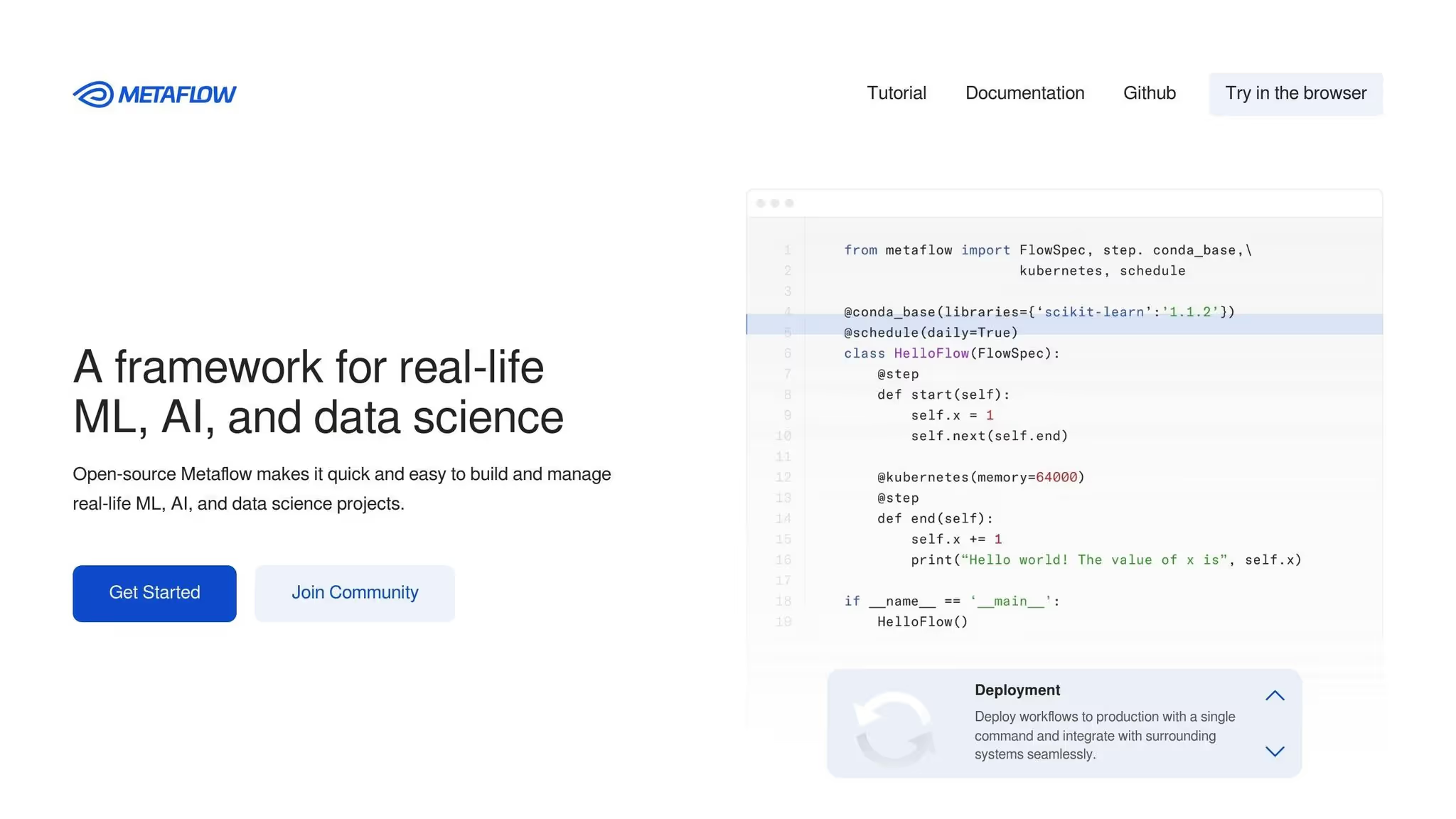
  • Metaflow: Built by Netflix, simplifies large-scale data science workflows.
  • Dagster: Focuses on data quality and reliable pipelines in AI processes.

Quick Comparison

Platform Key Features Best For Cost Model
Prompts.ai 35+ LLMs, cost reduction, enterprise security Large enterprises Pay-as-you-go TOKN credits
Kubiya AI Modular agents, DevOps automation AI-first companies Usage-based
Domo Business intelligence integration Data-driven organizations Usage-based
Apache Airflow Open-source, customizable workflows Technical teams Infrastructure costs
IBM watsonx Orchestrate Enterprise-grade compliance, hybrid deployment Regulated industries Licensing fees
Vellum AI LLM optimization, developer-friendly tools AI development teams Unknown
Prefect Python-first, cloud-native Mid-size Python teams Free & paid tiers
SuperAGI Autonomous agents, real-time adjustments Research teams Early-stage pricing
Metaflow AWS-focused, data science workflows Data scientists AWS infrastructure costs
Dagster Data quality, pipeline reliability Data engineering teams Open-source, infra costs

Choosing the right platform depends on your team's technical expertise, budget, and operational needs. Whether you prioritize cost savings, governance, or scalability, there's a solution tailored for your goals.

The Future of AI Orchestration: How to Avoid the Tool Trap (It’s Costing Companies Millions)

1. Prompts.ai

Prompts.ai

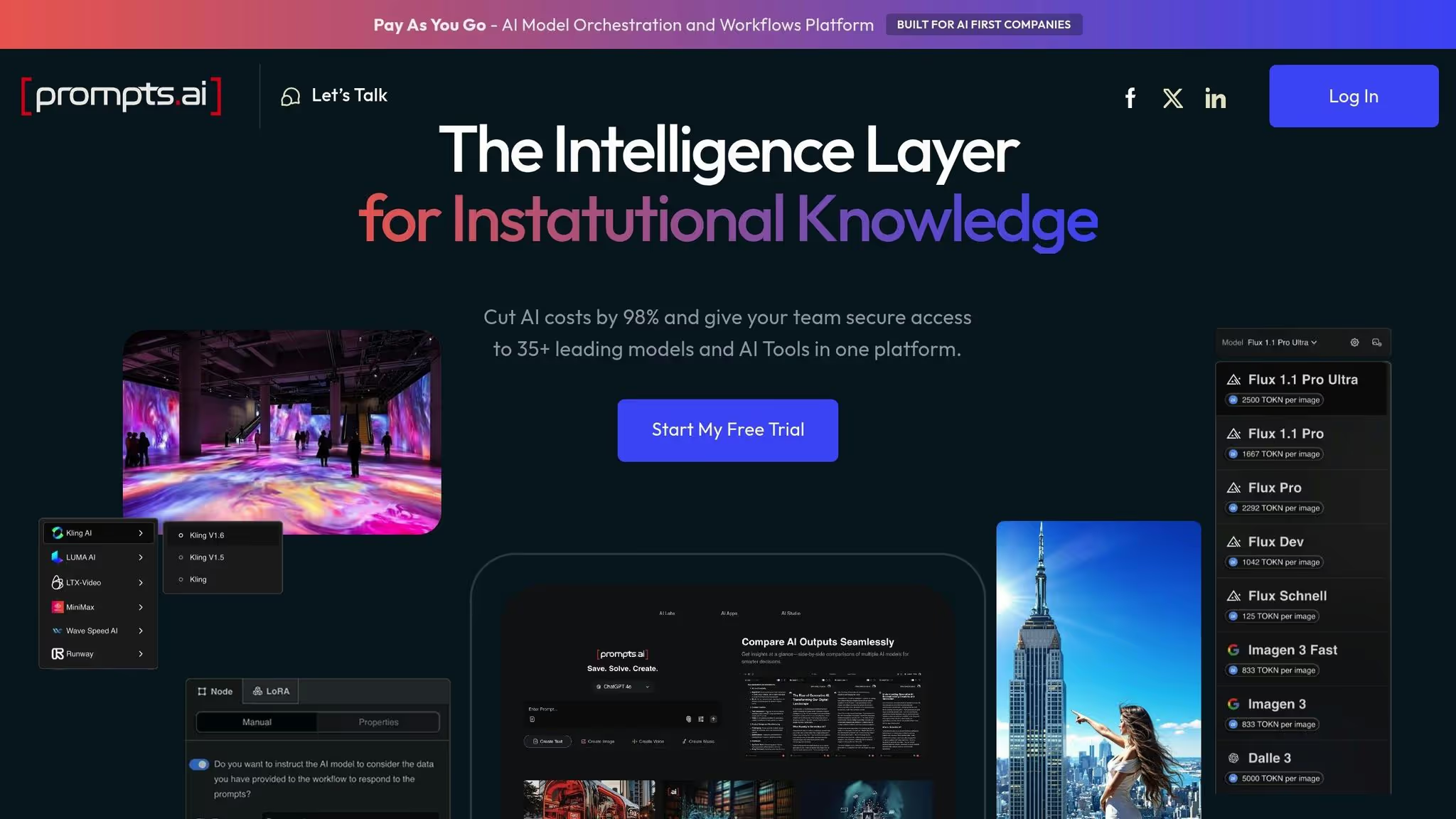
Prompts.ai is an enterprise AI orchestration platform designed to tackle the challenges of scalability, cost management, and governance. By bringing together over 35 advanced language models - including GPT-5, Claude, LLaMA, and Gemini - into a single secure interface, it simplifies AI operations for businesses.

Scalability Features

Prompts.ai’s architecture is built to handle growth with ease, allowing organizations to scale from small projects to enterprise-wide applications in just minutes. Teams can quickly add models, users, and workflows, a crucial advantage in the fast-moving U.S. market. The platform also offers side-by-side model comparisons, enabling teams to assess multiple models simultaneously. This ensures efficient use of resources as operations grow.

Interoperability

The platform eliminates AI silos by seamlessly integrating with widely-used tools like Slack, Gmail, and Trello. This integration turns isolated experiments into repeatable, scalable workflows that fit into existing processes. For instance, in May 2025, a freelance AI director used Prompts.ai to orchestrate a creative workflow for a promotional video, leveraging tools like Google DeepMind Veo2 and Midjourney V7. Similarly, in February 2025, a BMW concept car video was created by combining MidJourney-generated visuals with Prompts.ai’s unified interface for streamlined production.

Governance and Security

Security and compliance are at the core of Prompts.ai, with adherence to SOC 2 Type II, HIPAA, and GDPR standards. The platform initiated its SOC 2 Type II audit on June 19, 2025, ensuring ongoing compliance through continuous monitoring with Vanta. Users can access real-time updates on security policies and controls via the Trust Center (https://trust.prompts.ai/). Centralized governance provides full visibility and auditability, strengthening trust and accountability in AI operations.

Cost Optimization

Prompts.ai addresses unpredictable AI expenses with its Pay-As-You-Go TOKN credit system, which can cut software costs by up to 98%. The platform’s built-in FinOps layer tracks every token and provides real-time spending insights, helping teams make informed, cost-effective decisions. By combining financial transparency with performance monitoring, Prompts.ai ensures AI operations remain both scalable and cost-efficient, making it a standout choice among orchestration solutions.

2. Kubiya AI

Kubiya AI

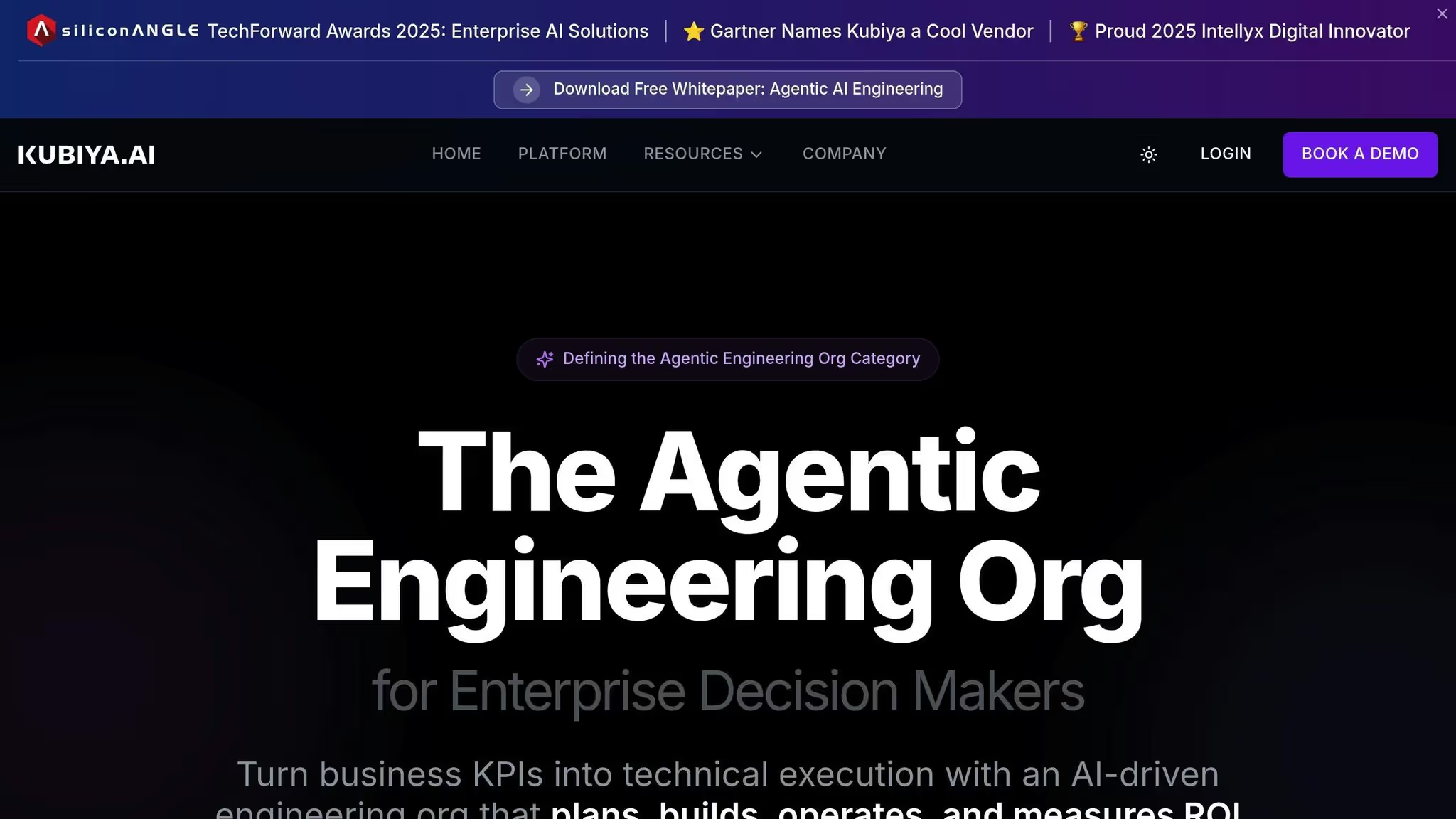
Kubiya AI provides a modular, multi-agent system designed to streamline DevOps automation. Its architecture is especially suited for organizations looking to expand their DevOps operations with smarter, automated workflows. By addressing integration and automation hurdles effectively, Kubiya AI serves as a powerful tool for scaling operations.

Scalability Features

Kubiya AI’s modular design allows it to deploy specialized agents tailored for tools like Terraform, Kubernetes, GitHub, and CI/CD pipelines. These agents work together to manage intricate workflows by maintaining continuous access to infrastructure, APIs, logs, and cloud platforms. This real-time visibility enables the platform to adjust automation strategies dynamically, ensuring it aligns with evolving infrastructure needs as organizations scale their operations.

Interoperability

The platform seamlessly integrates with leading cloud providers, collaboration tools, and monitoring systems. Through the Kubiya dashboard or CLI, users can securely connect services like AWS, Kubernetes, GitHub, and Jira for automated workflows. It also supports tools like Slack, enabling developers to issue natural language commands for automation tasks. For example, in enterprise settings, a developer might request a complex infrastructure setup via Slack, prompting Kubiya to handle Terraform deployments and manage approval processes automatically. Additionally, agents can configure specific tools, such as aws-ec2 and kubernetes, to ensure precise control over workflows.

Governance and Security

Kubiya AI prioritizes enterprise-grade security with features like Zero Trust architecture and Policy Enforcement. Role-based access control (RBAC) ensures that team members can only access resources and automation capabilities relevant to their roles. Secure authentication is further reinforced through single sign-on (SSO), which integrates seamlessly with existing enterprise identity systems. To maintain compliance and provide oversight, the platform includes detailed audit trails, offering comprehensive logs to monitor automation activities across the infrastructure.

3. Domo

Domo

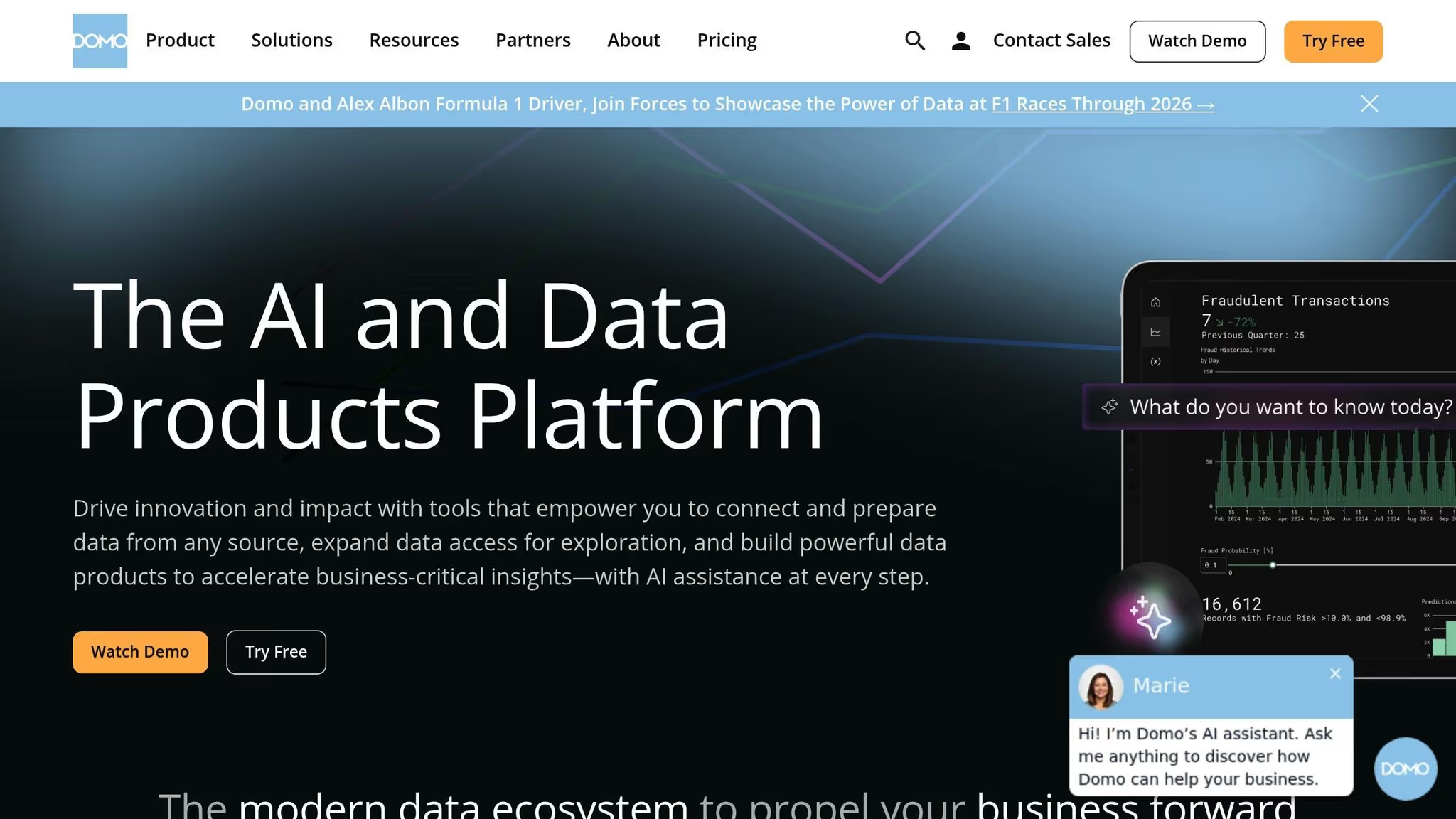
Domo continues to stand out in the world of AI orchestration by offering a cloud-based business intelligence platform that simplifies data management while meeting the demands of growing enterprises. By blending advanced analytics with AI-driven automation, Domo enables businesses to create workflows that scale effortlessly across departments and data sources, making it a powerful tool for managing complex AI processes.

Scalability Features

Domo’s cloud-native design, combined with its Magic ETL, ensures computing resources and data transformations automatically adjust to workload changes. This means the platform can handle sudden spikes in demand without requiring manual oversight. It processes data from thousands of sources simultaneously, all while maintaining consistent performance.

Organizations can set up automatic scaling triggers tied to data volume thresholds, ensuring resources are allocated efficiently during high-demand periods. This approach keeps processing times steady and predictable, even as data volumes grow.

Interoperability

Domo connects seamlessly with over 1,000 pre-built connectors and a REST API, making it easy to integrate with major cloud services like AWS, Microsoft Azure, and Google Cloud Platform. This allows businesses to expand their AI orchestration capabilities without abandoning their existing infrastructure.

For unique needs, development teams can use Domo’s SDK to create custom connectors, ensuring even proprietary tools and systems are fully integrated. Real-time data streaming further enhances its versatility, enabling immediate processing of data from IoT devices, social media platforms, and transactional systems. These features make Domo a central hub for scaling enterprise AI workflows.

Governance and Security

Security and governance are central to Domo’s platform. It adheres to stringent standards such as SOC 2 Type II and ISO 27001, offering granular access controls, automated data lineage, and detailed audit logs. Permissions can be assigned to specific datasets, dashboards, or tools, ensuring sensitive information remains protected.

Multi-factor authentication and single sign-on integration provide secure yet user-friendly access. Additionally, the platform’s data quality monitoring tools automatically detect and flag inconsistencies, ensuring the reliability of orchestrated workflows. These features add a layer of security while optimizing resource management.

Cost Optimization

Domo employs a usage-based pricing model, enabling organizations to pay only for what they use, avoiding unnecessary expenses. Detailed cost analytics, broken down by department or project, help businesses allocate budgets effectively and identify areas for optimization.

Features like intelligent caching and data compression reduce processing redundancies and storage requirements. The platform’s workload scheduling tools allow resource-intensive AI processes to run during off-peak hours when cloud computing rates are lower, leading to significant cost savings.

4. Apache Airflow

Apache Airflow

Apache Airflow has become a key player in the open-source workflow orchestration landscape, especially for organizations that need scalable solutions for their custom MLOps stacks. Its open-source foundation and code-driven design meet the growing demand for transparent and efficient AI orchestration in enterprise environments. With Airflow, developers can define intricate AI workflows as code, offering benefits like version control, reusability, and scaling across distributed systems.

Scalability Features

Apache Airflow's code-based workflow design is built for scalability, making it a strong choice for handling large-scale AI operations. Developers can programmatically define, schedule, and monitor pipelines, ensuring efficient dependency management and parallel execution - both critical for managing extensive AI workloads.

The platform shines when it comes to chaining multiple AI models into complex, multi-step systems capable of processing massive data sets. Its robust retry mechanisms and fault tolerance ensure workflows continue running smoothly, even when components fail.

Airflow also supports dynamic scaling by leveraging elastic cloud resources, allowing organizations to adjust their AI workflows based on demand. Its seamless integration with cloud platforms, APIs, and vector databases enables workflows to access diverse data sources and computing resources as needed. This adaptability makes it a dependable choice for handling unpredictable workloads while maintaining operational efficiency.

Interoperability

Airflow's modular, open-source architecture is particularly well-suited for custom MLOps stacks and applications involving large language models. It integrates easily with existing systems, avoiding the limitations of proprietary solutions - a significant advantage for businesses with complex technical needs.

Through its extensive library of operators and hooks, Airflow connects with virtually any system. This allows AI workflows to pull data from multiple sources, process it through various AI models, and deliver results to different endpoints - all within a single, unified workflow.

Governance and Security

Airflow complements its integration capabilities with strong governance features, offering complete transparency into workflows. This visibility is essential for troubleshooting complex AI processes and ensuring smooth operations. Its code-based approach also supports version control, enabling teams to track changes, maintain audit trails, and revert to earlier versions if needed. Such control is invaluable for organizations that prioritize rigorous AI model governance.

Cost Optimization

As an open-source platform, Apache Airflow eliminates licensing fees, making it a cost-effective solution for enterprise-grade orchestration. Organizations only pay for the infrastructure they use, which keeps costs manageable as they scale their AI operations.

Airflow’s efficient resource management and scheduling capabilities further reduce expenses by running workloads only when necessary. Its ability to orchestrate intricate computational workflows provides a reliable backbone for large-scale AI initiatives, all without the added costs of proprietary tools.

5. IBM watsonx Orchestrate

IBM watsonx Orchestrate

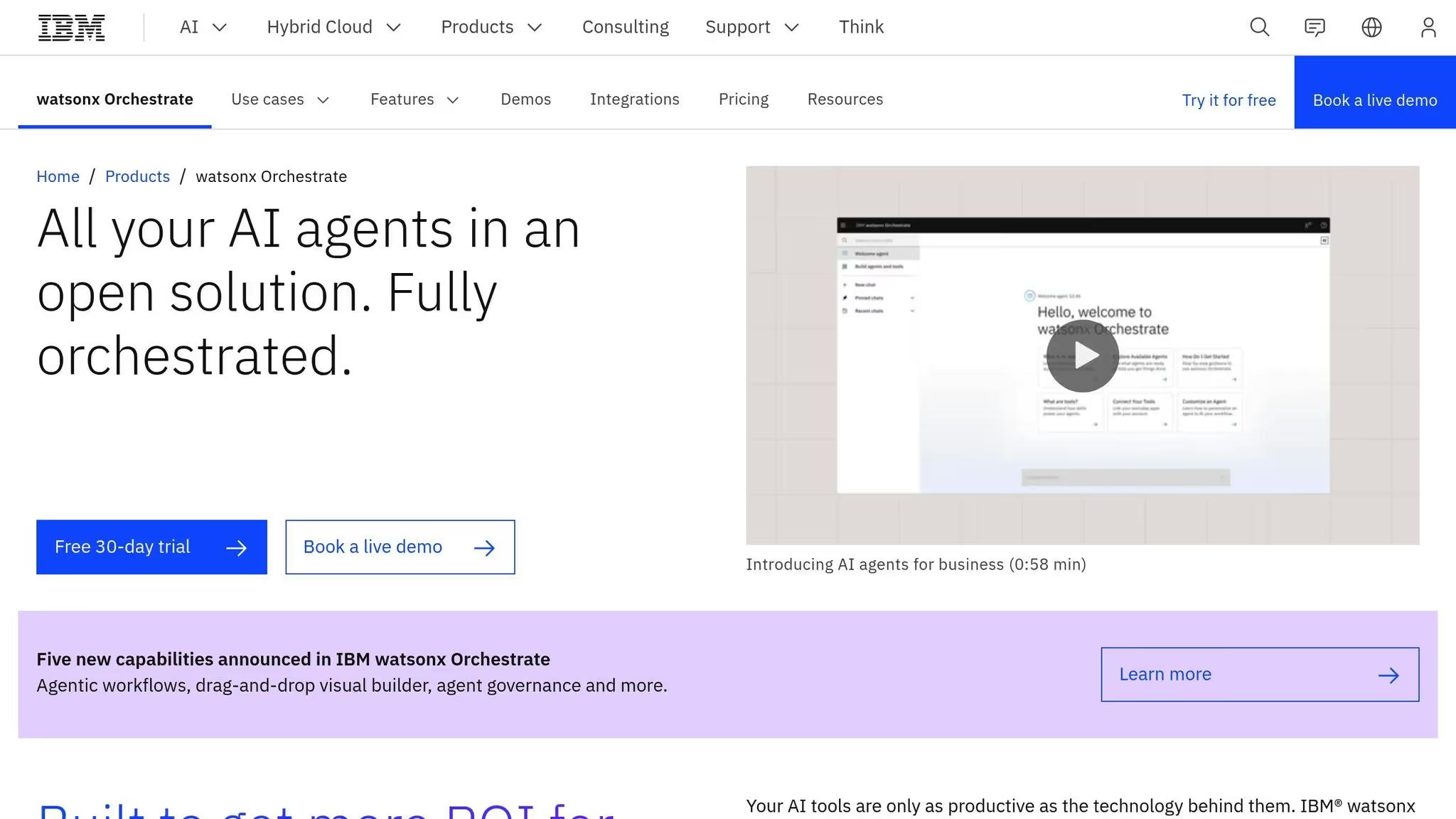
IBM watsonx Orchestrate is a purpose-built AI orchestration platform designed for enterprises in regulated industries. It combines IBM's deep enterprise expertise with advanced AI technology to create a secure and compliant solution. The platform is tailored to scale AI workflows efficiently while meeting the stringent requirements of large organizations.

Scalability Features

IBM watsonx Orchestrate delivers exceptional reliability, boasting uptime rates of up to 99.99%, which exceeds the industry standard of 99.9% uptime targeted by most AI orchestration tools. Its hybrid deployment capabilities allow businesses to scale effortlessly across cloud, on-premises, and mixed environments. This flexibility ensures that as AI initiatives grow, performance remains consistent and reliable. This robust foundation supports seamless integration and enhanced security, which are further explored below.

Interoperability

The platform simplifies AI orchestration by enabling workflows to be triggered using natural language inputs. This approach makes it accessible even to non-technical business users. It efficiently coordinates various backend systems, ensuring smooth data flow between enterprise applications. By integrating seamlessly with both IBM's ecosystem and third-party tools, it provides significant value for organizations already leveraging IBM technologies. This interoperability ensures streamlined operations and reinforces the platform's role in supporting scalable, secure workflows.

Governance and Security

Governance and security are at the core of IBM watsonx Orchestrate. The platform embeds compliance and governance features directly into its workflows, ensuring that AI operations align with organizational policies and regulatory requirements. With tools like role-based access controls and enterprise-grade compliance measures, it’s particularly suited for industries where security and transparency are paramount.

"Enterprises in regulated industries gravitate toward IBM's offering because of its strong governance framework. Features like role-based access controls, hybrid cloud deployment options, and enterprise-grade compliance make it a fit for organizations where security and transparency are nonnegotiable."
– Domo

For instance, a major financial institution used the platform to automate customer support and back-office tasks. Employees could use natural language inputs to initiate workflows, such as processing loan applications or handling service requests. Meanwhile, the platform managed backend systems and enforced embedded governance policies, reducing manual errors and streamlining operations.

Cost Optimization

In addition to its operational strengths, IBM watsonx Orchestrate offers meaningful cost-saving opportunities. Its deployment strategy allows organizations to optimize costs by strategically placing workloads - keeping sensitive tasks on-premises while utilizing cloud resources for less critical operations. This approach aligns with budgetary needs while maintaining security and performance. Furthermore, the platform’s high reliability minimizes costly downtime, reducing disruptions and associated expenses.

6. Vellum AI

Vellum AI

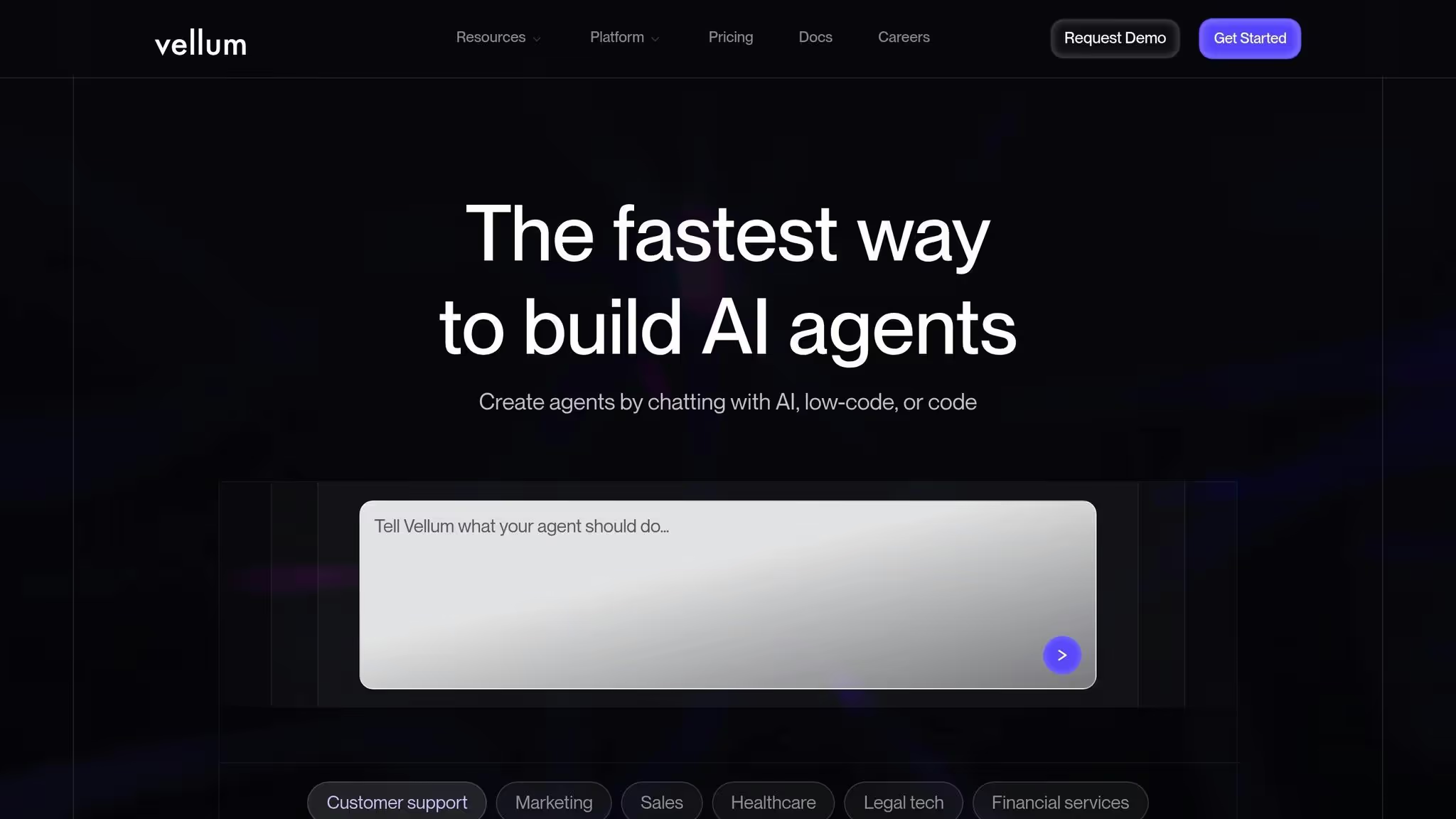
Vellum AI stands out as an AI orchestration platform, though it provides limited publicly available details about its capabilities. Information on its scalability, integration options, governance features, and cost management tools is sparse. For the latest insights into how Vellum AI can streamline AI workflows, reaching out to the vendor directly is recommended.

7. Prefect

Prefect

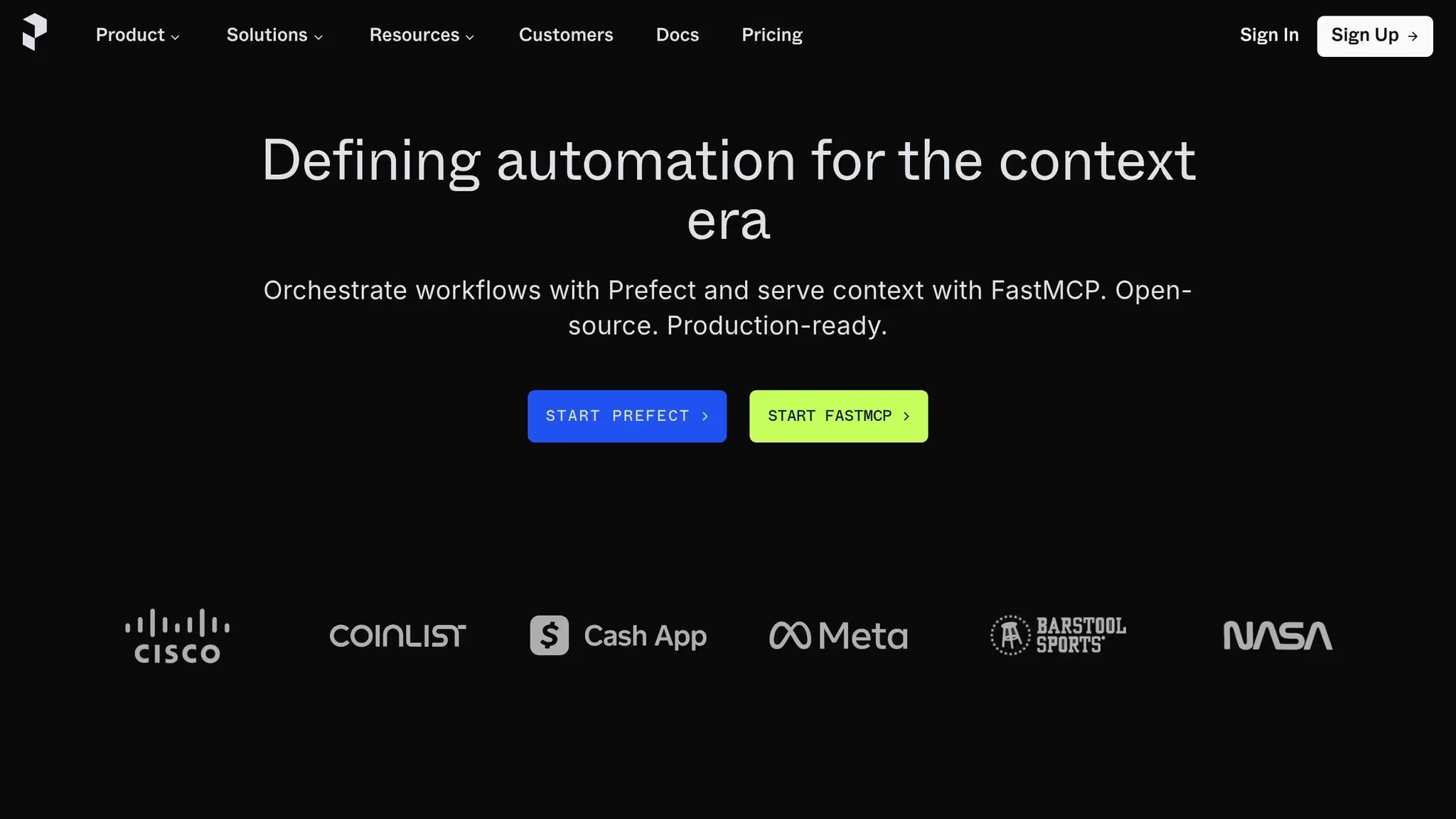
Prefect is a Python-friendly orchestrator designed to streamline AI workflow management. With its cloud-native foundation, it stands out for its focus on integration and observability, making it a strong choice for teams already immersed in Python-based AI environments.

Interoperability

Prefect's Python-first approach makes it a natural fit for AI and machine learning workflows. It enables seamless orchestration of complex ML processes, allowing data scientists and engineers to use familiar Python libraries, frameworks, and tools. This compatibility ensures smooth operation across the various components of machine learning pipelines, simplifying integration and enhancing workflow efficiency.

Scalability Features

Prefect's cloud-native architecture is versatile enough to handle everything from straightforward automation tasks to intricate, multi-step AI workflows. While specific scalability metrics aren't publicly available, the platform is designed to adapt to growing needs. For large-scale implementations, it's recommended to consult directly with Prefect to evaluate performance capabilities.

8. SuperAGI

SuperAGI

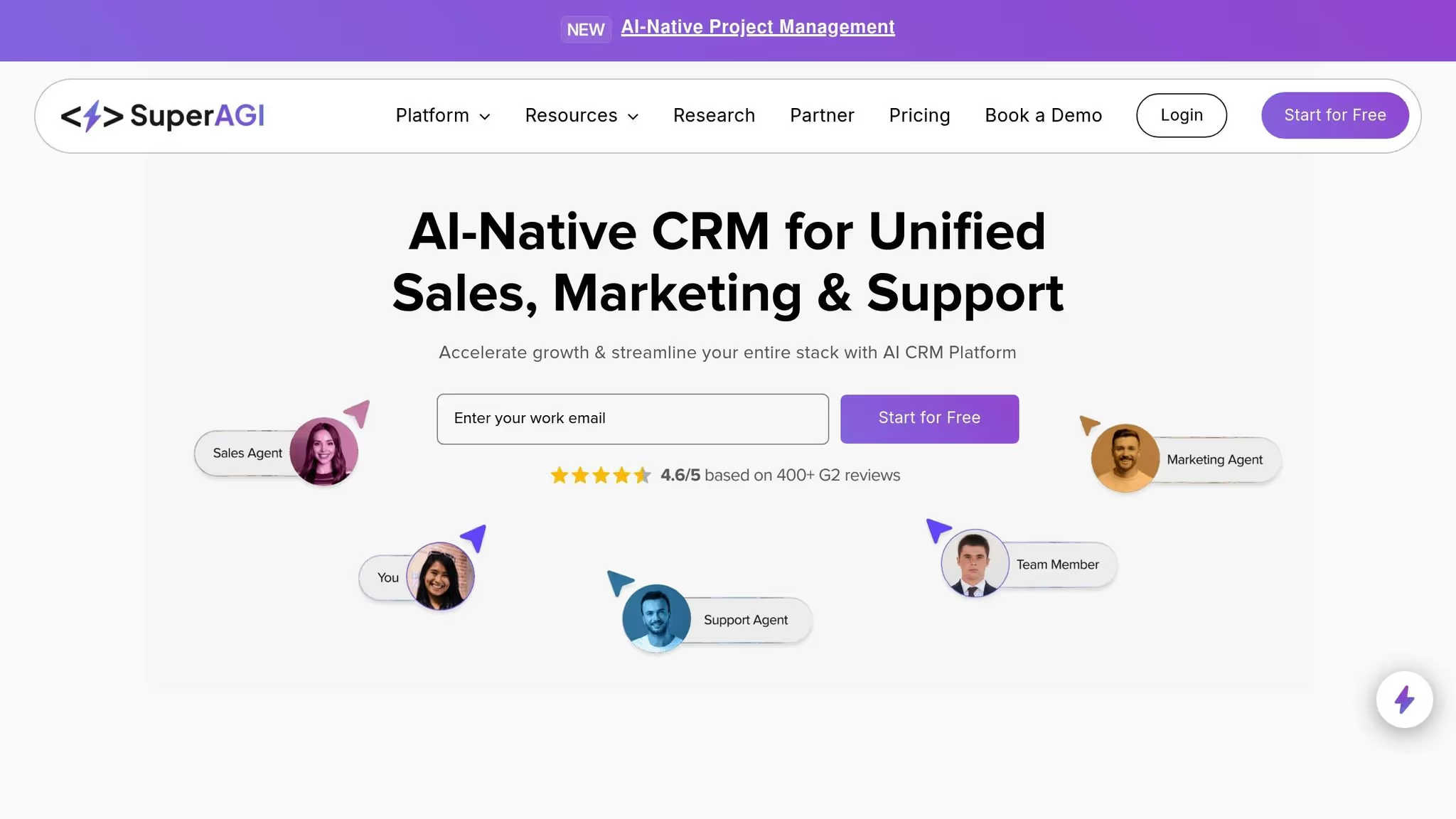
SuperAGI takes AI operations to the next level by automating task allocation with fully autonomous agents. These agents can dynamically adjust workloads and recover from errors as they happen, keeping workflows running smoothly. With real-time monitoring tools, it tracks performance and makes automated tweaks to maintain efficiency at an enterprise scale. This method adds another layer to the orchestration strategies mentioned earlier, providing a robust option for managing scalable AI workflows.

9. Metaflow

Metaflow

Created by Netflix, Metaflow is designed to tackle the challenges of large-scale data science by managing machine learning workflows for production use. It streamlines infrastructure management while delivering the performance necessary for enterprise-level AI operations.

Scalability Features

Metaflow automatically adjusts resources to meet computational needs, allowing for dynamic scaling as demand fluctuates. By abstracting infrastructure complexities, it lets data scientists concentrate on building algorithms and analyzing data, ensuring workflows remain both scalable and dependable.

Interoperability

Metaflow works seamlessly with major cloud platforms, especially AWS, offering full compatibility for scalable machine learning workflows. Its intuitive API simplifies defining processes, making it easier to integrate components and manage models.

Governance and Security

Metaflow incorporates comprehensive version control, including data versioning and lineage tracking. This built-in audit trail supports compliance and ensures that models can be reproduced across various environments. These strong governance and security measures solidify Metaflow's position as a key player in workflow orchestration.

10. Dagster

Dagster

Dagster is an open-source orchestration tool designed with a focus on data quality and pipeline reliability, making it a robust choice for managing AI workflows. It provides organizations with the transparency and control needed to build and deploy customized AI systems while maintaining flexibility over their infrastructure.

Scalability Features

Dagster is built to scale efficiently, thanks to its flexible deployment options and separation of architecture. It can be installed locally or deployed on Kubernetes, giving teams the ability to choose the environment that aligns with their specific scaling needs. A standout feature is its repository model architecture, which separates codebases to ensure that processes run independently. This isolation is key to maintaining stability as AI operations expand.

The platform also allows organizations to tailor their deployment infrastructure to meet growing demands. This adaptability ensures that as workloads increase, the system remains capable of handling the additional computational requirements, while also integrating smoothly with existing systems.

Interoperability

Dagster’s open-source framework promotes seamless integration and flexibility. Developers can easily modify and expand its capabilities, making it a versatile tool for adapting to unique project needs.

Governance and Security

Dagster includes built-in features for validation, observability, and metadata management, ensuring reliable machine learning workflows. Its data-centric design incorporates quality checks directly into pipelines, helping to maintain reliability as workloads grow. These features make it a strong choice for organizations prioritizing governance and security in their AI operations.

Platform Advantages and Drawbacks

After analyzing individual platforms, let's consolidate their strengths and challenges. Each option brings unique benefits and hurdles, impacting scalability, costs, and technical demands.

Enterprise solutions like Prompts.ai and IBM watsonx Orchestrate shine in governance and security. Prompts.ai, for instance, reduces AI costs by up to 98% by streamlining tools into a single ecosystem. However, these solutions often require a higher initial investment and come with a steeper learning curve compared to lighter alternatives.

Open-source platforms such as Apache Airflow, Prefect, and Dagster offer unmatched flexibility and customization. They allow organizations to avoid vendor lock-in and tailor features to their needs. That said, these platforms demand significant technical expertise for setup, maintenance, and scaling. Over time, the total cost of ownership can rise due to the need for dedicated engineering resources and infrastructure management.

Cloud-native platforms like Domo enable quick deployment but may increase dependency on vendors and offer fewer opportunities for customization.

AI orchestration tools like Kubiya AI, Vellum AI, and SuperAGI are purpose-built for automating AI workflows. While they excel in machine learning operations, they may fall short in addressing the broader workflow orchestration needs of complex enterprises.

Here’s a comparison of key aspects across platforms:

Platform Key Advantages Primary Considerations Best For
Prompts.ai Access to 35+ LLMs, 98% cost reduction, robust enterprise governance Higher upfront costs, steep learning curve Large enterprises, cost-conscious organizations
Kubiya AI AI-focused design, intelligent automation Developing ecosystem AI-first companies, modern workflows
Domo Business intelligence integration, user-friendly High licensing costs, limited customization Data-driven organizations, business users
Apache Airflow Open-source flexibility, strong community support Complex setup, ongoing maintenance Technical teams, custom workflows
IBM watsonx Orchestrate Enterprise-grade security, IBM ecosystem integration High costs, vendor lock-in Large corporations, existing IBM customers
Vellum AI LLM optimization, developer-friendly tools Narrow focus, limited integrations AI development teams, LLM workflows
Prefect Modern architecture, ease of use Smaller community, fewer integrations Mid-size teams, Python developers
SuperAGI Agent-based autonomy, experimental workflows Early-stage platform, sparse documentation Research teams, experimental projects
Metaflow Proven by Netflix, strong for data science Limited general orchestration, AWS-centric Data science teams, ML pipelines
Dagster Emphasis on data quality and reliable pipelines Steep learning curve, resource-intensive Data engineering teams, quality-critical workflows

When it comes to cost management, open-source platforms may appear free at first glance but can lead to higher engineering expenses over time. Conversely, enterprise solutions consolidate costs by reducing tool sprawl, offering potential long-term savings.

Another key distinction lies in compatibility. Proprietary platforms often rely on custom APIs and data formats, while open-source options typically use standard protocols. Additionally, platforms equipped with built-in audit trails, role-based access controls, and compliance certifications help minimize regulatory risks.

Scalability is another critical factor. Cloud-native platforms can scale efficiently to meet growing demands, though costs may spike at extreme scales. On the other hand, self-hosted open-source solutions can offer more predictable scaling but require careful management of infrastructure to achieve it. These factors are crucial for organizations to consider when choosing the best platform for their needs.

Conclusion

Our analysis underscores how different platforms cater to specific operational needs, tackling challenges like tool sprawl and fragmented workflows. Selecting the right AI orchestration platform hinges on your organization’s unique priorities, resources, and long-term objectives. The market offers a variety of options, each with strengths tailored to enterprise governance, technical adaptability, or integration with business intelligence tools.

For enterprise organizations focused on governance and cost efficiency, platforms like Prompts.ai stand out. With access to over 35 leading LLMs and the ability to cut AI costs by up to 98% through unified orchestration, these platforms are ideal for environments where compliance, security, and financial transparency are critical.

Technical teams with significant engineering capabilities may gravitate toward open-source options such as Apache Airflow, Prefect, or Dagster. These platforms demand substantial setup and maintenance but provide unparalleled customization for managing complex workflows.

Organizations heavily invested in data-driven decision-making and existing business intelligence systems might find platforms like Domo particularly appealing. These solutions integrate AI orchestration seamlessly into established analytics ecosystems, enhancing operational efficiency.

When deciding on a platform, consider factors like total cost of ownership, scalability, and governance requirements. For instance, organizations prioritizing compliance will benefit from features like built-in audit trails and role-based access controls. Others may value customization or the ability to deploy quickly.

Ultimately, the most effective AI orchestration platform is one that aligns with your organization’s capabilities, infrastructure, and growth plans. By choosing a solution that evolves alongside your business, you can ensure secure, efficient, and scalable AI operations tailored to your needs.

FAQs

How does Prompts.ai help lower costs while ensuring scalable AI workflows?

Prompts.ai brings efficiency to your operations by merging more than 35 AI tools into one seamless platform. This consolidation simplifies your workflows, cutting costs by as much as 95% in mere minutes. By maximizing resource efficiency and removing unnecessary complexities, Prompts.ai makes your AI processes scalable and budget-friendly.

What should businesses look for in an AI orchestration platform to meet their scalability needs?

When choosing an AI orchestration platform, it's essential to focus on features that support growth and operational efficiency. Start by evaluating platforms with integration capabilities that work effortlessly with your current tools and systems, ensuring a smooth transition.

Automation is another critical aspect - opt for platforms with strong automation tools to simplify workflows and minimize the need for manual effort.

Don't overlook security and governance features, as protecting sensitive data is non-negotiable. Additionally, platforms with modular and flexible designs offer the ability to adjust and expand as your business requirements change. Lastly, prioritize a user-friendly interface so your team can quickly adopt and manage the platform without needing extensive training.

How does Prompts.ai protect enterprise data and ensure compliance with regulations?

Prompts.ai adheres to rigorous security and compliance protocols, including SOC 2 Type II, HIPAA, and GDPR standards, to protect sensitive data. These safeguards are designed to keep enterprise operations secure while aligning with regulatory obligations.

For companies, this robust protection is essential for preserving trust, minimizing legal exposure, and enabling reliable, compliant AI-powered workflows.

Related Blog Posts

SaaSSaaS
Quote

Streamline your workflow, achieve more

Richard Thomas