Pay As You Go7 天免费试用;无需信用卡
获取我的免费试用版
December 2, 2025

Which AI Integration Platform is the Best?

Chief Executive Officer

December 2, 2025

AI integration platforms simplify managing multiple tools, models, and workflows. They help businesses optimize costs, ensure security, and streamline operations. This article reviews seven platforms - Prompts.ai, Kubiya AI, IBM watsonx Orchestrate, Apache Airflow, Zapier, n8n, and Pipedream - based on their features, scalability, security, and cost management. Here’s a quick summary:

  • Prompts.ai: Centralizes 35+ LLMs like GPT-5 and Claude, offers cost tracking (TOKN credits), and enterprise-grade governance.
  • Kubiya AI: Focuses on conversational AI for workflows but lacks multi-model support.
  • IBM watsonx Orchestrate: Strong compliance and security, ideal for regulated industries, but costly.
  • Apache Airflow: Open-source, highly customizable for technical teams, but requires expertise.
  • Zapier: No-code, user-friendly, but limited for AI-specific needs.
  • n8n: Self-hosted, open-source, great for compliance, but demands infrastructure management.
  • Pipedream: Developer-focused with strong API support, but lacks AI governance tools.

Each platform offers unique strengths tailored to different user needs, from no-code simplicity to developer-level customization. Below is a Quick Comparison to help you decide.

9 Best AI Automation Tools in 2025 (In-Depth Comparison)

Quick Comparison

Platform Key Strengths Key Weaknesses Best For
Prompts.ai Multi-LLM support, cost tracking, governance Newer, learning curve for prompt engineering Enterprises scaling AI
Kubiya AI Conversational AI, natural language workflows Limited AI model options, no cost transparency Teams seeking simplicity
IBM watsonx Orchestrate Enterprise-grade security, compliance High cost, complex setup Regulated industries
Apache Airflow Open-source, customizable, scalable Requires technical expertise, no AI tools Technical teams
Zapier No-code, easy to use Limited AI features, task-based pricing Non-technical users
n8n Self-hosted, flexible Infrastructure management required Compliance-focused teams
Pipedream Developer-friendly, strong API support Lacks AI governance, code-focused Developers

Choose a platform that aligns with your team’s expertise, workflow complexity, and budget goals. Platforms like Prompts.ai simplify AI operations for enterprises, while tools like Zapier and n8n cater to non-technical users or compliance-heavy needs.

1. Prompts.ai

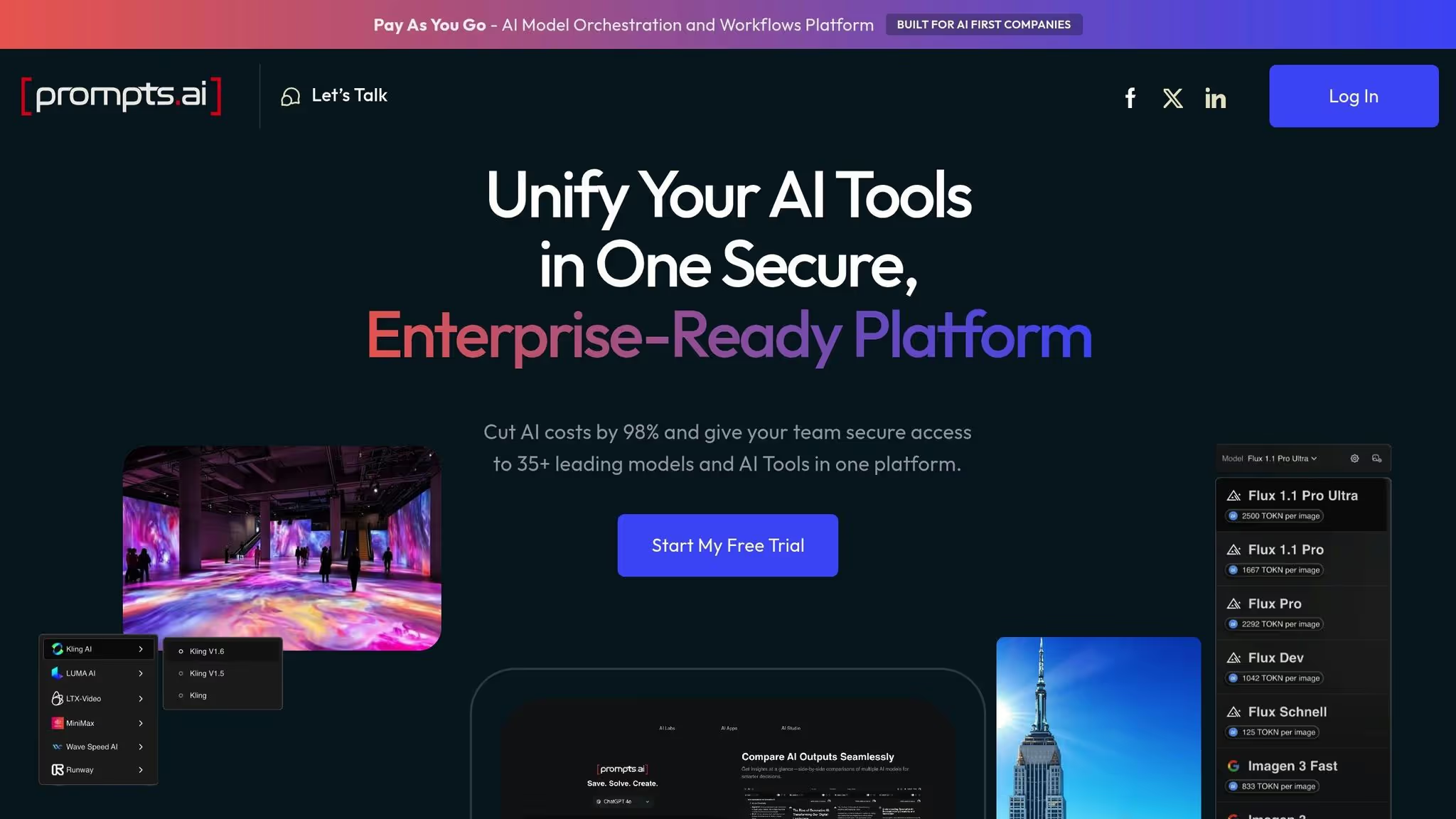
Prompts.ai

Prompts.ai acts as a smart bridge, connecting businesses to over 35 large language models, including GPT-5, Claude, LLaMA, Gemini, Grok-4, Flux Pro, and Kling, all through a single, unified interface. It tackles a common issue faced by enterprises: juggling multiple AI subscriptions, managing costs across different models, and ensuring governance without adding operational hurdles. With a 4.8 user rating and recognition from GenAI.Works as the leading AI platform for enterprise automation and problem-solving, Prompts.ai has positioned itself as a solution to the inefficiencies caused by fragmented AI services.

Scalability

Prompts.ai is designed with the philosophy of "Scale Without Silos", allowing businesses to expand their use of models, users, and teams without disrupting existing workflows. The platform offers flexible pricing plans to suit various needs:

  • Problem Solver Plan: Ideal for individuals or small teams, starting at $99/month (or $89/month annually), includes 500K TOKN Credits, unlimited workspaces, 99 collaborators, and 10GB of storage.
  • Business-Tier Plans: Tailored for larger teams:
    • Core Plan: $99/member/month with 250K TOKN Credits.
    • Pro Plan: $119/member/month with 500K TOKN Credits.
    • Elite Plan: $129/member/month with 1M TOKN Credits.

Features like TOKN Pooling and Storage Pooling ensure that resources are shared efficiently across teams, maximizing the value of every allocation.

Steven Simmons, CEO and Founder of Prompts.ai, shared, "With Prompts.ai's LoRAs and workflows, I now complete renders and proposals in a single day - no more waiting, no more stressing over hardware upgrades."

This scalable framework ensures smooth integration of new models and workflows as businesses grow.

LLM Integration

Prompts.ai simplifies the complexity of managing multiple AI models by removing the need for separate API keys, billing setups, and integration codes. With support for unlimited workflow creation, teams can design repeatable processes that utilize multiple models in sequence. For instance, a content team might use one model for generating quick drafts and another for refining tone and style, all within an automated workflow.

The platform also offers pre-built "Time Savers" templates, which streamline tasks like sales, marketing, and operations. Mohamed Sakr, founder of The AI Business, uses these templates to automate lead generation and improve productivity. Additionally, the ability to compare model performance side-by-side ensures that teams can make informed decisions based on both cost and output quality.

Security & Governance

Prompts.ai prioritizes security and compliance, adhering to SOC 2 Type II, HIPAA, and GDPR standards. On June 19, 2025, it introduced continuous SOC 2 Type II audits via Vanta, allowing organizations to monitor its security status in real time through the Trust Center at https://trust.prompts.ai/. This hub provides transparency into policies, controls, and compliance updates.

Business-tier plans include advanced features like Compliance Monitoring and Governance Administration, offering centralized oversight of AI usage. Frank Buscemi, CEO and CCO, uses Prompts.ai to automate workflows while safeguarding sensitive client data, ensuring that creative processes remain secure and compliant.

These measures underscore Prompts.ai's commitment to security alongside its operational efficiencies.

Cost Efficiency

Prompts.ai's TOKN credit system ensures that costs align directly with usage, replacing outdated pricing models that charge for unused capacity. The platform's FinOps layer provides detailed tracking of token usage across models and teams, offering real-time spending insights. This transparency helps organizations avoid unexpected expenses and maintain control over their AI budgets.

2. Kubiya AI

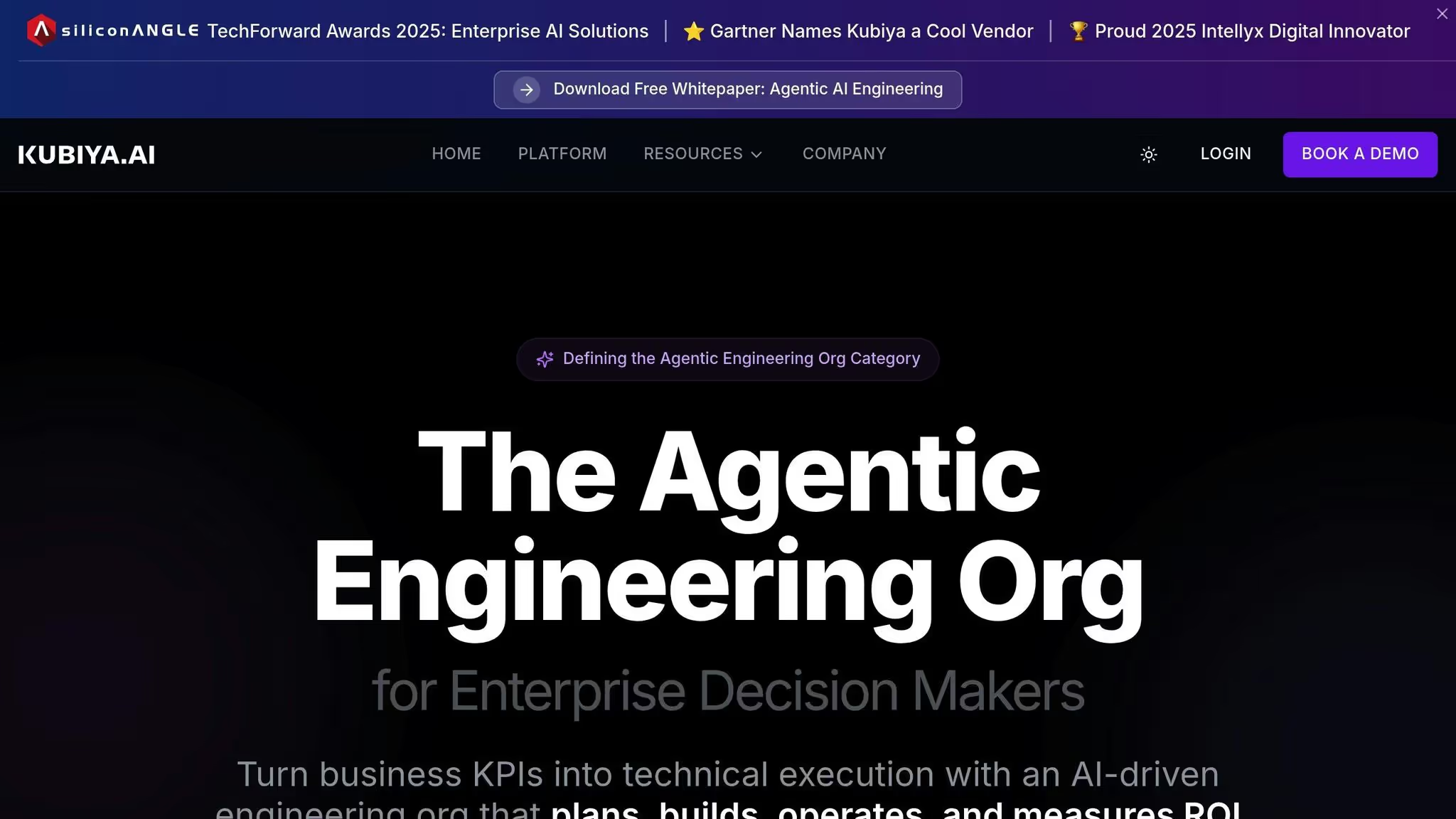
Kubiya AI

Kubiya AI is a platform designed to automate workflows by orchestrating AI agents across various business processes. It belongs to a new wave of tools that utilize large language models (LLMs) to simplify and manage complex operations.

LLM Integration

Kubiya AI empowers teams to create AI agents capable of understanding natural language requests and performing actions across different systems. This capability aligns with the platform's goal of simplifying AI-driven workflows.

Scalability

The platform supports running multiple tasks simultaneously and offers flexible deployment options, including cloud-native and hybrid models. Businesses should assess these features to ensure they meet current and future automation requirements.

Security and Governance

Kubiya AI incorporates key security features such as controlled access, activity tracking, and audit trails to help maintain compliance. It's important to review the platform's certifications and governance frameworks to confirm they meet both regulatory and internal compliance needs.

Cost Considerations

While Kubiya AI's pricing details are not publicly available, organizations should evaluate the total cost of ownership. This includes subscription fees, usage-based expenses, and potential savings from automation and tool consolidation, especially when planning for large-scale enterprise use.

3. IBM watsonx Orchestrate

IBM watsonx Orchestrate

IBM watsonx Orchestrate takes AI workflow security to the next level by enhancing data protection and governance. Designed to meet strict industry standards, it safeguards sensitive data while ensuring compliance.

The platform incorporates role-based access controls, limiting who can make changes to automated workflows. It also maintains detailed activity logs to provide a clear audit trail and encrypts data both during transit and while stored.

With certifications like SOC 2, ISO 27001, and compliance with GDPR, watsonx Orchestrate ensures robust protection. Additionally, its approval workflows require every change to go through a review process, adding an extra layer of oversight.

These features create a dependable and compliant framework for managing AI workflows with confidence.

4. Apache Airflow

Apache Airflow

Apache Airflow is an open-source platform designed to orchestrate complex workflows using Python. By employing directed acyclic graphs (DAGs), it allows teams to sequence tasks with precision, offering detailed control over data processing pipelines.

Scalability

Airflow's DAG-based architecture enables it to handle workloads on a massive scale. It supports running thousands of tasks simultaneously, thanks to its flexible executors like Celery and Kubernetes. These executors dynamically allocate workloads, ensuring that infrastructure adapts seamlessly to current needs. This automated scaling eliminates the need for constant manual adjustments, making it a practical choice for growing organizations.

Security & Governance

Airflow also addresses critical security requirements with features like configurable access controls and detailed audit logging. It includes role-based access control (RBAC) to manage user permissions effectively and integrates with enterprise authentication systems such as LDAP and OAuth. These integrations allow companies to leverage their existing identity management tools. Additionally, its audit logs provide a detailed record of workflow executions, capturing information such as triggers, execution times, and outcomes - essential for maintaining compliance and diagnosing issues.

Cost Efficiency

As an open-source platform, Apache Airflow eliminates licensing fees, leaving organizations to cover only infrastructure costs, whether they operate in the cloud or on-premises. While this setup can be budget-friendly, it does require a skilled technical team for installation, maintenance, and ongoing Python development. Airflow's task execution model, which operates strictly on schedule, further optimizes resource usage by reducing idle computing costs. This balance of affordability and efficiency makes it an appealing option for teams with strong technical expertise aiming to manage scalable workflows effectively.

5. Zapier

Zapier is a platform designed for no-code automation, enabling users to connect thousands of web applications through workflows called Zaps. It simplifies repetitive tasks, making it a practical tool for teams aiming to streamline operations without needing programming expertise.

Scalability

Zapier’s pricing is based on the number of tasks performed, with each action in a workflow counting as one task. It offers a free plan with limited monthly tasks, while paid tiers provide higher task limits and features like multi-step workflows. Setting up workflows across apps is straightforward, but since each Zap runs independently, organizations need to monitor task usage carefully as their needs grow.

LLM Integration

Zapier has expanded its capabilities to include integrations with AI platforms like OpenAI, allowing users to add AI-powered features such as text analysis or content generation to their workflows. These functions are accessible through simple trigger-action setups, making them user-friendly for non-technical teams. However, the platform’s no-code approach imposes some limitations, such as restricted options for fine-tuning AI models or implementing advanced conditional logic.

Security & Governance

Zapier ensures data security through encryption during transit and storage, and it adheres to established compliance standards. Higher-tier plans offer role-based access controls, enabling administrators to manage who can modify workflows. Additionally, activity logs provide an audit trail for changes, supporting oversight of automated processes. Organizations with specific data residency needs should be aware that data passes through Zapier’s servers as part of its cloud-based infrastructure.

Cost Efficiency

Zapier’s task-based pricing grows with usage, making it a flexible option for teams with varying needs. The free plan is suitable for basic tasks, while paid plans unlock features like faster updates and multi-step workflows. This model can be cost-effective for teams looking to avoid the expense of custom integrations. However, for businesses with high or fluctuating task volumes, monitoring usage is essential to keep costs under control. Zapier’s combination of simplicity and scalability makes it a solid choice for teams prioritizing ease of use over technical complexity.

6. n8n

n8n is a self-hosted, open-source automation platform that offers flexibility and control over data and operations. Its open-source nature makes it an attractive option for organizations with strict compliance needs or unique workflow demands. Below, we'll examine how n8n performs in terms of scalability, LLM integration, security, and cost.

Scalability

Since n8n is self-hosted, its scalability depends entirely on the organization's hardware and infrastructure choices. This gives businesses the freedom to scale as needed, provided they have the resources to support the expansion.

LLM Integration

While n8n’s documentation doesn’t highlight specific support for large language models (LLMs), its open framework allows users to integrate AI components seamlessly. This flexibility enables businesses to create workflows tailored to their specific needs.

Security & Governance

n8n’s self-hosted design puts data security and governance in the hands of the organization. This capability is especially important for businesses that need to meet stringent compliance standards. However, the responsibility for implementing and maintaining security measures falls entirely on the organization.

Cost Efficiency

As an open-source platform, n8n eliminates licensing fees, leaving infrastructure and maintenance as the primary expenses. For organizations with existing IT resources and expertise, this can be a budget-friendly choice, particularly if they are prepared to manage a self-hosted setup.

7. Pipedream

Pipedream

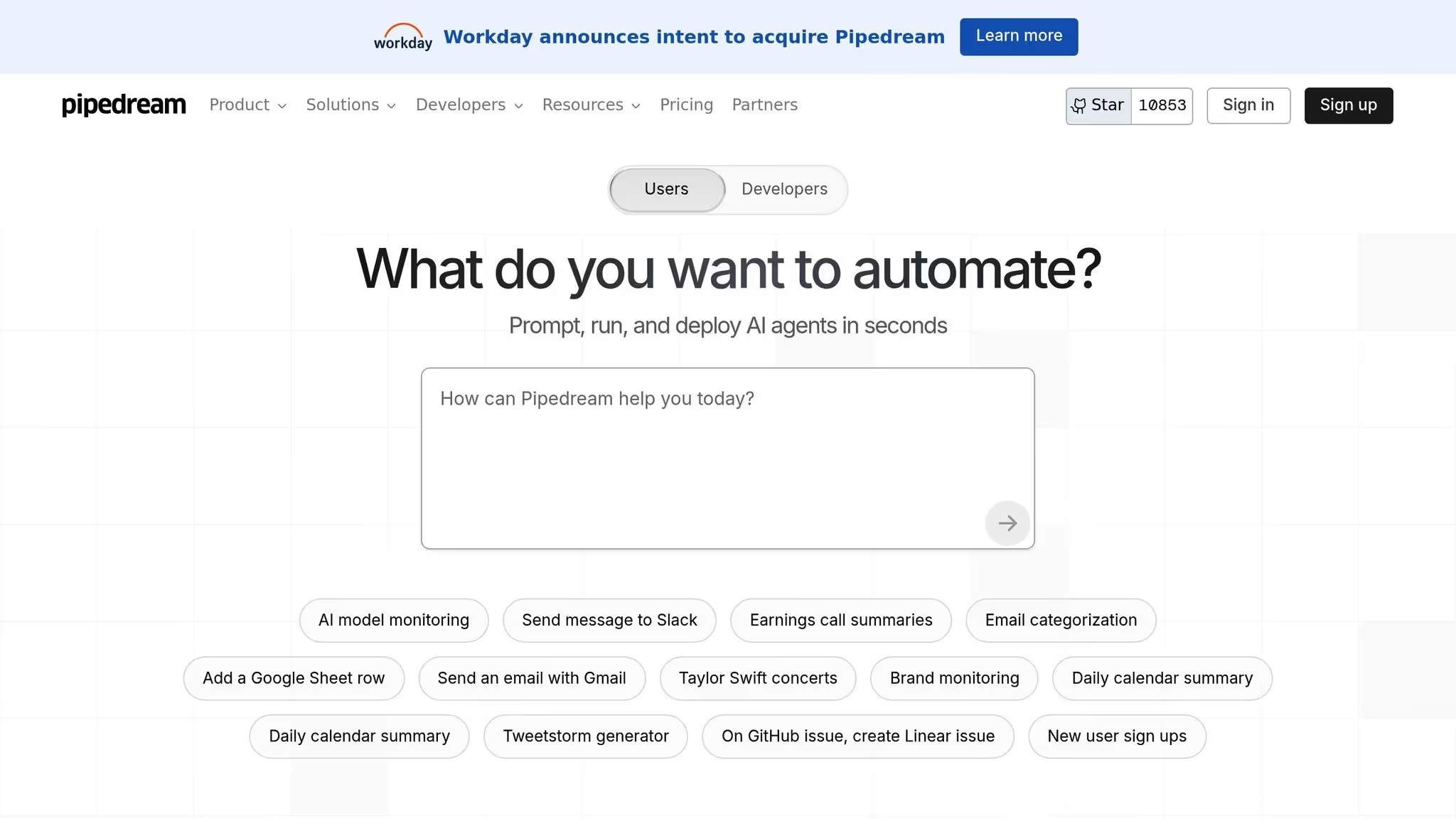
Pipedream stands out as a developer-focused platform designed to simplify automation. It enables technical teams to connect applications, APIs, and data sources through code-driven workflows. With access to over 2,500 integrations and strong API support, Pipedream empowers developers to efficiently streamline processes and build seamless connections between tools and systems.

Pros and Cons

Selecting the right AI integration platform involves carefully evaluating each option's strengths and limitations. Each platform caters to distinct workflow needs, making it essential to align features with your specific goals.

Platform Strengths Weaknesses
Prompts.ai Access to 35+ leading LLMs, including GPT-5, Claude, LLaMA, and Gemini, through a single interface; real-time FinOps tools that can cut AI costs by up to 98%; enterprise-grade governance with complete audit trails; pay-as-you-go TOKN credits eliminate subscription fees; includes a Prompt Engineer Certification program and expert-curated workflows; enables side-by-side model performance comparisons Relatively new compared to legacy enterprise platforms; requires an initial learning curve for teams unfamiliar with prompt engineering practices
Kubiya AI Strong conversational AI capabilities for automating workflows; natural language interface reduces the need for technical expertise; ideal for teams seeking chat-based interactions with tools Limited selection of AI models compared to platforms with multi-LLM support; less transparency in cost optimization; may require additional tools for full AI orchestration
IBM watsonx Orchestrate Backed by a well-established enterprise vendor with strong compliance credentials; seamless integration with IBM’s ecosystem; robust security features tailored for regulated industries Higher costs typical of IBM enterprise solutions; steeper learning curve; complex setup; limited flexibility when working outside IBM’s technology stack
Apache Airflow Open-source with no licensing fees; highly customizable for technical teams; strong community support; excels in complex data pipeline orchestration Demands significant technical expertise for implementation and maintenance; steep learning curve for non-developers; lacks built-in AI model management; no native cost tracking for AI operations
Zapier Intuitive interface with minimal technical requirements; extensive app marketplace featuring thousands of pre-built integrations; quick and easy setup for simple automations Few AI-specific features; costs can increase quickly with higher usage; limited customization options; not designed for enterprise AI governance or managing multiple models
n8n Self-hosted deployment ensures data control; visual workflow builder combines ease of use with flexibility; fair-code licensing model; more affordable than proprietary platforms Requires infrastructure management for self-hosted setups; smaller integration library compared to larger platforms; limited native capabilities for AI model orchestration
Pipedream Developer-friendly with strong API support; access to over 2,500 integrations; code-driven workflows provide maximum flexibility; generous free tier for testing Primarily focused on coding, which may pose challenges for non-technical users; lacks robust AI governance features; no centralized model comparison or cost-tracking tools for AI operations

This table highlights the trade-offs between platforms, offering a snapshot of their performance, usability, and cost considerations.

For instance, Zapier prioritizes simplicity but lacks advanced orchestration features, while Apache Airflow offers deep customization at the cost of higher complexity. On the other hand, IBM watsonx Orchestrate delivers strong compliance features but comes with a premium price tag. These contrasts emphasize the importance of matching platform capabilities to your workflow needs.

For organizations focusing on AI workflow orchestration, features like multi-model support, real-time cost tracking, and governance controls are essential. Many traditional automation platforms weren’t built with AI-specific workflows in mind, often missing critical capabilities like token-level cost monitoring, model performance benchmarks, or prompt versioning. Without these, scaling AI across teams can lead to budget overruns and compliance issues.

Developer-focused tools like Pipedream and Apache Airflow provide unmatched flexibility but demand technical expertise, while no-code platforms simplify deployment but may struggle with more intricate logic.

Security and compliance also vary widely. Self-hosted solutions offer full data control but shift infrastructure responsibilities to internal teams. By aligning platform features with both technical needs and business objectives, you can make a choice that supports seamless and scalable AI operations.

Conclusion

When finalizing your choice of an AI platform, it’s essential to align it with your specific workflow needs. Avoid generic, one-size-fits-all options and instead focus on a solution that can grow alongside your team’s skill set, the complexity of your projects, and your budget constraints.

AI-focused platforms provide key benefits like access to multiple models, precise token-level cost tracking, and strong governance features. These capabilities help keep pilot projects on course, minimizing the risk of unexpected expenses or compliance issues.

Some platforms cater to engineering teams with extensive customization options, while others prioritize simplicity, offering user-friendly interfaces that can reduce processes from months to mere minutes.

Ultimately, your decision should factor in your team’s technical expertise, the complexity of your workflows, and your financial goals. A platform that offers pay-as-you-go pricing and claims to reduce costs by up to 98% can deliver immediate value while streamlining your AI tool management.

FAQs

What should I look for in an AI integration platform for my business?

When choosing an AI integration platform, it’s essential to focus on features that directly support your business goals. Start by evaluating broad API compatibility, which ensures the platform can connect with a wide range of tools and systems. Scalability is another critical factor, allowing your operations to grow seamlessly, while real-time performance monitoring helps maintain efficient workflows without interruptions.

Platforms with customization options - like support for tailored tools or code extensibility - can adapt to your specific needs. Equally important are robust security measures, including strong authentication protocols, to keep your data safe.

A platform with a user-friendly interface and developer-friendly workflows simplifies both implementation and ongoing management. Finally, ensure it integrates effectively with large language models and provides dependable support for scaling as your business expands.

How do pricing models for AI integration platforms influence cost efficiency?

The way AI integration platforms structure their pricing - whether through pay-as-you-go or subscription plans - has a big impact on managing costs. These options let businesses match their spending to actual usage, helping them avoid paying for features or capacity they don’t need.

With automation and scalable pricing in place, companies can often cut operational costs by as much as 30%. This adaptability makes it possible for organizations, regardless of size, to manage their budgets efficiently while still addressing their AI-powered workflow requirements.

What security and compliance features should AI integration platforms offer for regulated industries?

AI platforms designed for regulated industries need to emphasize security and compliance to safeguard sensitive data and align with industry regulations. Essential features include fine-grained role-based access control (RBAC) to manage user permissions, single sign-on (SSO) with SAML support for streamlined authentication, and immutable audit logs that provide a reliable record of all activities.

Moreover, these platforms should support data residency options, private networking setups, and compliance with standards like SOC 2, ISO 27001, GDPR, and HIPAA. Such measures not only help businesses meet regulatory obligations but also build trust with clients and stakeholders.

Related Blog Posts

SaaSSaaS
Quote

Streamline your workflow, achieve more

Richard Thomas