Pay As You Go7 天免费试用;无需信用卡


人工智能通过自动执行关键字研究、内容创建和技术审计等复杂任务,正在改变企业的SEO。手动跟踪和电子表格等传统方法无法满足成千上万个网址、动态产品更新和全球市场的需求。以下是人工智能如何重塑大型企业的SEO:
人工智能编排平台可集中工具、执行治理和简化工作流程,将 SEO 转变为增长引擎。采用这些策略的企业可以更快地获得成果、更高的投资回报率和可衡量的业务影响。

人工智能驱动的 SEO 影响:企业成功的关键统计数据和投资回报率指标
过去,企业关键词研究通常涉及精心梳理电子表格中的搜索量——在处理多个产品线、区域市场和不断变化的搜索趋势时,这一过程很快变得难以管理。人工智能彻底改变了这种格局,它能够在几分钟内处理海量数据集,同时识别手动方法根本无法检测到的模式。
这种转变不仅仅是速度;还在于更深入地了解用户的意图。例如,像 “远程团队的最佳项目管理软件” 这样的查询将远程工作、协作工具、特定软件品牌和用户挑战等概念联系在一起。AI 集群工具可以根据其语义对数千个查询进行分组,使企业能够创建与大型语言模型 (LLM) 分析和引用信息的方式相一致的内容架构。
今天, 60% 的营销人员 使用 ChatGPT 等人工智能工具进行关键字研究,结果不言自明。利用人工智能实现内容和工作流程自动化的公司报告a 员工工作效率提高 40% 在第一年内。关键在于超越孤立的关键字列表,了解用户真正想要的是什么,无论是学习、比较、决定还是解决问题,然后扩展内容策略以满足这些需求。
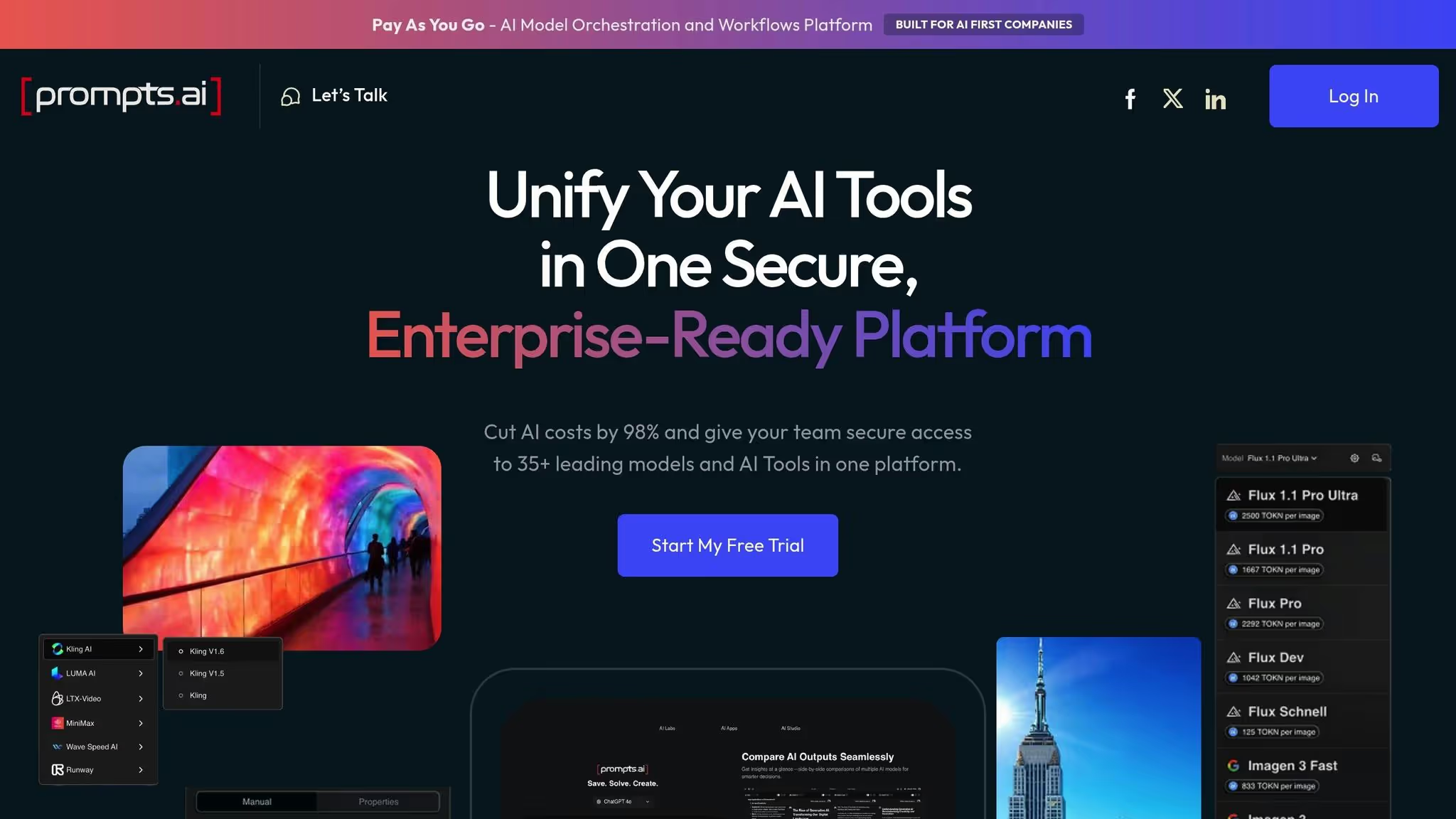
Prompts.ai 将包括 GPT-5、Claude、Gemini 和 LLaMA 在内的超过 35 个领先的 LLM 集成到一个平台中,允许用户根据特定任务量身定制研究。例如,GPT-5 擅长广泛的语义聚类,Claude 非常适合分析用户意图,其他专业模型可以预测新兴趋势——所有这些都可以通过一个界面进行访问。
Prompts.ai 的与众不同之处在于其结构化提示框架,该框架遵循 角色任务约束上下文格式 模型。这可确保输出一致且针对特定领域。团队无需生成通用关键字列表,而是输入专有数据(例如产品目录、客户支持日志或销售记录),并要求模型发现与实际业务结果相关的高价值搜索机会。例如,一家SaaS公司可能会使用这样的提示:“充当SEO策略师。分析我们的 2025 年第四季度支持请求单数据,确定我们缺乏内容的前 20 个 “修复” 意图查询。按产品线对它们进行分组,并按门票数量对它们进行排名。”
Prompts.ai 还包括实时 FinOps 控件 跟踪代币使用情况,帮助团队衡量其研究工作的成本效益。即用即付的TOKN积分提供了财务灵活性,而并排的模型比较可确保您获得有关预算的最佳见解。这种治理水平至关重要,尤其是 63% 的高管 优先将 AI 与分析、BI 和 CRM 系统集成,以推动可衡量的结果。
以Smart Rent为例:2025年,该公司采用了以清单为重点的提示来增强其在人工智能驱动的搜索引擎上的权威。结果令人震惊——a 引用次数增加了 100% 跨越 ChatGPT、Perplexity 和 Gemini 等平台,以及 能见度提高了 50% 在谷歌 AI 概述上。通过使用人工智能绘制受众搜索行为地图并相应地构建内容,他们实现了与LLM提取和引用信息的方式直接一致的策略。
这些高级关键字见解为语义聚类和预测分析等更深入的策略铺平了道路,为SEO的长期成功奠定了基础。
在关键字研究的基础上,语义和预测分析使企业能够完善其内容策略以获得持续的权威。语义分析不仅限于精确匹配的关键字,而是按其含义对主题进行分组。例如,如果您的公司提供网络安全解决方案,AI 可以将相关搜索(例如 “数据泄露预防”、“网络安全工具” 和 “勒索软件防护”)聚集到一个统一的主题中心中。这种方法确立了 话题权威,向搜索引擎和 LLM 发出信号,表明您的域名是该主题的可信资源。
预测分析根据历史数据确定未来趋势,从而更进一步。与其对搜索算法或流量模式的变化做出反应,企业可以提前规划 两层内容策略:一个是维持稳定流量的常青话题,另一个是与产品发布、行业活动或监管变化相关的季节性高峰。正如里程碑公司创始人贝努·阿格瓦尔所解释的那样:
“人工智能搜索是概率的。它根据模式和可能性生成响应,这意味着结果可能因查询而异。”
这种概率性质需要持续的监测和调整。人工智能平台可以按意图(例如信息、商业或交易)和渠道阶段自动标记查询,从而使团队能够进行设计 轮辐式架构 它引导用户从广泛的信息内容到特定的转化点。下表说明了意图如何与人工智能驱动的策略保持一致:
随着焦点转移到 答案引擎优化 (AEO),企业必须针对人工智能模型综合答案并直接引用来源的 “零点击” 环境进行优化。人工智能驱动的研究可确定哪些查询触发了这些结果,使团队能够使用 “答案优先” 方块(在章节的顶部提供简洁、直接的答案)来组织内容,从而最大限度地提高引用机会。正如 Single Grain 所说:
“语义SEO现在是人工智能概述中被引用和隐身的区别。”
对于管理数千个 URL 的企业来说,这种精度只能通过 AI 来实现。人工研究跟不上算法更新、新的搜索结果页面功能以及谷歌以外搜索平台向YouTube、Reddit、LinkedIn和人工智能助手等扩张的快速步伐。采用人工智能进行营销的公司报告a 收入中位数增长15%,以及 73% 的高管 在 12 个月内实现正投资回报率。优势在于用数据驱动的策略取代猜测,将关键字努力与可衡量的业务成果直接联系起来。
在确定了正确的关键字和语义集群之后,下一个障碍是创建不仅排名不错而且易于被人工智能系统引用的内容。对于管理数百甚至数千页的企业来说,手动创建内容很快变得不切实际。人工智能工作流程通过自动化重复任务来解决这个问题,同时通过结构化框架和人工监督来保持质量。
这种转变改变了游戏规则:企业现在使用人工智能驱动的评分系统来评估内容,而不是制作内容并寄希望于其表现。这些系统会检查核心问题是否得到解答,语义覆盖是否彻底,格式是否得到优化。使用自动化工作流程的公司报告说,将手动任务减少了30%,并将发布时间缩短了50%。
这种效率的一个关键推动因素是使用即时工程框架,例如 “5W 和 H” 模型(内容、地点、谁、何时、为什么、如何)。现在,团队不再使用 “写一篇关于网络安全的博客文章” 之类的模糊指令,而是使用明确的角色、限制和输出格式来创建精确的提示。例如,内容团队可能会指定:
"Act as a B2B content strategist. Write a detailed guide on a cybersecurity topic, including an analytical comparison of key tools and clear, structured sections."
This level of clarity ensures actionable results on the first draft.
Adopting an entity-first content architecture further boosts relevance. Instead of creating isolated articles targeting single keywords, enterprises map entities - such as people, products, and problems - across their entire content library. AI models assess whether a site demonstrates authority by connecting related concepts through internal links and structured data. This approach supports Answer Engine Optimization (AEO), where content is formatted to earn direct citations in AI overviews and large language model (LLM) summaries. Companies integrating generative AI into marketing and sales workflows have reported a 10–20% revenue increase, with 68% achieving higher ROI from content marketing.
PotentialAction for AI agents
Prompts.ai gives enterprises access to over 35 leading LLMs - including GPT-5, Claude, Gemini, and LLaMA - allowing teams to assign specific content tasks to the best-performing model without switching platforms. Its refined prompt framework ensures alignment with your brand's voice and SEO objectives.
For example, a financial services company could use a prompt like:
"Act as a compliance-aware content strategist. Generate a detailed guide on rollover options for retirement accounts that includes clear comparisons and FAQ sections."
This approach generates drafts optimized for schema markup, semantic relevance, and readability - key factors for both traditional search engines and AI-driven citation.
Retrieval-Augmented Generation (RAG) further enhances content quality by grounding AI outputs in your organization’s trusted data sources, such as documentation, case studies, or product details. This minimizes errors and is especially beneficial for technical content, such as SaaS feature comparisons or regulatory compliance guides.
Using a section-by-section drafting technique gives teams better control over the depth and context of content. Instead of asking AI to generate an entire article in one go, teams can guide the process one section at a time. This allows for mid-draft corrections, precise word count management, and the inclusion of proprietary insights. As Aleyda Solis, International SEO Consultant at Orainti, explains:
"I like to think of LLMs as partners - they handle the heavy lifting, and I guide the final result."
Prompts.ai’s real-time FinOps tools track token usage for each content piece, helping teams measure cost-effectiveness across different models and prompt strategies. With pay-as-you-go TOKN credits, you’re not locked into fixed subscriptions, enabling side-by-side model comparisons to balance quality and cost. These features integrate seamlessly with broader enterprise systems, supporting scalable, data-driven content strategies.
Scaling content across large teams requires more than just high-quality AI outputs - it demands workflows that connect AI tools directly to your enterprise data. This includes integrating with GA4 to analyze traffic and conversions, syncing with CRM systems to uncover pipeline-driving topics, and feeding insights into BI dashboards to link content optimization with revenue impact. Sixty-three percent of executives prioritize integrating AI with analytics, BI, and CRM systems, and enterprises with advanced AI integration have seen twice the revenue growth attributed to AI.
Centralized prompt libraries are essential for maintaining consistency at scale. Instead of having every content creator develop prompts from scratch, enterprises create libraries of reusable, tailored prompts for tasks like meta descriptions, content outlines, FAQ generation, and technical analysis. These libraries often include version control to track successful variations and ensure consistency across teams.
Human-in-the-loop (HITL) governance is equally important for ensuring quality and brand alignment. While AI can draft content quickly, review stages for fact-checking, bias monitoring, and brand consistency are critical. These checkpoints help prevent errors and build trust with both users and search engines.
Modular content models simplify how AI engines process and recombine your content. Instead of relying on a single, lengthy guide, enterprises break content into smaller, entity-mapped modules - such as definitions, step-by-step guides, comparison tables, or case studies - that can be repurposed in various contexts. This modular approach aligns with generative AI systems, which extract specific facts and examples to create comprehensive responses. As Benu Aggarwal, Founder and President of Milestone Inc., highlights:
"A deep nested schema architecture expresses the full entity lineage of a business in a machine-readable form."
For enterprise websites, relying solely on manual audits is no longer practical. AI-driven automation has redefined technical SEO, turning it into a continuous monitoring system that identifies, prioritizes, and often resolves issues before they can harm rankings or revenue. These automated systems enhance SEO workflows across large, complex sites, ensuring better performance and efficiency.
This shift from periodic snapshots to dynamic, real-time systems is already showing tangible results. For example, in 2024, Smart Rent adopted an AI-powered SEO strategy to address technical challenges and optimize content. Within a month, their visibility on platforms like ChatGPT, Perplexity, Gemini, and Google AI Overviews increased by 50–100%. Similarly, LS Building Products leveraged an AI-driven search framework to optimize content and resolve technical issues, achieving a 540% boost in AI Overviews mentions and a 100% increase in visibility across key platforms. This kind of continuous monitoring paves the way for automated site audits and dynamic dashboards that provide real-time insights.
Modern AI tools go beyond identifying problems - they fix them. Autonomous systems can adjust title tags, meta descriptions, and image alt-text without requiring developer input. Template-level clustering identifies systemic issues, such as recurring problems across similar pages, rather than treating each URL as a separate case. Companies implementing AI-based automation have reported a 40% boost in productivity within the first year, along with a 35% reduction in SEO labor costs. Structured AI frameworks also speed up issue resolution by 18–28%, making them a valuable asset for enterprise teams.
AI-powered tools enable rapid, large-scale crawling, allowing enterprise teams to perform full-site audits daily. For instance, platforms like Botify can crawl one million pages in just three hours, catching issues before they escalate. These tools don’t just identify problems - they group them into actionable clusters. Prompts.ai, for example, uses AI models to analyze SEO data and detect performance drops, automatically updating technical tickets or content briefs. Instead of manually sorting through thousands of errors, AI systems can group issues by templates, taxonomies, or device types, revealing patterns like "all product pages missing schema markup" or "mobile category pages experiencing timeouts." This systemic view allows teams to address problems across hundreds of pages at once.
AI crawlers are also adept at handling complex Single Page Applications (SPAs) and JavaScript rendering. They compare HTML snapshots before and after JavaScript execution to pinpoint hydration errors, missing tags, or blocked resources at scale - all in hours rather than weeks.
Advanced implementations take this further by integrating automated SEO checks into CI/CD pipelines. Before any code is pushed live, headless crawlers can run on preview builds to prevent regressions, such as accidentally noindexing key sections or breaking canonical tags. This human-in-the-loop governance ensures critical changes, like robots.txt updates, are manually reviewed, while routine optimizations are handled autonomously.
A structured 30-60-90 day plan can accelerate adoption. In the first 30 days, teams can instrument their stack and run a full-site crawl. By day 60, they can deploy template-level fixes to high-traffic pages. By day 90, efforts can expand to include schema markup improvements and internal link graph optimizations. AI tools rank technical clusters by their SEO impact, required effort, and revenue risk, helping teams prioritize the most impactful fixes.
Modern enterprise platforms now offer real-time anomaly detection, alerting teams instantly when impressions drop, indexation errors spike, or Core Web Vitals regress. These alerts allow SEO managers to act immediately - for example, when Largest Contentful Paint (LCP) performance drops on mobile product pages or a server misconfiguration blocks Googlebot from accessing an entire directory.
AI-powered log file analysis adds another layer of insight. By parsing server logs daily, these tools uncover "crawl budget leaks", such as redirect chains, infinite faceted navigation, or orphaned URLs that waste search engine resources. Teams using these insights have reported a 23% increase in organic impressions within 90 days by reallocating crawl budgets to high-value pages.
Dashboards also shift the focus from individual pages to templates, making it easier to spot and address systemic issues. For instance, instead of analyzing thousands of product pages one by one, AI tools highlight regressions by template type and recommend fixes like code-splitting or bundling strategies. This approach maximizes the impact of engineering efforts by addressing issues that affect large groups of URLs simultaneously.
Automation is saving teams significant time. About 15.6% of SEO teams report saving over 10 hours per week by automating tasks, while 49% of enterprise tech leaders confirm that AI is now a core part of their business strategy. As noted by Single Grain:
"AI technical SEO audit tools compress weeks of fragmented diagnostics into minutes, revealing crawl, indexation, and performance issues before they stifle visibility and growth."
Prompts.ai extends this automation to cost management with real-time FinOps tools. These tools track the number of tokens consumed by each crawl or analysis, allowing teams to manage their budgets effectively. With pay-as-you-go TOKN credits, teams can balance audit depth with cost efficiency, ensuring their technical SEO efforts remain both impactful and economical.
As enterprise SEO operations grow to encompass multiple teams, markets, and platforms, maintaining control becomes a formidable task. By 2025, 78% of global enterprises reported employing AI in at least one business function, highlighting the widespread integration of AI technologies. However, scaling AI-driven SEO without proper oversight can lead to significant risks, such as data breaches, compliance violations, and rising costs. The key challenge lies in expanding SEO output while ensuring workflows remain secure, auditable, and cost-efficient. In today’s AI-driven landscape, effective governance is just as important as cutting-edge SEO strategies.
Modern AI orchestration platforms address these challenges by embedding governance directly into SEO workflows. They enforce consistent security protocols and approval processes across keyword analysis, content creation, and technical audits. This approach not only ensures compliance but also leads to faster resolution of technical issues - by 18–28%, in fact. Below, we explore how integrated governance mitigates these risks.
Without adequate safeguards, a single misstep in an SEO workflow can compromise sensitive information or result in regulatory violations. In response to these risks, 63% of executives now prioritize integrating AI with analytics, BI, and CRM systems to maximize business value.
Prompts.ai tackles these security challenges with enterprise-grade protections built into every SEO workflow. Features like SSO/SAML integration allow team members to authenticate through existing identity management systems, while encryption - both at rest and in transit - ensures data remains secure throughout the analysis process. For multinational enterprises, regional data controls enable compliance with local regulations, ensuring customer data is handled appropriately.
Additionally, Prompts.ai provides a comprehensive audit trail, logging every AI interaction. This includes details such as who initiated the action, what data was accessed, which model was used, and the resulting output. Role-based approvals further enhance security by assigning responsibilities: junior analysts can handle keyword research, while senior strategists review and approve critical changes. This human-in-the-loop approach ensures significant SEO decisions receive proper oversight without slowing down routine tasks.
While robust security is essential, keeping costs in check is equally critical for efficient enterprise SEO.
Traditional AI platforms often rely on fixed subscription fees, which can lead to inefficiencies - wasting resources during slow periods and limiting flexibility during peak demand. Prompts.ai’s FinOps layer takes a different approach, tying costs directly to token consumption. This model has been shown to cut AI tooling expenses by as much as 98%.
With a real-time cost tracking dashboard, teams can monitor the return on investment (ROI) of their SEO activities and adjust spending based on actual token usage. This level of transparency and granularity allows enterprises to scale their SEO operations efficiently, aligning costs with usage instead of being locked into inflexible subscription plans.
Getting AI-powered SEO workflows up and running is just the beginning - the real challenge lies in proving their impact on your business. Traditional metrics like keyword rankings and click volume no longer paint the full picture. By 2024, 60% of searches ended without a click, a sharp rise from 23% in 2022. This trend forces businesses to rethink success metrics, prioritizing visibility, influence, and revenue over outdated vanity numbers.
The best strategies for measuring success tie SEO efforts directly to business results. Achieving this requires combining data from multiple platforms - like Google Analytics 4, Search Console, CRM tools, and business intelligence software - to create a unified view of how organic search fuels revenue and pipeline growth. Connecting SEO signals to closed deals can double AI-attributed revenue while improving operational efficiency by 30%.
Modern SEO measurement has evolved beyond traditional metrics, aligning more closely with business outcomes. Instead of focusing solely on top-10 rankings, enterprises should monitor AI citation rates - how often their brand is referenced in tools like ChatGPT, Claude, Perplexity, and Google AI Overviews. These AI Overviews accounted for 13.14% of all U.S. desktop searches in March 2025, up from 6.49% in January, making it essential to track your share of voice in these features.
Key metrics to prioritize include AI citation rates, organic market share, and revenue attribution. Organic market share, for example, offers deeper insights than raw traffic numbers. It measures your percentage of total impressions within your category, tracks branded search volume trends, and evaluates traffic quality using metrics like pages per session and conversion rates.
Revenue attribution is another critical area of focus. SEO leads convert at an impressive 14.6%, compared to just 1.7% for outbound leads. By linking content clusters to CRM opportunities, teams can track pipeline influence, assisted conversions, and customer lifetime value. This approach uncovers hidden ROI that multi-touch attribution models often miss - revealing up to 50% of previously invisible marketing impact.
Operational efficiency metrics also matter. These include content velocity (how many optimizations and new pieces you publish monthly), time to act (how quickly technical issues are identified and resolved), and ranking velocity (how fast new content climbs into the top 20). Companies using automated technical monitoring frameworks report resolving SEO issues 18–28% faster, directly protecting revenue and improving performance.
To make sense of these metrics, a unified reporting system is essential. Fragmented dashboards create blind spots that can derail performance. Prompts.ai solves this by integrating data from platforms like GA4, Search Console, and CRM tools into one real-time dashboard. This consolidated view tracks the entire customer journey - from AI citations to closed deals - giving you actionable insights every step of the way.
Real-time alerts flag regressions and shifts in demand, enabling teams to act immediately. This proactive approach transforms SEO from a reactive process into a continuous growth driver.
Prompts.ai’s unified dashboards eliminate the hassle of switching between tools to analyze performance. You can track your inclusion in AI Overviews, identify which content drives qualified leads, and measure the ROI of your optimization workflows - all in one place. With 73% of executives using AI in marketing reporting positive ROI within 12 months, having a clear view of what works accelerates decision-making and helps allocate resources effectively.
Cost transparency is another standout feature. Prompts.ai tracks token usage in real time, showing exactly how much each SEO workflow costs and the outcomes it generates. This level of detail allows you to calculate ROI per dollar spent, refine model selection for specific tasks, and justify investments with hard data that resonates with decision-makers.
This integrated reporting approach ensures that every AI-driven SEO initiative is directly connected to measurable business success, complementing earlier strategies for maximizing impact.
The world of enterprise SEO has undergone a dramatic transformation. With 60% of searches ending without a click, relying solely on traditional keyword-focused strategies is no longer enough. Businesses must now embrace a strategic shift toward entity-first architecture, answer engine optimization, and AI citations. This new approach treats SEO as a continuous growth engine rather than a collection of isolated tasks.
"Enterprise SEO automation is the difference between reactive fixes and an always-on growth engine." – Single Grain
Prompts.ai offers a solution to fragmented workflows by creating a unified, scalable system that integrates leading AI models while ensuring the governance and security enterprises demand. By automating technical monitoring, accelerating content production by 30%, and resolving SEO issues 快 18—28%,团队可以取得可衡量的结果。实时代币成本跟踪进一步显示了投资回报率,使SEO成为业务增长的明显驱动力。
人工智能驱动的 SEO 工作流程可带来令人印象深刻的结果,包括 收入增加 10—20%,一个 在第一年内将生产力提高40%,还有一个 在 12 个月内实现了 73% 的正投资回报率。但是,实现这些结果需要的不仅仅是自动化。成功取决于将人工监督与透明的成本控制、安全的治理和统一报告相结合,将自然绩效与收入和管道指标直接挂钩。
Prompts.ai 的 即用即付 TOKN 积分模式 确保您只按实际用量付费,最多可减少 AI 软件开支 98% 与管理多个订阅相比。实时仪表板集成了 GA4、Search Console 和 CRM 数据,让您可以全面了解人工智能驱动的工作流程如何影响您的利润。这种透明度使SEO从被视为成本中心转变为可衡量的增长引擎,高管可以放心地进行投资和扩大规模。
展望未来,企业SEO的未来不是增加手动工作量。它旨在协调智能系统,持续发现、优化和衡量受众搜索的所有地点的绩效。有了正确的平台和治理框架,您的团队可以专注于高层次的战略和创新,而人工智能则负责繁重的工作。这种统一的、由人工智能驱动的方法将SEO转变为持续的增长引擎,与文章的核心信息完美契合。
人工智能通过快速处理大量数据来简化关键字研究和用户意图分析。它确定了搜索行为的趋势,并确定了有影响力的关键字机会。与手动方法不同,人工智能工具深入研究语义数据,提供更深入的、以情境为导向的见解,帮助企业更精确地定位关键字,使策略与用户意图保持一致。
除了研究之外,人工智能还能自动执行关键字聚类、分析主题相关性和预测建模等任务。这些功能使企业能够专注于可提供可衡量结果的关键字,并调整其内容以适应不断变化的搜索趋势。使用人工智能,公司可以提高效率,提高相关性,并在SEO工作中保持竞争力。
人工智能驱动的SEO策略通过自动化数据分析、关键字研究和内容优化等劳动密集型任务,为企业节省了可观的开支。这些工具不仅减少了对大型团队的需求,而且还降低了运营开支,同时提高了工作流程的效率。
由于能够快速确定搜索意图和发现关键词机会,人工智能可以加快广告活动的创建并缩短上市时间。这消除了与手动研究和反复试验方法相关的成本。此外,自动化使公司能够更有效地使用其资源,将精力引导到提高投资回报率的战略项目中。因此,将人工智能纳入SEO实践可以确保更低的成本和更好的搜索性能。
为了在将人工智能集成到SEO工作流程的同时确保数据保护并保持合规性,企业需要优先考虑 强有力的数据管理实践。首先,选择具有已建立安全证书的人工智能平台。如果在内部构建解决方案,请对平台保护敏感信息的能力进行全面评估。正在部署 数据丢失防护 (DLP) 工具 可以进一步保护关键数据并维护其完整性。
实施明确的组织政策来规范数据访问和移动,尤其是在基于云的系统中,也至关重要。利用政策执行系统等工具可以支持负责任的人工智能实践,同时确保遵守监管标准。通过将安全的平台选择、有效的治理策略和先进的技术措施相结合,企业可以在不影响安全性的前提下,放心地将人工智能纳入其SEO工作中。