Pay As You Go - AI Model Orchestration and Workflows Platform



Centralizing prompt management is transforming how teams work with AI. Scattered workflows, lost time, and governance challenges are common blockers for companies adopting AI. Unified platforms solve this by organizing prompts into managed assets with version control, access permissions, and collaboration tools. Teams save time, reduce costs, and improve efficiency by streamlining workflows and enabling cross-functional input.
Key Takeaways:
Enterprise AI platforms need to provide a solid framework where prompts are treated as valuable assets, not just throwaway lines of code. The shift from disorganized experimentation to streamlined workflows relies on three key capabilities: centralized organization, version control with access management, and tools that enable collaboration between technical and non-technical team members. These features are the foundation of effective team prompt management.
Imagine the chaos of searching through Slack messages, email chains, or personal notes to find a critical prompt. A centralized repository eliminates this hassle, offering a single source of truth for all team prompts.
These platforms structure prompts in a way that reflects real-world workflows. For example, marketing prompts are grouped in one workspace, customer support in another, and product development in yet another. With features like tags, categories, and search filters, users can easily locate prompts based on use case, model type, performance metrics, or business goals. A sales team member needing a prompt for email outreach can simply search and adapt an existing, proven solution.
Centralization not only prevents redundant efforts but also ensures consistency across outputs. A shared library encourages teams to reuse and refine existing prompts rather than starting from scratch. This setup also gives leadership a clear view of how prompts are being used and where additional training might be needed.
Every tweak to a prompt carries potential risks - whether it's a subtle change in wording that affects output quality or a compliance issue that arises unexpectedly. Without proper tracking, teams can lose track of which version is live, who made changes, or how to fix issues when they arise. Version control systems tackle these problems by treating prompts like software code, logging every edit with timestamps and author details.
As teams grow, version control becomes even more crucial. It prevents conflicts when multiple people work on the same prompt and allows users to compare versions side by side to understand changes. If a new version doesn't perform well, rolling back to a previous one is fast and easy. Teams can also test new ideas in isolated branches without disrupting live versions, merging successful experiments back into the main workflow.
Access management adds another layer of control. Role-based permissions ensure that only authorized team members can view, edit, or deploy prompts. Approval workflows enforce quality checks, requiring proposed changes to be reviewed and tested before going live. This process ensures compliance, maintains high standards, and creates a reliable audit trail.
Together, these tools safeguard intellectual property by preventing accidental leaks or unauthorized access while fostering secure collaboration.
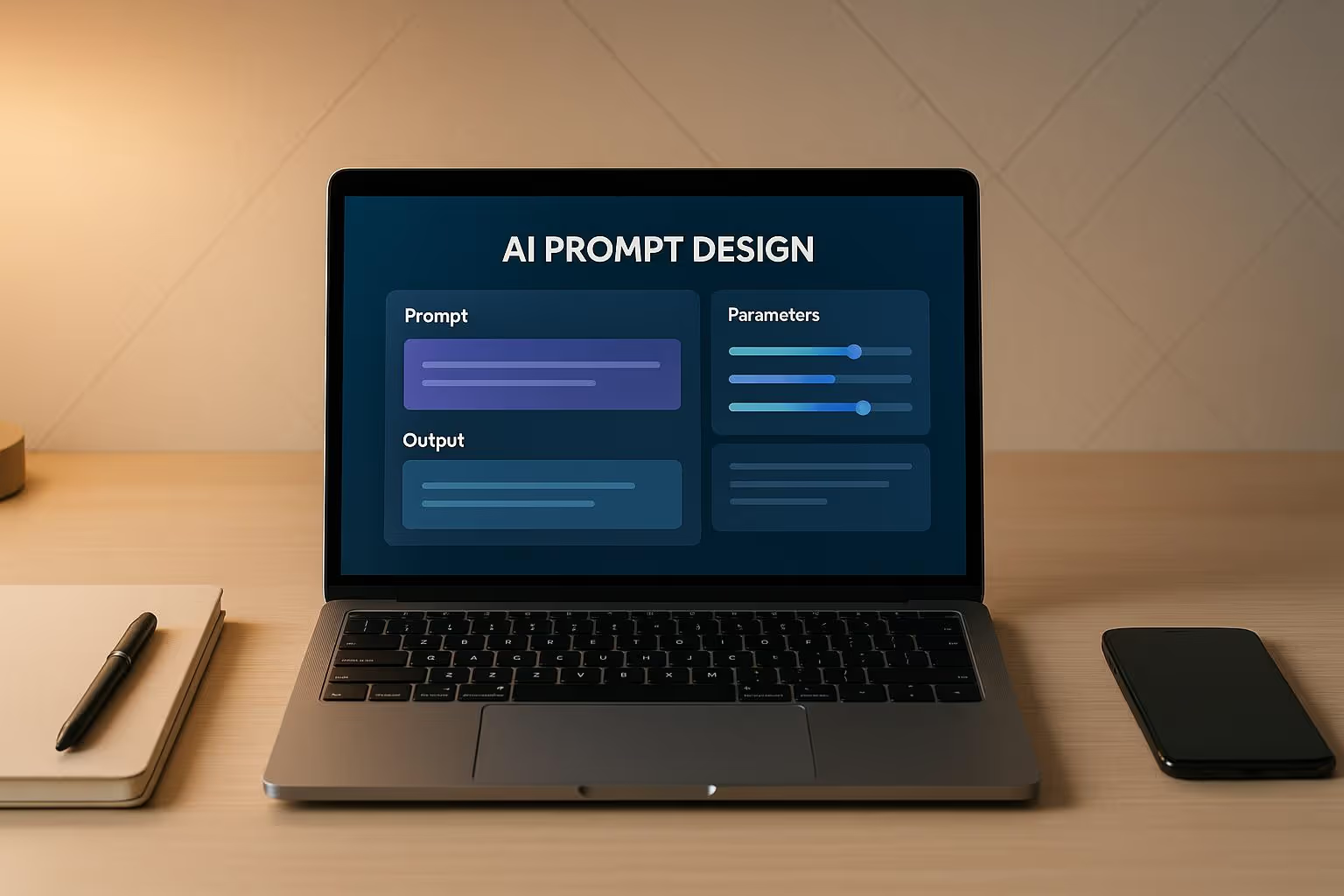
Collaboration tools are essential for bridging the gap between technical and non-technical team members. Often, the people who understand business needs best - like product managers or subject matter experts - lack the technical skills to directly influence AI outputs. User-friendly platforms solve this problem with intuitive interfaces, templates, and visual editors that make prompt creation and refinement accessible to everyone.
When non-technical team members can actively contribute, the quality of outputs improves. For instance, a customer service manager can directly specify the tone and details needed for customer interactions without relying on an engineer to translate their requirements. Real-time collaboration tools allow teams to comment, refine, and test prompts together, all within a single platform.
Automated testing frameworks further enhance collaboration by providing objective data on prompt performance. Instead of relying on subjective opinions, teams can use metrics to identify which prompts deliver the best results, whether in accuracy, relevance, or cost efficiency. For example, a marketing specialist can quickly determine which version of a prompt drives higher engagement, making data-driven adjustments without lengthy analysis.
Collaboration tools also include features like commenting and annotation, which preserve the context behind prompt modifications. When a change is made, team members can document their reasoning, explaining the business logic, performance impact, or edge case considerations. This ensures future users understand not just what was changed, but why, reducing errors and preserving improvements.
Integration with existing tools like Slack, Microsoft Teams, and project management systems keeps collaboration seamless. Notifications alert team members when prompts need review or when performance metrics shift, allowing prompt management to fit naturally into established workflows. This integration strengthens the platform’s role as a unifying force in AI workflow management.
Unified platforms revolutionize how teams operate by enhancing productivity, reducing costs, and ensuring compliance. These platforms go beyond mere convenience, offering measurable improvements that scale with an organization’s AI capabilities.
Unified platforms remove the common bottlenecks that slow down AI adoption. Instead of wasting time digging through emails, Slack messages, or personal notes to find effective prompts, teams can focus on creating value. Research shows that AI users save an average of 5.4% of their work hours, and McKinsey reports that 60% of employees could reclaim 30% of their time with workflow automation.
These platforms allow teams to turn individual successes into shared resources, iterate on prompts more quickly, and compare AI models side by side, leading to productivity gains as high as 10 times. For instance, when a customer service representative crafts a highly effective prompt for refund requests, the entire team can immediately benefit from it, eliminating redundant efforts.
Real-world examples highlight how unified platforms transform workflows. Dan Frydman, an AI thought leader, used to spend hours manually refining design concepts. Now, with prompts.ai Image Studio, he creates photorealistic visuals in a fraction of the time, speeding up approvals and boosting client satisfaction. Similarly, Steven Simmons, CEO and founder, once spent weeks rendering in 3D Studio and writing business proposals. Today, he completes both tasks in a single day. Architect June Chow leverages side-by-side model comparisons to tackle complex projects and explore ideas faster than ever before.
This transformation isn’t limited to individual tasks - it extends to entire workflows. Leaders like Mohamed Sakr, founder of The AI Business, and Frank Buscemi, CEO and CCO, have streamlined operations across sales, marketing, and content creation, enabling their teams to focus on strategic, high-value work. By turning ad hoc experiments into scalable processes, unified platforms shift AI adoption from being an individual challenge to an organizational strength. Faster iterations and shared resources not only improve productivity but also drive down the overall cost of AI operations.
One of the most compelling reasons to adopt a unified prompt management platform is cost savings. Prompts.ai consolidates over 35 AI models and tools, cutting software expenses by as much as 98%. This integration simplifies procurement and reduces administrative overhead across the board.
In addition to reducing subscription costs, these platforms include FinOps tools that monitor and optimize model usage in real time. Usage analytics provide insights into spending patterns, enabling better resource allocation. Features like version control minimize costly errors by allowing teams to revert to proven prompts, while testing environments ensure that only optimized prompts are deployed.
The TOKN pooling system further streamlines cost management. By using TOKN credits, which can be shared across teams and projects, organizations pay only for what they use. Performance tracking during test runs supports data-driven decisions, ensuring continuous efficiency and cost optimization. These savings are complemented by robust governance features that help meet regulatory requirements.
For enterprises, particularly those in regulated industries, maintaining control over AI systems is critical. Unified platforms enhance governance by centralizing AI models, tools, and teams within a secure, enterprise-ready framework. Role-based access control restricts access to authorized personnel, while sandbox environments allow junior team members to experiment safely without impacting production.
Features like automated approval workflows, audit trails, and sandbox testing ensure compliance and protect the integrity of prompts. Automated evaluators check for issues such as secret leaks, profanity, or regressions with every commit, providing a layer of oversight that is invaluable during audits. Teams can easily trace prompt performance, deployment history, and modifications, streamlining compliance processes.
Prompts.ai adheres to leading security and compliance standards, including SOC 2 Type II, HIPAA, and GDPR. The platform initiated its SOC 2 Type II audit on June 19, 2025, and maintains continuous monitoring through its partnership with Vanta. A dedicated Trust Center offers real-time visibility into security policies, controls, and compliance updates. These features empower organizations in regulated industries to innovate confidently while adhering to stringent data protection rules.
Building on the capabilities of a unified platform, these practices turn prompt engineering into an operational powerhouse. By establishing clear processes, fostering collaboration, and sharing knowledge effectively, teams can consistently transform AI potential into dependable results.
For prompt engineering to thrive, teams need open and structured channels for feedback and collaboration. Without them, valuable insights can get lost, and efforts may be duplicated. Establishing dedicated spaces for prompt discussions ensures that ideas and feedback flow seamlessly across teams and departments.
Use existing tools to create specific channels for prompt-related discussions. Separate these from general project conversations to keep the focus sharp. For instance, designate channels tailored to unique use cases - like customer service, marketing, or data analysis - so team members can easily find relevant examples for their work.
Regular review sessions further enhance communication. Schedule weekly or biweekly meetings where team members can share successful prompts, explain their context, and discuss challenges. Documenting these discussions, including the reasoning behind changes and the benefits observed, creates a shared resource that everyone can access and learn from.
Cross-department collaboration can also amplify results. A prompt that works well in one area, like marketing, might only need slight tweaks to be effective in another, such as customer support. This approach not only saves time but also ensures that successful techniques are quickly adopted across the organization.
To ensure consistent results, structured testing is essential. Relying on anecdotal evidence can lead to unpredictable outcomes, especially in high-stakes workflows. A clear evaluation framework helps identify prompts that deliver reliable performance.
Start by defining success criteria for each prompt. For example, in customer support, success might mean resolving issues quickly while maintaining high satisfaction scores. For content creation, it could involve matching the brand's tone, hitting word count targets, and including necessary keywords. Clear metrics make it easier to objectively compare different versions of a prompt.
Testing should cover a range of scenarios, from common tasks to complex edge cases, to identify potential weaknesses before deployment. Comparing how different AI models respond to the same prompt can also help teams find the best fit for specific tasks, offering flexibility as needs evolve.
Leverage version control systems to track prompt iterations, making it easy to roll back to a previous version if needed. Automated tools can also flag language errors or performance dips, streamlining the evaluation process.
Over time, a team's collective expertise in prompt engineering becomes a critical asset. Without proper documentation, however, valuable insights can be lost when team members leave or priorities shift. Organizing and sharing this knowledge ensures it remains accessible and useful.
Develop comprehensive prompt libraries that go beyond simply storing text. Each entry should include the prompt itself, its intended use, the models it works best with, example inputs and outputs, and notes on any limitations. This level of detail helps team members quickly determine whether a prompt fits their needs or requires adjustments.
Document the reasoning behind design choices, such as how a prompt was refined to reduce ambiguity or enhance clarity. Including performance metrics - like response accuracy, processing time, cost per query, or user satisfaction - further reinforces best practices and helps identify top-performing prompts.
Encourage contributions by providing easy-to-use templates and submission processes. Monthly knowledge-sharing sessions, where team members present challenges and solutions, can also foster collaboration and continuous learning. Recording these sessions creates a valuable resource for onboarding new team members.
Finally, organize documentation for easy navigation. Use tags to categorize prompts by department, use case, model, or complexity level. A well-structured system ensures that insights are not only preserved but also readily available to drive ongoing progress. This complements centralized prompt management by safeguarding institutional knowledge for future innovation.
Managing prompts effectively turns chaos into order. By adopting unified platforms that centralize prompt sharing, version control, and collaboration, organizations can transform scattered and unorganized prompts into structured workflows that consistently deliver results.
These platforms allow teams to access and refine existing prompts rather than starting from scratch, saving time and effort. With version control, teams gain the traceability needed for governance and compliance, while linking prompt adjustments to performance and cost metrics ensures smarter decision-making. Intuitive interfaces invite participation from non-technical team members, making collaboration across departments easier. This streamlined approach not only boosts productivity but also helps cut unnecessary expenses.
Streamlined workflows also lead to cost savings. Real-time tracking enables organizations to pinpoint the most efficient prompt-model combinations, reducing redundant testing and focusing efforts on refining prompts that drive meaningful outcomes.
Governance and compliance become straightforward instead of overwhelming. With version control and role-based access, organizations can maintain complete audit trails, while automated safeguards minimize the risk of errors or data leaks.
Platforms like prompts.ai bring all these capabilities together in one place. They provide unified access to over 35 leading language models and integrate FinOps controls that monitor every token’s usage. This eliminates tool sprawl, slashes AI software costs by up to 98%, and delivers the visibility enterprises need to operate efficiently. By combining centralized prompt management with cost transparency and community-driven insights, organizations can shift their focus from managing infrastructure to fostering innovation.
To move forward, establish clear communication channels, implement structured testing and evaluation processes, and systematically document team knowledge. With the right platform and practices in place, prompt engineering can evolve into a scalable operational advantage that supports your organization’s growth and goals.
Centralized AI platforms improve team workflows by making prompt sharing straightforward, ensuring smooth version control, and encouraging better collaboration. These features help teams work smarter, cut down on repetitive tasks, and keep projects aligned.
With efficient prompt management, teams can save both time and resources, reducing overall operational expenses. This streamlined process allows AI systems to operate at peak performance, increasing productivity and achieving stronger outcomes.
Version control plays a key role in managing AI prompts, enabling teams to track changes, test updates, and maintain a detailed record of prompt iterations. This approach allows for confident implementation of improvements while reducing the risk of errors or mismatched updates.
By using version control, teams can easily compare different versions, pinpoint the most effective ones, and revert to earlier prompts when necessary. This process not only simplifies collaboration but also enhances the efficiency and alignment of AI-driven workflows.
Non-technical team members can take an active role in AI projects thanks to the straightforward, easy-to-navigate interfaces offered by modern AI platforms. These platforms often feature visual tools or playgrounds, enabling users to test and adjust prompts without requiring any coding knowledge.
Working together in these collaborative spaces, team members can try out various inputs, share feedback, and refine prompts to better meet project objectives. This approach ensures that everyone, regardless of their technical expertise, can contribute meaningfully to harnessing AI’s potential.