Pay As You Go - AI Model Orchestration and Workflows Platform


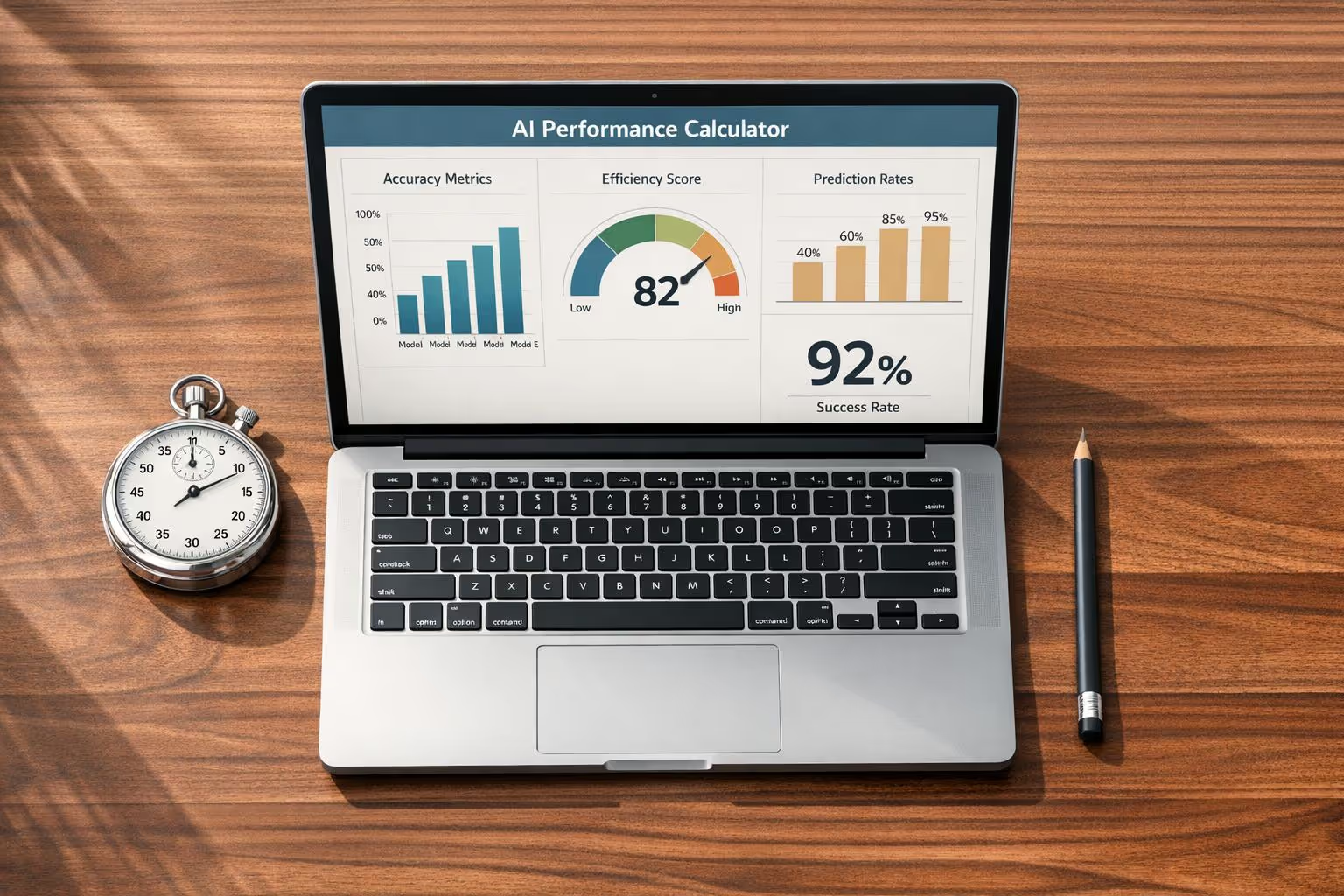
In today’s fast-paced world, businesses and individuals are turning to artificial intelligence to streamline workflows and cut down on repetitive tasks. But how do you know if your AI tools are truly delivering value? That’s where a tool to measure AI efficiency comes in handy. It’s not just about adopting tech—it’s about understanding its impact on your day-to-day operations.
AI can transform how we handle everything from drafting emails to crunching massive datasets. Yet, without clear metrics, it’s tough to justify the investment or pinpoint areas for improvement. By evaluating key factors like time savings and error reduction, you gain actionable insights into your processes. Imagine shaving hours off a project or boosting output by double digits—those are the wins a performance tracker helps uncover.
The beauty of assessing AI’s role lies in the clarity it brings. You’re not just looking at raw data; you’re seeing a story of efficiency unfold. Whether you’re a freelancer optimizing content creation or a manager overseeing data tasks, knowing where AI shines (or stumbles) lets you make smarter decisions. Dive into this approach and watch your productivity soar.
You can assess pretty much any task where AI plays a role—think content writing, data analysis, image processing, or even customer support automation. Just pick the task type from the dropdown or type it in, and add the time it takes manually versus with AI. The tool does the rest, giving you a snapshot of efficiency gains.
The results are as accurate as the data you provide. If you’ve got precise numbers for manual time, AI-assisted time, and error rates, you’ll get a solid estimate of productivity and accuracy improvements. If some data is missing, we use reasonable defaults and flag them in the results so you know it’s an approximation.
If you skip entering certain inputs—like error rates or manual time—we fill in the gaps with standard assumptions based on typical AI use cases. Don’t worry, though; we’ll clearly note where defaults are used. You can always tweak the inputs for a more tailored output.